.svg)
%201.webp)

%201.webp)

1.3 ATA Hyperbaric Chambers for Sale

.webp)
What Is a 1.3 ATA Hyperbaric Chamber and How It Benefits You
A 1.3 ATA hyperbaric chamber pressurizes the environment to 1.3 atmospheres absolute — approximately 4.4 psi (30.4 kPa) above normal atmospheric pressure. At this level, users breathe concentrated oxygen (typically 90%±3%) through a mask or nasal cannula while resting inside the pressurized cabin, a routine often referred to as mild hyperbaric oxygen therapy (mHBOT) in the wellness industry.
Why buyers choose 1.3 ATA:
- Accessible pressure level: 1.3 ATA is the most common setting for non-medical mild HBOT in home and wellness use, referenced in the FDA Product Code CBF classification for Acute Mountain Sickness.
- Adaptable session rhythm: sessions typically run 60–90 minutes, 3–5 times per week, fitting around work and family schedules.
- Wide range of use: chosen by athletes for recovery, by wellness centers for vitality programs, and by home users for general well-being routines.
Typical specifications at 1.3 ATA:
- Operating pressure: 1.3 ATA (≈ 4.4 psig / 30.4 kPa gauge / 131.7 kPa absolute)
- Oxygen delivery: 90%±3% concentration via mask or nasal cannula (hard-shell chambers with BIBS)
- Session duration: 60–120 minutes per session
- Recommended room ventilation: 4–6 air changes per hour (ACH)
Oxyboss Adjustable-Pressure Chambers: Built for 1.3 ATA and Beyond
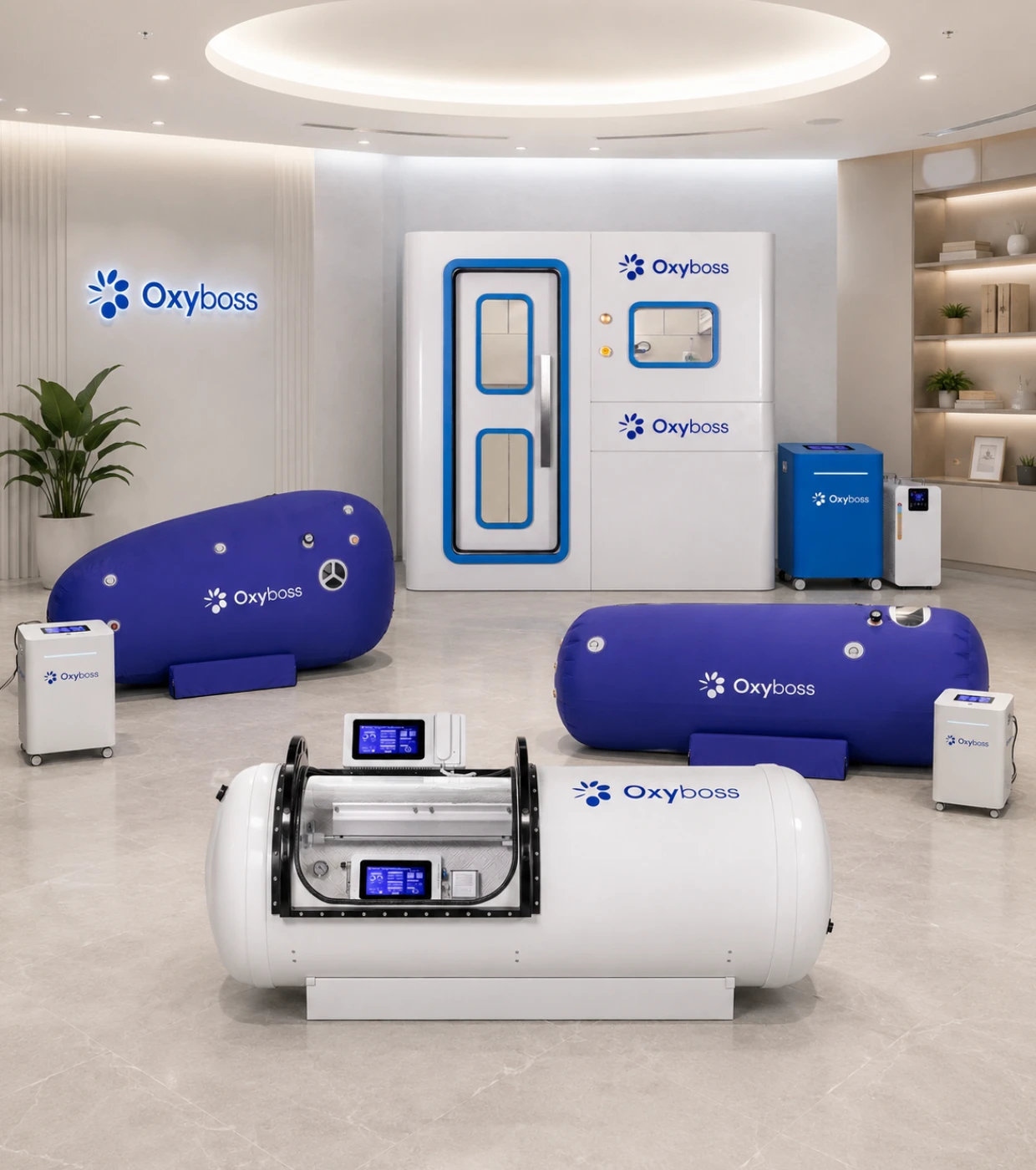
Oxyboss manufactures chambers that let you dial in 1.3 ATA exactly, then adjust upward or downward as your routine evolves. Every Oxyboss chamber — soft or hard — supports the full 1.1–1.5 ATA mild-HBOT range, and our hard-shell models extend to 2.0 ATA for higher-pressure protocols.
All chambers share the same 3-in-1 oxygen source (10 L concentrator + oil-free compressor + air conditioner), CE / PED-certified pressure vessels, and dual touchscreen control (inside / outside). Choose the form factor that fits your space and usage pattern.

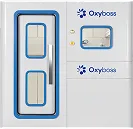
Hard-Shell Adjustable Chambers (1.1–2.0 ATA)
Permanent or semi-permanent installation. Designed for wellness centers, recovery studios, and high-utilization home users. Why adjustable pressure matters: starting at 1.3 ATA lets new users acclimate to ear-pressure changes and the sensation of mild HBOT. Once tolerance is established (typically 5–10 sessions), pressure can be increased to 1.5, 1.75, or 2.0 ATA on the same chamber.
Soft-Shell Adjustable Chambers (1.1–1.5 ATA)
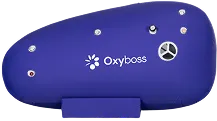
Portable, zipper-entry, foldable. Designed for home users, mobile practitioners, and wellness studios with limited floor area.
Real-Time Pressure Monitoring and Auto-Regulation
Every Oxyboss chamber uses dual pressure sensors with live display on internal and external touchscreens. Pressure is held within ±0.05 ATA of the set target (e.g., 1.30 ATA ±0.05) throughout the session. If cabin pressure drifts, the integrated air compressor adjusts supply automatically.
Factory data: across 500+ chambers tested over 7 continuous days, 98.7% of sessions held target pressure within specification, with zero unplanned pressure drops.
.webp)
Independent Oxygen Delivery via BIBS (Built-In Breathing System)
Hard-shell models support optional BIBS configuration, where the user breathes 90%±3% concentrated oxygen through a mask, while the chamber itself is pressurized with ambient air. This design:
- Keeps cabin oxygen concentration at normal levels (typically 21–23%), avoiding elevated-oxygen fire risk
- Delivers the oxygen dose directly to the user's lungs via a closed breathing circuit
- Allows cabin oxygen sensors to trigger automatic supply shutoff if cabin O₂ exceeds 24% (standard on OB-H401)
Fail-Safe Pressure Relief and Emergency Egress
All chambers include:
- Automatic pressure relief valve (activates at preset over-pressure threshold, e.g., 200.5 kPa for OT-H202, releasing ≈3 kPa before reseating)
- Manual mechanical vent operable from inside and outside, functional during power loss
- Post-depressurization door release: once pressure equalizes, doors unlock manually from both sides
Compliance: hard-shell chambers carry CE marking and PED (Pressure Equipment Directive 2014/68/EU) certification under Module H, Category III. Certificate #10.07.12722, issued by Notified Body EUROCERT S.A. (NB 1128), valid through August 2029.
Built-In Air Conditioning and Humidity Control
Sessions at 1.3 ATA generate modest adiabatic heat during pressurization. The integrated air-conditioning unit in the 3-in-1 system holds cabin temperature at user-selected levels (typically 20–24 °C / 68–75 °F) and prevents condensation that could damage electronics or promote mold over years of use.
Integrated Oxygen Generation, Pressurization, and Climate Control
One integrated unit replaces separate concentrator, compressor, and air-conditioner purchases — with unified diagnostics on a single touchscreen.
.svg)
On-Site Oxygen Concentrator
No external oxygen tanks required. The system extracts oxygen from ambient air using PSA (Pressure Swing Adsorption) molecular sieve technology, delivering:
- 10 L/min at 90%±3% purity (standard, sufficient for single-user sessions at 1.3–1.5 ATA)
- 20 L/min option available for OT-H202 (USD $790 upgrade), supporting higher-flow protocols

Oil-Free Air Compressor
Supplies clean compressed air for chamber pressurization. The compressor:
- Maintains steady ramp-up (typically 0.1 ATA per minute to 1.3 ATA)
- Filters intake air to remove particulates before they reach the cabin
- Operates at ≤ 60 dB(A) at 1-meter distance (normal conversation level)

Integrated Air Conditioning
Cools and dehumidifies cabin air during operation, enhancing user comfort and preventing moisture-related damage to electronics or seals.
Operating Cost
oxygen generation adds ≈0.5 kWh per hour to power draw. No recurring cylinder rental or refill fees.
Hard-Shell Chambers: Q235 Carbon Steel and 5083 Marine-Grade Aluminum
- OT-H201 / OT-H202: Q235 carbon steel shell, powder-coated finish, designed for stationary installation. Standard concrete floor, no reinforcement required at ground level.
- OB-H401 / OB-H402: 5083 aluminum alloy shell (4 mm thickness), lighter and more corrosion-resistant than steel. Suitable for humid or coastal environments. Welding per EN ISO 15614-2 / EN ISO 9606-2; WPQR (Welding Procedure Qualification Record) available on request.
Both feature:
- Tempered glass viewport with polycarbonate inner layer (impact-resistant, optically clear)
- Stainless steel hinges and pressure-rated door seals
- Anti-static flooring and flame-retardant interior padding
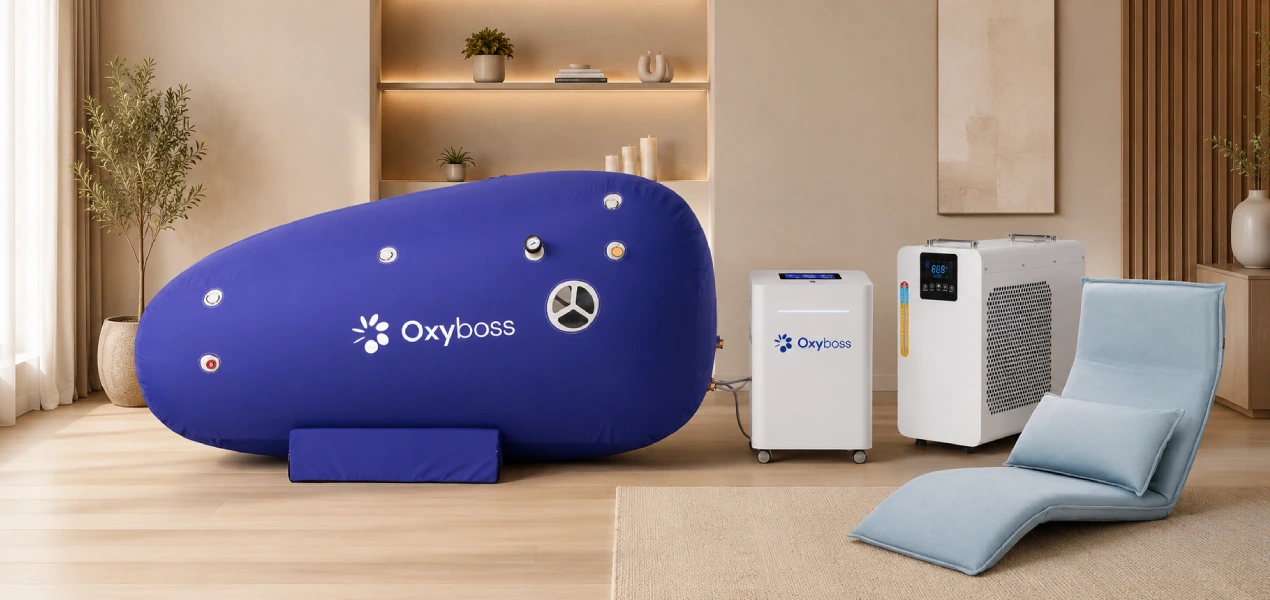
Soft-Shell Chambers: TPU Fabric with Reinforced Zipper
- TPU (Thermoplastic Polyurethane) fabric: durable, flexible, airtight; rated for 10,000+ pressurization cycles
- Dual-layer zipper design: inner and outer zippers form a redundant seal; tested to 1.5 ATA with < 0.5% pressure loss per hour
- Frame: collapsible powder-coated steel frame; chamber folds to ≈ 1.2 m × 0.8 m × 0.4 m for storage or relocation
Choose soft if: you need portability, plan 1–4 sessions per week at home, and want the lowest entry cost.
Choose hard if: you run a commercial facility, plan 5+ sessions per day, want the longest service life, or anticipate upgrading to 1.5+ ATA protocols later.
Athletes and Recovery Studios
Post-training recovery, competition prep, ongoing conditioning routines. Common picks: OT-H201 for compact single-user rooms; OT-S158 for team travel.
Wellness Centers, Spas, and Longevity Studios
Relaxation, vitality programs, premium membership add-ons. Common picks: OT-H202 for spacious walk-in rooms; OB-H401 for premium interior finish.
Biohackers and Home Longevity Users
Daily or weekly vitality sessions, family use. Common picks: OT-S15T entry-level 32″ chamber; OT-S159 lie-flat comfort chamber.
Senior Living and Active Aging Communities
General vitality support, mobility and focus routines. Common picks: OT-H202 with optional wheelchair ramp; OT-S158 gentle 1.3 ATA soft entry.
Mobile Wellness Practitioners
In-home sessions, event services, traveling practice. Common picks: OT-S15T (lightest, folds for transport); OT-S158 (lie-flat option).
OEM and Private-Label Buyers
Custom color and logo for reseller branding, wellness-hotel deployments, franchise chains. Common picks: OB-H301 mid-size, OB-D201 high-cycle.
Who Uses 1.3 ATA Hyperbaric Chambers?
Real-world user groups and the session settings they typically run.
Regulatory note: Oxyboss chambers are marketed as general wellness / leisure products , not as medical devices. In the United States, the FDA-cleared home-use hyperbaric chamber indication at 1.3 ATA (Product Code CBF) covers Acute Mountain Sickness only; other uses are considered off-label. Oxyboss makes no disease-treatment claims. Users with existing health conditions should consult a licensed healthcare provider before starting mild HBOT.



How to Start Your Hyperbaric Chamber Project with Oxyboss
A 7-step process from first inquiry to lifetime support — with concrete timelines at each stage.
Step 1: Needs Assessment and Model Selection (1–2 business days)
Share your intended use (home, wellness center, recovery studio, mobile practice), expected session frequency, space constraints (room size, door width, floor load), and pressure preference. We'll recommend the optimal configuration and prepare a detailed quotation including chamber, oxygen system, delivery method (DDP door-to-door or ex-works), and optional add-ons (BIBS, wheelchair ramp, upgraded 20 L concentrator).
Step 2: Quotation Review and Customization (2–3 business days)
Receive your tailored proposal with itemized pricing, technical specifications, optional upgrades (20 L concentrator, BIBS system, custom colors / logos for OEM orders), and payment terms (standard: 50% deposit, 50% balance before shipment; credit card accepted). Request adjustments until the solution fits your budget and timeline.
Step 3: Order Confirmation and Production (7–20 business days)
Once approved:
- Soft chambers (OT-S15T / S158 / S159): 7 working days production, plus 3 days factory testing.
- Hard chambers (OT-H201 / OT-H202 / OB-H301 / OB-H401 / OB-H402 / OB-D201): 15–20 working days production, plus 5–7 days continuous pressure testing.
Production updates with photos and videos are provided before final inspection. OEM / private-label orders (logo, custom colors) add 3 days — customization is free with no MOQ.
Step 4: Pre-Shipment Inspection and Documentation (3–5 business days)
Before shipment, you receive test-report photos and videos (pressure hold, oxygen concentration, safety-valve function), the User Manual, Maintenance Guide, and Installation Guide (English; other languages on request), plus CE / PED certificates, ISO 9001 certificate, and material certifications. Optional third-party inspection with SGS, Bureau Veritas, or TÜV can be coordinated at buyer's cost.
Step 5: Shipping and Customs Clearance (15–55 days)
Delivery options:
- Sea freight: 45–55 days to US / EU ports; economical for hard chambers.
- Air freight: 15–20 days; faster but higher cost.
- EU truck delivery: 20–30 days for intra-EU routes.
DDP option handles all customs clearance, import duties, and door-to-door delivery; no extra charges on arrival. Shipments originate from Shenzhen, China. Hard chambers ship in 2–3 crates; soft chambers ship in 1–2 cartons.
Step 6: Installation and Commissioning (1–2 days on-site work)
Chambers arrive 85–95% pre-assembled. Your on-site team completes: unpacking and positioning, connecting the high-pressure hose from the 3-in-1 oxygen source to the chamber inlet, connecting power (standard 110 V or 220 V, 10 A circuit breaker recommended), verifying door seal, testing manual pressure relief valve, and running the initial pressurization cycle per Installation Guide.
1-on-1 video support is provided during installation and initial startup, plus installation videos in English. For OB-H301 / OB-H401 / OB-D201: oxygen source can be placed up to 5–7 meters away in a separate equipment room by extending the hose and control cable (confirm during order).
Step 7: Training, Handover, and Ongoing Support (Lifetime)
After successful installation:
- Operator training: live video session covering pressure ramp protocols, oxygen flow settings, emergency procedures, daily cleaning, and filter maintenance. Training certificate issued upon completion.
- Warranty activation: hard chambers 3 years, soft chambers 1 year. Register your unit with serial number and installation date.
- 24/7 technical support: report issues via WhatsApp, email, or video call. 48-hour diagnosis response, 3–5 day parts delivery to most destinations. Warranty parts and shipping are free; post-warranty parts available at factory cost.
Routine maintenance: clean interior after each use, replace air filter every 500–1,000 hours (USD $50), check door seal every 6 months, replace molecular sieve every 5,000–8,000 hours (USD $600).
Ready to Bring 1.3 ATA Hyperbaric Sessions to Your Home or Facility?
Free technical consultation, custom quote in 24 hours, DDP door-to-door option.
Tell us your intended use, session frequency, and space constraints, and we'll recommend the optimal chamber configuration with transparent pricing. All inquiries receive a detailed technical consultation — no obligation.
Frequently Asked Questions
Yes. Our hard-shell OT-H201, OT-H202, OB-H301, OB-H401, OB-H402, and OB-D201 models feature digital pressure control with 0.05 ATA precision. Set the target to 1.30 ATA on the touchscreen, and the system holds that pressure automatically throughout the session. Pressure is displayed in real time in ATA, psi, and kPa.
Our soft-shell OT-S15T / OT-S158 / OT-S159 chambers adjust across 1.1–1.5 ATA, so 1.3 ATA is a standard setting on every Oxyboss chamber — soft or hard. Step up to a hard-shell model if you want higher-pressure options later (1.5, 1.75, 2.0 ATA).
Regulatory context varies by country:
- United States: Oxyboss chambers are sold as general wellness devices. The FDA-cleared home-use hyperbaric chamber indication at 1.3 ATA (Product Code CBF) covers Acute Mountain Sickness only; other uses are off-label. No formal authorization is required to purchase, but we recommend consulting a licensed healthcare provider first, especially if you have ear or sinus issues, lung conditions, or are pregnant.
- European Union: our hard chambers carry CE / PED certification for pressure-equipment safety and are marketed as wellness / leisure products (not EU MDR medical devices). No authorization needed; professional guidance is recommended.
- Other regions: check local rules. Most countries allow 1.3–1.5 ATA chambers for non-medical wellness use without licensing.
Wellness centers and spas: you can offer 1.3 ATA sessions as a wellness service in most jurisdictions without healthcare licensing, but verify local health-department rules and liability insurance.
Two independent systems working together:
- Chamber pressurization (ambient air): the chamber is pressurized to 1.3 ATA using filtered ambient air (21% oxygen, 79% nitrogen). This creates the mild-pressure environment that may enhance oxygen dissolution in blood plasma — see PubMed mild-HBOT literature for current research.
- Oxygen delivery (mask / nasal cannula): simultaneously, you breathe 90%±3% concentrated oxygen through a mask or nasal cannula supplied by the built-in concentrator. The oxygen flows into your breathing circuit, not into the chamber cabin.
Why this design?
- Safety: keeping cabin oxygen at normal levels (21–23%) avoids elevated-oxygen fire risk. Pure-oxygen environments above 23.5% are flammable; our BIBS (Built-In Breathing System) vents exhalations outside the chamber, preventing oxygen buildup.
- Efficiency: you get the oxygen dose where it matters (your lungs) without wasting it by filling the entire cabin.
- Monitoring: oxygen sensors in the cabin trigger automatic shutoff if O₂ exceeds 24%, adding a redundant safety layer.
Soft chambers without BIBS deliver oxygen into the cabin air, reaching 24–30% cabin oxygen concentration — still within safe operating limits, but lower than the 90% delivered via BIBS.
It depends on your definition and goals.
Professional / higher-pressure perspective:
- The Undersea & Hyperbaric Medical Society (UHMS) defines professional-grade HBOT as ≥ 2.0 ATA for specific indications. Research supporting those indications used 2.0–3.0 ATA in controlled environments.
- At 1.3 ATA, you are below the threshold referenced by professional bodies and insurance-covered protocols. Oxyboss chambers are not marketed for any specific health condition and make no health claims.
Wellness and mild HBOT perspective:
- Emerging research and user reports suggest that 1.3–1.5 ATA with supplemental oxygen may support general wellness, recovery, and cognitive routines, even if effects are more modest than higher-pressure HBOT. See current mild-HBOT literature on PubMed.
- Many athletes, biohackers, and wellness practitioners use 1.3–1.5 ATA as part of broader well-being routines, not as a health-condition intervention.
Our recommendation: if you need a specific health-condition intervention, work with a licensed healthcare provider and use a professional 2.0+ ATA chamber at a certified facility. If you are exploring mild HBOT for wellness, recovery, or general vitality, 1.3–1.5 ATA home / wellness chambers like Oxyboss models are a practical entry point. Be realistic about evidence levels and do not substitute mild HBOT for professionally directed care.
Common use cases (reported by users and in emerging research; no health claims made by Oxyboss):
- Sports recovery and performance routines
- Post-viral fatigue support routines
- General energy and focus enhancement
- Comfort routines for joint and muscle soreness
- Anti-aging and vitality protocols
Evidence status: peer-reviewed studies on 1.3–1.5 ATA are limited compared to 2.0+ ATA research. Some pilot studies show promising signals (e.g., cognitive function in mild TBI, post-viral fatigue), but results are not definitive.
Contraindications (do not use if you have):
- Untreated pneumothorax (collapsed lung)
- Active ear or sinus infection with blocked Eustachian tubes
- Certain chemotherapy drugs (bleomycin, doxorubicin — consult your oncology provider)
- Uncontrolled seizures
- Severe COPD with CO₂ retention
- Pregnancy (insufficient safety data)
Always consult a qualified licensed provider before starting hyperbaric sessions if you have any health conditions.
Ear equalization is essential. At 1.3 ATA, cabin pressure increases by ≈ 4.4 psi (30 kPa), which your middle ear must equalize to avoid discomfort
Techniques:
- Valsalva maneuver: pinch nose shut, close mouth, gently blow to push air into Eustachian tubes
- Toynbee maneuver: pinch nose shut, swallow
- Frenzel maneuver: pinch nose shut, push tongue back and up
- Yawning or chewing gum during pressurization
Pressurization rate matters: our chambers let you control ramp speed. Slow pressurization (0.05–0.1 ATA per minute) gives more time to equalize. If you feel ear pressure or pain, pause pressurization immediately and equalize before continuing.
If you cannot equalize:
- Do not force it. Stop the session and depressurize.
- Try a lower starting pressure (1.1 or 1.2 ATA) and build tolerance over multiple sessions.
- If difficulty persists: consult an ENT specialist. Deviated septum or chronic sinusitis may need attention first.
Children and older adults often need extra coaching on equalization. Our training video covers techniques step-by-step.
Yes. Oxyboss chambers are widely used in:
- Wellness centers and spas — as a premium add-on, often bundled with massage, infrared sauna, or hydrotherapy
- Gyms and sports performance facilities — recovery zones for members
- Chiropractic and physiotherapy studios — complementary recovery offering
- Anti-aging and longevity studios — part of comprehensive vitality routines
Commercial operation considerations:
- Daily usage: both soft and hard chambers support multiple daily sessions. Recommended cool-down: 20–30 minutes between sessions. No hard limit on sessions / day (depends on oxygen system capacity, not chamber structure).
- Warranty coverage: commercial use is covered under standard warranty (soft 1 year, hard 3 years). High-utilization buyers often add extended warranty or service contracts.
- Liability insurance: check with your insurer; most wellness businesses add hyperbaric as a covered service without special licensing (since 1.3 ATA is non-medical in most jurisdictions).
- Marketing compliance: do not make health-condition claims. Position as wellness, recovery, or performance routine, not condition management.
Volume discounts: 2+ chambers qualify for distributor / bulk pricing. Contact sales for regional exclusivity and co-marketing support.