.svg)
%201.webp)
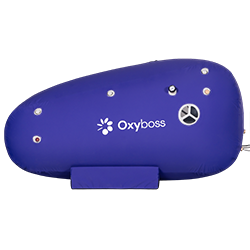
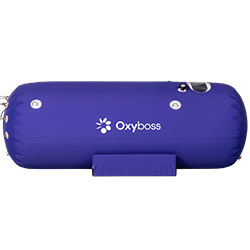
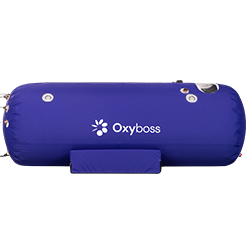
Personal Hyperbaric Chambers for Home

.webp)
Why do People Bring One Home?
The reasons we hear most from owners aren't medical — they're everyday. Pick the ones that sound like you:
- Recovery after hard training. Athletes and gym regulars use a session to wind down after intense days.
- Better sleep. Plenty of owners say their best nights come after a relaxed evening session.
- A forced pause. Sixty minutes with no phone, no notifications, nowhere else to be.
- Focus. A quiet reset for people with demanding jobs and busy heads.
- Jet lag. Frequent travelers use it to resync after long-haul flights.
- Time together. The two-seat models turn a session into a shared ritual instead of a solo chore.
This is a personal wellness product. It's not a medical device, and we don't claim it diagnoses, treats, or cures anything. If you have any ear, sinus, lung, or heart condition, if you're pregnant, or if you're on medication that changes how your body handles oxygen — talk to your doctor first. The who shouldn't use one section below goes deeper.
A note on what a home chamber isn't: clinical hyperbaric oxygen therapy, as defined by the Undersea & Hyperbaric Medical Society (UHMS), means breathing near-100% medical oxygen in a hard-sided chamber at at least 2.0 ATA — a different thing from a soft-shell home session at 1.5 ATA with ambient air or moderate oxygen enrichment. We keep expectations in the everyday-wellness lane and don't position Oxyboss chambers as substitutes for clinical HBOT.
One Oxygen Source, Ten Chambers - What that Actually Saves You
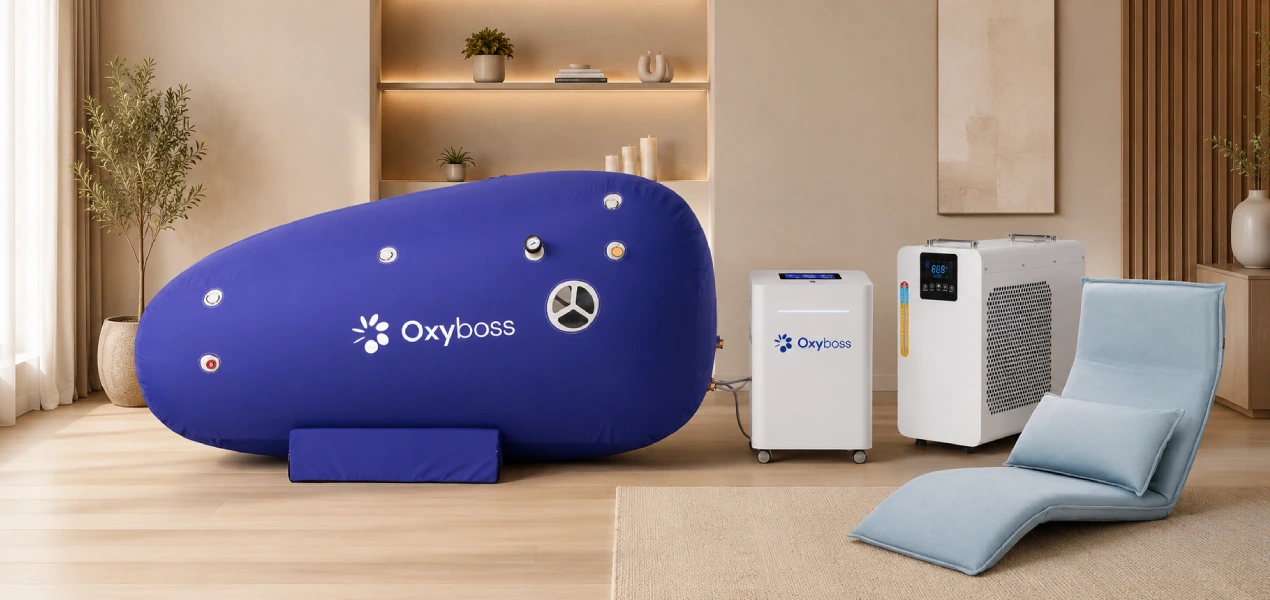
Here's the thing most personal hyperbaric chamber brands don't put on the spec sheet. A "real" hyperbaric setup isn't just the chamber. It's usually a chamber, an external oxygen concentrator (which can run $800–$2,500 on its own), a separate air compressor, and — because sealed chambers get stuffy fast — an air conditioning unit.
Four boxes. Four power cords. Four things that can break. You'll see this pattern across most home-chamber pricing guides, where the chamber and the oxygen supply show up as separate line items. Oxyboss builds the whole oxygen supply chain into one machine:
- 10 L/min oxygen output at 90% ± 3% concentration
- Air compressor built in
- Air conditioner built in
- 2200 W / 10 A total draw
- 110V / 220V / 240V — works on a standard US household outlet
- 930 × 450 × 920 mm, 130 kg — one box, not four
- Internal and external touch control — start and stop from inside or outside the chamber
- Plug-and-play cabling — fully modular, no electrician required
So when you compare an Oxyboss chamber to other private hyperbaric chambers at the same pressure, ask whether the other guy's price includes the oxygen supply or whether you're about to add a $1,500 line item. We include everything.

Hard-shell Sitting Chambers
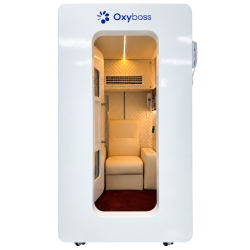
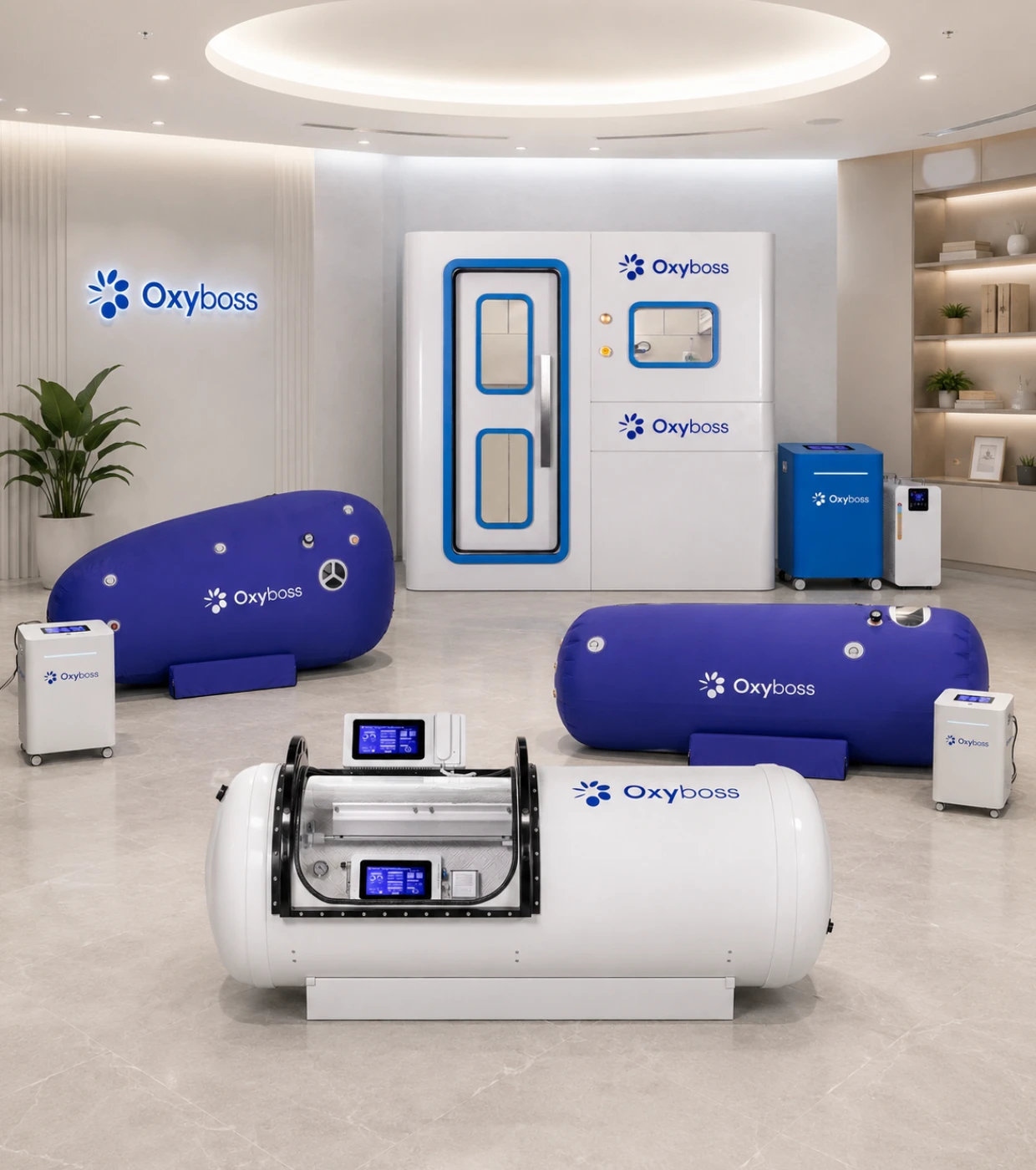
Sitting personal hyperbaric chambers are the largest of the bunch. All run at 2.0 ATA. Sit upright, read, work on a laptop, watch something on a tablet — that's the appeal. None of them fold up.
Hard-shell Capsule Chambers
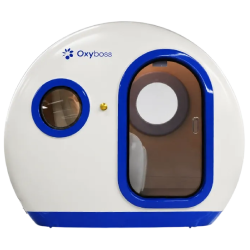
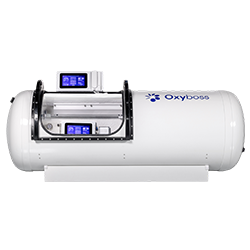
Hard-shell capsule chambers are aluminum, go up to 2.0 ATA, and look like something out of a sci-fi movie. Lying position only. Heavier, more permanent, higher pressure ceiling.
Soft-shell Hyperbaric Chambers
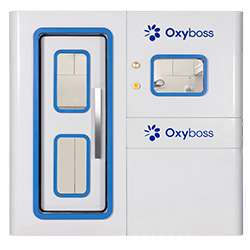
Soft-shell personal hyperbaric chambers run at 1.5 ATA and are made from high-grade, hypoallergenic TPU. They're the lightest, the most portable, and the easiest to set up. Good entry point if you've never used a chamber before or if you live somewhere you can't dedicate a permanent room to it.
Where will it live?
Measure the room. Then add space for the 3-in-1 oxygen source main unit (930 × 450 × 920 mm, 130 kg). That box sits next to the chamber and needs airflow around it. Most buyers underestimate the total footprint. Don't be most buyers.

How heavy is too heavy?
Soft-shell chambers weigh 18–24 kg and fold. Hard-shell capsules run 300–450 kg. Hard-shell sitting chambers run 400–900 kg. The lighter the chamber, the easier to move — but also, the lighter the chamber, the lower the pressure ceiling. There's a real trade-off.

Who else needs to use it?
If it's just you, an S158 or H201S is plenty. If your partner or a family member will share, look at the two-person models (H402 or D201). If you want a "wellness room" experience, H202 is the one.
Soft vs hard shell, in one sentence each

- Soft-shell (1.5 ATA): lighter, foldable, lower pressure, lower price entry point, 1-year warranty.
- Hard-shell (up to 2.0 ATA): heavier, permanent, higher pressure ceiling, longer warranty (3 years), more interior room.
A point of reference from the field: the UHMS position statement on low-pressure fabric hyperbaric chambers describes treatment below 1.5 ATA as "mild" and unproven for UHMS's accepted medical indications — a useful line to draw when you're comparing a home chamber to clinical HBOT, and the reason we don't position Oxyboss chambers as medical equipment.
Who shouldn't use one

This isn't a complete medical list. It's a starting point for a conversation with your doctor.
- Anyone with untreated pneumothorax should not use any hyperbaric chamber.
- Ear or sinus conditions that make pressure equalization hard (recent ear surgery, severe congestion, blocked Eustachian tubes) — get cleared first.
- Lung conditions (COPD with CO₂ retention, pulmonary fibrosis, large bullae) — talk to your pulmonologist.
- Heart conditions (congestive heart failure, recent heart attack, unstable angina) — get cardiology sign-off.
- Pregnancy — limited data; ask your OB.
- Claustrophobia severe enough to trigger a fight-or-flight response in an enclosed space — start with a soft-shell chamber, consider a hard-shell sitting model with a wider door.
- Certain medications (some chemo agents, bleomycin, disulfiram, mafenide acetate) — interaction risks; check with your prescriber.
If any of that sounds like you, don't skip the doctor call. The chamber isn't going to do anything useful for you if you use it wrong, and it's not worth risking your ears or your lungs to find out the hard way. For a clinical overview of contraindications, see the Hyperbaric Oxygen Therapy Contraindications chapter on NCBI Bookshelf (StatPearls).
Why Trust Oxyboss
Look, anyone selling a $10,000+ box that goes in your home needs to earn your trust first. Here's what we put on the table.
.svg)
Built under ISO 13485
ISO 13485 is the international quality management standard specifically for medical-device manufacturing. Even though our product is sold as a personal wellness device, we hold ourselves to the manufacturing discipline that standard requires.

Built under ISO 9001
The general quality management standard. Documented processes, traceable components, consistent builds.

CE-marked for the European Economic Area
Third-party-notified-body assessment of design and manufacturing conformity. CE marking isn't a rubber stamp — it's a declaration backed by testing.
Global Warranty
Same warranty terms whether you're in California, Berlin, or Sydney. Soft-shell: 1 year. Hard-shell: 3 years. Consumables are consumables — they're listed in the warranty card.
Door-to-door DDP Shipping
Our service covers most countries worldwide. We handle customs formalities, duties, and taxes prior to delivery, so you won't have to worry about unexpected bills from customs brokers.
Real Humans on the Quote Form
When you fill in the form, a real person reads it and sends you a real quote within one business day. No drip campaign, no chatbot loop.
Every Chamber Factory-tested Before Shipping
Pressure-hold, oxygen concentration, compressor and AC function, touch-screen sync, voltage verification on all three supported inputs. The test report is in the box. If a unit doesn't pass, it doesn't ship.
Our hard-shell chambers are designed against the same family of pressure-vessel-for-human-occupancy standards that govern clinical chambers — see the ASME PVHO-1 standard for the underlying framework.
Plug-and-play install, no electrician needed You connect the chamber to the 3-in-1 oxygen source with the supplied cables and you're done. Most users are running their first session within an hour of the truck leaving.
Contact Oxyboss for a Quote
Contact Oxyboss and tell us your country, intended use, and the type of hyperbaric chamber you are interested in.
Whether you are looking for a chamber for personal wellness, home use, or a commercial application such as a spa, wellness center, gym, or recovery facility, Oxyboss will provide suitable product recommendations, pricing details, catalogs, and professional support.
Frequently Asked Questions
You get in, the chamber seals, and the air pressure inside rises gently above sea level. At higher pressure, your body absorbs more oxygen with each breath than it normally would.
Soft-shell Oxyboss chambers run at 1.5 ATA; hard-shell models go up to 2.0 ATA. These are low-pressure, home-scale sessions — a different thing from the multi-ATA chambers used in clinical settings, and we keep our expectations in that everyday-wellness lane.
A quick reality check on the evidence: a lot of the published hyperbaric research comes from clinical settings at higher pressures and higher oxygen levels than a home chamber delivers, so the outcomes from those studies don't translate one-to-one to a 1.5 ATA home session.
The Hyperbaric Oxygen Therapy chapter on NCBI Bookshelf (StatPearls) walks through that evidence base in detail.
A standard household outlet is all you need. The 3-in-1 oxygen source draws 2200 W (about 10 A), which is within the range of a normal 15 A or 20 A circuit. No dedicated line, no electrician, no panel upgrade.
The compressor and air conditioner both run inside the oxygen source main unit, outside the chamber. From inside the chamber, you hear a low white-noise hum. Most users fall asleep in it.
Add the chamber dimensions to the 3-in-1 main unit dimensions (930 × 450 × 920 mm), then leave at least 30 cm of clearance around the main unit for airflow. A typical 10 × 10 ft room works for any chamber except the H202 room-type, which needs more breathing room.
The oxygen concentrator inside the 3-in-1 unit pulls in room air, filters out nitrogen, and outputs oxygen at 90% concentration, give or take 3 percentage points. That's high-concentration output — well above normal room air (about 21%). The chamber then fills with the output through the supply line. Worth flagging: clinical hyperbaric oxygen therapy, per the UHMS hyperbaric indications page, involves breathing near-100% medical oxygen at at least 2.0 ATA, which is a different setup from a home session.
Not hot. The built-in air conditioner in the 3-in-1 unit keeps the chamber at a comfortable temperature throughout the session. Hard-shell sitting chambers have a dedicated AC unit in the standard kit.
Mostly quiet. Pressure builds gradually, and your ears pop the same way they do on a plane — swallow, yawn, or pinch-and-blow to equalize, and go slow if they feel stuck. Some people notice a little sinus or tooth pressure; a few feel pleasantly sleepy afterward. Mild and brief is normal. Sharp ear pain isn't — stop the session, and if ear or sinus trouble keeps coming back, talk to a doctor before your next one.
There's no one-size plan, and we're not going to invent one for you. Most owners start with 45–60 minutes a few times a week and adjust based on how their body responds. What we won't do is hand you a session schedule dressed up as medical advice — if you have a specific goal in mind, that's a conversation for a qualified clinician, not a spec sheet.
A few commonsense rules. Leave phones, watches, and anything battery-powered outside — the sealed environment doesn't mix well with electronics.
Skip oily cosmetics and heavy lotions (clean skin is the safer default with enriched oxygen), and go with cotton clothing. Don't drink alcohol beforehand, and don't show up starving or stuffed. And never bring anything that produces a flame — a lighter, matches, nothing.
This isn't us being fussy; it's the one rule the whole industry takes seriously. After a string of hyperbaric chamber fires caused serious injuries and deaths, regulators including the FDA issued an explicit safety communication on following manufacturer instructions, maintaining equipment, and keeping prohibited items out of chambers — see the FDA Letter to Health Care Providers on Safe Use of HBOT Devices.
One more on equipment: don't improvise. Hooking an oxygen tank or concentrator to a chamber that isn't specifically rated and labeled for it — especially zippered fabric "altitude bags" — is a known fire and suffocation hazard, and US regulators have warned consumers against it.
Oxyboss chambers are designed as a matched system with the 3-in-1 oxygen source; use the supplied configuration, nothing else.
The 3-in-1 unit draws about 2.2 kW at full load, so an hour-long session uses roughly 2.2 kWh. On typical US residential rates, that lands around 30–50 cents per session — usually well under a dollar. The real long-term line items are filter replacements and routine upkeep, which are simple and we'll walk you through them.
With basic care (filter changes and seal checks every few months), soft-shell chambers typically last several years of regular sessions; hard-shell aluminum chambers last considerably longer. We've seen hard-shell units in service for over a decade.
Sources referenced on this page
Where this page points to external authorities, the underlying sources include: the Undersea & Hyperbaric Medical Society (UHMS) hyperbaric indications and low-pressure chamber position statement; the NCBI Bookshelf StatPearls chapter on Hyperbaric Oxygen Therapy; the American Society of Mechanical Engineers PVHO-1 standard; the National Fire Protection Association NFPA 99 health-care facilities code; and the US FDA Letter to Health Care Providers on Safe Use of HBOT Devices. These links were verified at the time of publication; if a source has since moved or been updated, please follow the link on the source's own domain for the current version.