.svg)
%201.webp)
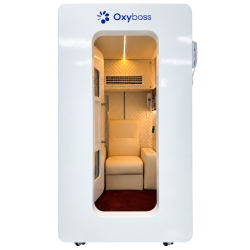
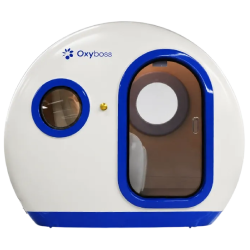
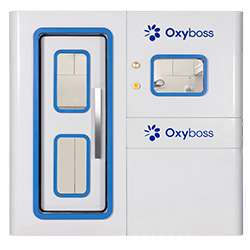
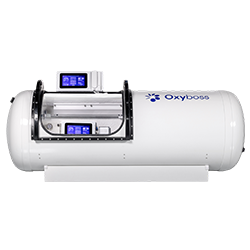
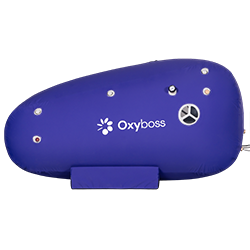
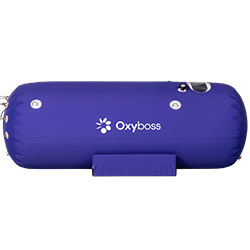
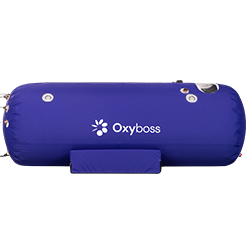
1.5 ATA Hyperbaric Chambers for Sale

1.5 ATA Hard-Shell Hyperbaric Chambers (1.1–1.5 ATA)
Six chambers. Same 1.5 ATA operating pressure as the soft-shell models, on hard-shell aluminum or steel frames that last 5–8 years. Choose a hard-shell chamber if you want a longer-lived build, an electric sofa interior, two-seat configurations, or the option to push pressure higher than the soft-shell ceiling. All hard-shell chambers run on the same 3-in-1 oxygen-and-air unit with built-in air conditioning, dual touchscreens, and 10 A breaker wiring.
1.5 ATA Soft-Shell Hyperbaric Chambers (1.1–1.5 ATA)
Three chambers. Same pressure (1.5 ATA, adjustable 1.1–1.5), same medical-grade TPU shell, same 2-in-1 oxygen-and-air unit, same dual touchscreens, same foldable mattress and pillow. Different shapes for different rooms, different bodies, different storage situations.
The 3-in-1 Oxygen-and-Air Unit
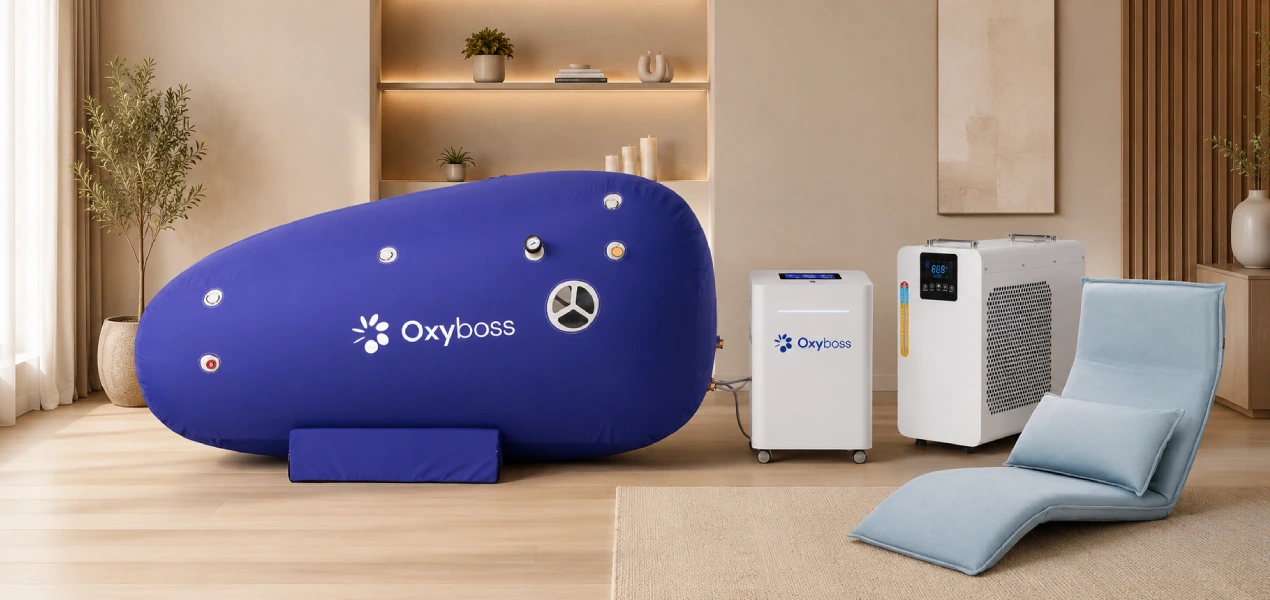
Every hard-shell Oxyboss chamber runs on a single integrated cabinet: a 10 L/min oxygen concentrator, an air compressor, and an air conditioner in one box. One power cord, one control interface, one modular connection to the chamber. Most competitors stack three separate units.
Single-cabinet integration reduces failure points.
Three systems in one enclosure means one set of wiring, one control board, fewer connection points. When service is needed, our engineers know the entire unit — it's the same cabinet across all six hard-shell models.
Built-in air conditioning keeps sessions comfortable.
Sealed metal chambers heat up 3–5°C over 60–90 minutes without active cooling. The 3-in-1 routes conditioned air into the chamber during operation. No separate room HVAC needed.
10 L/min oxygen output (20 L/min on two-seat models) sustains full-session delivery.
The concentrator delivers 90% ± 3% oxygen continuously. Molecular sieve lasts 5,000–8,000 hours; replacement costs ≈ USD 600 and swaps in 30 minutes.
Modular serviceability: swap the module, not the cabinet.
Compressor fails? We ship the compressor module. Sieve spent? We ship the sieve cartridge. AC coil leaks? We ship the coil assembly. Parts air-shipped within 3–5 days; no whole-unit replacement, no weeks-long wait.
Plug-and-play: standard wall outlet, 10 A breaker.
2200 W on standard residential wiring (220V / 240V single-phase, or 110V with rated breaker). No three-phase, no electrician unless your circuit can't support 10 A continuous. Hose extends to 5–7 m for remote placement.

Private residence (soft-shell)
A spare bedroom, a garage corner, or a dedicated room. The OB-S15T fits apartment corners; the OB-S158 and OB-S159 lie flat in any room with roughly 1.5 m × 2.5 m of clear floor. One standard wall outlet, no electrician, no plumbing. Setup is 15–30 minutes the first time, two minutes every session after that.
.webp)
Spa, salon, or wellness center (soft or hard)
Soft-shell adds a chamber as a bookable service line — standard outlet, one treatment-room footprint, no dedicated operator. Hard-shell (H201, H202, H301) suits a dedicated recovery room with a roll-in chamber, electric sofa, and built-in air conditioning.
The dual touchscreen lets the client control pressure from inside while staff monitor from outside. Back-to-back sessions work with a 20–30 minute cooldown between bookings.
Gym or sports facility (soft or hard)
Place a soft chamber in a recovery lounge — at 18–24 kg it moves between rooms if your layout changes seasonally. A hard chamber suits a permanent recovery room; the wheels with mechanical brakes let you reposition it for cleaning or layout changes.
Clinic-adjacent office or practitioner room (hard-shell, non-medical use)
Practitioners who want to offer pressurized-air sessions without entering the medical-device regulatory pathway use our hard-shell chambers as personal wellness equipment.
The H401 / H402 with the BIBS upgrade routes exhaled gas straight out of the chamber, raising per-session oxygen delivery efficiency without crossing into clinical HBOT territory. No prescription required, no FDA 510(k) needed, no medical-device registration.
Couples, families, or two-seat commercial rooms (H402, D201)
Two-seat hard-shell chambers run sessions for partners, family members, or client pairs simultaneously. The 20 L/min concentrator delivers oxygen to both masks in parallel.



Certifications And Compliance
- CE / PED — Pressure Equipment Directive 2014/68/EU, Annex III (Module H). PED certificate no. 10.07.12722, issued to Shenzhen Oxyboss Health Technology Co., Ltd. by EUROCERT S.A. (Notified Body 1128). Equipment category: III. Valid 2026-08-10 to 2029-08-09. Certificate available in English and Chinese; verifiable on the notified body's website.
- ISO 13485 — Medical Device Quality Management Systems (certificate available on request). We apply this standard to our build process even though our products are classified as personal wellness equipment, not medical devices. (ISO 13485:2016)
- ISO 9001 — General Quality Management. Certificate no. 11726Q2286R002, issued by Shanghai ICAS Certification-Assessment Co., Ltd. under the CNAS accreditation scheme.
Ready to Choose?
Soft-shell or hard-shell comes down to room, weight, and how long-lived you want the chamber. If you're relocating between rooms or the chamber has to fit a corner — start with the OB-S158 or OB-S159. If you want a fixed installation, an electric sofa, or two-seat sessions — look at the H401 or H402. All nine chambers ship DDP with a factory test report in the box. You can start sessions within hours of arrival.
Frequently Asked Questions
Clinical hyperbaric chambers are hard-shell, operate at 2.0 ATA or above, use medical-grade oxygen under physician supervision, and are used for a defined list of conditions (UHMS, HBO Therapy Indications, 15th Edition). A 1.5 ATA soft-shell chamber operates at lower pressure with air, in a non-clinical setting, without physician supervision. They are different categories of equipment.
Soft-shell: For the OB-S15T (triangle), about 1.0 m × 2.6 m. For the OB-S158 (80 cm soft lying), about 1.5 m × 2.5 m. For the OB-S159 (90 cm), about 1.6 m × 2.5 m. All measurements include the 2-in-1 unit. Add 30 cm of clearance on at least one side for ventilation and access to the emergency release valve.
Hard-shell: H201 (capsule) needs about 1.0 m × 2.5 m. H202 (square) needs 2.5 m × 2.5 m. H301 (Mini) needs 1.8 m × 1.5 m. H401 needs 2.5 m × 1.5 m. H402 and D201 (two-seat) need 2.8 m × 2.0 m. All measurements include the 3-in-1 unit (which can be placed in an adjacent technical room and connected via extended hose up to 5–7 m). Ensure 4–6 air changes per hour in the room, and a 10 A breaker with residual-current protection.
Clinical hyperbaric chambers are hard-shell, operate at 2.0 ATA or above, use medical-grade oxygen under physician supervision, and are used for a defined list of conditions (UHMS, HBO Therapy Indications, 15th Edition). A 1.5 ATA soft-shell chamber operates at lower pressure with air, in a non-clinical setting, without physician supervision. They are different categories of equipment.
Soft-shell chambers (S15T, S158, S159) are TPU, foldable, 18–24 kg, 1-year warranty, max 1.5 ATA, 2-in-1 oxygen unit (1200 W). They roll up for storage, one person can carry them, and they plug into any standard outlet. Lifespan is 3–5 years.
Hard-shell chambers (H201, H202, H301, H401, H402, D201) are aluminum or Q235 steel, 300–900 kg, 3-year warranty, 3-in-1 oxygen unit with air conditioning (2200 W, 10 A breaker required). They roll on heavy-duty wheels with mechanical brakes, lifespan is 8–10 years, and they come with optional electric sofas, BIBS upgrade, or two-seat configurations. The same 1.5 ATA operating pressure as the soft-shell line, with longer build life and more interior options.
About 7.3 psi above normal air pressure — equivalent to being roughly 16 feet underwater. You'll feel pressure on the ears and equalize by yawning or swallowing, similar to a slow airplane descent. Most users forget about the pressure within the first five minutes.
A typical session is 60 to 90 minutes at pressure, 3 to 5 times per week. Single sessions should not exceed 2 hours. Start at 1.3 ATA on your first session and work up to full pressure over the first two weeks — there's no benefit to rushing. Between back-to-back sessions, allow 20–30 minutes of cooldown.
No. The chamber is pressurized with compressed air. The 2-in-1 unit generates oxygen (90% ± 3%, 10 L/min) separately and delivers it to you through a mask. The chamber interior stays close to normal air composition. This is fundamentally different from clinical hard-shell chambers that may use higher oxygen concentrations in the ambient environment.
Soft-shell: The chamber depressurizes on its own when power is cut — air escapes through the relief system. The zipper door opens normally once pressure equalizes. Alternatively, pressure can be released manually via the manual pressure relief valve.
Hard-shell: Both inside and outside of the chamber are equipped with purely mechanical (non-electric) manual pressure-release valves. If power fails, either valve depressurizes the chamber; the door opens manually from either side after equalization.
There is no scenario in which you are locked inside — soft or hard.
Anyone with untreated pneumothorax (collapsed lung) should not use one. Talk to a licensed physician before use if you have lung disease, recent ear surgery or current ear infection, sinus congestion or sinus surgery within the past 6 months, pregnancy, a history of seizures, an implanted medical device (pacemaker, insulin pump, defibrillator), heart conditions or uncontrolled high blood pressure, or claustrophobia that would prevent staying inside for 60–90 minutes. (FDA, Hyperbaric Oxygen Therapy: Get the Facts.)
Chamber interiors are an oxygen-enriched environment during operation. No flames, no smoking, no petroleum-based skin products (water-based only), no electronics that haven't been cleared for chamber use. If anything feels wrong during a session, release pressure through the emergency exhaust valve, exit the chamber, and contact a healthcare provider. The emergency release should be tested before your first session — instructions are printed on the inside of the chamber door and in the manual. (NFPA 99, Health Care Facilities Code, Chapter 14.)
Send us a photo or video. Our engineers diagnose remotely, usually within 48 hours. If a part needs replacing, we air-ship the replacement module — not the whole unit. Warranty: 1 year on soft-shell, 3 years on hard-shell, global, uniform. Within warranty, replacement parts and shipping are free (consumables — masks, mattress, pillow, soft padding, silicone seals — are excluded). After warranty, parts are available at factory cost with continued technical support. Target turnaround: replacement part shipped within 3–5 days of confirmed diagnosis. 24/7 online technical support is standard.
Soft-shell: TPU shell, zipper, valves, sensors: ≈ 3–5 years. 2-in-1 unit: ≈ 5 years; molecular sieve: 5,000–8,000 operating hours. Running cost ≈ 1.2 kWh / session (≈ 20 cents at typical U.S. residential rates, see EIA, State Electricity Profiles). Consumables: air filter kit ≈ $50 every 500–1,000 h, door seal ≈ $150 every 2 years, molecular sieve ≈ $600 at end of life.
Hard-shell: Aluminum and steel shells: 8–10 years. 3-in-1 unit (compressor + concentrator + A/C): ≈ 5 years. Running cost ≈ 2.2 kWh/h (≈ 37 cents per hour-long session). Same consumables apply; the higher-output 20 L/min concentrator on H402 and D201 has a proportionally shorter molecular-sieve interval under heavy commercial use.
Day-to-day: wipe the interior after each session, keep the zipper or door seal dry, inspect the seal, emergency valve, and mask hose every 12 months.