.svg)
%201.webp)
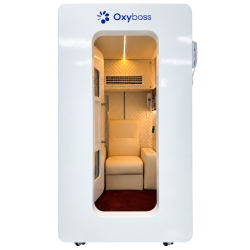
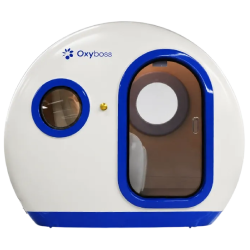
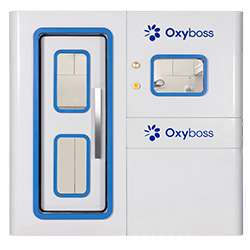
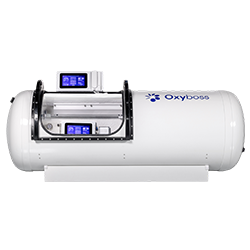
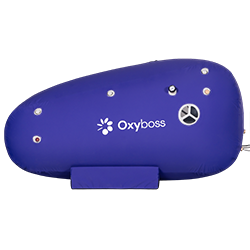
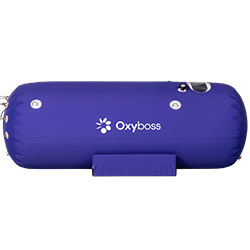
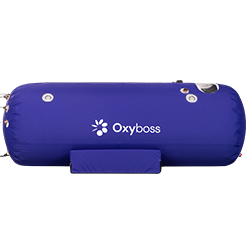
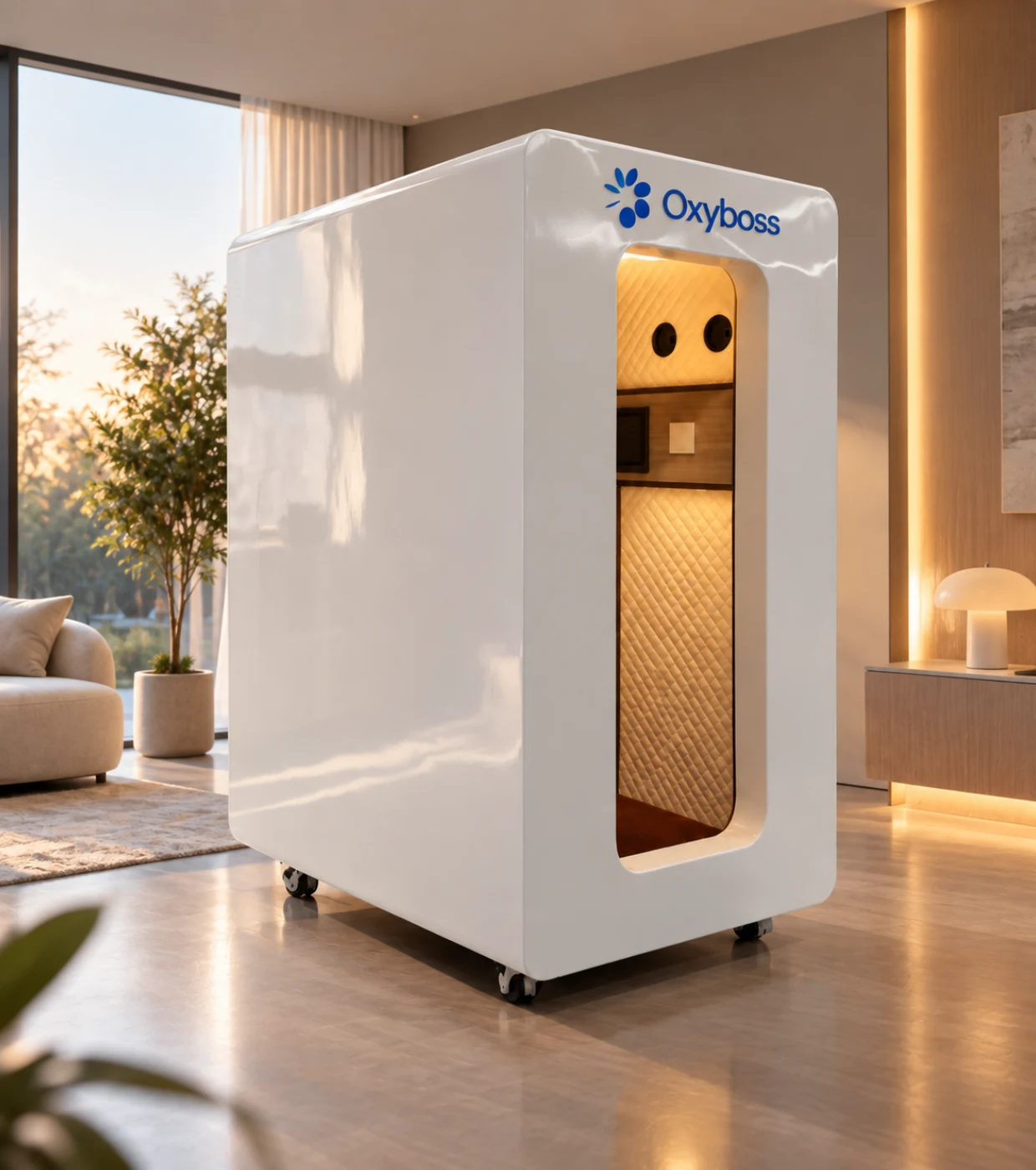
Oxyboss Hard Shell Hyperbaric Chambers
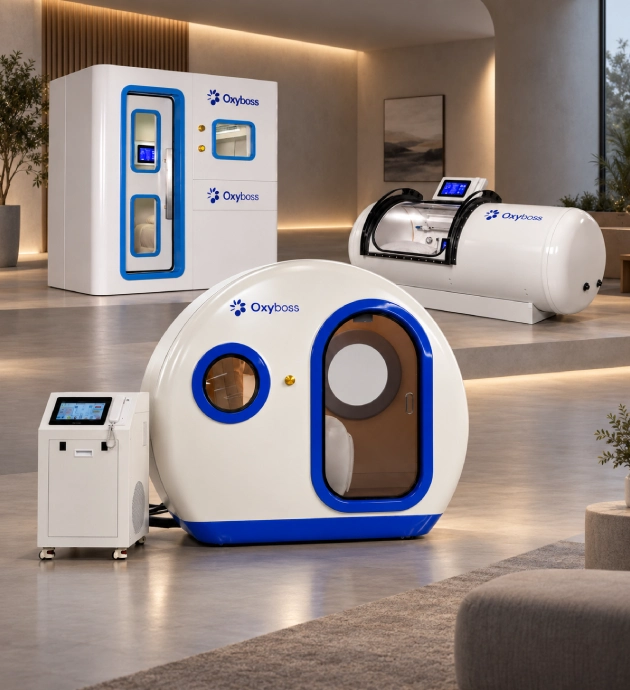
Seven hard-shell chambers — capsules, room-types, shells and a two-seat cylinder. Every one runs on the same 3-in-1 oxygen source we design and ship in-house. Pick by pressure, by space, and by who's sitting inside. We'll quote the rest.
Why Hard Shell and Where It Lands on The Pressure Ladder
Look, "hard shell" gets thrown around. Here's what it actually means in our line — and what it doesn't.
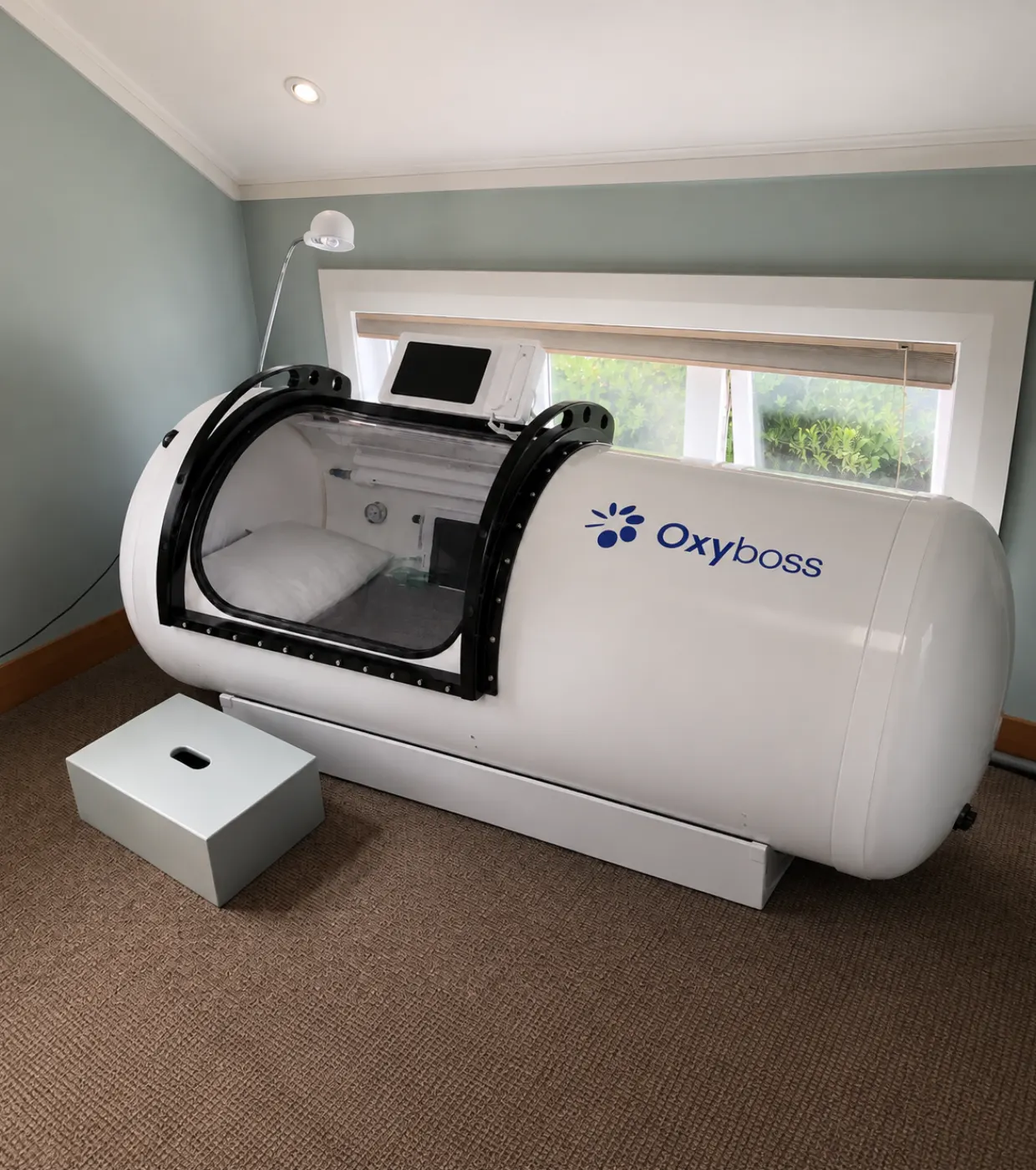
A hard shell hbot is a rigid vessel — steel or aluminum — built to hold steady pressure without depending on a zipper or fabric to keep its shape. That single fact lets it run at 1.1 to 2.0 ATA in our lineup, and deliver the oxygen output that softer chambers can't reach.
Two notes worth saying out loud:
- We're not the deepest in the market. A few competitors push to 3.0 ATA. That level sits in a different category — clinical equipment, hospital infrastructure, trained operators. For home and small-business use, 2.0 ATA is the practical ceiling, and that's where our hard-shell line lives.
- We're also not the softest. Our soft-side line is 1.5 ATA, which is above the 1.3 ATA baseline you find on most portable soft chambers on the U.S. market today. So if you've been told "soft chambers are basically toys" — not quite. Pressures and use-cases differ, and both have a job.
Soft-shell side note (with a hand-off) If you're shopping light, low-pressure, easy to fold — that's our soft line, not this page. Head to the soft-chamber collection →
.webp)
ATA = atmospheres absolute. 1 ATA is sea-level pressure. 1.5 ATA = 50% more pressure than the air around you. 2.0 ATA = double. Our hard shells run 1.1 to 2.0 ATA, adjustable per session. Soft-shell chambers in this category typically top out at 1.3–1.5 ATA.
What it doesn't tell you: pressure without oxygen is just a hard box. Pair pressure with oxygen concentration and flow, and the picture fills in.
A lot of product pages say "100% pure oxygen." We don't, and here's why.
Our integrated oxygen source delivers 90% ± 3% O₂ at 10 L/min. That's what the spec sheet says, and that's what the machine puts out. The 100%-O₂ number you see on competitor pages is — at best — what a tight clinical loop can sustain in a closed vessel.
For consumer and small-business chambers, the honest number lives between 90 and 95%. We quote the real one.
- Aluminum (capsules, shell chambers, the two-seat cylinder): lighter, easier to ship, easier to site.
- Q235 carbon steel (room-type, Mini): heavier, more rigid feel, classic industrial look.
Pick by site constraints, not by status. A 900 kg room-type chamber is a real commitment. A 300 kg aluminum capsule slides into more homes.
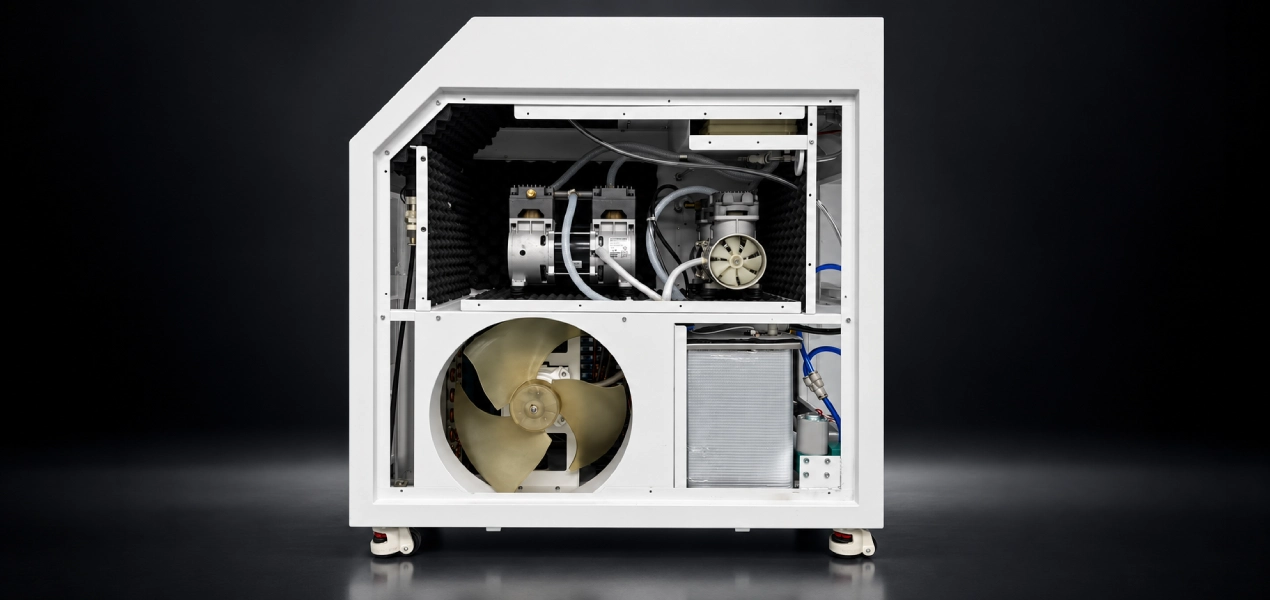
Most hard-shell chambers on the market pair with a monolithic oxygen source: one box, one fix point. Ours is modular. Three blocks — 10L concentrator, air compressor, air conditioner — wired plug-and-play. If one block fails, you swap the block. You're not shipping the whole rig back to us. Same hardware across all 10 Oxyboss models, so spares stay familiar.
Explore the Oxyboss Single Person Hard Shell Chamber
One seat at a time — capsules, room-types, single shells. When it's your hour, and the door closes, these are the chambers that fit one adult (or a parent + small child, in the larger capsules).
For your Home
- Pick by space first — measure the doorway, pick the chamber, not the other way around.
- Door-to-door shipping — the chamber arrives pre-assembled at your door. You'll arrange local help to move it into the room (a 300–900 kg chamber isn't a one-person carry). The hookup is one step: connect the oxygen source to the chamber with the supplied line.
- Warranty: 3 years on hard-shell oxygen chambers, consumables excluded.
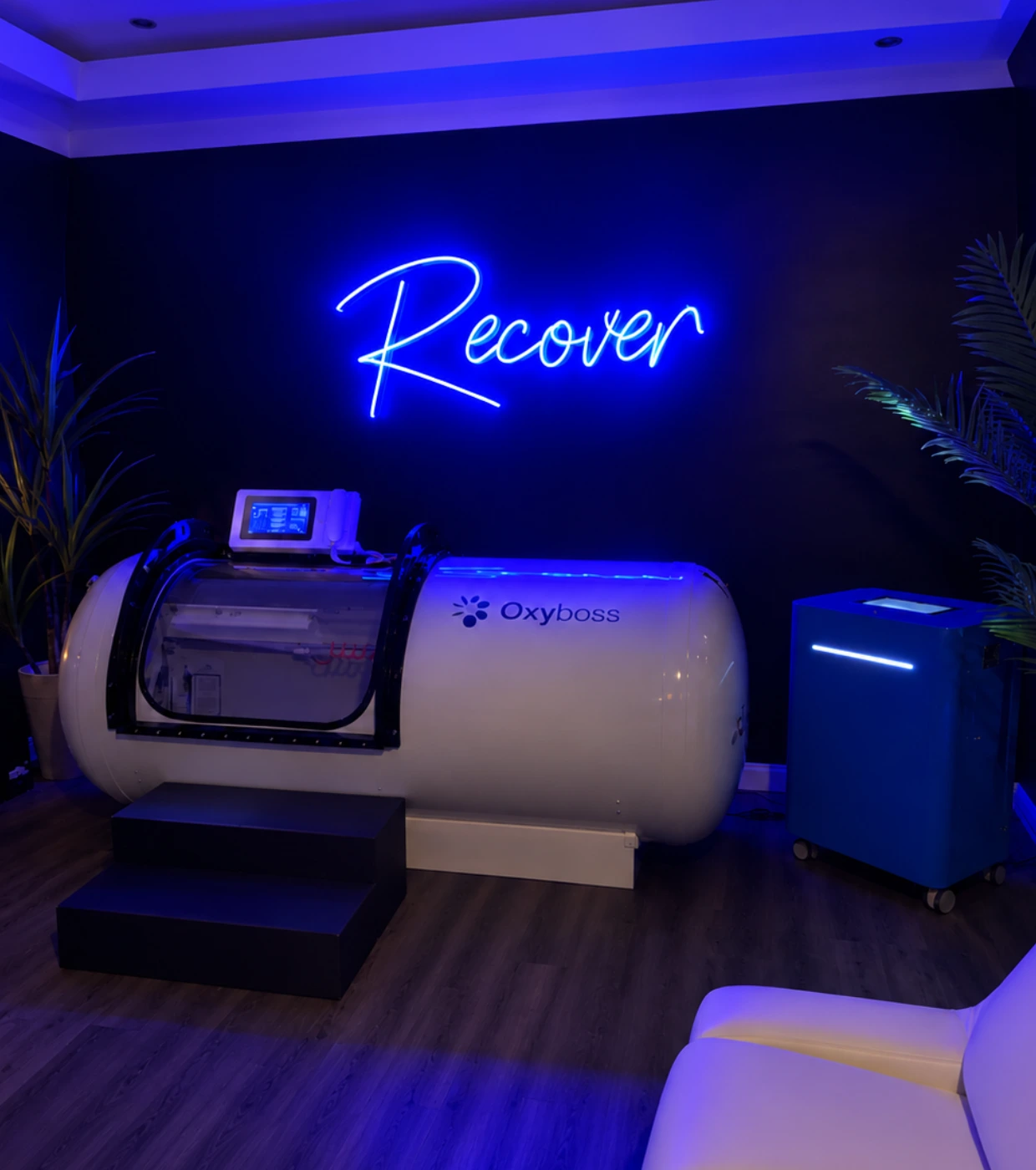
For Your Wellness Center or SPA
- Multi-seat availability (H402 / D201) lets you schedule shared sessions and use the chamber across two clients per slot.
- Modular oxygen source means a swap, not a service call — your operator downtime stays low.
- Quote-based pricing per configuration, with global shipping.
- Warranty: 3 years on hard-shell oxygen chambers, consumables excluded. Worldwide.
Applications of Hard Shell Oxygen Chambers


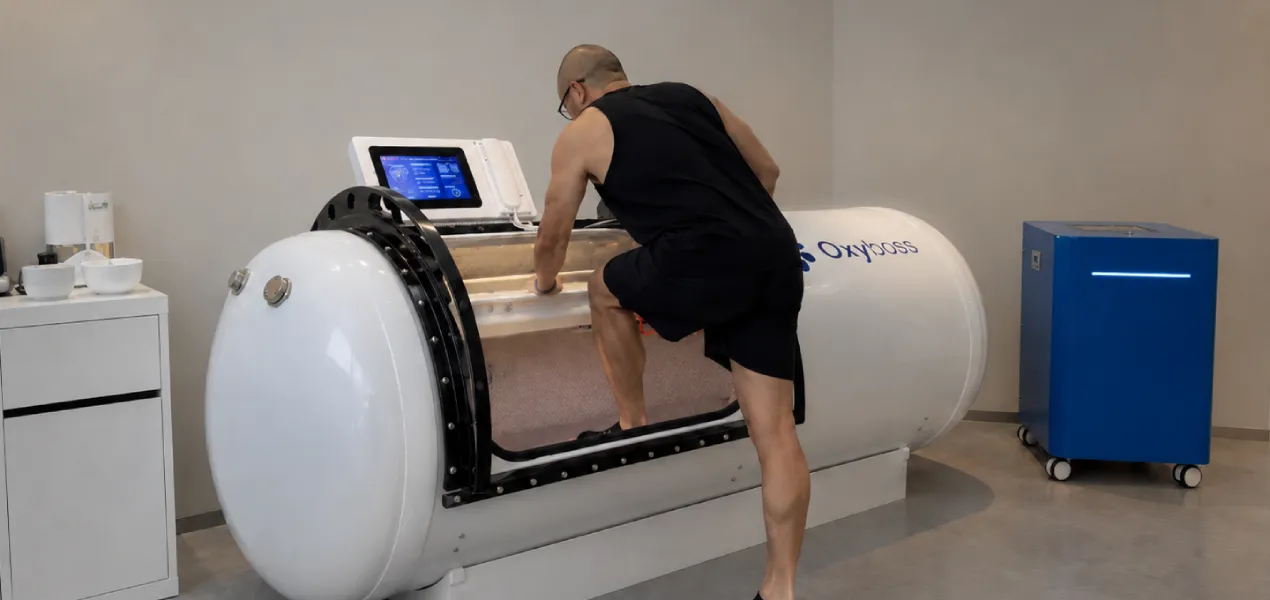




.svg)
After-Work Reset
The weeknight wind-down — a session after work, before dinner

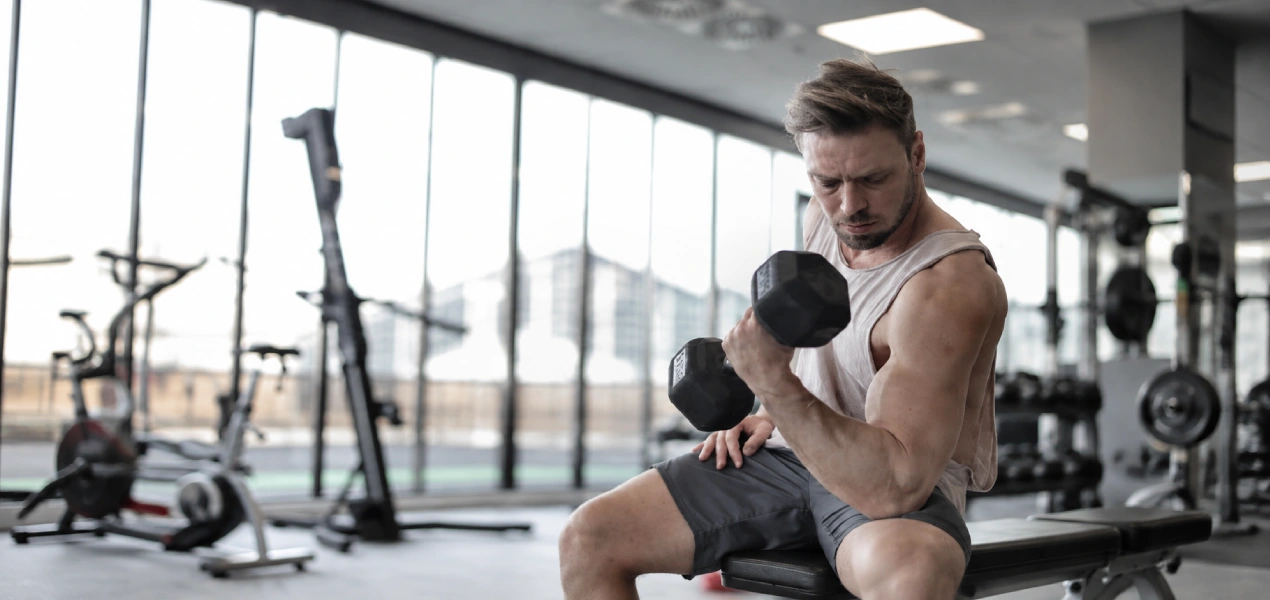
Post-Training Recovery
The training-day reset — athletes and lifters who want a deeper downtime after hard sessions

Focus & Recharge
The focus-block — book an hour, do breathing work or just sit, come out sharper

Pressure Upgrade
The "I want a real one" upgrade — moving from soft-side to higher pressure without going clinical
.svg)
Shared Relaxation
The shared wind-down — partner sessions, scheduled together, easier to keep the habit
Support Companion
The companion case — one person uses the chamber while the other sits in to support; useful if either of you is uneasy about closed spaces

Training Partners
The pair-up — athletes training partners, recovery buddies who want the same session timing
Family Time
The family entry — parents and an older child or teen sharing the same session block
Talk to a physician first
Higher-pressure hyperbaric use should be discussed with a physician, especially if you have any ongoing medical issues, are pregnant, or are on medication. This is not a sales disclaimer — it's a real step we want you to take. The U.S. FDA recommends physician involvement and treatment in an appropriately accredited facility for higher-pressure hyperbaric use.

Who shouldn't use one
Higher-pressure hyperbaric chambers aren't appropriate for everyone. Some categories of people should not use them without direct medical supervision, including but not limited to:
- people with untreated pneumothorax
- people with certain respiratory conditions
- pregnant people (without physician sign-off)
- people with implanted devices that aren't rated for the pressure class
This isn't a complete list. Your physician knows your history. Ask them. The UHMS clinical-hyperbaric definition and accepted indications explicitly exclude certain conditions; the FDA's consumer guidance echoes the same caution.

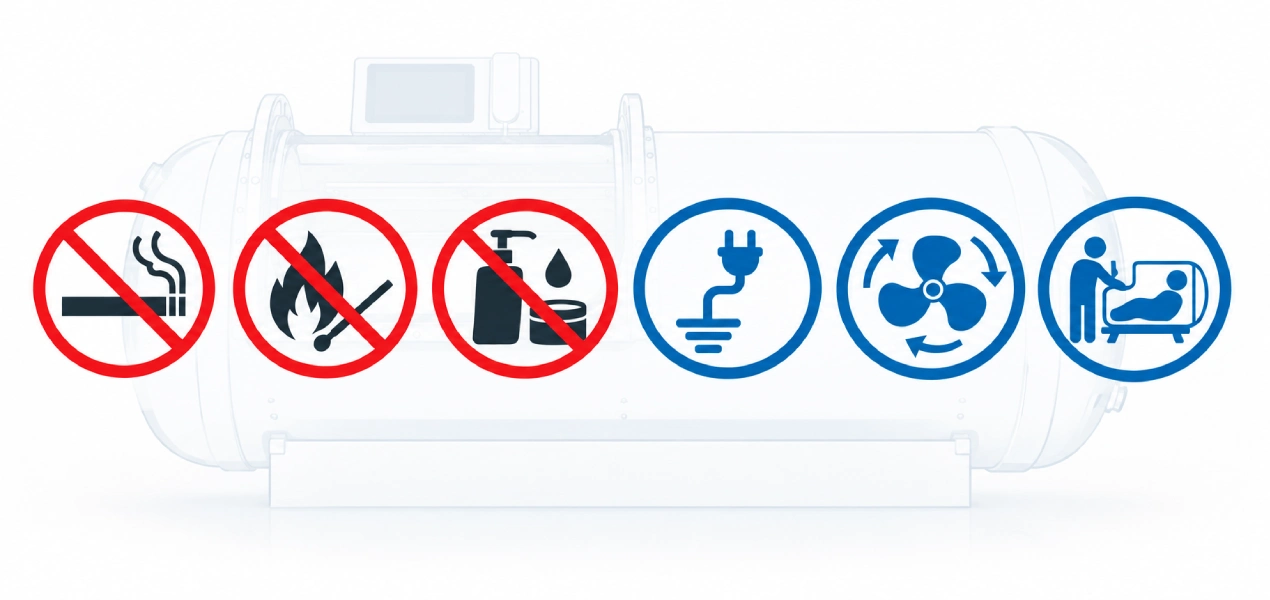
Safety basics, every time
- Oxygen-rich environment. No smoking, no open flames, no petroleum-based products (lotions, lip balms, certain fabrics) inside or within reach of the chamber.
- Grounding. The chamber must be grounded per local code. The oxygen source ships with grounding hardware.
- Ventilation. The room holding the chamber should have normal ventilation. Don't seal the chamber in an airtight closet.
- Operator present. Someone should be within earshot during a session. For higher-pressure hard-shell sessions, this matters more, not less.
These are the basics the FDA's 2025 Letter to Health Care Providers on safe HBOT device use lays out.
What you'll need on-site
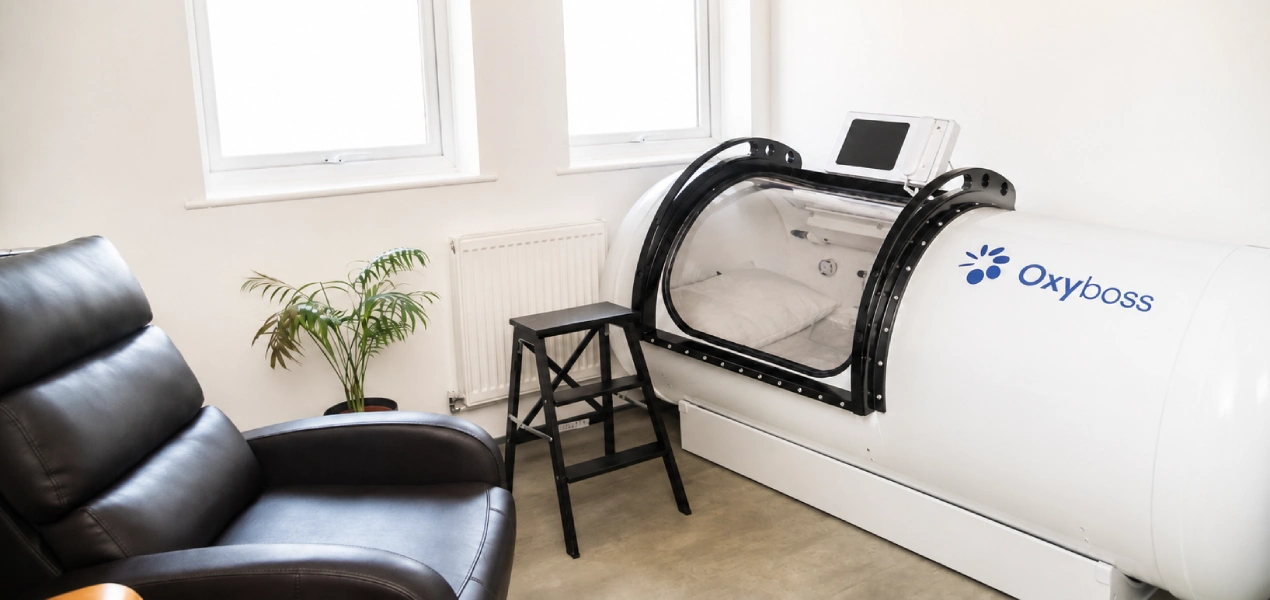
- A doorway wide enough for the chamber (see model table for dimensions)
- A floor that handles the chamber's weight at rest
- A 110V / 220V / 240V outlet (we ship the right plug for your region — tell us your country)
- A flat area for the oxygen source beside the chamber
- Ventilation, not airtight enclosure
- Local help to move the chamber into position (300–900 kg depending on model)
What's in the box
Here's everything that arrives, and here's everything you'll do:
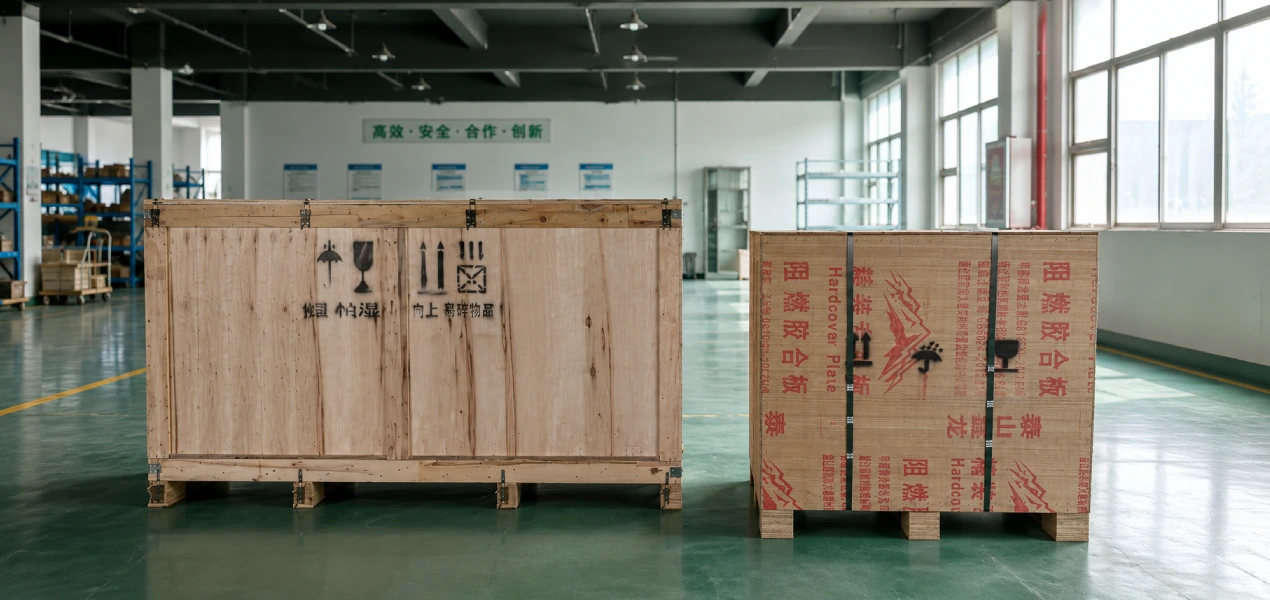
- The chamber. Pre-assembled, packaged for ocean freight.
- The 3-in-1 oxygen source. Same modular block design across the whole Oxyboss line.
- The cable. One line connects oxygen source to chamber. Plug-and-play, no special tools.
- Documentation. Spec sheet, hookup diagram, pre-session checklist, warranty terms.
- DDP shipping, door-to-door. We handle export, ocean freight, import, and last-mile to your address. 35 to 45 days to most U.S. lower-48 locations, longer for remote or special-handling zip codes.
- What we don't do: we don't install. The chamber arrives at your door; you arrange local help to move it into the room. The hookup itself is the single cable step — no technician needed.
The pricing we quote you covers the chamber, the oxygen source, the cable, DDP freight, and the warranty. No itemized surprise line-items.
Warranty & aftercare
- Hard-shell chambers: 3-year warranty, worldwide.
- Soft-shell chambers: 1-year warranty, worldwide.
- Consumables (filters, gaskets, oxygen hoses) are excluded — these are wear items.
- Modular oxygen source = modular service. A failed block is a block swap, not a full rig return. We keep spares aligned across the whole Oxyboss line.
Still Deciding?
Send us your room size and who's using it. We'll match you to a model.
Contact us, and we will provide you with a more detailed product catalog.
Soft-shell line: Browse soft-shell chambers
Frequently Asked Questions
Hard-shell means a rigid vessel (steel or aluminum). Soft-shell is fabric-based. The hard side reaches higher pressure (in our line, 1.1–2.0 ATA vs the soft side's 1.5 ATA), and holds that pressure more steadily.
Do you need hard? Depends on what you're after. Read the section above on the pressure-ladder breakdown — and if soft is the right fit, head to the soft-shell collection.
Not in this category. The UHMS defines clinical HBOT at ≥ 2.0 ATA; above that, you cross into clinical territory with infrastructure and operator requirements that don't match a home or small-business setup. Our hard shells stop at 2.0 ATA on purpose.
Look at the model table above — dimensions are there. For most U.S. homes, the standard 75–80 cm doorway fits the capsules and single shells. The two-seat shells (148–178 cm) need a wider entry — measure before you order.
For closed consumer / small-business chambers, the realistic sustained output is 90–95% O₂. Anyone quoting 100% on a consumer-grade rig is rounding up. We quote what the machine actually puts out.
In the U.S., medical-grade HBOT devices are FDA-cleared as Class II devices. Oxyboss chambers are sold as wellness and recovery devices, not as medical devices. We hold CE, ISO 13485, and ISO 9001 certifications. We don't claim FDA clearance and we don't market for medical indications. That's the honest position.
The lightest hard-shell we ship is 300 kg (H201S). The heaviest is 900 kg (H202). They're real pieces of equipment. Local help at delivery is a must. We pre-assemble in our facility so the only on-site work is the cable hookup.
For our two-seat models (H402, D201), it's a real two-occupant vessel. Same pressure curve for both seats. Egress and emergency release sized for two occupants. Some sellers use "two-person" to mean "a wider single-person lying chamber" — that's not what these are.
The lightest hard-shell we ship is 300 kg (H201S). The heaviest is 900 kg (H202). They're real pieces of equipment. Local help at delivery is a must. We pre-assemble in our facility so the only on-site work is the cable hookup.
Modular oxygen source — block swap. Chamber — warranty repair through our service network. We ship parts internationally and we keep spares aligned across the line.
Honest answer: nobody can promise a specific result. Higher-pressure hyperbaric use is widely used for general wellness and recovery, but results vary person to person, and the evidence base for many claimed benefits is still developing — see the Harvard Health write-up on evidence-based uses and unproven claims for the same point from a clinical perspective.
If you want a specific outcome, talk to a physician first — they'll be straight with you.For the clinical context, see the Mayo Clinic patient overview of hyperbaric oxygen therapy.