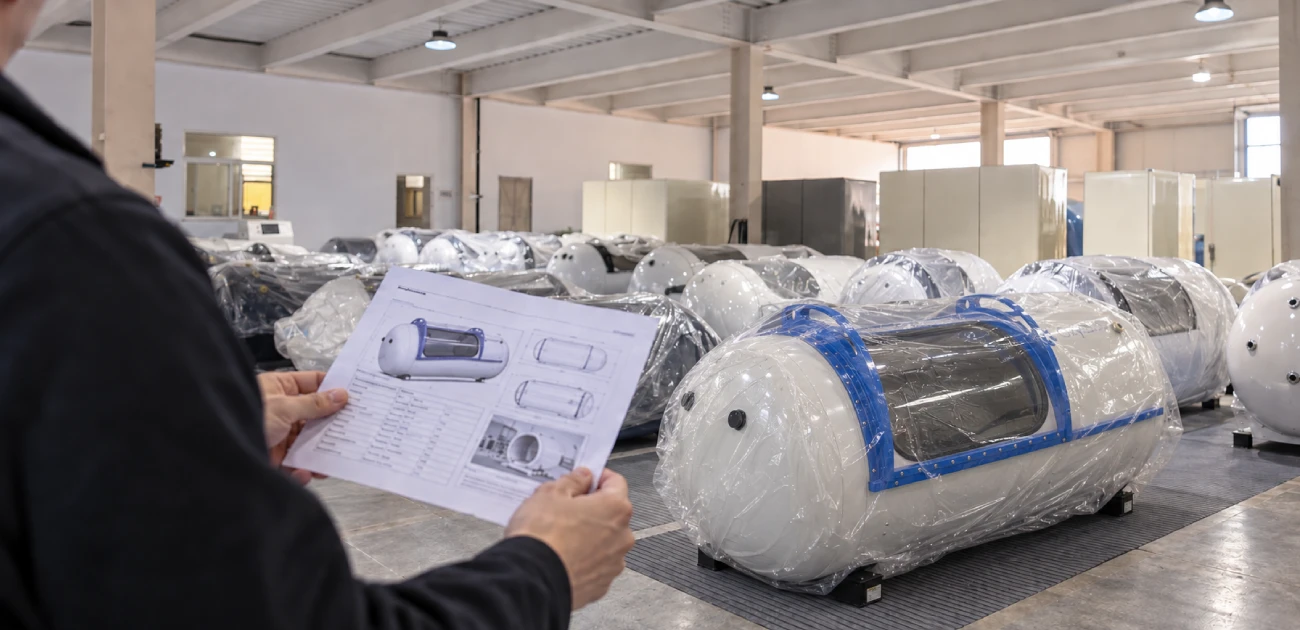
For every claim a hyperbaric chamber manufacturer makes, can you verify it yourself in five minutes? That's the question this guide answers.
Certificate numbers, pressure ratings, warranty clauses, spare parts cycles, quotation line items — anything a manufacturer puts in writing should resolve to something you can independently check. If it doesn't, the claim isn't doing its job.
Below: how to read the paperwork, what the numbers on a spec sheet actually mean, which questions to ask before the deposit clears, and how to apply this checklist to real-world examples from hyperbaric oxygen chamber manufacturers and hyperbaric chamber suppliers alike.
How to verify certifications — and why "FDA approved" is the wrong phrase
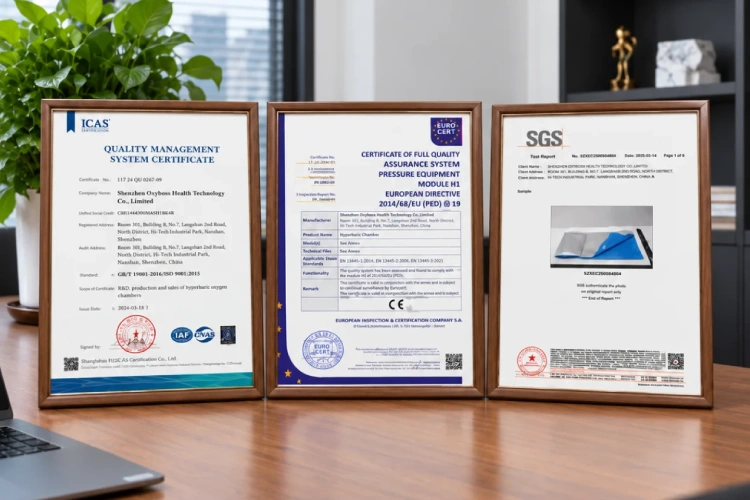
Certificate numbers, applicant entities, ISO and CE parameters — every claim should resolve to something verifiable.
FDA 510(k) clearance vs. FDA registered: three steps to check
When a hyperbaric chamber manufacturer lists "FDA" on their site, you need to know which of three FDA pathways they're referring to:
- FDA registered — the facility is registered with FDA (every importer and manufacturer must do this); doesn't mean the product itself has been reviewed
- 510(k) cleared — the specific device has been reviewed and cleared for a specific intended use (e.g., wound care, decompression sickness)
- FDA approved — reserved for high-risk devices that need pre-market approval (PMA); hyperbaric chambers for wellness use don't fall into this category
To verify 510(k) clearance yourself:
- Ask the manufacturer for the 510(k) number (formatted as K######)
- Go to FDA's 510(k) database and search by that number
- Compare the applicant name and device trade name on the certificate with what appears on the chamber's physical nameplate and your quotation
Why we don't use "FDA approved" for wellness chambers: Oxyboss chambers are wellness devices, not medical devices. We don't claim our chambers treat, diagnose, cure, or prevent any disease. Our chambers are designed for daily recovery, rest, and a calmer rhythm of life — not clinical therapy. That distinction matters, and it's why you won't see "FDA approved" or "medical-grade" on our pages. If a page tells you a chamber is "FDA approved," ask which PMA pathway — because chambers for home wellness don't need that designation.
ISO 13485, ISO 9001, CE marking: what each one actually covers
ISO 13485 — quality management system for medical devices. If a manufacturer lists ISO 13485, ask for the certificate and check:
- The scope (does it cover hyperbaric chambers specifically?)
- The issuing body (recognized certification body, not a self-declared claim)
- The expiration date (certificates expire, usually every three years)
ISO 9001 — general quality management. Broader than ISO 13485, applies to any manufacturing process. Worth having, but doesn't substitute for device-specific certification.
CE marking — required for selling in the European Economic Area (EEA). For hyperbaric chambers, the CE mark should come with a Notified Body number (a four-digit code like CE 0123). To verify:
- Ask for the CE certificate PDF
- Look for the Notified Body number
- Check the EU's Notified Body database to confirm that body is authorized for the relevant device category
Red flag: "FDA approved" / "FDA certified" / "medical-grade" applied to a wellness chamber. None of these phrases are technically accurate for a non-medical hyperbaric chamber used at home. If you see them, the manufacturer's compliance vocabulary hasn't been audited — which means the rest of the paperwork deserves the same scrutiny.
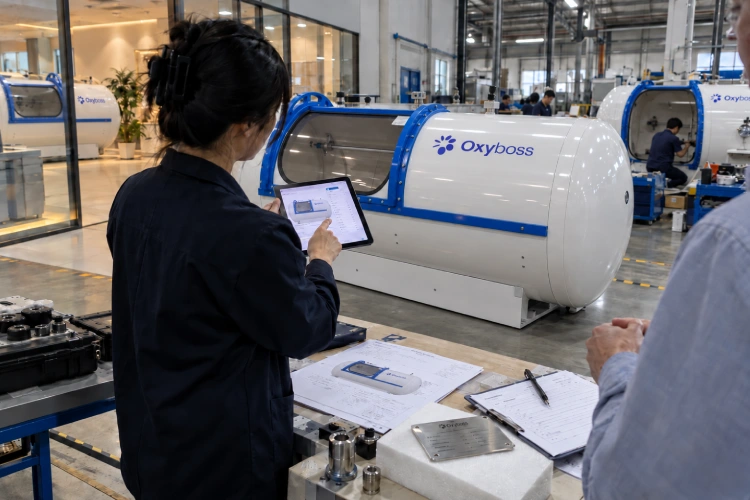
Reading a quotation like a manufacturer's accountant
Three minutes with a quote tells you more than a year of marketing material.
What a complete hyperbaric chamber quote should contain
A serious hyperbaric chamber supplier sends a line-item quote that breaks out:
- Chamber unit (model, working pressure, dimensions, weight)
- Compressor (model, flow rate, power, oil-free or not)
- Oxygen concentrator (model, LPM, oxygen purity %, required for hard-shell chambers)
- Air cooler / cooling system (for multi-place or 2.0 ATA hard-shell rooms)
- Control system (digital/analog, safety valve count, pressure gauges, custom points)
- Accessories (zippers, mattresses, intercoms, internal/external gauges, safety valves)
- Spare parts list (specific part numbers, not just "spare parts included")
- Warranty terms (parts covered, labor covered, exclusions, transferability defined)
- Shipping (Incoterm like FOB Shenzhen / EXW / DAP, weight, dimensions, crate)
- Lead time (production + shipping, separately)
- Installation (included, optional, third-party — and the third-party's credentials)
- Training (included, online, on-site)
Two questions you can expect the quote to disclose:
- Custom clearance assistance — does the supplier provide customs documentation for their EXW/FOB/CIF shipment? Do they have a logistics partner who specializes in hyperbaric chambers? Chambers over 300 kg aren't DHL-shipped from the e-commerce marketplace.
- Returns, refunds, and re-stocking costs — most manufacturers don't accept returns on custom-built chambers; if they do, what's the restocking fee and who covers return shipping for a 600 kg crate?
What's the actual warranty on a hyperbaric chamber?
A serious warranty has three layers. Most lead with the longest of the three.
- Chamber shell (the pressure vessel) — typically 3 to 5 years. This is the part that holds pressure, so it's the longest.
- Door/window/seam zippers — typically 2 to 3 years. Zippers are wear items and may have shorter coverage.
- Electronics and consumables — compressors, oxygen concentrators, valves — typically 1 year. Wear parts age faster than the shell.
The questions that distinguish a trustworthy warranty:
- Parts-only vs. parts-and-labor — does the warranty cover shipping labor? Most do not cover shipping labor, only replacement parts.
- Transferable — if you sell, resell, or gift the chamber to someone in your research books, does the warranty follow the product or stay with the original buyer? Look at the warranty card — if transferability isn't explicitly stated, the warranty likely stays with the original buyer.
- Replacement shipping time — when a part fails, how long until a replacement is shipped? Top suppliers answer in days, not weeks.
Specifications — what the numbers actually mean
When you compare chamber soft-shell chambers, the spec numbers don't get much printed. Here's what each number says:
TPU material — thermoplastic polyurethane. Medical-grade TPU is the same material used in surgical implants and catheters. A chamber spec listing "medical-grade TPU" means the raw material has a USP Class VI or ISO 10993 biocompatibility certificate. The certificate should be for the exact material grade, not a generic material safety sheet.
Working pressure 1.3 / 1.4 / 1.5 ATA — most home soft-shell chambers run at 1.3–1.5 ATA. The difference between 1.3 and 1.5 ATA is the mild hyperbaric chamber pressure during a session. Higher ATA means higher partial pressure of oxygen inside the chamber. Whether you need 1.3 vs. 1.5 depends on the brand and intended use — for wellness, both are within normal operating range.
Oxygen purity 90% / 93% ± 3% — for hard-shell chambers using oxygen concentrators, this is the purity of the air output, not the input. 93% ± 3% (i.e., 90–96%) is the industry standard for oxygen concentrators. Higher purity isn't medically necessary for wellness use.
Compressor flow rate (L/min) — for soft-shell chambers, 60–80 L/min is typical. Higher isn't always better; oversized compressors can over-pressurize the chamber faster than the relief valve can vent.
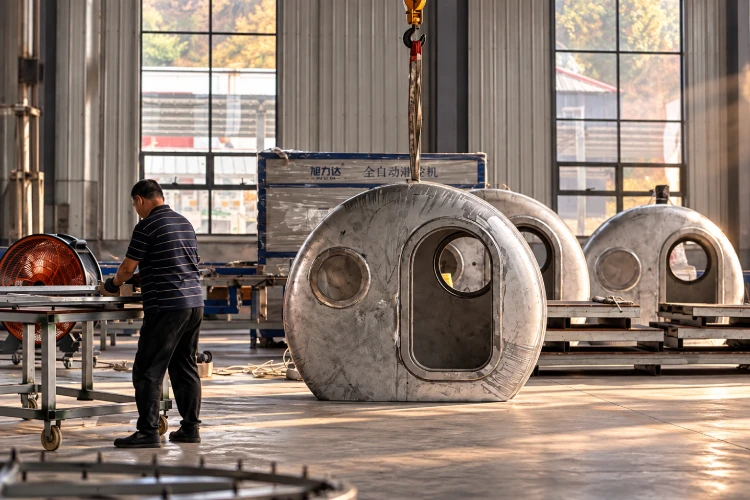
What separates manufacturers from suppliers from traders
A supplier that can be audited can sometimes be sitting in a showroom that can be audited.
- Manufacturers — design, fabricate, and assemble the chamber in their own factory. They control the supply chain.
- Suppliers / distributors — buy from one or more manufacturers and resell. They may or may not have any involvement in the design.
- Traders — trade companies that sit between buyers and manufacturers, often without owning any production capacity themselves. They're often brokers, not factories.
How to verify which one you're talking to:
- Ask for the factory address and the production video. A real manufacturer can show you their own production line, not a stock video.
- Ask for the production capacity (units per month). Real manufacturers give you a number; traders give you "we can handle any volume."
- Ask who owns the design — is it OEM (your brand on their design), ODM (their design, your brand), or original design? Original-design claims require the design patents or originals.
- Ask for a business license and a sample of the chamber in question. A real plan that can be verified on-site is more valuable than a hundred-page PDF that can be counterfeited.
Don't confuse:
- OEM (Original Equipment Manufacturer) — you own the design, the factory produces it for you.
- ODM (Original Design Manufacturer) — the factory owns the design, you put your brand on it.
- Original design — the company owns the design and the IP behind it.
Why this matters for warranty and spare parts:
OEMs and ODMs usually get spare parts from the factory directly — parts are standardized. Traders and brokers sometimes can't get spare parts when the original factory has changed design or gone out of business. The spare parts cycle for a real manufacturer's chamber is typically 7–15 days; for a transacting broker, it can be 30–60 days.
How to apply this checklist to any hyperbaric chamber manufacturer
Here's the five-minute audit you can run on any chamber manufacturer's website, brochure, or quotation.
Step 1: Google the certificate numbers
- 510(k) number → FDA database
- ISO number → certification body
- CE Notified Body → EU NANDO
Step 2: Match the certificate names to the nameplate
- Applicant name on the certificate = company on the quotation?
- Device trade name on the certificate = brand on the chamber?
- Factory address = the production video you were sent?
Step 3: Read the warranty clause line-by-line
- Shell / zippers / electronics coverage separately?
- Transferable?
- Shipping labor included?
- Replacement part turnaround time stated?
Step 4: Cross-check the spec sheet and the quote
- Model numbers consistent?
- Spec numbers consistent?
- Spare parts list on the quote matches the chamber model?
Step 5: Contact the brand directly
- Do they reply within 1 business day?
- Can they name a salesperson by name?
- Can they give you a factory tour you can audit?
- Do they have a U.S. or EU distributor you can call directly?
If any of these five steps fail, you don't have a manufacturer — you have a sales pitch. Walk away.
How Oxyboss applies this checklist — a transparent example
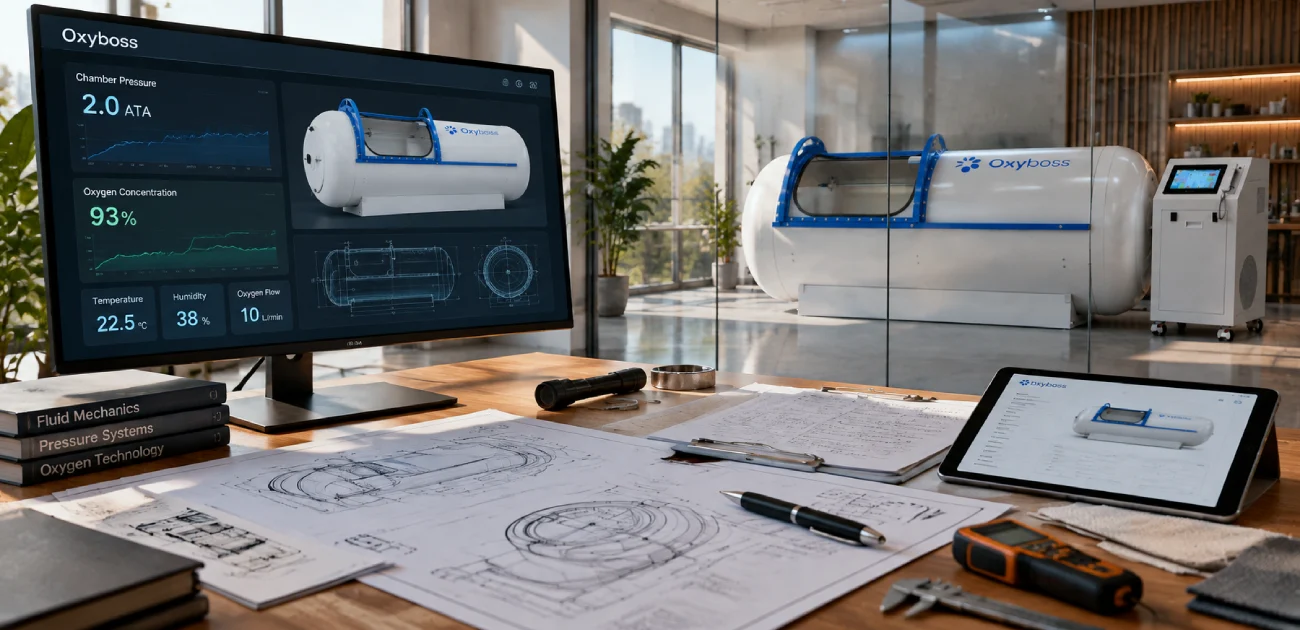
We're a hyperbaric oxygen chamber manufacturers brand with 20+ years of industry experience. Buyers in 130+ countries have run the same audit on us — here's how our paperwork checks out, and how you can verify each claim yourself.
Standards and compliance
- CE marking on hard-shell chambers shipped to the European Economic Area.
- FCC compliance for electronic control systems.
- RoHS compliance for materials.
- ISO 9001 quality management system in place at the Shenzhen factory.
- FDA establishment registration — registered as a device establishment; not 510(k) cleared, not PMA approved. We don't sell medical devices, and we don't claim to.
Why you won't see "FDA approved" or "medical efficacy" on our pages
- Oxyboss chambers are positioned as non-medical wellness devices (see the certification section above for the FDA pathway distinction).
- We never imply our chambers diagnose, treat, cure, or prevent any disease.
- Recovery claims are limited to non-medical framing such as fitness or exercise recovery.
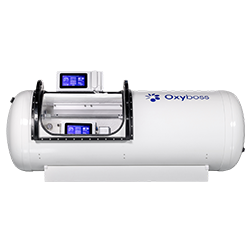
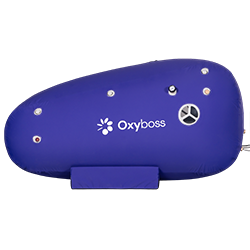
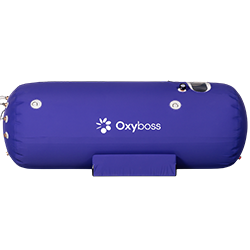
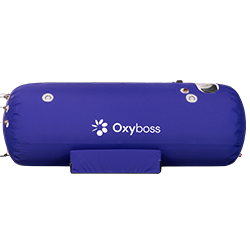
Product line (9 standard models, in 4 series)
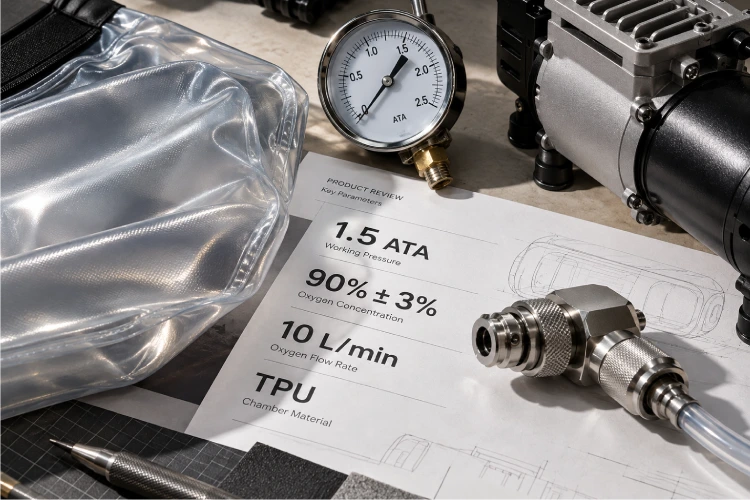
For chamber-by-chamber dimensions, weights, and standard configurations, see the Oxyboss product specification page. All 9 models use the 3-in-1 integrated oxygen source (10 L/min O₂ output, 90% ± 3% purity, 2,200 W rated power, 110V / 220V / 240V), with internal and external synchronized touch control screens and a fully modular plug-and-play cabling architecture. Standard export plugs across all voltage standards.
Warranty (Oxyboss standard terms)
- Three-year warranty on both the chamber body and the oxygen source.
- Within the warranty period, for quality or manufacturing issues, we provide remote diagnosis, video guidance, repair instructions, replacement parts, and technical documents.
- Exclusions — the warranty does not cover: misuse, accidental damage, unauthorized disassembly or repair, failure to follow the maintenance manual, shipping damage, consumable wear, or force majeure.
- After-sales reach — dedicated after-sales team reachable across time zones via phone, email, and video; most issues resolved through remote video troubleshooting. Modular architecture means most repairs are simple component replacement.
Lead time and pricing
- Lead times depend on model, configuration, and destination. The Oxyboss business team confirms lead times in each formal quotation — don't accept a generic "30 days" answer.
- Prices are not listed in this guide; request a current quotation from the Oxyboss sales team.
How to reach Oxyboss
- Pre-purchase consultation: reply within 1 business day, with a named salesperson assigned to your account.
- Factory tour: on-site visit to the Shenzhen production line is welcomed on appointment.
- Modular design across all 9 models means most spare parts ship within days, not weeks.
What to ask before the deposit clears
What separates a real hyperbaric chamber supplier from a manufacturer who hasn't been audited? Show up at the negotiation table with these questions, and you'll know within minutes.
Certifications:
- May I see the FDA 510(k) number, if you have one?
- May I see the ISO 13485 certificate and expiration date?
- May I see the CE certificate with the Notified Body number?
- Does your company own a factory production video I can audit?
Warranty: 5. Is the warranty soft-shell parts and labor? 6. Is the warranty transferable if I sell or gift the chamber? 7. Replacement parts turnaround in days, not weeks?
Sourcing: 8. Do you own the design or are you ODM? 9. Can I see the factory production line in person or on video? 10. Can I see the business license and sample production capacity per month?
Sales process: 12. Can I get a named salesperson assigned to my account? 13. Can I get a factory tour booked? 14. Can I see the verified brand assets (logo, domain, social media, credit line)?
If a supplier balks, your commission is over. Walk away.
FAQ
When does "manufacturer" vs "supplier" matter most in practice?
It matters most after you sign the purchase order. A direct manufacturer can troubleshoot a chamber problem against their own build records and ship a matching replacement part in days. A supplier has to route the same problem to the factory and wait for their reply. Use the label to plan your after-sales expectations, not just your up-front pricing.
When does "FDA approved" really matter?
It only matters if you're buying a chamber for clinical use under U.S. medical direction. For home or commercial wellness use, "FDA approved" is the wrong phrase — and a manufacturer who uses it is signaling that they don't understand their own compliance position. See the certification section above for the three actual FDA pathways.
When does the warranty clause actually get tested?
Three moments: (a) the part fails in the first 90 days; (b) the part fails near the warranty boundary; (c) the chamber is resold or gifted. The warranty text is rarely re-read before the first failure. Re-read it now and you'll know whether shipping labor, transferable coverage, and replacement-part turnaround are actually written down.
When does the chamber pressure rating (1.3 vs 1.5 vs 2.0 ATA) actually matter?
It matters when you compare soft-shell to hard-shell. Soft-shell chambers top out at 1.5 ATA; hard-shell chambers can reach 2.0 ATA. If a supplier says "2.0 ATA" for a soft-shell chamber, they're misreading their own spec sheet. The right ATA for you is the one your intended use calls for — both ranges are within normal operating range for wellness use.
How long does a hyperbaric chamber actually last?
A well-maintained soft-shell chamber typically lasts 5–10 years with proper care (cleaning, zipper maintenance, leak testing). A hard-shell chamber typically lasts 15–20 years. The lifespan depends on use frequency, maintenance, and the quality of the original materials. The chamber warranty tells you how long the manufacturer expects the shell to last — anything under 3 years on shell coverage is a red flag.
When can you actually customize a chamber?
Customization is a function of order volume and the manufacturer's design pipeline. Small orders (≤5 units) get surface customization only: color, logo, control-panel branding. Mid orders (≥50 units) may unlock chamber color, branding, and accessory bundling. Original-design customization (e.g., new dimensions or new control logic) is reserved for OEM/ODM contracts at hundreds of units. Ask for the customization fee schedule in writing before the deposit.
When should you walk away from a supplier?
Any one of these: (a) they refuse to name the certificate-issuing bodies; (b) the production video is a stock clip, not their own line; (d) the warranty clause is verbal, not written; (e) replacement-part turnaround is "we'll see" rather than a stated number of days. One of these is a negotiation. Two is a pattern. Three is a different supplier.
Sources
- FDA 510(k) Premarket Notification database — official U.S. government source for cleared devices
- FDA Establishment Registration & Device Listing — explains the difference between registered, cleared, and approved
- ISO 13485:2016 Medical Devices Quality Management — official standard for device quality systems
- ISO 9001:2015 Quality Management — general quality system standard
- EU NANDO database for Notified Bodies — official EU source for verifying CE marks
- ASME PVHO-1 Safety Standard for Pressure Vessels for Human Occupancy — the gold standard for chamber pressure vessel safety
- NFPA 99: Health Care Facilities Code — covers hyperbaric facility requirements, oxygen piping, and fire safety for chamber rooms
- Undersea and Hyperbaric Medical Society (UHMS) — clinical hyperbaric guidelines and safety best practices