.svg)
%201.webp)
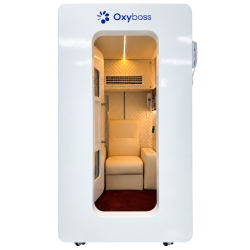
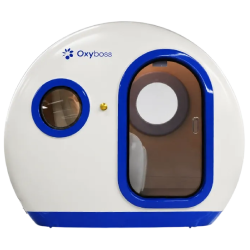
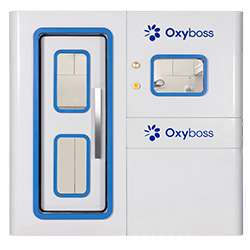
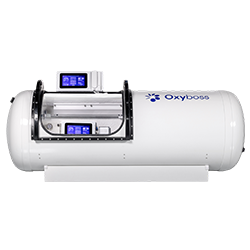
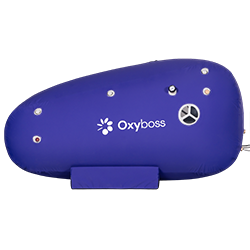
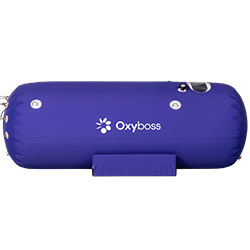
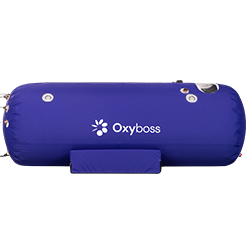
Lying Type Hyperbaric Oxygen Chamber
Four Oxyboss models designed for the way you actually use a chamber — lying flat. Choose from a soft triangle for first-time buyers, two wider soft beds for tall or broad users, or a hard aluminum capsule for daily, high-pressure sessions up to 2.0 ATA. Every unit ships with an integrated 90% ± 3% oxygen source, dual synchronized touch screens, and plug-and-play setup in a regular 10 A outlet.
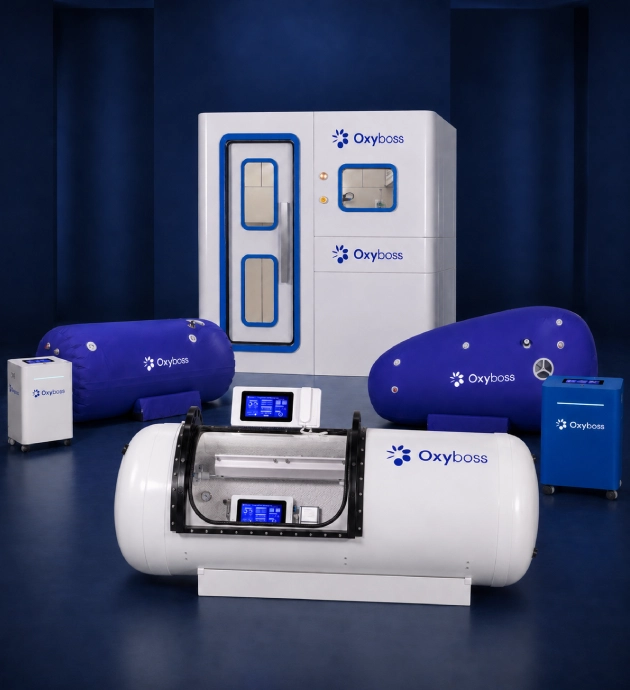
Lying Type Hyperbaric Sleeping Chambers
Eight models, two pressure families, one oxygen platform. The 1.5 ATA soft line covers home buyers who want the lowest entry price and a foldable cabin. The 2.0 ATA hard line covers buyers who want higher pressure, a metal shell, and a 3-year warranty. Pick the family first, then the size — every chamber on this page is in stock, every chamber ships DDP to the US and EU, every chamber comes with a pre-shipment test video you can verify on the actual production line.
Core Performance and Technical Advantages
Four engineering choices that show up the moment you turn the unit on.


.svg)
1.1–2.0 ATA fully adjustable pressure range
Soft units cover 1.1–1.5 ATA and the OB-H201 reaches the soft-shell ceiling of 2.0 ATA — both ranges cover everything from a first-week 1.3 ATA acclimation session to a daily high-pressure routine, with no manual reconfiguration of hardware. Pressure ramp times are roughly 5 minutes to 1.3 ATA, 10–12 minutes to 1.5 ATA, and 20–25 minutes to 2.0 ATA, depending on chamber size.

Same-mask steady 90% ± 3% O₂ delivery
Every Oxyboss unit ships with a 10 L oxygen concentrator calibrated to keep the mask-side reading inside a 6-point band. The cabin itself is pressurized with compressed air, not oxygen — the cabin atmosphere stays near normal-air oxygen levels, which keeps the fire-load profile the same as a normal room. (For the safety rationale behind air-pressurize-plus-mask oxygen, see the FDA HBOT safety communication to health care providers, August 25, 2025.)

Synchronized internal and external touch screens
Both screens mirror in real time, so the operator outside the cabin sees the same numbers the user inside sees. The 10-inch interface supports English, Mandarin, and the language set you need for your local market on request. No mobile app or internet connection is required for operation — the chamber runs as a standalone device.

Plug-and-play cabling on every chamber
Each chamber leaves the factory pre-assembled; on arrival you connect the chamber to the 3-in-1 (or 2-in-1) source with the labeled cables, run a self-check on the touch screen, and the unit is ready. No electrician, no on-site installation service. The OB-H201 supports up to 5–7 m of high-pressure hose between chamber and source if you need to put the noisy compressor in a separate utility closet.
The 3-in-1 Integrated Oxygen Source
One cabinet replaces three separate pieces of equipment.
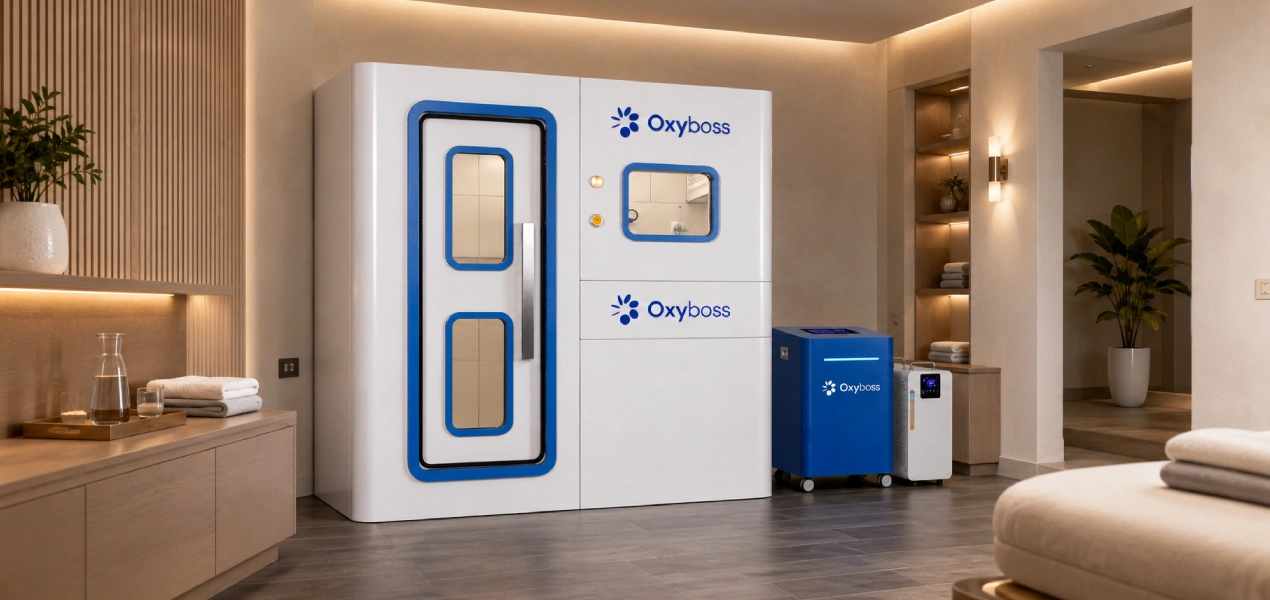
The 3-in-1 source (10 L oxygen concentrator + air compressor + air conditioner in a single 130 kg cabinet) is standard on every hard-shell Oxyboss unit, including the OB-H201. The 2-in-1 variant (concentrator + compressor, no air conditioner) is standard on the soft-shell series. Both are fully modular — every sub-assembly can be swapped on its own, without returning the whole unit.
- Fewer failure points, faster fixes. When something goes wrong, the engineer identifies which of the four modules (oxygen, pressurization, cooling, control) is at fault, ships just that module, and you swap it in. Industry-standard repair practice splits the same work across three separate service visits.
- Cabin temperature stays in a usable range. Hard-shell sessions at 2.0 ATA run long enough that heat builds up without active cooling. The 3-in-1 keeps cabin temperature stable for sessions of up to the recommended 2-hour cap.
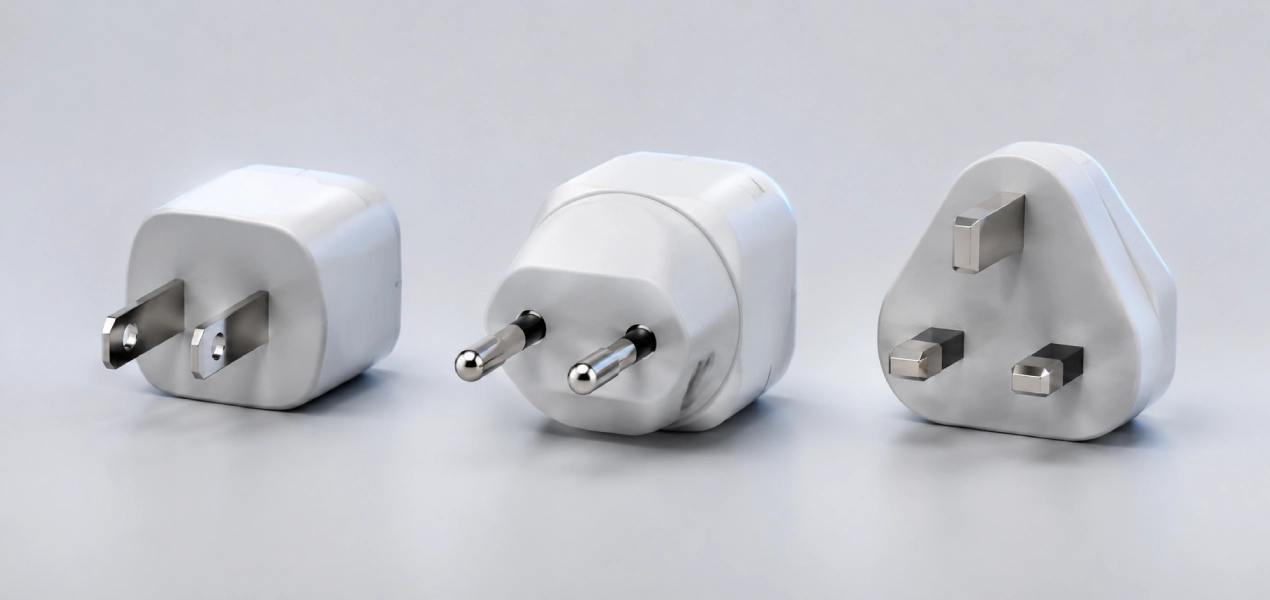
- Standard 10 A residential circuit is enough. At 2,200 W the source draws about 10 A, so a normal 110 V / 220 V / 240 V household circuit with a 10 A breaker and residual-current device covers the load — no dedicated industrial wiring required.

Materials, Build & Why They Matter
Material choices are about longevity and repairability, not marketing copy.
Home recovery routines
Users with demanding training schedules run 1.5 ATA sessions in the late afternoon, 60–90 minutes each, with 20–30 minutes between sessions if they back-to-back. The supine posture is what makes a session this long sustainable.

Wellness studios and boutique recovery centers
Studios add a lying chamber to a recovery room next to cold plunges and saunas. The OB-H201 supports a daily session count well above the soft-shell limit because of its active cabin cooling and aluminum shell.

Corporate wellness rooms
A 1.5 ATA soft chamber fits in a converted office with a 10 A outlet and a 4–6 ACH ventilation rate. Setup is half a day.

Senior living and post-acute wellness
Users who can't tolerate sitting for 90 minutes benefit from the supine posture. Caregiver monitoring is easier with the synchronized internal and external touch screens.

Athletes on the road
The OB-S15T (24 kg chamber body, total pack-out about 140 kg with the air conditioner) travels in a sports-team truck. One person can set it up.
Home-office power naps
Hard-shell chambers support overnight stays when properly supervised; soft-shell chambers do not.
From Inquiry to First Session
Five steps. One contact. Same engineer on email.
- Send your room dimensions and a power outlet photo. A tape measure, a doorway width, an elevator depth, and a quick snap of the outlet. We confirm fit within one business day.
- Get a written quote with shipping terms. DDP (Delivered Duty Paid) door-to-door: we handle transport, customs clearance, and import duty. You don't pay the carrier twice. Soft-shell shipping quote can include transport; hard-shell shipping is usually quoted separately because of weight.
- Place the order with a 50% deposit. Production lead time is about 7 working days for soft-shell units and 15–20 working days for the OB-H201. Balance is due after our factory acceptance test and before shipment.
- Receive the chamber, plug it in, run the self-check. The chamber ships pre-assembled. Connect the labeled cables, run the touch-screen self-check, and you're ready. A 1-on-1 video training session is included, and you get a training certificate at the end.
- Ongoing support from a real engineer. Warranty is 1 year on soft-shell units and 3 years on the OB-H201. Non-consumable replacement parts are free in-warranty, and we cover air freight. A 24/7 remote-engineer channel handles troubleshooting; parts typically leave our Shenzhen warehouse within 3–5 days of fault confirmation.
What We Have, What We Don't
What we hold
- CE / PED under European Pressure Equipment Directive 2014/68/EU. Certificate number 10.07.12722, issued by Notified Body EUROCERT S.A. (NB 1128), maximum pressure equipment category III, valid through 2029-08-09.
- ISO 9001 quality management. Certificate 11726Q2286R002, issued by Shanghai ICAS Certification, with CNAS recognition.
- ISO 13485 medical-device quality management. Held for the manufacturing process.
- Pressure vessel engineering aligned with ASME PVHO-1 family of standards. We describe the alignment as "designed to" the standard family; we do not claim certification by ASME.
Safety baseline for every chamber we ship
- Dual mechanical manual depressurization valves (inside and outside the cabin) that operate without power.
- Continuous cabin O₂ monitoring with a 24% alarm threshold and automatic supply shutoff on over-limit.
- CO₂ monitoring referenced to NFPA 99 / ASME-PVHO limits (typically 2,500–5,000 ppm).
- Pressure vessels tested for pressure-hold and leak-check at the factory before shipment.
- Oxygen concentration calibrated to 90% ± 3% at the mask outlet.
- Three-voltage (110 V / 220 V / 240 V) power-on verification at the factory.
- Internal and external touch-screen synchronization tested before shipment.
Reference: the FDA HBOT safety communication to health care providers, August 25, 2025 lists the failure modes we design against.
Ready to Choose Your Lying Type Hyperbaric Chamber?
Three ways to move from this page to a session.
- Tell us your room dimensions and pick a model. Send a doorway measurement, an elevator depth, and a power outlet photo. We'll confirm fit and email a written quote within one business day. Most soft-shell buyers are answered the same day.
- Book a 30-minute video walk-through. We'll show you a real OB-S158, OB-S159, and OB-H201 in operation, including pressurization, mask-side oxygen reading, and depressurization. No script, just the hardware.
- Talk to a distributor in your region. If you're outside our direct-shipping regions, we'll connect you with an authorized local distributor who carries stock and can demonstrate the unit in person.
Frequently Asked Questions
A clinical HBOT chamber delivers near-100% medical oxygen at 2.0 ATA or higher under physician supervision for FDA-recognized indications such as decompression sickness or carbon monoxide poisoning — see the Cleveland Clinic HBOT page. Oxyboss units are personal wellness devices. The OB-H201 reaches 2.0 ATA, but it uses cabin air pressurization plus a 90% ± 3% mask-side oxygen feed, not medical-grade oxygen. It does not diagnose, treat, or replace medical care.
Hard-shell only, and only as a supervised nap. The OB-H201 auto-depressurizes at the end of a session and leaves the door slightly ajar for fresh-air exchange. Soft-shell units (OB-S15T, OB-S158, OB-S159) require you to manually open the zipper after the cycle — if you don't, CO₂ builds up inside. So the rule is: soft-shell, no sleeping; hard-shell, supervised rest only, no unattended overnight use.
One session should not exceed 2 hours. Between sessions, rest 20–30 minutes. There is no fixed daily session cap — the limit is the oxygen source's duty cycle, not the chamber itself. A weekly rhythm of 5 sessions at 60–90 minutes each is a common starting point for home users.
No. Every Oxyboss unit ships with an integrated oxygen concentrator that pulls in room air and outputs 90% ± 3% oxygen through your mask. No external tank, no refill schedule.
Soft-shell units carry a 1-year warranty; the OB-H201 carries a 3-year warranty. Non-consumable parts are replaced free in-warranty, including air freight. Outside warranty, replacement parts remain available at factory cost, with continued remote engineering support. Consumables budget at roughly USD 50 per filter cycle, USD 150 per door seal change, and USD 600 per molecular-sieve change — well under USD 100 per month for a typical home user.
Talk to your physician first. Absolute contraindications include untreated pneumothorax and uncontrolled fever; relative contraindications include seizure history, active ear or sinus infection, pregnancy, COPD, and insulin-dependent diabetes (low-blood-sugar risk during sessions). Children can use the chamber under adult supervision starting at pressures of 1.3 ATA or lower, provided they can clear their ears and have no nasal congestion. Don't use the chamber after drinking alcohol until fully sober.
A clinical HBOT chamber delivers near-100% medical oxygen at 2.0 ATA or higher under physician supervision for FDA-recognized indications such as decompression sickness or carbon monoxide poisoning — see the Cleveland Clinic HBOT page. Oxyboss units are personal wellness devices. The OB-H201 reaches 2.0 ATA, but it uses cabin air pressurization plus a 90% ± 3% mask-side oxygen feed, not medical-grade oxygen. It does not diagnose, treat, or replace medical care.
We work with distributors worldwide. Distributor pricing starts at 2 units. We provide 1-on-1 video training, operation manuals, and a training certificate per dealer. OEM, private label, logo, and color customization are supported at no extra charge for the chamber body; size and interior customization are quoted separately. Lead time is 7 working days for soft-shell and 15–20 working days for the OB-H201 after deposit. We can also arrange pre-shipment inspection by SGS, Bureau Veritas, or TÜV at the buyer's cost.