.svg)
%201.webp)
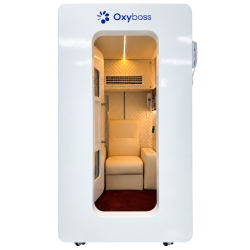
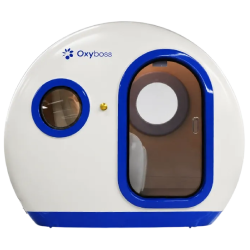
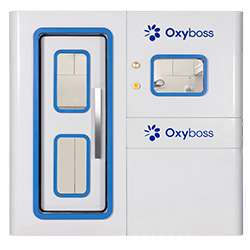
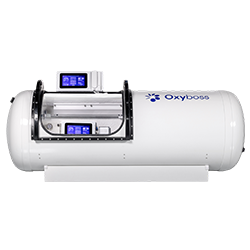
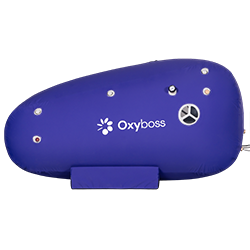
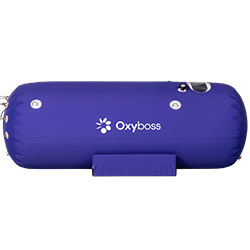
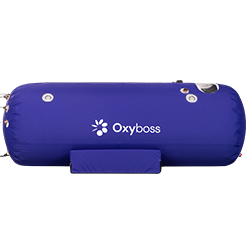
Portable Soft Hyperbaric Chamber
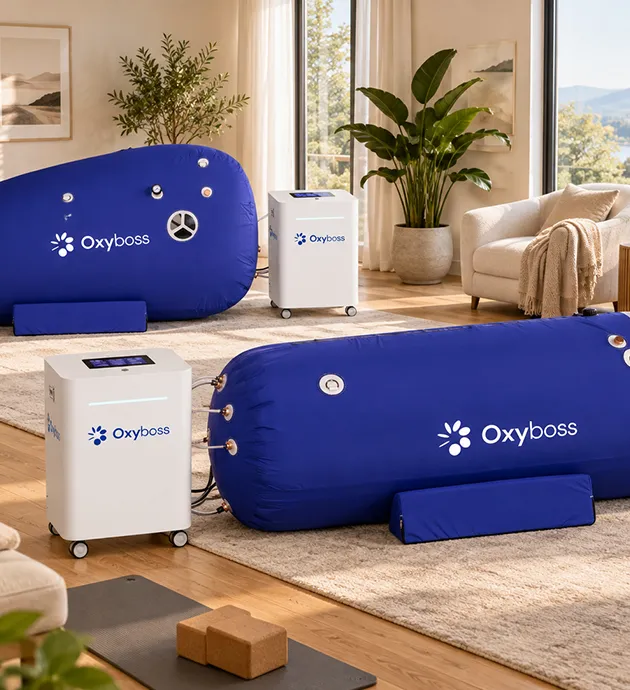
What “Portable” Means Here
A portable hbot chamber in this lineup has four fixed characteristics:
- It’s a soft-shell pressure bag made of medical-grade TPU, not a metal cylinder.
- It runs at 1.1–1.5 ATA (around 4–7.5 psi of overpressure). That’s the gentle end of the HBOT range.
- It uses the 3-in-1 oxygen source to inflate and raise oxygen levels inside.
- You plug it into a standard wall outlet and store it folded in a closet when you’re done.
What these chambers do well: give you a quiet hour in a pressurized, oxygen-enriched space. People use them for recovery, sleep quality, and general wellness.
One thing worth saying out loud: 1.5 ATA breathing 90% oxygen is not the same as a clinical 2.0–3.0 ATA session with 100% oxygen. The Undersea & Hyperbaric Medical Society (UHMS) defines a therapeutic dose as roughly 2.0 ATA breathing near-100% oxygen; below 1.4 ATA breathing air, you’re essentially breathing a slightly richer mix at sea level (UHMS Position Statement, 2017). If you’re shopping for a hospital-grade treatment, this isn’t it.
Explore the Oxyboss Portable Soft Hyperbaric Chamber
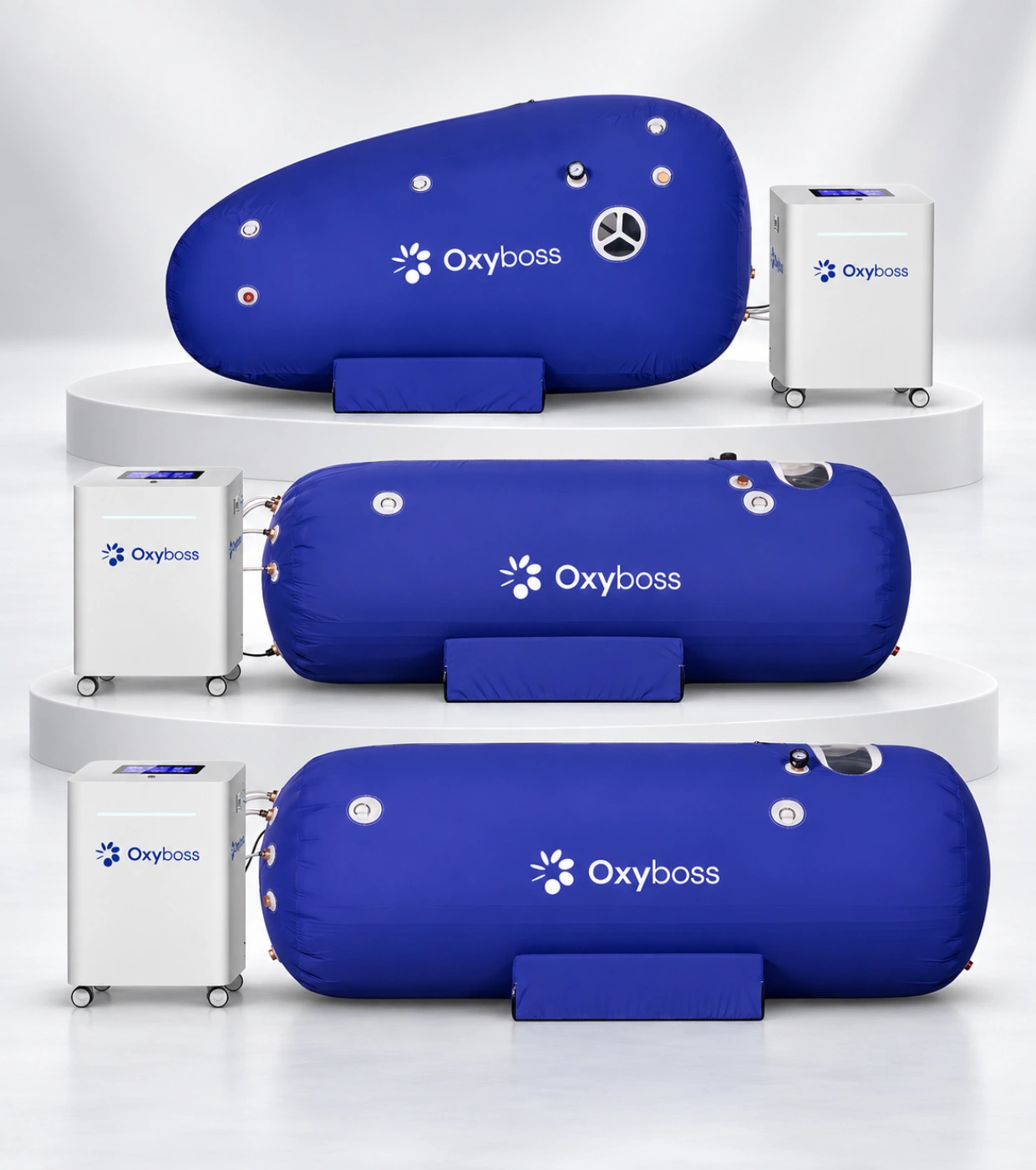
All three use medical-grade TPU. The triangle has the smallest floor footprint. The 90 cm lying gives you an extra 10 cm of shoulder and hip room, which is the difference between “comfortable” and “my shoulders touch the wall” for taller or broader users.
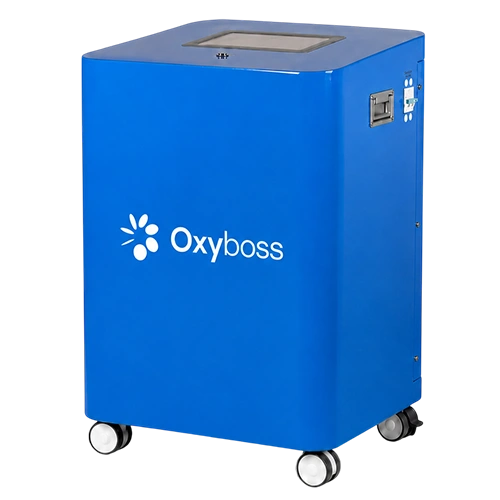
The 2-in-1 Oxygen Source is Identical for All Three
- 10 L/min oxygen flow at 90% ± 3% concentration
- 1200 W rated power, 10 A draw
- 110 V / 220 V / 240 V — works in the US, UK, EU, Australia, and most of Asia without rewiring
- 520*450*708 mm, 50 kg
- Inside + outside synchronized touch screens so you can run a session without help
What’s Standard in the Build
Every Oxyboss soft chamber comes with:
- Medical-grade TPU shell, heat-welded seams (not glued).
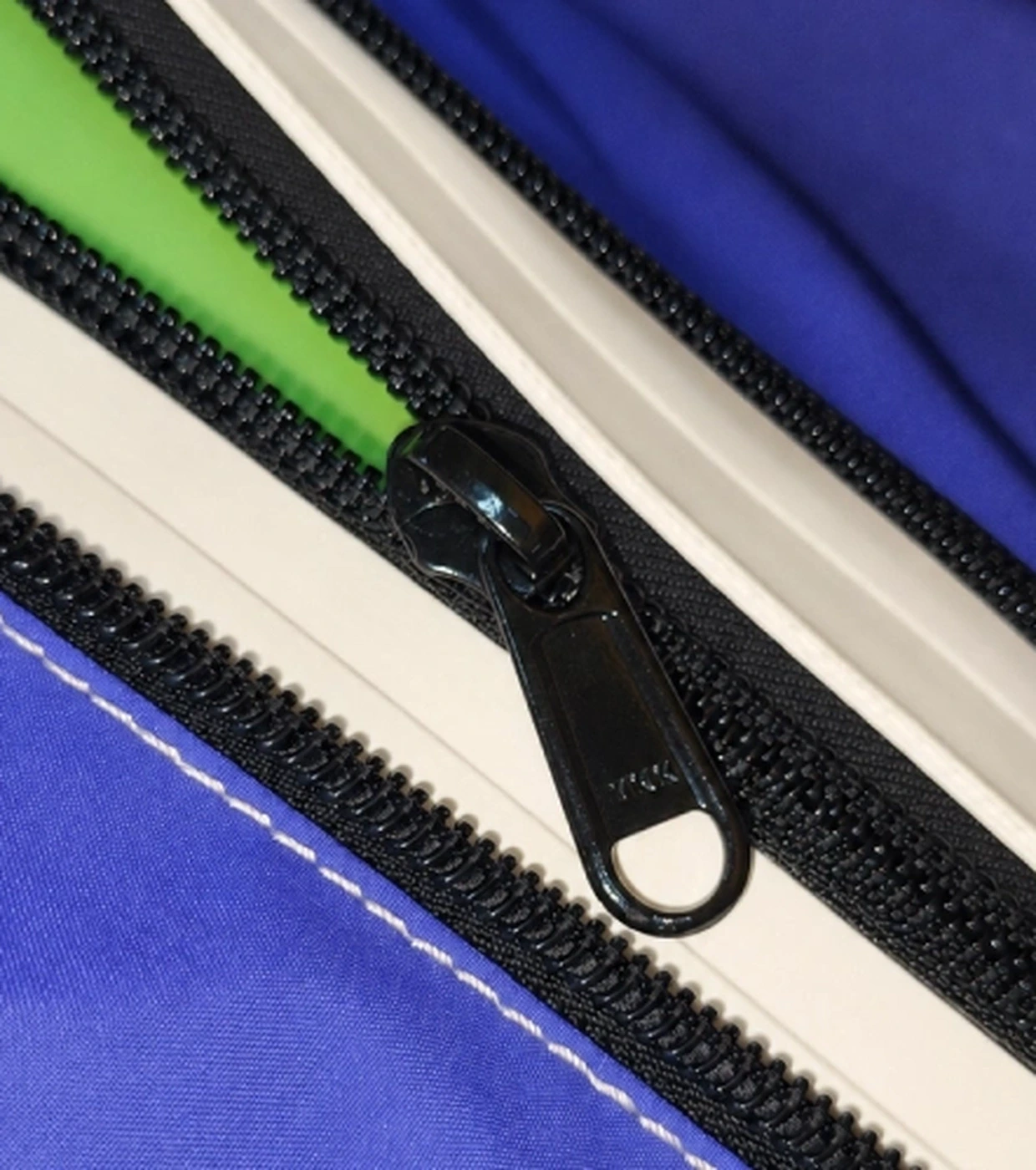
- Main zipper plus a backup zipper for redundancy.
- Soft foldable mattress and pillow.
- Oxygen mask.
- Inside + outside touch control screens synced to the 2-in-1 source.
- Emergency relief valve accessible from inside — depressurizes in roughly 30 seconds.
- CE PED 2014/68/EU (Module H, Category III), ISO 9001:2015, ISO 13485:2016 certifications on the pressure equipment.
What Goes into A Session
Here’s what happens when you actually use one.
Common side effects: ear discomfort, mild sinus squeeze, feeling light-headed for a minute after. These are normal and short-lived. Severe ear pain, sharp chest pain, or sudden vision changes — stop the session and call your doctor. (Mayo Clinic – Hyperbaric oxygen therapy)

.svg)
Setup (about 10 minutes the first time, about 3 minutes after that)
Unroll the chamber. Connect the air hose and oxygen hose from the 2-in-1 source. Plug into the wall. The compressor fills the bag in a few minutes.

Get in, zip up
You zip from the inside; the zipper is always within reach in case you want out fast.

Pressure ramp (7–12 minutes)
The compressor brings you up to your set pressure. You’ll feel ear pressure — same as landing on a plane. Yawn, swallow, or pinch-and-blow to clear your ears. If you can’t clear, stop the session.

Session (60–90 minutes typical)
You breathe normally. Read, nap, listen to a podcast. The internal screen shows pressure and session time.
Decompress (about 5 minutes)
The system vents pressure slowly. You unzip and stand up.

Make Sure Your Home Can Run One
Walk around the room you plan to use and check:
- Floor space: the chamber itself is 80–90 cm wide × 210 cm long (or 220 × 70 cm for the triangle). Plus the oxygen source, which is 930 × 450 × 920 mm. You need walking room around it.
- Ventilation: the concentrator moves air; the room should have some ventilation or a window you can crack. Compressors generate heat.
- Door clearance: the 80 and 90 lying chambers are 210 cm long. Measure your hallway and bedroom door before ordering. Yes, really.
How to Choose Between the Three
- Choose the triangle (OB-S15T) if: you sit upright to read or work, your floor space is tight (70 × 110 cm footprint), or you want the lightest bag (24 kg) to move around.
- Choose the 80 cm lying (OB-S158) if: you want to lie flat, you’re average build, and the hallway / bedroom door fits 210 cm.
- Choose the 90 cm lying (OB-S159) if: you’re tall, broad-shouldered, or you just don’t want to feel the walls.
If you’re not sure, the 80 is the safe default for most adults under about 185 cm and 95 kg. The 90 covers the rest.
What Happens If Something Goes Wrong
Soft chambers don’t break often. The zipper is the wear item. The mattress cover takes abuse. The compressor has moving parts. That’s it.
.svg)
You troubleshoot with us over a video call. Most issues are user-fixable: zipper alignment, hose seating, sensor reset.

If a part is damaged, we ship the replacement part to you. You swap it in. The modular cabling on the 3-in-1 source means most module swaps take about 15 minutes with a screwdriver.

If the "two-in-one" module malfunctions, we will ship the replacement part to you, eliminating the need to ship back the 50 kg main unit.
Warranty: 1 year on the soft chamber and 2-in-1 oxygen source, wear items excluded (zippers, mattress cover, seals).
Frequently Asked Questions
Portable hbot chambers are safe for most healthy adults, but the following conditions need medical clearance before you step inside:
Send us:
- Untreated pneumothorax (collapsed lung) — absolute contraindication
- Middle ear infection or recent ear surgery
- Sinus or upper respiratory infection
- COPD with bullae
- Pregnancy
- Implanted devices (certain pacemakers, insulin pumps)
- Severe claustrophobia
- Active chemotherapy with specific agents (doxorubicin, bleomycin, cisplatin)
The Mayo Clinic page has a longer list (Mayo Clinic – Hyperbaric oxygen therapy risks). The UHMS guideline is the clinical reference (UHMS – Hyperbaric Oxygen Indications, 14th ed.). Don’t skip this step.
Portable hyperbaric oxygen chambers are sold as cash purchases. Insurance, Medicare, and HSA/FSA reimbursement are not standard for general wellness use; if you’re treating a medical condition, hospital-grade HBOT is the regulated path (Medicare.gov – Hyperbaric Oxygen Therapy Coverage).
When you’re budgeting, factor in everything beyond the chamber itself:
- The 2-in-1 oxygen source is bundled — you don’t need to buy a separate concentrator.
- Shipping (we ship globally; you pick the freight method).
- Electricity — about $50–$150/year depending on your local rate and how often you use it.
- Replacement filters, zippers, mattress cover over time.
Every Oxyboss chamber runs through a full factory acceptance test before shipping: pressure-hold test (holds rated pressure for the specified dwell time, checks for leaks), oxygen concentration verification (sensor reads the rated 90% ± 3% output), compressor and AC function check, touch-screen synchronization test (internal and external screens mirror correctly), and a full power-up cycle on 110V / 220V / 240V to confirm it runs on each supported voltage. The test report ships with the unit.
We manufacture under ISO 13485 (the medical-device quality management system standard) and ISO 9001 (general quality management). Our chambers carry the CE mark for the European Economic Area. Our product is a personal wellness device, not a medical device — see the disclaimer at the bottom of this page.