.svg)
.svg)
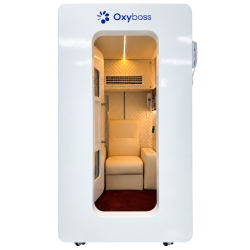
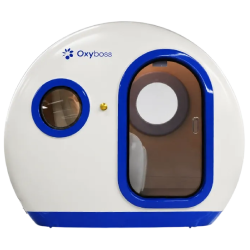
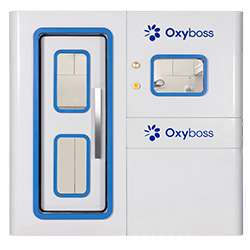
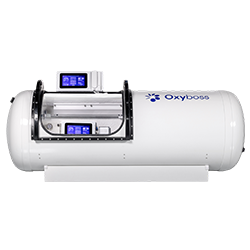
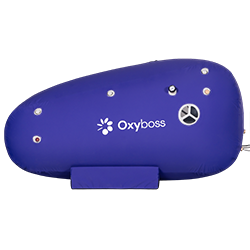
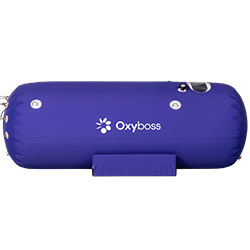
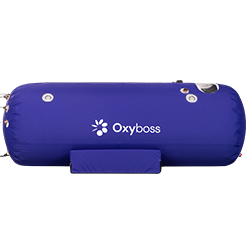
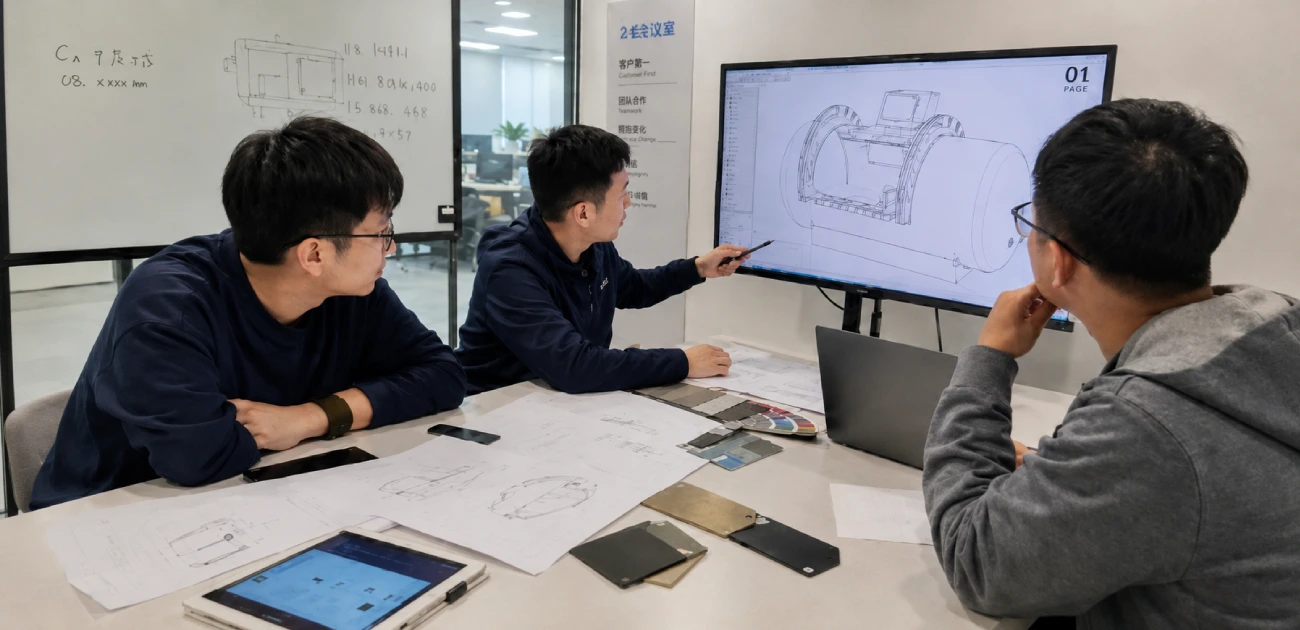
Where safety meets human-centered engineering.
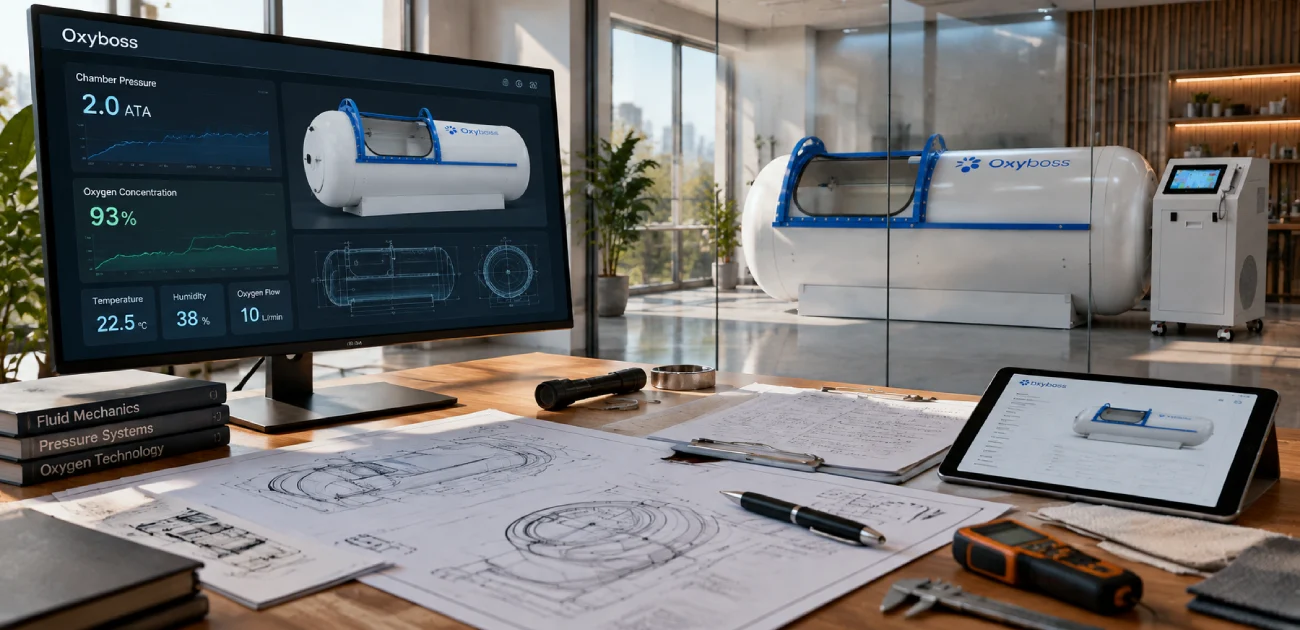
The Oxyboss design team is not simply designing a hyperbaric oxygen chamber. We are engineering a long-term, stable, monitorable, interactive, and maintainable pressurized oxygen environment with a safety-critical mindset.
For commercial buyers who are responsible for end-user experience and safety, reliable hyperbaric chamber design is not about adding more features. It is about identifying risk boundaries in advance and building safety logic into every detail.
Our design philosophy is simple:
Before a user enters the chamber, safety has already been built into the structure, materials, pressure control, airflow circulation, and interaction system.
Consult Our Engineering Design Team Get Custom Design Advice
1. Structural Geometry
Hyperbaric chamber structural design begins with the engineering of pressure distribution.
In Oxyboss chamber design, cylindrical and curved geometries are prioritized not for appearance, but because of the fundamental stress behavior of pressure vessels. Compared with square or polygonal structures, a cylindrical shape helps distribute tensile stress more evenly across the chamber wall, reducing localized stress concentration and lowering the risk of long-term structural deformation.
1.1 Cylindrical Stress Distribution
A cylindrical structure allows internal pressure to transfer more evenly across the chamber wall, helping avoid pressure concentration around corners or sharp transitions. For distributors and project buyers, this means the equipment is better positioned to maintain structural stability through repeated pressurization and depressurization cycles.
1.2 Curved Surface Design
The curvature of the chamber affects more than its appearance. It also influences the pressure path. A well-planned curved surface allows stress to transition more smoothly, reducing excessive local load on specific structural areas and supporting long-term reliability.
1.3 Wall Thickness Planning
The wall thickness of each model is not simply increased for the sake of being thicker. It is planned based on pressure rating, chamber size, and expected usage frequency. The design goal is to balance safety redundancy, chamber weight, and long-term service life.
1.4 Fatigue Consideration
A hyperbaric oxygen chamber is not a one-time pressure vessel. It must withstand repeated pressurization and depressurization cycles. During the design stage, Oxyboss considers structural fatigue to help reduce the risk of deformation and performance degradation after long-term cyclic use.

2. Material Rationale
Good material design is not only about strength. It must also consider temperature, odor, and the in-chamber environment.
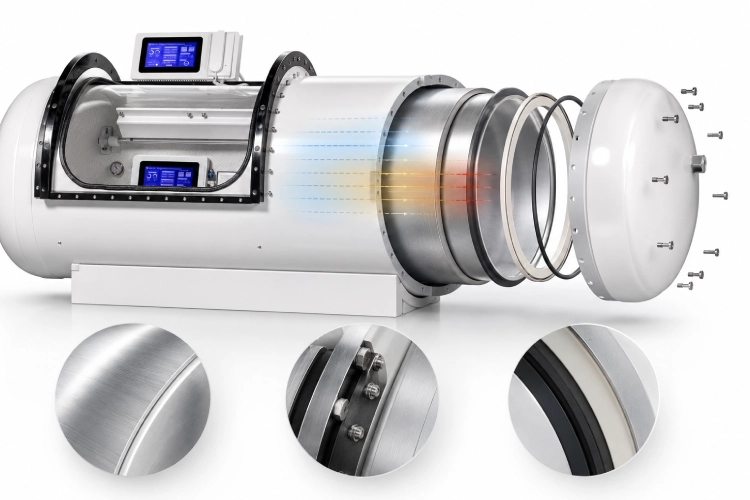
A hyperbaric chamber is a relatively enclosed pressurized space. Material selection affects not only structural strength, but also heat exchange efficiency, in-chamber odor, user comfort, and long-term maintenance. In hard-shell chamber design, Oxyboss focuses on thermal conductivity, structural stability, and a low-odor environment to create a cleaner and more stable chamber experience for end users.
2.1 Aerospace-Grade Aluminum
Some hard-shell chamber models use 6061-T6 aerospace-grade aluminum alloy as a structural material. Compared with certain stainless steel materials, aluminum alloy offers better thermal conductivity, helping the chamber exchange heat with the surrounding environment and reduce sharp temperature fluctuations inside the chamber.
2.2 Thermal Balance
During pressurization, temperature changes may occur inside the chamber. Proper material and structural design can help the chamber release or exchange heat more efficiently, keeping the in-chamber environment closer to a stable state and improving comfort during longer sessions.
2.3 Low-Odor Design
Oxyboss minimizes the unnecessary use of adhesives and organic materials in oxygen-enriched pressurized environments. Through mechanical fastening, structural sealing, and medical-grade sealing rings, we reduce the possibility of material outgassing and residual odor.
2.4 Sealing Materials
Sealing rings and contact materials directly affect the in-chamber air experience. We focus on material stability under pressure changes and oxygen-enriched conditions, helping reduce odor sources and create a fresher, cleaner breathing environment inside the chamber.

3. Passive Safety
Truly reliable safety design should not rely only on electronics.
Oxyboss follows a “physics-first” engineering principle in safety design. Electronic systems can improve operational efficiency, but in extreme situations, the most fundamental safety protection still comes from mechanical structure, pressure differential, springs, gravity, and manual depressurization paths.
These design elements do not depend on complex programs, networks, or smart systems. They form the lowest-level safety logic of a hyperbaric chamber.
3.1 Inward-Opening Door
An inward-opening chamber door uses internal pressure to create a natural self-locking effect. When the chamber is pressurized, internal pressure pushes the door firmly against the sealing structure, physically reducing the risk of accidental opening or forced opening under pressure.
3.2 Pressure Self-Locking
The higher the internal pressure, the stronger the contact force between the door and the sealing structure. This design does not rely on electronic locking. Instead, it uses the pressure differential itself to create a safety boundary, actively limiting door-opening risk while the chamber is under pressure.
3.3 Manual Exhaust Path
Oxyboss retains an independent mechanical manual exhaust path. Even in the event of power failure or electronic system abnormality, the user inside the chamber or the operator outside can still depressurize the chamber mechanically, avoiding complete reliance on electronically controlled valves.
3.4 Dual Redundancy
A dual mechanical exhaust design provides additional redundancy for extreme situations. If one safety path is unavailable, another independent path can still serve as a backup, helping users complete a smoother and more controlled depressurization process.
4. Intelligent Interaction
Good interaction design is built to reduce operational errors.
For commercial equipment, a more complex interface does not necessarily mean a more professional system. The more critical the information is, the clearer it should be. Oxyboss interaction design focuses on helping operators make quick judgments, giving users inside the chamber a stronger sense of control, and making emergency functions easy to identify.
The goal is to reduce operational risks caused by distraction, accidental touch, or misunderstanding.
4.1 Synchronized Interaction
The internal and external control panels use a consistent UI structure and operating logic. Pressure, time, operating status, and key functions are presented in a synchronized way. This significantly reduces training costs and minimizes communication errors caused by different internal and external interfaces, allowing both the operator and the user inside the chamber to quickly understand the current equipment status.
4.2 Clear Interface
The UI uses high-contrast visuals and a simplified layout, separating commonly used functions from safety-related functions. Even in dimly lit environments, operators can identify key buttons faster and spend less time searching through menus.
4.3 Highlighted Controls
Core functions such as depressurization, emergency stop, and status alerts should not be hidden inside complicated menus. Oxyboss places high-priority operations in easier-to-recognize positions, helping operators respond faster in urgent situations.
4.4 Smooth Pressure Control
Digital PID pressure control logic helps make pressurization and depressurization smoother, reducing pressure fluctuations that may occur with traditional manual pressure adjustment. A smoother pressure curve can help reduce ear pressure discomfort and improve user acceptance during the session.
5. In-Chamber Environment
A comfortable chamber experience comes from both airflow design and spatial psychology.
The inside of a hyperbaric chamber is not just a closed space. How air enters, moves, and exits the chamber, and whether the user can visually connect with the outside environment, all affect comfort and the sense of safety during use.
Oxyboss focuses on airflow path design, carbon dioxide removal, humidity control, and visual connection to help reduce stuffiness and the feeling of enclosure.
5.1 Diagonal Airflow
The air inlet and outlet are placed diagonally to help prevent localized airflow short-circuiting. Air can move gradually from one end of the chamber to the other, creating a more continuous flow path and improving overall air exchange inside the chamber.
5.2 Directed Ventilation
A uni-directional airflow design helps carry away carbon dioxide and moisture produced by the user’s breathing, reducing localized air stagnation. For longer sessions, this type of airflow organization helps maintain a more stable in-chamber environment.
5.3 Reduced Stuffiness
Continuous air circulation helps reduce the stuffy feeling often associated with enclosed spaces. For first-time users, the sense of airflow and freshness inside the chamber can directly affect whether they feel comfortable completing the full session.
5.4 Sightline Design
The observation window height is designed to align as naturally as possible with the user’s line of sight in a lying position. This allows the user to see the outside environment and maintain eye contact with the operator, helping reduce psychological pressure caused by enclosed spaces.

6. Collaborative Design
From brand concept to engineered reality, customization is more than appearance.
For overseas distributors, private-label partners, and premium project buyers, customization should not stop at logo and color. The Oxyboss engineering team can participate in early-stage design communication across structure, appearance, software interface, language system, and configuration planning.
This helps customers confirm design feasibility, market fit, and long-term delivery stability before production begins.
6.1 Drawing Support
In the early stage of a custom project, the engineering team can provide CAD drawings, dimensional planning, and structural solution communication based on project requirements. This helps customers more clearly determine whether the product fits the target space and sales positioning.
6.2 3D Visualization
For projects with higher requirements for exterior color, brand identity, chamber form, and space matching, 3D rendering can be used to preview the visual result and reduce communication gaps before production.
6.3 Simulation Review
For certain complex customization requirements, the team can combine airflow design and structural evaluation thinking to assess whether the air inlet and outlet layout, chamber dimensions, and local structural design are reasonable before production.
6.4 Software Customization
Oxyboss can support software-level localization, including UI brand logo integration, control panel language packages, operation prompt language, and certain data interface requirements. This helps distributors create a product version that better fits their local market.
6.5 Brand Implementation
From exterior design to software, and from packaging to user interface, the goal of our engineering team is not simply to execute customization requests. It is to help customers turn a brand concept into an engineered product that can be manufactured, delivered, and sold over the long term.
7. Design Consultation
Let our engineering team support your next hyperbaric chamber product.
If you have higher requirements for product structure, safety parameters, chamber appearance, control interface, language localization, or software customization, the Oxyboss engineering design team can participate in the early stage of your project to evaluate design feasibility, customization scope, and commercial implementation.
Whether you are a professional distributor, an OEM/ODM brand owner, or a commercial buyer planning a premium wellness project, we can work with you in deeper technical communication to help create a hyperbaric chamber product that better fits your local market.
Contact Our Engineering Team Submit Custom Requirements Get a Design Proposal