.svg)
.svg)
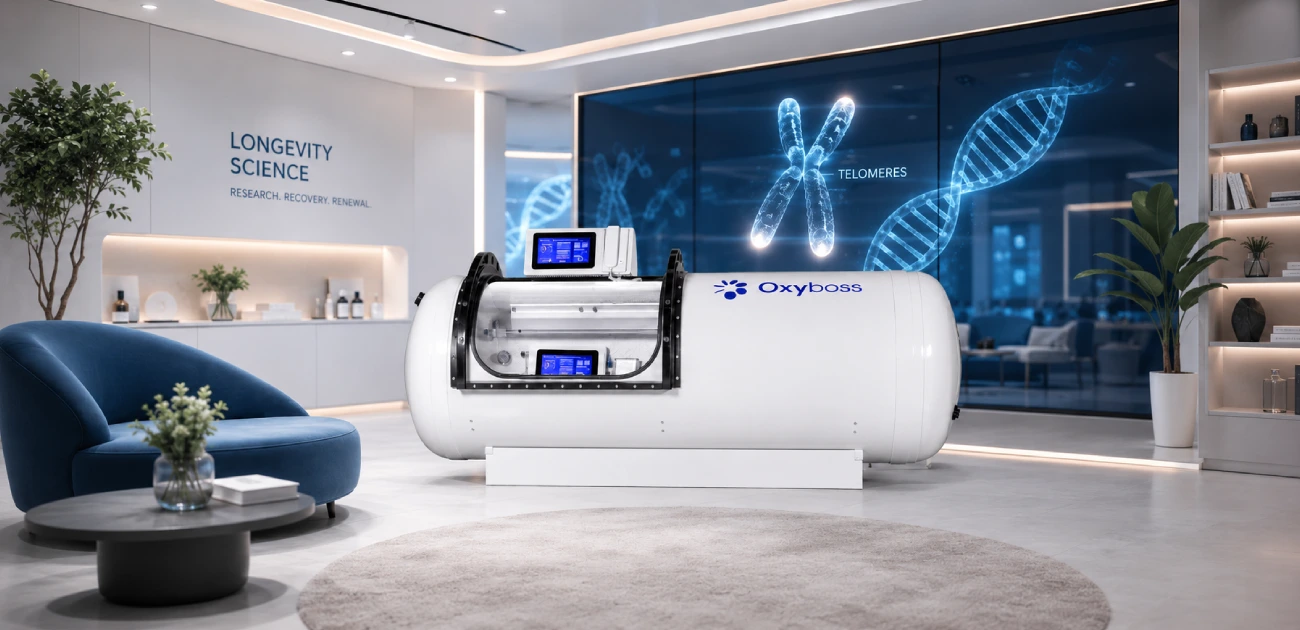
Hyperbaric Oxygen Therapy & Telomere Lengthening — The Science That Redefines Anti-Aging
1. Telomeres: The “Shoelace Tips” Wearing Down Inside Your Cells
To understand how hyperbaric oxygen may relate to aging, we first need to look at one of the smallest structures in the human body: the ends of our chromosomes.
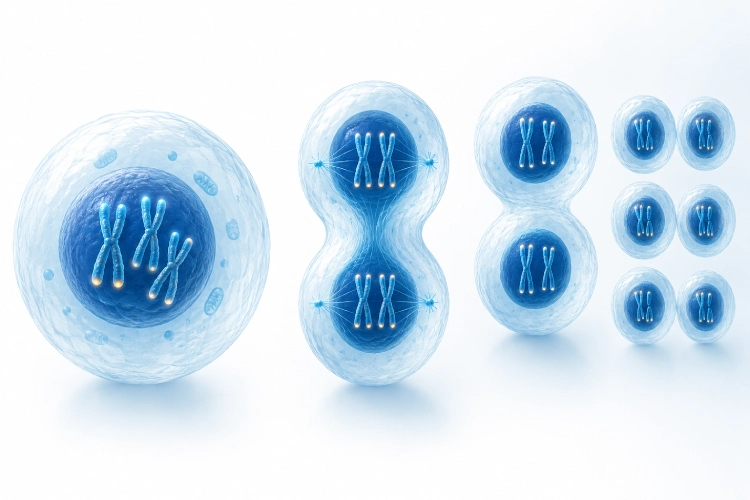
Imagine a brand-new pair of shoes. The small plastic cap at the end of each shoelace—known as an aglet—keeps the lace from fraying and unraveling. Deep inside your cells, every chromosome has a similar protective cap at each end. This structure is called a telomere.
Telomeres are non-coding segments made up of repeated DNA sequences. They do not carry genetic instructions, but they perform a critical role: protecting essential genetic information from damage and replication errors each time a cell divides.[1]
However, every time a cell divides, its telomeres inevitably become slightly shorter. Like the plastic tip of a shoelace, they wear down with repeated use. When telomeres reach a critically short length, the cell may enter a state known as cellular senescence. It stops dividing normally, begins releasing inflammatory factors, and may eventually undergo programmed cell death.[1]
This is not a distant or purely theoretical concept. Telomere shortening is recognized by modern life science as one of the core hallmarks of cellular aging.[1] It has a direct and significant relationship with visible and functional aspects of aging, including skin laxity, declining immune function, chronic inflammation, and cognitive deterioration.
For this reason, slowing or potentially reversing telomere shortening has long been regarded as one of the “holy grails” of regenerative medicine and anti-aging science.
In 2020, a clinical study associated with Tel Aviv University in Israel presented the anti-aging industry with an unexpected possibility.[2]
2. A Milestone Study: The 2020 Israeli Clinical Trial on Hyperbaric Oxygen and Human Telomeres
In November 2020, a research team led by Professor Shai Efrati of Tel Aviv University and Shamir Medical Center published a landmark clinical paper in the internationally recognized academic journal Aging, Volume 12, Issue 22.[2]
It was presented as the world’s first randomized controlled trial—or RCT—to demonstrate that hyperbaric oxygen therapy could significantly increase human telomere length and reduce senescent cells.
Key Study Data
The study design and data above were reported in the clinical study published by Hachmo and colleagues in 2020.[2]
The Study’s Central Conclusion
Professor Efrati’s team concluded that repeated intermittent hyperoxic exposures may reverse two major biological hallmarks of aging at the cellular level: telomere shortening and the accumulation of senescent cells.[2]
The reported effects did not rely on pharmaceutical intervention, gene editing, or stem cell injection. They were observed following a specific hyperbaric oxygen protocol involving the inhalation of pure oxygen inside a hyperbaric chamber.
The study quickly became one of the most frequently cited HBOT papers among anti-aging clinics, functional medicine institutions, and high-net-worth wellness communities worldwide. It became more than an academic publication—it became part of the scientific foundation of the emerging hyperbaric anti-aging market.
📎 Full paper citation: Hachmo Y, Hadanny A, Abu Hamed R, et al. “Hyperbaric oxygen therapy increases telomere length and decreases immunosenescence in isolated blood cells: a prospective trial.” Aging. 2020;12(22):22445–22456.[2]
3. The Deeper Mechanism: Why Can Breathing High-Concentration Oxygen Make the Body Respond as if It Were Hypoxic?
If hyperbaric oxygen simply meant “breathing more oxygen,” it would be unlikely to trigger such complex cellular responses. The deeper scientific explanation lies in a counterintuitive physiological phenomenon known as:
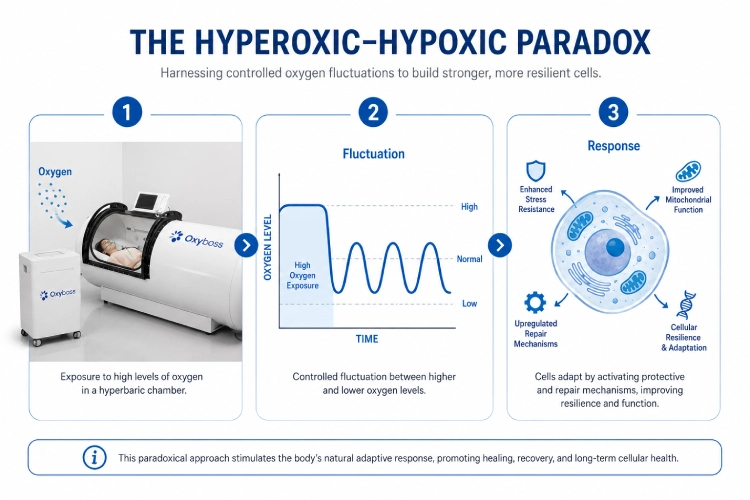
The Hyperoxic-Hypoxic Paradox.[3]
This concept was systematically described by Professor Efrati’s research team and is considered an important framework for understanding the proposed anti-aging mechanisms of HBOT.[3] It can be explained in three stages.
Stage One: Breathing Pure Oxygen Under Pressure
Inside a hyperbaric chamber, ambient pressure may be raised to 1.5 ATA or even 2.0 ATA. When a participant breathes 100% oxygen under these conditions, the amount of dissolved oxygen in the blood may rise to 10 to 15 times the level observed during normal breathing.[3][4]
At this point, cells throughout the body are exposed to a highly oxygenated environment.
Stage Two: Intermittent Air Breaks Create Rapid Oxygen Fluctuations
The critical factor is the intermittent structure of the protocol.
Participants in the study did not breathe pure oxygen continuously for the full 90-minute session. Instead, brief periods of breathing normal air were introduced during high-concentration oxygen exposure.[2] This caused dissolved oxygen levels in the blood to fluctuate sharply between peaks and relative troughs.
This rapid shift from extremely high oxygen levels to comparatively lower oxygen levels may “trick” the cellular oxygen-sensing system. Gene-expression pathways may interpret the sudden reduction in oxygen as a hypoxic signal, even though the body never experiences genuine oxygen deprivation.[3]
Stage Three: Cellular Repair and Survival Pathways Are Activated
When cells receive this perceived “hypoxic warning,” a series of repair and adaptation pathways may be activated:
- Activation of the HIF-1α pathway may initiate gene expression associated with angiogenesis and tissue repair.[3][4]
- Stem cells may be mobilized from the bone marrow into the bloodstream, supporting systemic regenerative activity.[3][5]
- Telomerase may be significantly activated. Telomerase is a reverse transcriptase capable of adding DNA sequences back to the ends of telomeres and thereby lengthening telomeres.
- Senescent cells may be marked and cleared, enhancing the immune system’s ability to identify and remove so-called “zombie cells.”[2][4]
Put simply, a hyperbaric chamber is not merely “flooding the body with oxygen.” It uses carefully controlled changes in oxygen exposure to reactivate the body’s natural cellular repair programs.[3] Telomere lengthening and the reduction of senescent cells are presented as measurable outcomes of this activation.[2]
4. From the Laboratory to the Market: How Telomere Science Can Become a Powerful Sales Tool
If you are a distributor or regional partner evaluating opportunities in the hyperbaric chamber market, you may be interested not only in the science itself, but also in a more practical question:
Which customers can this research help you reach?
The answer is that it may provide an entry point into one of the world’s fastest-growing, highest-value, and most retention-driven consumer markets: anti-aging and longevity.
Why Telomere Research Can Be Highly Persuasive in Premium Markets
The global anti-aging industry is expanding at a compound annual growth rate of more than 8%, with the market expected to exceed USD 420 billion by 2030.
Three of the most commercially valuable customer groups in this market include:
- High-net-worth professionals and entrepreneurs: They may already possess substantial material wealth, but remain willing to invest heavily in time, health, and longevity.
- Silicon Valley-style biohackers: They actively pursue measurable, data-supported methods of optimizing physical performance and health.
- Athletes and performing artists: Their professional competitiveness depends on maintaining physical performance, recovery capacity, and long-term function.
These groups share one important characteristic: they are less likely to be persuaded by general marketing claims and more likely to respond to measurable data and published research.
When communicating the statement:
“Our hyperbaric oxygen service protocol is based on a clinical study published in Aging in 2020, which reported an increase of more than 20% in telomere length and a reduction of up to 37% in senescent cells,”
the service is no longer presented as a vague wellness concept. It becomes a scientific offering supported by precise experimental data, an established academic journal, and a traceable participant protocol.
Expanding the Distributor’s Sales Position
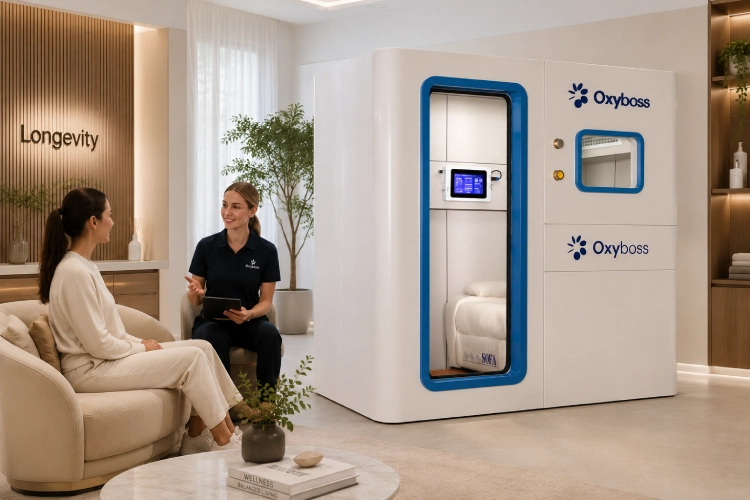
As an Oxyboss partner, you are not simply selling a piece of equipment. You are delivering a broader science-driven business model to downstream customers:
- For anti-aging clinics: A “telomere lengthening program” may become a flagship differentiating service designed to attract high-net-worth customers and encourage prepaid treatment packages.
- For premium wellness clubs and spas: A hyperbaric chamber may be positioned as the central equipment behind a “cellular rejuvenation experience,” increasing perceived membership value and renewal potential.
- For sports recovery centers: Telomere maintenance and cellular repair can provide a scientific angle for offering athletes an enhanced service beyond conventional recovery programs.
Telomere science can become a key lever in moving from “selling equipment” to “selling solutions.” Oxyboss focuses on ensuring that the hardware supporting that solution can withstand technical and scientific scrutiny.
5. Hardware Determines Scientific Relevance: Not Every Chamber Is Suitable for Discussing Telomeres
There is an important reality that must be acknowledged:
Professor Efrati’s telomere study used medically controlled hyperbaric equipment with strictly defined parameters, rather than the low-pressure inflatable soft chambers commonly found on the consumer market.[2]
If a device cannot reach the pressure, oxygen concentration, and safety standards required by the research protocol, claiming that “hyperbaric chambers can lengthen human telomeres” is not only imprecise—it is scientifically unsupported.
Based on the clinical study protocol, the following technical requirements are central to the hardware platform. They also represent the engineering standards Oxyboss applies to its product development.
1. Precise and Continuously Stable Pressure Control
The telomere study used a pressure environment of 2.0 ATA.[2] This requires:
- A high-strength chamber wall structure capable of maintaining pressure without deformation;
- A continuously adjustable pressure-control system that keeps pressurization and depressurization smooth, linear, and free from sudden changes, reducing the risk of pressure-related injury or barotrauma;
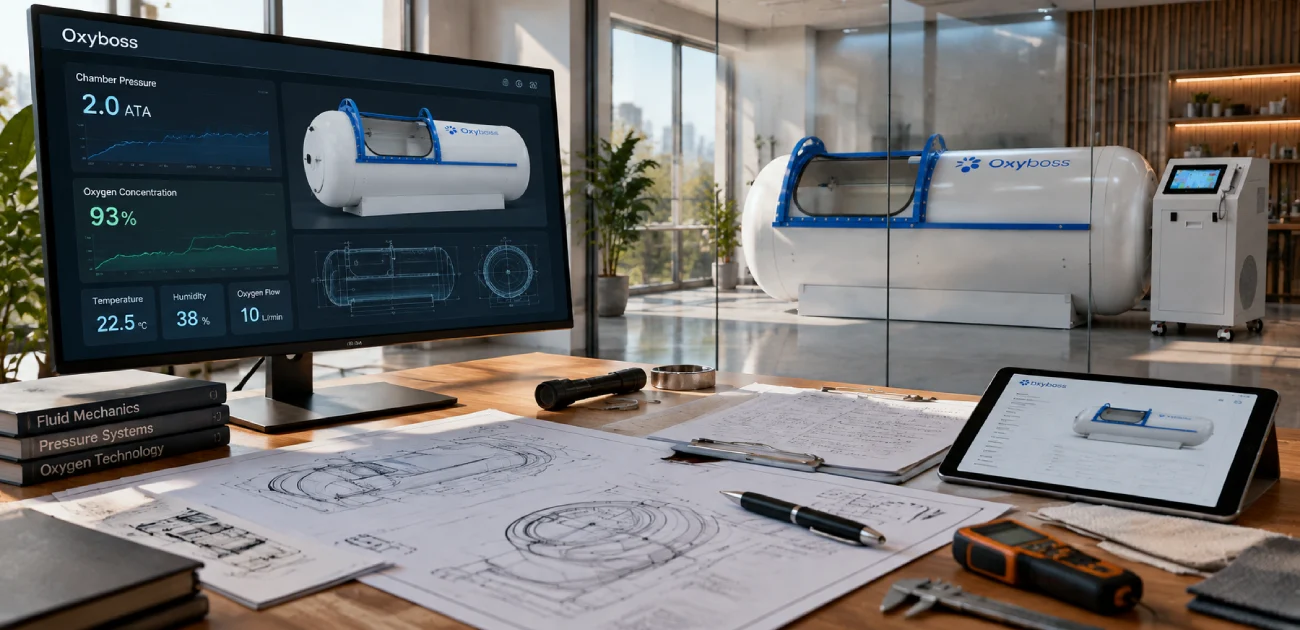
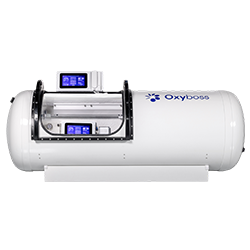
- In the Oxyboss commercial chamber range, the OB-H20 series supports a maximum pressure of 2.0 ATA and offers pressure-control accuracy of ±0.01 ATA, helping maintain consistent operating parameters from one session to the next.
2. High-Purity Oxygen Supply and Support for Intermittent Breathing Protocols
The research protocol centered on alternating between 100% oxygen inhalation and intermittent periods of breathing normal air.[2] This requires:
- An oxygen generation and delivery system capable of maintaining an oxygen supply at medical-grade purity of at least 93%;
- A properly designed oxygen mask or hood system that supports rapid switching and helps create the intended high-to-lower oxygen fluctuation;
- Across the Oxyboss hyperbaric chamber range, the oxygen supply system can be combined with an optional BIBS system. This allows high-concentration oxygen to be delivered while exhaled carbon dioxide is discharged, supporting a stable oxygen concentration of 93%±3%.
3. Chamber Material Safety and Zero Harmful Off-Gassing
This is a critical parameter that many lower-end manufacturers overlook.
Under high-pressure and high-oxygen conditions, low-quality plastics, adhesives, and sealing materials may release gases through a process known as outgassing. Chemicals that remain stable under normal atmospheric pressure may release volatile organic compounds, formaldehyde, or other potentially harmful substances in a pressurized, oxygen-rich environment.
A user who expects to breathe clean, high-concentration oxygen could otherwise be unknowingly exposed to unwanted chemical emissions.
Oxyboss addresses this concern through the following standards:
- Chamber linings, sealing components, and parts that come into contact with the user’s skin or breathing environment are made from medical-grade, non-toxic TPU—thermoplastic polyurethane—materials, designed not to release harmful substances under high-pressure, oxygen-rich conditions;
- A multi-stage, high-cleanliness air-filtration system helps maintain a clean chamber environment;
- Materials undergo third-party testing and certification in accordance with applicable international medical-device material safety standards.
4. Commercial-Grade Durability and Engineering Redundancy
The clinical research protocol required participants to complete 60 sessions of 90 minutes each.[2] A chamber used in a commercial setting may undergo thousands or even tens of thousands of complete pressurization, holding, and depressurization cycles over its operating life.
- Oxyboss chamber structures undergo strict 24/7 fatigue cycling tests to help ensure that frequent commercial operation does not result in material fatigue, degraded sealing, or pressure-system deviation;
- Critical safety components, including pressure-release valves and pressure sensors, use a dual-redundancy design, so the failure of a single component does not compromise the complete safety system.
6. Learn More About Oxyboss Hyperbaric Chambers
If you are evaluating hyperbaric chamber products and would like to learn more about operating pressure, oxygen-delivery methods, optional BIBS systems, available configurations, or business cooperation opportunities, contact the Oxyboss team.
Based on your target market, procurement requirements, and intended application, we can provide product specifications, model recommendations, quotations, and related technical documents.
[Explore Hyperbaric Chambers] [Contact Oxyboss]
Disclaimer
The content on this page is based on publicly available, peer-reviewed academic literature and is provided solely for educational and informational purposes. It does not constitute medical advice, diagnosis, or a recommendation for any treatment protocol.
The clinical use of hyperbaric oxygen therapy should be carried out under the guidance of qualified medical professionals. As an equipment manufacturer, Oxyboss is committed to providing hyperbaric chamber hardware designed in accordance with applicable international safety standards. Clinical use of any equipment must comply with local regulations and medical requirements.
The research data cited on this page originates from Hachmo Y, Hadanny A, et al., Aging, 2020;12(22):22445–22456. Individual outcomes may vary depending on personal factors and the protocol used.[2]
References
[1] López-Otín C, Blasco MA, Partridge L, Serrano M, Kroemer G. “Hallmarks of Aging: An Expanding Universe.” Cell. 2023;186(2):243–278. doi:10.1016/j.cell.2022.11.001.
[2] Hachmo Y, Hadanny A, Abu Hamed R, Daniel-Kotovsky M, Catalogna M, Fishlev G, Lang E, Polak N, Doenyas K, Friedman M, Zemel Y, Bechor Y, Efrati S. “Hyperbaric Oxygen Therapy Increases Telomere Length and Decreases Immunosenescence in Isolated Blood Cells: A Prospective Trial.” Aging (Albany NY). 2020;12(22):22445–22456. doi:10.18632/aging.202188.
[3] Hadanny A, Efrati S. “The Hyperoxic-Hypoxic Paradox.” Biomolecules. 2020;10(6):958. doi:10.3390/biom10060958.
[4] Tessema BT, Sack U, Serebrovska Z, König B, Egorov E. “Effects of Hyperoxia on Aging Biomarkers: A Systematic Review.” Frontiers in Aging. 2022;2:783144. doi:10.3389/fragi.2021.783144.
[5] Gupta M, Rathored J. “Hyperbaric Oxygen Therapy: Future Prospects in Regenerative Therapy and Anti-Aging.” Frontiers in Aging. 2024;5:1368982. doi:10.3389/fragi.2024.1368982.