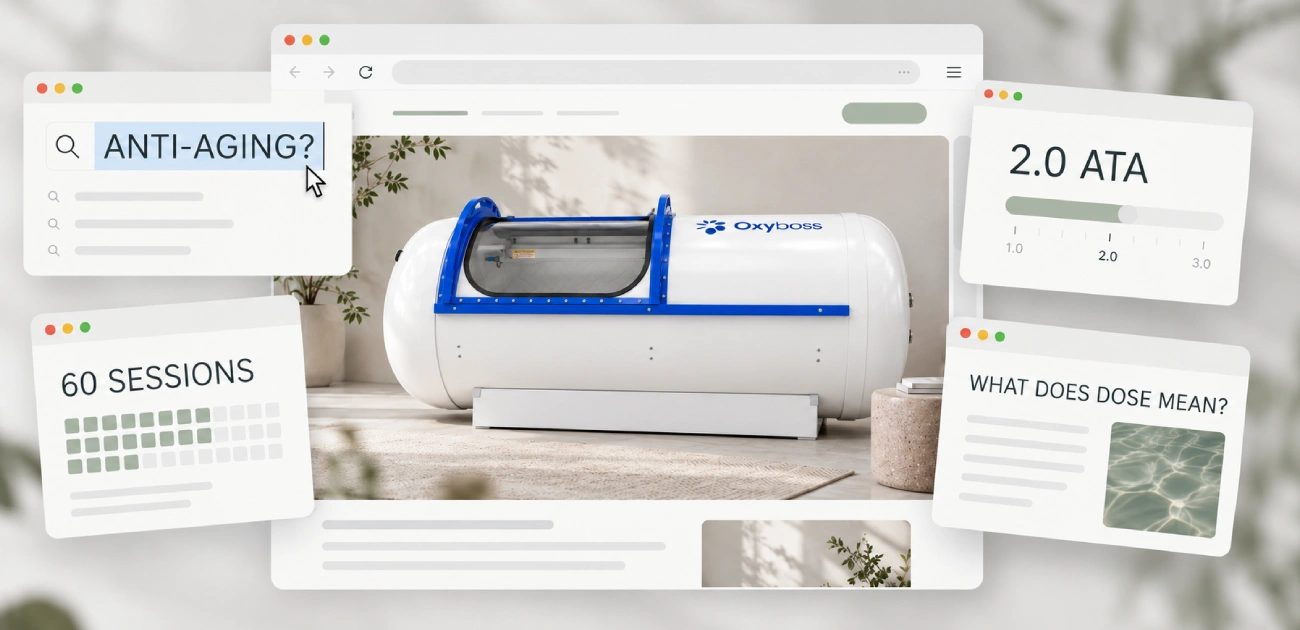
Most people who ask about hyperbaric oxygen and aging are thinking about one study. Sixty sessions, 2.0 atmospheres of pressure, pure oxygen through a mask, 90 minutes at a time. Thirty-five people over 64. Their telomeres got longer. (Hachmo et al., 2020)
That study is real. It's also specific. The pressure, the oxygen concentration, the session length—it's a recipe. Change any ingredient and you're making something else.
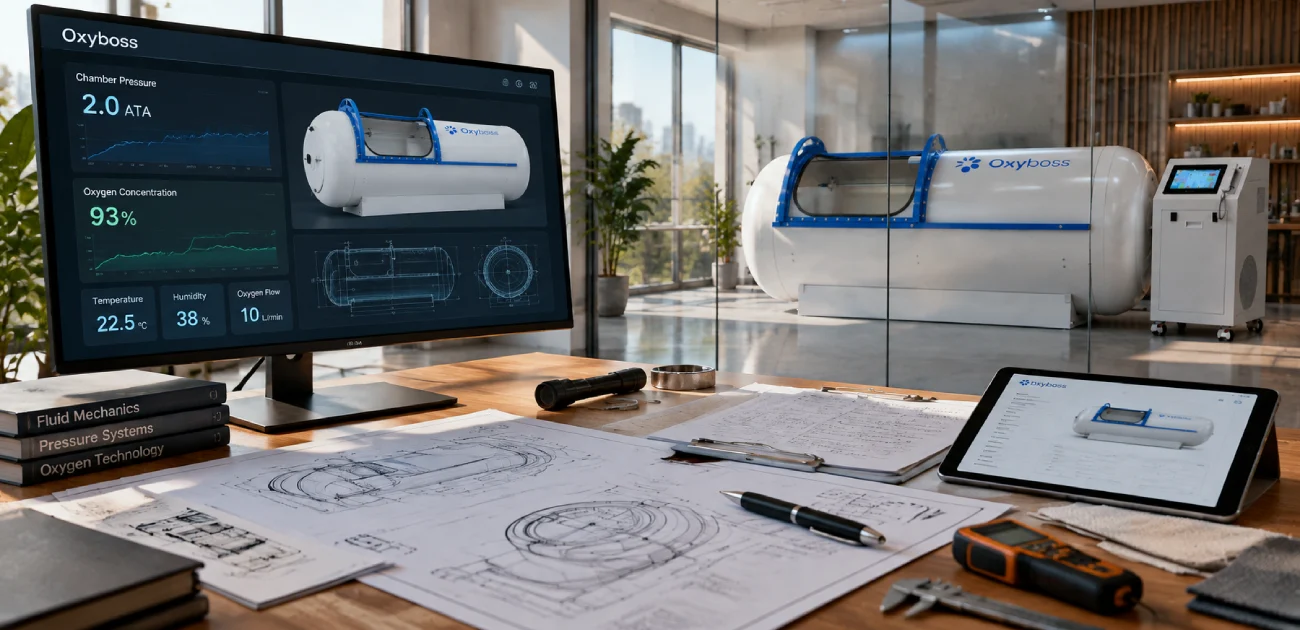
We build chambers. Soft ones that go to 1.5 ATA, hard ones that go to 2.0. All of them can take supplemental oxygen if you add a concentrator. What we can't do is tell you that a lower dose works the same way, because no one's tested it.
What "hyperbaric" actually means
"Hyperbaric" means above normal atmospheric pressure. At sea level, you're at 1.0 ATA (atmosphere absolute). A hyperbaric chamber pushes that number higher—1.3, 1.5, 2.0, sometimes higher in medical settings.
Higher pressure forces more oxygen into your blood plasma. Not just into red blood cells (those max out pretty fast), but dissolved directly in the liquid part of your blood. More dissolved oxygen means tissues that are starved, inflamed, or healing slowly get a bigger supply.
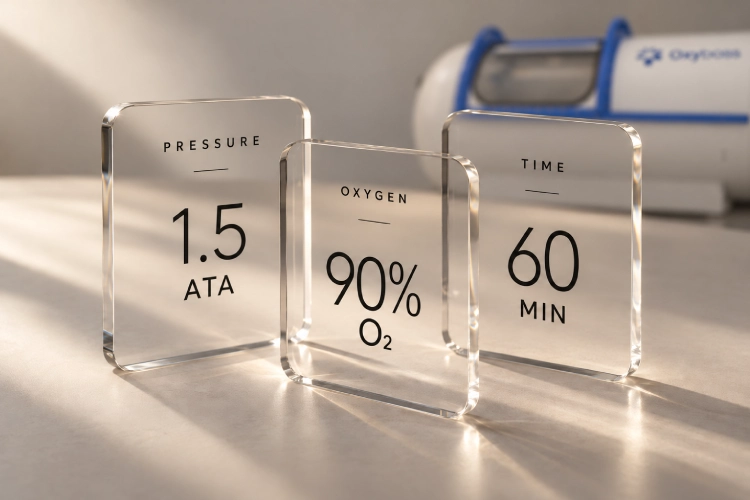
But dose isn't just pressure. It's pressure times what you're breathing. Breathe room air at 1.5 ATA and you're getting less oxygen than breathing 95% oxygen at 1.3 ATA. The studies that report anti-aging effects used controlled oxygen delivery—usually a mask feeding concentrated oxygen while pressure climbs. If you're sitting in a chamber full of room air, you're getting a fraction of that dose.
Here's the range:
Most home units fall into rows 2 or 3. The telomere study used row 4.
What's actually in the research
The sixty-session protocol is the only one tested for anti-aging markers. Ninety minutes per session, five days a week, twelve weeks total. Researchers picked that schedule based on wound-healing studies, not because they tested shorter ones and found them lacking.
Would forty sessions work? Twenty? We don't know. The markers they measured—telomere length, senescent cell percentage—take time to shift. But how much time at what dose is uncharted.
If you're working at a lower pressure or lower oxygen concentration than the study, the math changes. Whether that means more sessions or just different results, no one's published data either way.
The skin studies focused on wound healing—burns, surgical incisions, grafts at risk of failing. They measured how fast tissue closed and how much collagen formed, not whether healthy skin looked better. If you're trying HBOT for skin, you're extrapolating from wound data and hoping the mechanism transfers. It might. Or it might only work on damaged tissue, not aging-but-healthy tissue.
Where HBOT is standard care: compromised skin flaps, grafts that aren't getting enough blood flow, tissue at risk of dying. That's medical HBOT—2.0+ ATA, prescribed, supervised. Not the same as a routine post-op add-on.
What the studies didn't test:
- Lower pressures (1.3, 1.5 ATA)
- Shorter protocols (10, 20, 40 sessions)
- Room air instead of supplemental oxygen
- Long-term durability (did the telomere gains stick? revert? keep growing?)
- Whether the biomarker changes translate to living longer or feeling better
That doesn't mean lower doses don't work. It means we're guessing. Most consumer chambers operate in the untested range. If you're using one and seeing results, you're a data point of one.
What happens inside a session
You climb in, zip or seal the door, and the operator (or you, if it's a home unit) starts the compressor. Pressure climbs. Your ears feel it first—like driving up a mountain or descending in a plane. You equalize by swallowing, yawning, or pinching your nose and gently blowing. Some people clear easily. Others need a few tries.
The chamber gets warmer as it pressurizes. Physics, not a heater. Once you're at target pressure, it stabilizes. If you're on supplemental oxygen, you put the mask on now. You'll hear your own breathing, the hiss of the concentrator if there is one, and the hum of the compressor keeping pressure steady.
Ninety minutes is typical. Some people read, some sleep, some just sit. You're not working out. You're not meditating unless you want to. You're sitting in a slightly-too-warm tube breathing.
At the end, pressure drops slowly. Your ears pop again. The chamber cools. You get out.
Side effects: ear discomfort if you don't equalize well, sinus pressure if you've got congestion, claustrophobia if small spaces bother you, temporary vision changes if you're doing high-pressure protocols for weeks (rare at wellness doses). Serious risks—oxygen toxicity, lung barotrauma—happen at much higher doses than consumer chambers reach.
The difference between soft chambers, hard chambers, and oxygen bars
Oxygen bars give you concentrated oxygen to breathe, but no pressure. You're at 1.0 ATA—sea level. More oxygen gets into your lungs, but it doesn't force extra oxygen into your plasma the way pressure does. It's not hyperbaric.
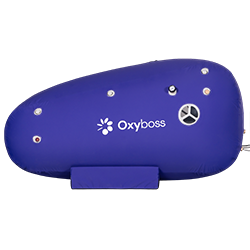
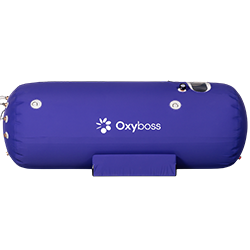
Soft chambers use fabric and zippers. They're portable, cheaper, and top out around 1.5 ATA. Most are rated for 1.3. They work for wellness protocols, athletic recovery, and anyone who wants a home unit without the cost or footprint of a hard chamber.
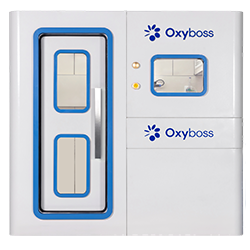
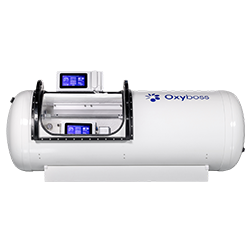
Hard chambers are rigid—acrylic, fiberglass, or steel. They can reach higher pressures (2.0–3.0 ATA) and are built to stricter standards if used in clinical settings. More expensive, less portable, but capable of delivering the doses used in most published studies.
All three can deliver supplemental oxygen if you add a concentrator and mask. The pressure is what separates them.
What to watch out for
"Approved for..." — The FDA approves chambers as medical devices. It approves specific conditions for reimbursement. It does not "approve" chambers for anti-aging, beauty, or performance. If someone implies that, they're blurring the line.
Testimonials — "I feel ten years younger" is a feeling. Feelings are real, but they're also shaped by expectation, placebo, and the $8,000 you just spent wanting it to work.
"Oxygen therapy" — That phrase covers oxygen bars (no pressure), mild hyperbaric (1.3 ATA), and clinical HBOT (2.0+ ATA). They're not interchangeable. Ask for the ATA number and what you're breathing.
"Medical-grade" — This gets attached to chambers that meet certain manufacturing or certification standards. That's not the same as a chamber used in a medical protocol for an FDA-approved condition. The phrase can mean different things depending on who's using it.

FAQ
How many hyperbaric oxygen sessions are needed for anti-aging? The only published protocol tested sixty sessions—90 minutes each, five days a week. Whether fewer would work isn't in the data.
How much does hyperbaric oxygen therapy for anti-aging cost? Sessions run 75–250 depending on location and setup. A sixty-session protocol runs 4,500–15,000 if paying per visit. Home chambers start around 5,000 for a basic soft unit; hard chambers capable of 2.0 ATA run 15,000–$30,000. Insurance rarely covers wellness use—only the fourteen FDA-approved conditions qualify.
How long does it take to see skin improvements from HBOT? Honest answer: nobody knows. Skin studies measured wound healing, not wrinkle reduction or glow in healthy skin. Anecdotally, some report changes after 10–20 sessions, others see nothing after 40. There's no validated timeline.
Is hyperbaric oxygen therapy recommended after a facelift or other cosmetic surgery? Some surgeons offer it, some don't. No guideline mandates it. If offered, ask what pressure, how many sessions, and what outcome is being targeted. The evidence is case reports, not controlled trials.
Does insurance cover hyperbaric oxygen therapy after cosmetic procedures? Almost never. Cosmetic surgery is elective, and recovery from elective surgery is also elective. The only exception is if a complication falls under an FDA-approved condition (like a failing graft), and that's a medical escalation, not routine care.
How many sessions does it take at lower pressure (1.3–1.5 ATA) to match the 2.0 ATA study? Unknown. No head-to-head comparison exists. You're running a different protocol at a different dose and there's no published equivalent.
What's the safest setting for a home chamber? Medical HBOT (for FDA-approved conditions) requires a doctor's order and trained operators. Wellness HBOT oversight varies. Ask who inspects the chamber, how often, and what to do if you can't equalize your ears mid-session.
The short version
Hyperbaric chambers increase pressure. Higher pressure dissolves more oxygen in your blood plasma. Dose is pressure times oxygen concentration times duration. The anti-aging study used 2.0 ATA, supplemental oxygen, ninety minutes, sixty sessions. Most home chambers operate at 1.3–1.5 ATA. That's a different dose, and no one's directly tested whether it produces the same effect.
We make the equipment. What we can tell you is what dose means, how to read a spec sheet, and what questions to ask before you spend money or time. What we can't tell you is that a lower dose works the same way, because no one's tested it.