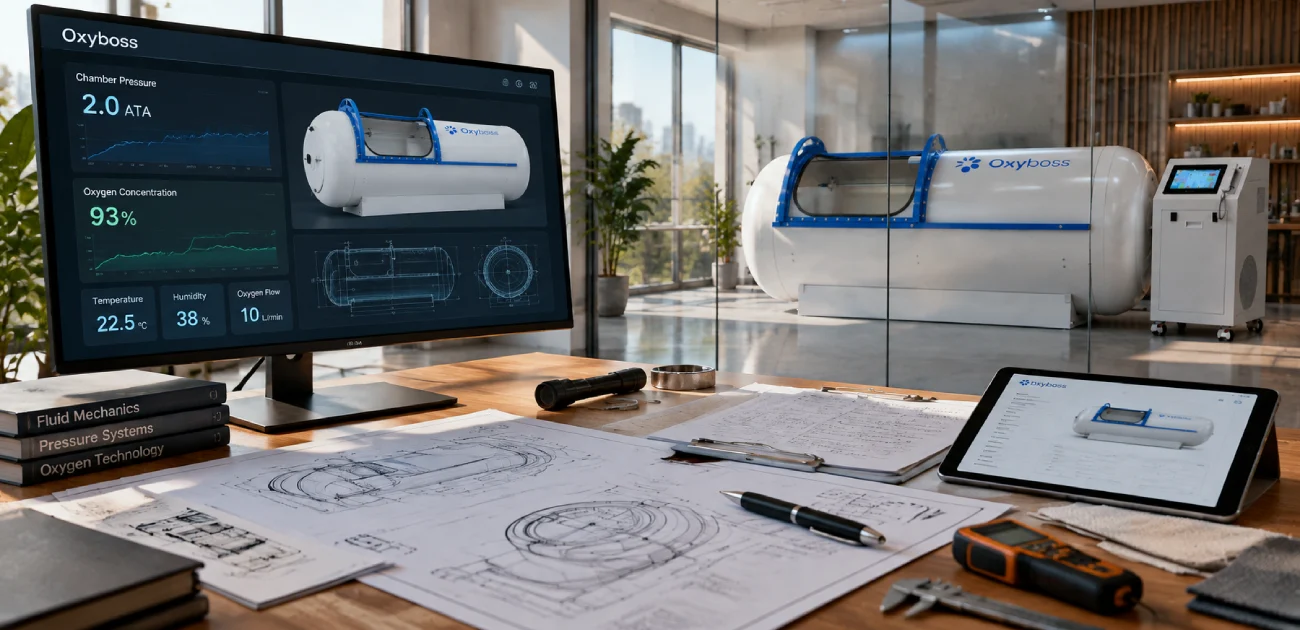

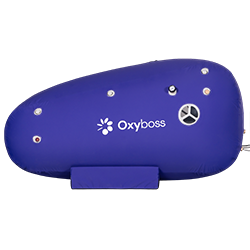
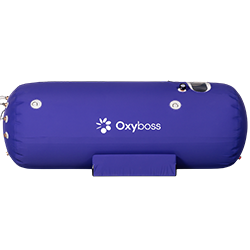


When you actually own a hyperbaric chamber — and not just spec one for a new build — the question stops being "what should I buy" and starts being "when do I replace it, where does the money come from, and how do I keep the room running while I do it." This guide is for the person answering that second question. It assumes you're running a soft-shell or hard-shell wellness chamber, you've already burned through a couple of operating cycles, and you don't want the next replacement to land as a surprise.
1. Three "lifetimes" everyone keeps mixing up
If you've ever read a hyperbaric equipment page that quoted you "20 years" and another that quoted you "15 years" and then a financing sheet that used a "10-year amortization," you already know the confusion. None of them are wrong. They are talking about three different things.
- Design life is what the manufacturer built the vessel to survive under stated operating conditions. It's the engineering number — and it usually shows up in the IFU (Instructions for Use), not the brochure.
- Accounting life is the depreciation schedule your accountant uses for tax and book purposes. In the U.S. wellness context, this often defaults to 7 or 10 years even when the chamber physically has more time on it (IRS Publication 946, Table B-2).
- Actual service life is how long the chamber actually runs before something — wear, regulation change, spare parts going end-of-life — forces your hand. This one nobody publishes, because it's the variable.
The reason the first section of this guide spends three sentences on this distinction: the rest of the plan hangs off which "lifetime" you're planning against. If you're planning against design life, you'll replace too early and waste money. If you're planning against accounting life, you'll under-budget the long tail. You plan against actual service life — and you keep the other two numbers on file as cross-checks.
2. Pick your tier first — soft-shell and hard-shell don't share a playbook
This guide treats the replacement problem differently for the two product tiers the wellness market actually buys:
Why this matters for a replacement plan, not a buying guide: every dollar number, every time-window, every labor estimate below changes when you cross tiers. Most of the conflicting budget numbers you find online — "$1,000 a year" versus "10% of equipment value" — are not actually conflicting. They're describing different tiers. Pick your tier before you do any math, and put it in the first line of your written plan.
3. Count in three units, not one
The hyperbaric industry almost universally quotes equipment life in calendar years. That's fine for a sales brochure. It's terrible for a replacement plan.
The three units that actually matter:
- Calendar years — the easy one, and the only one financing contracts care about.
- Operating hours — the unit that compressor warranties, oxygen concentrator sieve beds, and chiller compressor life are actually rated in. A chamber that runs 4 hours a day is not the same beast as one that runs 10.
- Pressure cycles — the unit that acrylic viewports, door gaskets, and certain weld inspections are rated in, because fatigue is cumulative, not time-based.
Pick whichever unit is most binding for each component in your asset register, and use that. A well-built replacement plan has three age columns per asset, not one.

4. Components fail on different clocks
Here's the part where the rubber meets the road. The "lifetime" of the chamber is a fiction; the lifetime of the parts is what you'll actually live with.
For a wellness-tier chamber, the parts that drive the replacement decision are roughly these, with order-of-magnitude service windows:
The takeaway: most replacement decisions are made because of one or two of these components hitting the wall, not the whole chamber. Which is exactly why a "replace the unit" plan is too blunt — what you're really planning for is component-level interventions, and only sometimes the whole unit.
5. The three-tier decision: Continue, Refurbish, or Replace
Most equipment replacement guides hand you a binary: repair or replace. That's wrong for hyperbaric chambers, because there's a meaningful middle option.
- Continue — keep running the chamber, plan the next decision in 12 months. Use this when annual maintenance is under ~10% of replacement value, downtime is acceptable, and the chamber is under ~60% of design service window.
- Refurbish / Retrofit — replace the components that have aged (compressor rebuild, gasket set, electronics upgrade, sieve bed swap, viewport re-qualification) and keep the vessel. Use this when one or two component classes are at end-of-life but the shell is sound and your regulatory framework still accepts the configuration.
- Replace — full unit replacement. Use this when the vessel itself is approaching design life, when multiple component classes are simultaneously failing, when regulatory change would force a re-certification that approaches the cost of a new unit, or when a single major repair would exceed ~50% of the cost of a comparable new unit.
The 50% rule of thumb is widely cited in facility maintenance planning and shows up in cost-analysis work for HVAC and medical equipment (Facility Maintenance Decisions: Repair vs. Replace). For hyperbaric chambers it usually lands at the same threshold — but the "50%" should be calculated against a like-for-like replacement, not the cost of a different tier.
6. Quantitative triggers — the numbers that actually move the decision
Three thresholds to keep on a one-page cheat sheet:
- Single repair ≥ 50% of replacement value → almost always replace, not repair. This is the textbook rule and it works for hyperbaric too (Facility Maintenance: Repair vs. Replace — 50% Rule).
- Same unit, 3+ service calls in a year → you are now in the failure-rate zone. The next service call is almost certainly a refurbish or replace decision, not a fix.
- Annual maintenance cost > 15% of replacement value → start a replacement budget line now, even if you don't replace for two more years. Waiting until the year you replace is how capital plans get killed.
If you're using the soft-shell tier, scale that 15% by the actual replacement value of that tier, not the hard-shell price you saw quoted in a magazine. The number should not be aspirational.
7. Score and prioritize — when you have more than one chamber
Most single-site operators have one chamber, so this section may not apply to you. If you're running two or more, or you're part of a small group, the prioritization is where the time goes.
A simple 1–3 scoring rubric works:
- Demand score — 1 (low utilization) → 3 (high utilization, fully booked, recurring clientele)
- Failure-risk score — 1 (new unit, no history) → 3 (multiple recent failures, parts going EOL)
- Replacement cost score — 1 (well within budget) → 3 (significant capital event)
Add the three scores (range 3–9). Anything at 7 or above goes first. Anything at 4 or below waits.
This is the same logic the CMMS / facility-management world uses for fleet replacement prioritization (Equipment Replacement Planning: A Step-by-Step Guide). For hyperbaric wellness specifically, the "demand" axis matters more than for HVAC, because a single chamber hyperbaric failure can take a service line offline.
8. Time-axis: this is not a "new clinic" timeline
If you read the construction-and-build-out content out there for hyperbaric clinics, you'll see 4–9 month timelines from decision to first customer (How to Build a Hyperbaric Clinic: Timeline). That's a new-build timeline. A replacement timeline is much shorter but more interruptive, and it has phases nobody writes about:
- Decision lock-in (2–6 weeks) — committee sign-off, vendor selection, financing approval.
- Manufacturing / shipping (4–12 weeks for soft-shell; 8–16 weeks for hard-shell, depending on configuration).
- Site prep (1–4 weeks) — door clearances, floor protection, electrical drop, ventilation checks.
- Old unit decommissioning (1–2 weeks) — depressurize, oxygen system purge, component salvage, asset disposal paperwork.
- New unit install + commissioning (1–2 weeks for soft-shell; 2–4 weeks for hard-shell).
- Staff retraining and validation (1–2 weeks) — operations on the new unit, safety chain validation, run-of-the-millual dry runs.
That's roughly 3–6 months from decision to first session on the new unit for a hard-shell replacement, 6–10 weeks for a soft-shell. Plan the downtime window before you sign the PO, not after.
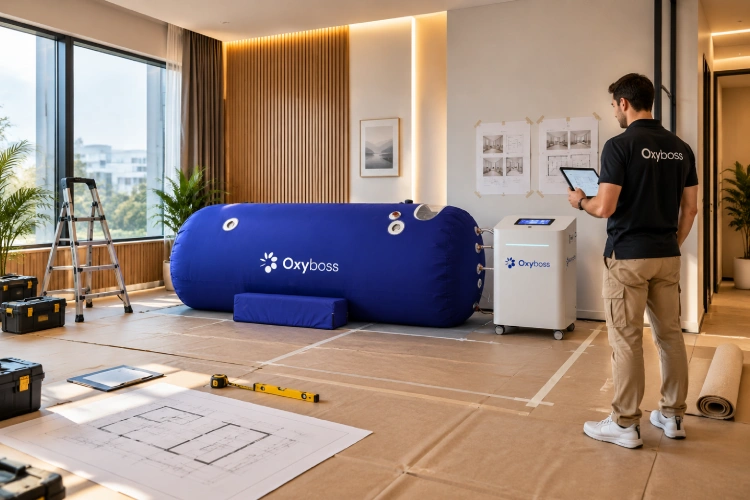
9. Site constraints you only discover on installation day
Most replacement guides skip this section, because most replacement guides are written for general equipment. Hyperbaric chambers are not general equipment.
Things to verify before you commit to a replacement model, not after:
- Door clearances — the narrowest dimension of the chamber when crated or assembled has to clear every doorway, stairwell turn, and elevator on the route in. For hard-shell chambers, only certain models clear a standard 81 cm (32 in) residential door.
- Floor loading — distributed load in pounds per square foot. Soft-shell chambers plus their oxygen concentrators are typically 8–10 psf. Hard-shell chambers can run 30 psf at the floor footprint of larger multi-place rooms, and over 100 psf for compact single-place units. Check your floor's rated capacity before you commit.
- Electrical service — soft-shell units typically run on a 120 V / 15 A household outlet. Hard-shell units often need a dedicated 30 A circuit at 120 V, or a 240 V drop. Verify the breaker panel before the unit arrives, not after.
- Ventilation and oxygen venting — hard-shell operation may require a vent line for enriched oxygen. Verify the path before you order the unit.
- Disassembly route — when this unit is replaced in 15 years, can it actually come back out the way it came in? Sketch it now.
10. Facility compliance and documentation: the boring section that saves you
The unsexy part of a replacement plan is the documentation, and the unsexy part of documentation is that it has to prove the action happened, not just that someone checked a box.
The standard "checked" log entry — "O-ring inspected, OK" — is weak documentation. The defensible entry reads: "Ground continuity verified, result within tolerance, no defect observed, released by [named technician] at [date/time]." The difference matters if there's ever a question about what happened on a particular day.
What to record at minimum, per session:
- Operating pressure achieved and held
- Session duration
- Compressor / oxygen system running hours (incremental)
- Pressure cycles completed (incremental)
- Any anomaly, with description
- Technician signature
For a wellness chamber, the relevant standards framework is the manufacturer's IFU plus any general industry guidance you choose to align with. Standards such as NFPA 99 Chapter 14 apply to medical hyperbaric facilities and are not directly applicable to a wellness chamber — but if you're aligning your practice with broader facility safety guidance, the documentation principles are still worth borrowing (NFPA 99: Health Care Facilities Code).
11. Maintenance cadence — only the bits that change the replacement decision
We're deliberately not publishing a full daily/weekly/monthly maintenance checklist here, because that content is well-covered elsewhere and the cadence is fully specified in your IFU. What we will cover is the maintenance-to-replacement interface:
- Annual cost trend, not annual cost: track year-over-year maintenance spend on each asset. The replacement decision is usually triggered by the trend, not the absolute number.
- Component service hours, not just calendar: every preventive maintenance event should update the component hour counter on the asset register.
- Spare-parts availability status: a critical component that's gone end-of-life from the manufacturer is itself a replacement trigger, regardless of how the asset is running.
If you want a full daily-to-annual maintenance schedule, the IFU is the source of record — and well-respected industry references such as Hyperbaric Business Solutions' Equipment Maintenance Guide walk through the cadence in detail.
12. Decommissioning the old unit — what to do with the corpse
When the new unit is on the floor and the old one needs to leave:
- Depressurize fully and verify zero residual pressure before any disassembly.
- Purge the oxygen system — concentrator sieve beds can retain oxygen and should be run through a manufacturer-approved purge cycle.
- Sanitize the interior per the IFU — particularly if the unit is being resold or transferred.
- Wipe operating hours and session logs if the unit is leaving the premises with any client-identifying data.
- Document the chain of custody — for warranty, for tax (disposal is a depreciable event), and for any regulatory question about what happened to a medical-adjacent pressure vessel.
- Salvage what you can — door gaskets, compressors, sight glasses, and certain electronics have resale or reuse value.
For a soft-shell chamber, decommissioning is an afternoon. For a hard-shell, plan a full day plus the rigging crew.
13. Replacement is not disposal — it's the start of the next cycle
The biggest mental shift in this whole guide: when you replace a hyperbaric chamber, you are not throwing the old investment away. You are rolling it forward.
The reserve you set aside for the last replacement becomes the down-payment on the next. The lessons you logged in the asset register — which components failed, which service vendors were responsive, which configurations your team actually liked — those become the spec sheet for the next purchase. The training that kept the team current on the old unit is the platform you train the new one on.
This is what the facility-management world calls the asset lifecycle: you don't replace it, you turn over the position in your operating model to the next unit, with everything you learned folded into the upgrade (Facility Asset Life Cycle Planning).
For wellness operators, this matters more than for many other equipment categories, because hyperbaric chambers are long-lived assets with high capital cost and meaningfully different generations of technology. The plan you write today is the plan you'll execute against, twice.
Appendix A — Maintenance budget benchmarks (cross-tier)
These don't agree. They describe different tiers. Use the row that matches your tier, and don't average across rows.
Appendix B — Asset register fields worth tracking
The minimum set of fields per asset, beyond the generic name/ID/serial:
- Working pressure (ATA or psi)
- Total operating hours (cumulative and last 12 months)
- Total pressure cycles (cumulative)
- Last inspection date and inspector
- Acrylic viewport certification status (if applicable)
- Door gasket replacement history (date + technician)
- Compressor major-service history
- Oxygen concentrator sieve-bed hours
- Critical spare-parts status (EOL / available / constrained)
- Replacement reserve year-to-date balance
- Replacement decision-year target
- Vendor and warranty contact