.svg)
.svg)
.png)
The 30-second answer
If you've ever been on a plane or gone scuba diving, you already know most of the sensation. Your ears feel full as pressure rises — just like takeoff or descent — and you'll hear a gentle hiss of airflow. Once pressure stabilizes, it's quiet, calm, and surprisingly relaxing. Most people watch something, read, or just zone out. When the session ends, pressure drops gradually (more ear popping), and you step out feeling clear-headed, maybe a little sleepy or thirsty. That's it.
No drama. No pain. Just a quiet hour where your body gets more oxygen than usual.
Inside the chamber, minute by minute
1. Stepping in
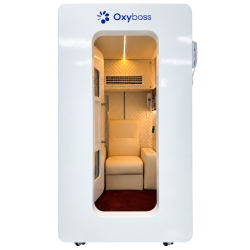
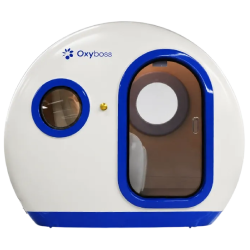
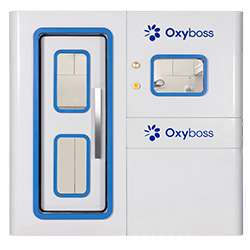
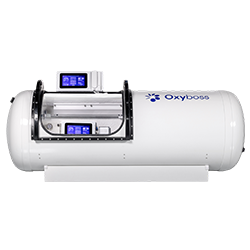
You climb into the chamber — think of it as a clear tube you lie down in, or a small room you sit in, depending on the type. The door or hatch seals with a soft click. If it's your first time, this moment might feel a bit surreal (you're about to be pressurized, after all), but the chamber is see-through, well-lit, and you can talk to someone outside if you need to.
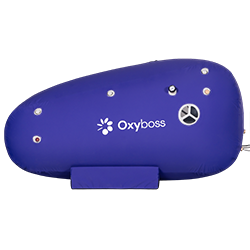
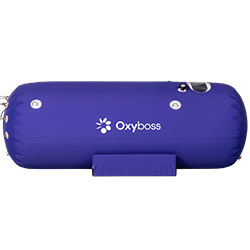
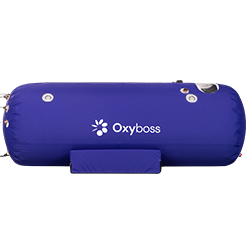
Home chambers especially feel less clinical than hospital setups — you're in your own space, you control the panel, and you can bail anytime. That makes a big difference if you're the type who gets twitchy in MRI machines.
2. Pressurization (the ear thing everyone talks about)
The chamber starts to pressurize. You'll hear airflow — a steady hiss or hum — and within a minute or two, you feel it: fullness in your ears, like the pressure change when a plane takes off or you drive up a mountain.
This is the most noticeable part of the whole experience. Your ears might pop, feel clogged, or just ache slightly if you don't equalize. The fix is simple: swallow, yawn, chew gum, sip water, or wiggle your jaw. Most people get the hang of it by the second or third session.
How fast does it pressurize? That depends on the chamber. Medical-grade units in hospitals might ramp up over 10–15 minutes to reach 2.0–2.4 ATA (atmospheres absolute) — roughly the pressure you'd feel 33–46 feet underwater. Home wellness chambers usually run gentler: 1.3–1.5 ATA (about 10–16 feet underwater equivalent) and take it slow so your ears have time to adjust. Many let you dial the rate yourself.
Some people notice a brief warmth as the air compresses. It fades once pressure levels off.
3. At pressure (the boring part, in a good way)
Once you hit target pressure, the hissing stops or drops to a low hum. The ear fullness settles. And… that's when most people realize there's nothing dramatic happening.
You're lying or sitting in a quiet, temperature-controlled space, breathing normally. If it's a pure-oxygen medical chamber, you might have a mask or hood on; if it's a mild home chamber, the whole cabin is oxygen-enriched and you just breathe the air around you.
What do people do?
- Watch a movie or show (most chambers have a tablet holder or screen)
- Listen to music, podcasts, audiobooks
- Read (if there's enough light)
- Nap — this is surprisingly common
- Meditate or just lie there thinking about lunch
Some users report subtle sensations: a faint tingling in fingers or toes, a floating or weightless feeling, a dreamy relaxed state. Others feel nothing except "I'm lying down and kind of bored." Both are normal.
How long? Medical sessions often run 60–120 minutes. Home wellness sessions tend to be shorter — 30–60 minutes — since the pressure is lower and the goal is relaxation rather than clinical treatment.
4. Depressurization (ear thing, round two)
When the session ends, pressure drops gradually. Your ears pop and crackle again, this time in reverse. It's the same sensation as landing in a plane. Swallow, yawn, and you're fine.
Depressurization is usually slower than pressurization to keep things comfortable. If your ears hurt at any point, the process can be paused or slowed down — especially in a home chamber where you're running the controls yourself.
5. Stepping out
The hatch opens. You step out. And… most people feel pretty normal. Maybe a little more relaxed than when you went in. Maybe a bit sleepy. Some people feel clear-headed and energized; others feel like they could nap for an hour.
Common after-effects:
- Mild thirst (drink some water)
- Light hunger
- A "floaty" or calm mood
- Slight fatigue (it passes quickly)
These aren't side effects in the medical sense — more like your body settling back to normal pressure. You can go about your day right after. No recovery time needed.
What if I freak out? (The claustrophobia question)
Let's be honest: if you have severe claustrophobia, a single-person chamber might not be your thing. It's an enclosed tube. You're lying inside it for 30–90 minutes.
But here's what makes it less scary than you'd think:
- The walls are clear. You can see out the whole time.
- You're not strapped in. You can move, shift position, stretch.
- There's ventilation and airflow — it doesn't feel stuffy.
- In a home unit, you control the start/stop. That sense of control changes everything.
- Many people who panic in MRI machines do fine in hyperbaric chambers, because MRIs are loud, tight, and you're stuck. Hyperbaric chambers are quieter and more spacious by comparison.
If you're nervous, start with a short session — 20 minutes — and see how it feels. Most people relax once they realize nothing bad is happening.
Which chamber are you in? The feel changes with the type
Not all hyperbaric chambers feel the same. If you've been reading about "what it's like," make sure you're reading about the right kind of chamber — because the experience varies.
Medical/Clinical chambers (hospitals, wound centers)
Home wellness chambers (personal use)
Pressure: 2.0–3.0 ATA (33–66 feet underwater equivalent)
Pressure: 1.3–1.5 ATA (10–16 feet equivalent)
Oxygen delivery: 100% pure oxygen via mask or hood
Oxygen: Oxygen-enriched air (you breathe the cabin atmosphere)
Supervision: Medical staff present, monitoring vitals
Supervision: You run it yourself (or a family member helps)
Purpose: Wound healing, carbon monoxide poisoning, decompression sickness, radiation injury — FDA-recognized medical indications
Purpose: Relaxation, recovery, wellness, sleep support — not medical treatment
Feel: More clinical. Higher pressure = stronger ear pressure. Mask can feel intrusive. Longer sessions (90–120 min).
Feel: Gentler pressure, easier on ears. No mask. Shorter sessions. You're in control.
Cost: $100–$300 per session; insurance may cover if medically necessary
Cost: One-time purchase; use as often as you want
The blog posts and testimonials you find online are often from people using medical chambers in hospital settings. If you're considering a home chamber, your experience will be milder, more casual, and less medicalized. That's not better or worse — just different.
What you'll actually feel (and what you won't)
Let's set expectations, because there's a lot of hype out there.
You will feel:
- Ear pressure (guaranteed)
- A quiet, low-stimulus environment (boring for some, calming for others)
- Possibly a subtle warmth, tingling, or relaxed/"floaty" sensation
- Refreshed or sleepy afterward
You probably won't feel:
- A sudden rush of energy or "oxygen high"
- Pain (unless you ignore ear pressure and don't equalize)
- Immediate healing or dramatic change after one session
- Anything mystical or intense
Mild hyperbaric chambers (1.3–1.5 ATA) are gentle. They're closer to "lying in a really good nap pod" than "going into a spaceship." If you're expecting a life-changing sensory experience from session one, you'll be disappointed. The benefits, if any, build over time and are subtle.
A note on evidence: The FDA recognizes hyperbaric oxygen therapy (HBOT) at ≥2.0 ATA for specific medical conditions like diabetic wounds, carbon monoxide poisoning, and decompression sickness (FDA, UHMS). Lower-pressure "mild" chambers (under 1.5 ATA) are not FDA-approved for medical treatment, and research on their effectiveness for things like autism, anti-aging, brain fog, or athletic performance is limited or inconclusive.
That doesn't mean they're useless — many people use them for relaxation, recovery, and general wellness and report feeling better. Just don't expect them to work like a prescription drug. They're more like a sauna or a massage chair: nice to have, possibly helpful, not a cure for anything.
When it feels wrong: signs to stop and get help
Most sessions are uneventful. But if you experience any of the following during or right after a session, stop immediately and contact a healthcare provider:
- Severe ear pain that doesn't ease with swallowing
- Sharp sinus pain or nosebleed
- Chest pain or trouble breathing
- Dizziness that doesn't go away after a few minutes
- Vision changes (blurry vision, flashing lights, tunnel vision)
- Confusion, slurred speech, or seizure-like symptoms
These are rare, but they can indicate problems like ear injury (barotrauma), oxygen toxicity (more common at higher pressures), or other complications. Hyperbaric chambers are generally safe when used correctly, but they're still medical devices — treat them with respect.
Who should avoid hyperbaric chambers altogether?
- Anyone with untreated pneumothorax (collapsed lung)
- Recent ear surgery or severe ear infection
- Certain lung conditions (COPD, emphysema — check with a doctor first)
- Fever or active cold/flu (pressure can worsen sinus/ear blockage)
- Pregnancy (unless under medical supervision)
- Severe claustrophobia with panic disorder
If you have any of these, talk to a doctor before using a chamber.
FAQ
Does it hurt?
No. The only discomfort is ear pressure, and that goes away when you equalize (swallow, yawn, etc.). If you've ever flown without pain, you'll be fine.
Can I use my phone inside?
Depends on the chamber. In pure-oxygen medical chambers, electronics are prohibited (fire risk). In mild home chambers with regular air, many allow phones or tablets. Check your user manual.
How many sessions before I feel something?
This varies wildly. Some people feel relaxed after one session. Others notice cumulative effects (better sleep, faster recovery) after 10–20 sessions. It's not a light switch.
Is it safe to use every day?
For mild home chambers (1.3–1.5 ATA), daily use is generally considered safe for most people. Medical chambers at higher pressure require supervision and protocol. Always follow manufacturer guidance and consult a doctor if you have health conditions.
What's the difference between a $5,000 chamber and a $30,000 chamber?
Pressure capacity, build quality, certifications, size, and features. Higher-end units may reach 1.5+ ATA, have better welds, FDA registration, and come from manufacturers with long track records. Cheaper units might work fine but lack third-party testing or customer support. Do your homework.
Can I bring my kid in with me?
Some chambers are designed for two people. Others aren't. And whether it's appropriate depends on the child's age, health, and ability to equalize ear pressure. Check with the manufacturer and your pediatrician.
The honest takeaway
A hyperbaric chamber feels like lying in a pressurized tube while your ears do the airplane thing, and then everything goes quiet and kind of boring for 30–90 minutes, and then you come out feeling like you just had a really solid rest.
It's not scary. It's not painful. It's not a magic healing pod. It's just a box that gives you more oxygen for a while, and for some people, that makes a difference in how they feel.
If you're thinking about trying one — whether at a clinic or buying one for home — now you know what to expect. The experience is way less dramatic than the marketing suggests, but also way less intimidating than your brain might be telling you.
Disclaimer: This article is for informational purposes only and is not intended to diagnose, treat, cure, or prevent any disease. Hyperbaric chambers are medical devices. Consult with a qualified healthcare provider before using one, especially if you have underlying health conditions. The author is a hyperbaric chamber manufacturer; this article reflects our experience building and testing these devices, not medical advice.