.svg)
.svg)
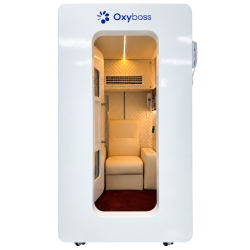
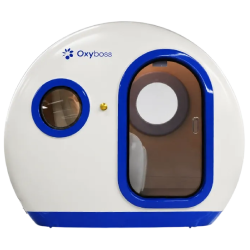
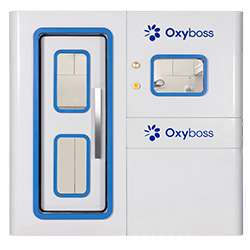
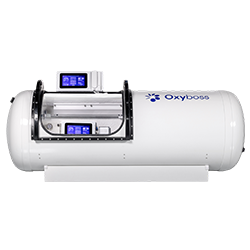
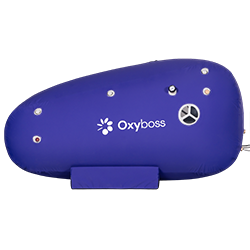
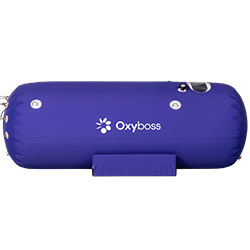
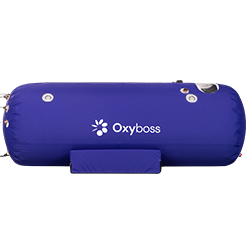

Your hyperbaric chamber is a precision wellness tool. Treat it right, and it'll serve you for years. Neglect it, and you're looking at expensive repairs—or worse, safety risks.
We've seen chambers die early over a clogged filter. We've watched seals crack because nobody checked them. And we've answered service calls that could've been avoided with a 10-minute monthly routine.
This guide covers everything you need to keep your chamber running safely and efficiently—whether you own a soft portable unit or a hard-shell room. We'll walk through daily care, seasonal tasks, and the preventive work that actually matters.
If you're using an Oxyboss chamber, you're already ahead. Our 3-in-1 integrated oxygen system simplifies maintenance compared to older multi-component setups. But even the best equipment needs attention.
Let's get into it.
1. Quick Start: What Maintenance Actually Means
Hyperbaric chamber maintenance isn't complicated, but it is consistent.
You're basically doing three things:
- Keeping it clean – Dirt and moisture are your enemies
- Checking seals and connections – Air leaks kill pressure performance
- Maintaining your oxygen source – Concentrators need regular filter swaps
Most maintenance takes 15-30 minutes per month. Annual professional service adds another hour or two.
Skip the routine stuff, and you'll pay later—in downtime, replacement parts, or safety incidents.
Your maintenance rhythm:
- Daily: Quick wipe-down after use, visual check
- Monthly: Deep clean, filter inspection, pressure test
- Quarterly: Seal conditioning, electrical connections check
- Annually: Professional inspection, calibration, parts replacement
Now let's break down what each chamber type needs.
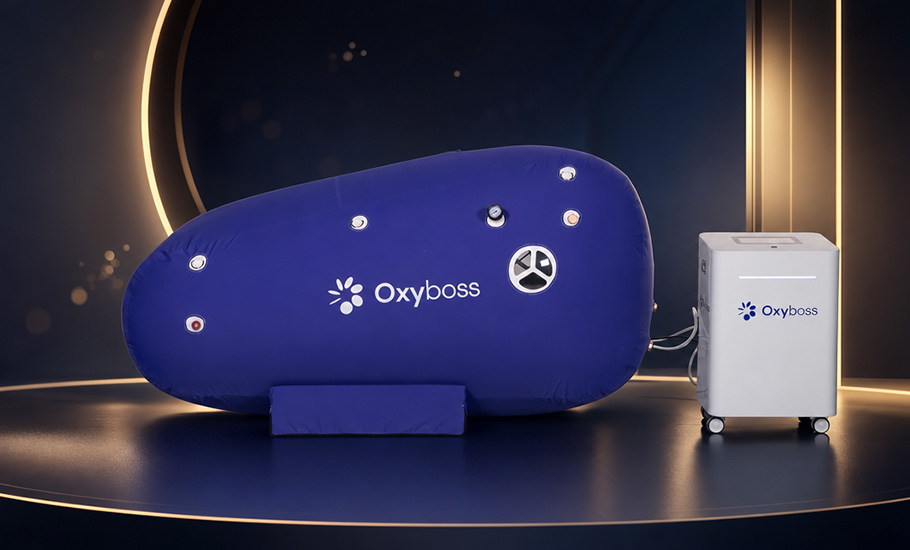
2. Soft Chamber Care (OB-S Series: Portable Chambers)
Oxyboss soft chambers use medical-grade TPU material rated for 1.5 ATA. They're lightweight and portable, but the flexible material needs different care than hard shells.
Daily After-Use Routine
Wipe down the interior – Use a damp microfiber cloth with mild soap. Focus on areas where skin makes contact.
Air it out – Unzip and leave the chamber open for 30-60 minutes after each session. Trapped moisture breeds mold.
Check the zipper – Run your finger along the zipper track. Feel for dirt, fabric caught in teeth, or resistance when opening/closing.
Monthly Deep Clean
Interior TPU surface:
- Mix warm water with pH-neutral cleaner (avoid bleach, ammonia, alcohol-based products)
- Wipe all interior surfaces with a soft sponge
- Pay attention to seams and corners where moisture collects
- Dry thoroughly with clean towels
- Leave open to air-dry completely (2-3 hours)
Zipper maintenance:
- Vacuum zipper track with brush attachment
- Apply silicone-based zipper lubricant (not WD-40)
- Cycle the zipper 10-15 times to distribute lubricant
Pressure test:
- Pressurize to operating pressure (1.5 ATA)
- Listen for hissing sounds
- Check pressure gauge—it should hold steady for 5 minutes
- Small pressure drops (0.05-0.1 ATA over 10 minutes) are normal; faster drops indicate leaks
Quarterly Checks
Inspect TPU material:
- Look for punctures, tears, or thin spots (especially at seams)
- Check for discoloration (yellowing/browning can indicate UV damage or cleaning product degradation)
- Test flexibility—material should still be supple, not brittle
Window and viewport seals:
- Windows use compression gaskets
- Check for compression set (permanent flattening)
- Apply thin layer of silicone grease to seal surfaces
Storage
Store soft chambers in a cool, dry place away from direct sunlight. UV exposure degrades TPU over time.
Fold it properly:
- Avoid sharp creases—use gentle rolling when possible
- Don't place heavy objects on top
- Keep away from heat sources (furnaces, radiators, space heaters)
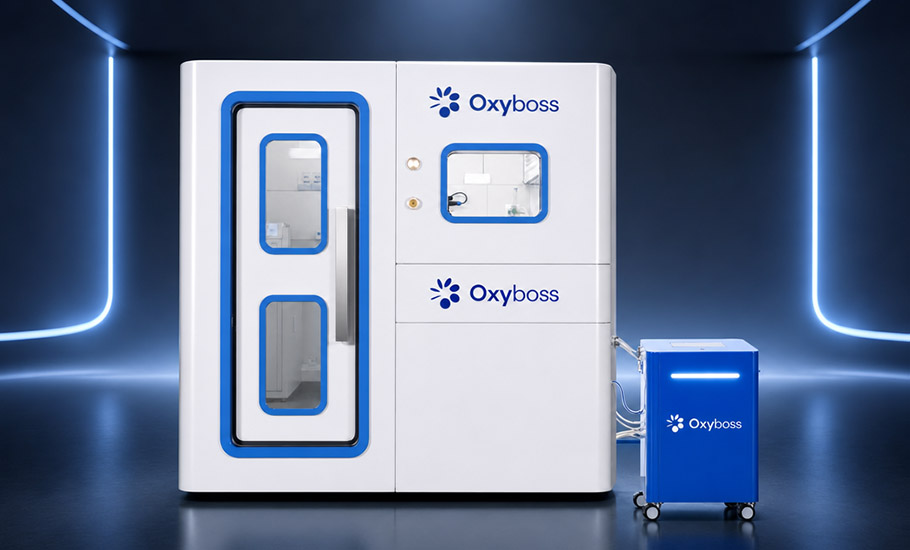
3. Hard Chamber Care (OB-H, OB-D Series: Aluminum & Steel Chambers)
Hard chambers require less frequent cleaning but more attention to mechanical components. Oxyboss hard chambers operate at 1.1-2.0 ATA depending on model.
Daily After-Use Routine
Wipe interior surfaces – Use disinfectant wipes on touchpoints (armrests, control panels, headrest areas).
Check door seals – Run your hand along the door gasket. Feel for moisture, debris, or irregularities.
Vent the chamber – Leave the door open 15-20 minutes to clear humidity.
Monthly Maintenance
Interior cleaning:
- Vacuum floors and seating surfaces
- Wipe all surfaces with mild disinfectant
- Clean acrylic windows with plastic-safe cleaner (no ammonia)
- Inspect interior padding and mattress for wear or moisture damage
Door seal inspection:
- Check O-ring or gasket for cuts, nicks, or flat spots
- Clean seal groove with lint-free cloth
- Apply thin coat of oxygen-safe lubricant (silicone or PTFE-based)
- Test seal compression—should feel firm but not crusty
Seal inspection protocols follow Divers Alert Network (DAN) recommendations for hyperbaric chamber safety.
Pressure test:
- Pressurize to maximum operating pressure
- Monitor pressure gauge for 10 minutes
- Acceptable leak rate: <0.1 ATA per 10 minutes
- Faster drops mean seal or valve issues
Quarterly Checks
Structural inspection:
- Check welds and seams for cracks or corrosion
- Aluminum chambers: look for oxidation (white powdery residue)
- Steel chambers: inspect for rust, especially around door hinges and base
Door hardware:
- Lubricate hinges with marine-grade grease
- Check latch mechanism for smooth operation
- Inspect safety release handle—should move freely
Acrylic windows:
- Check for crazing (fine cracks) or yellowing
- Inspect window seals for compression set
- Verify secure mounting (no rattling at pressure)
Pressure relief valves:
- Manually actuate relief valve quarterly
- Should release pressure smoothly without sticking
- If valve doesn't open cleanly, schedule professional service
Annual Professional Service
Hard chambers need yearly inspection by a qualified technician. This isn't optional—it's safety-critical.
What professionals check:
- Pressure vessel integrity (visual and sometimes ultrasonic testing)
- Valve calibration and function
- Electrical grounding and continuity
- Control system diagnostics
- Seal replacement if needed
- Certification/documentation updates
Annual inspection requirements align with ASME PVHO-2 standards for pressure vessels for human occupancy.
4. 3-in-1 Oxygen Source Maintenance (Oxyboss Core System)
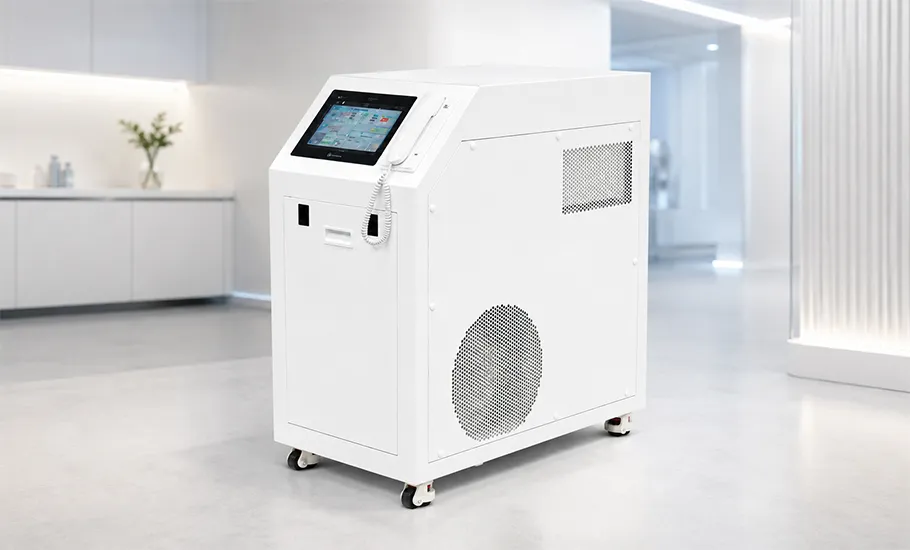
Here's where Oxyboss differs from older setups. Our chambers use an integrated 3-in-1 system that combines:
- 10L oxygen concentrator (90%±3% O₂ purity, 10L/min flow)
- Air compressor (pressurization system)
- Air conditioning unit (climate control)
All in one housing: 2200W, 10A, 930×450×920mm, 130kg.
This integration simplifies maintenance—you're managing one unit instead of three separate boxes. But each sub-system still needs attention.
Oxygen Concentrator Module
Filter replacement schedule:
- Intake air filter (external): Every 3 months or 500 hours (comes first)
- HEPA filter (internal): Every 12 months
- Molecular sieve beds: 3-5 years (professional replacement only)
Monthly filter check:
- Remove external filter housing
- Visually inspect for dust accumulation
- If filter looks gray or dirty, replace early
- A clogged filter drops oxygen purity and strains the compressor
Oxygen purity check:
- Use an oxygen analyzer quarterly
- Target: 90%±3% O₂ at 10L/min flow (per UHMS guidelines for hyperbaric oxygen delivery systems)
- If purity drops below 87%, check filters first, then call for service
Compressor check:
- Listen for unusual noise (grinding, squealing)
- Check cooling fan operation
- Inspect air intake vents—keep clear of obstructions
Air Compressor Module
Monthly checks:
- Inspect intake filter (same maintenance as concentrator intake)
- Check for oil leaks (if oil-lubricated model)
- Test pressure switch function
- Listen for abnormal vibration
Quarterly maintenance:
- Clean cooling fins
- Check belt tension (if belt-driven)
- Drain moisture separator (if equipped)
Signs of trouble:
- Slow pressurization times
- Overheating (unit shutting off mid-session)
- Loud banging or clanking
- Oil in air lines (should never happen with proper separators)
Air Conditioning Module
Monthly cleaning:
- Clean or replace AC filter (standard HVAC filter)
- Wipe down condenser coils with soft brush
- Check condensate drain—must flow freely
Quarterly checks:
- Inspect refrigerant lines for frost buildup (indicates low refrigerant)
- Test thermostat accuracy
- Verify fan operation at all speeds
Annual professional service:
- Refrigerant level check
- Coil deep cleaning
- Electrical connection inspection
Placement and Ventilation
Your 3-in-1 unit needs proper airflow to operate efficiently.
Requirements:
- Clearance: 18 inches on all sides
- Ventilation: Well-ventilated room (not enclosed closets)
- Floor surface: Level, vibration-damping mat recommended
- Ambient temperature: 50-95°F (10-35°C)
Warning signs of poor ventilation:
- Unit overheating and shutting down
- Reduced oxygen purity
- Shorter compressor run times before thermal cutoff
5. Power & Electrical Basics
Oxyboss 3-in-1 systems draw 2200W at 10A (110-240V, 50/60Hz). That's roughly equivalent to a window AC unit plus a space heater.
Circuit Requirements
Dedicated 15A circuit minimum – Don't share the circuit with other high-draw appliances.
Why: Running the chamber on an overloaded circuit causes:
- Voltage sag (reduces oxygen concentrator efficiency)
- Tripped breakers mid-session
- Potential fire hazard from overheating wires
Monthly electrical checks:
- Inspect power cord for fraying or damage
- Check plug for discoloration (indicates overheating)
- Test GFCI function if installed
- Verify grounding continuity (use outlet tester)
Voltage Stability
Low or fluctuating voltage affects oxygen concentrator performance more than you'd think.
Symptoms of voltage issues:
- Oxygen purity drops below 90%
- Concentrator runs hotter than normal
- Compressor struggles to reach target pressure
Solutions:
- Install voltage stabilizer/conditioner if you experience frequent brownouts
- Monitor voltage with plug-in meter during sessions
- Consider UPS (uninterruptible power supply) for areas with frequent outages
6. Preventive Maintenance Schedule (At a Glance)
Here's your complete maintenance calendar. Print this and stick it on the wall near your chamber.
Pro tip: Set recurring calendar reminders. Most maintenance failures happen because people forget, not because they don't know what to do.
7. Why Log Keeping Matters
Keep a maintenance log. Seriously.
It sounds tedious, but logs catch problems early and help technicians diagnose issues faster during service calls.
What to Track
After each session:
- Date and duration
- Peak pressure reached
- Any unusual sounds or smells
- Performance issues (slow pressurization, temperature problems)
After maintenance tasks:
- Task completed and date
- Parts replaced (filter type, seal model)
- Observations (condition of replaced parts, measurements)
- Technician name (for professional service)
Why It Helps
Warranty claims: Many manufacturers require maintenance records for warranty service. If you can't prove you changed filters on schedule, you might eat the repair cost.
Resale value: A well-documented maintenance history increases chamber resale value by 15-25%.
Pattern recognition: Logs help you spot trends. If oxygen purity gradually declines over 6 months, you know the molecular sieve is wearing out—time to budget for replacement before it fails mid-session.
Simple logging options:
- Spreadsheet (Google Sheets or Excel)
- Paper logbook kept near the chamber
- Maintenance apps (some chamber manufacturers offer branded apps)
8. Parts Lifecycle & 3-Year Cost Budget
Hyperbaric chambers have consumable parts. Budget for them upfront.
Typical Parts Lifespan
High-wear items (replace regularly):
- External air filters: 3 months / ~$15 each = $60/year
- HEPA filters: 12 months / ~$40 each = $40/year
- Zipper lubricant (soft chambers): As needed / ~$10/year
- Seal lubricant: As needed / ~$15/year
- Oxygen tubing: 12-24 months / ~$20 = $10-20/year
Medium-wear items (replace on condition):
- Door seals/O-rings (hard chambers): 2-4 years / $80-150
- Window seals: 3-5 years / $50-100
- Acrylic windows: 5-10 years / $200-400 (if needed)
- Soft chamber zipper replacement: 3-5 years / $150-300
Long-life items (professional replacement):
- Molecular sieve beds: 3-5 years / $400-800
- Compressor rebuild/replacement: 5-8 years / $500-1200
- AC refrigerant service: 3-5 years / $150-300
- Pressure gauges: 5-10 years / $100-200
3-Year Budget Estimate
Minimal maintenance (DIY only):
- Filters and consumables: $300-400
- Annual professional service (×3): $600-900
- Total: $900-1300
Realistic budget (includes some part replacements):
- Filters and consumables: $400-500
- Seals and gaskets: $150-250
- Professional service and repairs: $1000-1500
- Total: $1550-2250
Aggressive use or older units:
- Add $500-1000 for potential major component replacement
Compare that to buying a new chamber ($8,000-35,000 depending on model). Proper maintenance is cheap insurance.
9. Common Maintenance Mistakes (And How to Avoid Them)
Mistake #1: Using harsh cleaners on TPU or seals
Why it's bad: Alcohol, bleach, and ammonia-based products degrade flexible materials. TPU becomes brittle. Seals crack.
Fix: Use pH-neutral cleaners only. Read the label—if it warns against use on plastics, don't use it in your chamber.
Mistake #2: Skipping filter changes
Why it's bad: Clogged filters force the concentrator to work harder, reducing oxygen purity and shortening compressor life. We've seen molecular sieves fail at 2 years instead of 5 because owners ignored filters.
Fix: Set phone reminders for filter changes. Buy filters in bulk (6-12 month supply) so you're never tempted to "wait until next month."
Mistake #3: Over-lubricating seals
Why it's bad: Too much lubricant attracts dirt and creates a grinding paste that wears seals faster.
Fix: Thin film only. If you can see lubricant pooling or dripping, you used too much. Wipe off excess.
Mistake #4: Ignoring slow pressure loss
Why it's bad: Small leaks become big leaks. A seal that drops 0.2 ATA in 10 minutes will fail completely in 2-3 months, potentially mid-session.
Fix: Address pressure loss immediately. Check seals first (90% of leaks), then valves, then fittings.
Mistake #5: Storing soft chambers wet
Why it's bad: Mold. Once it starts, it's nearly impossible to fully eliminate from TPU seams.
Fix: Always air-dry completely before folding. If you see or smell mold, deep clean with diluted hydrogen peroxide (3% solution), rinse thoroughly, and dry in sunlight if possible.
Mistake #6: DIY electrical repairs
Why it's bad: Hyperbaric chambers operate under pressure. Faulty electrical work can cause fires in oxygen-enriched environments—that's catastrophic.
Fix: Leave electrical repairs to professionals. You can replace filters and clean seals; don't mess with wiring.
10. When to Call Oxyboss vs. DIY Troubleshooting
Some problems you can fix yourself. Others require professional help.
DIY-Friendly Issues
You can probably handle:
- Cleaning and routine maintenance
- Filter replacements
- Minor seal lubrication
- Zipper maintenance (soft chambers)
- Pressure testing and leak detection (as diagnostic step)
- Basic troubleshooting (checking power, resetting breakers)
Call Professional Support
Don't DIY these:
- Electrical system repairs
- Pressure relief valve replacement or adjustment
- Structural damage (cracks, deep scratches, dents affecting pressure integrity)
- Oxygen purity below 87% after filter changes
- Compressor or concentrator internal repairs
- Pressure gauge calibration
- Window seal replacement (hard chambers—requires specific torque specs)
Emergency Situations (Stop Using Immediately)
Call Oxyboss support NOW if you experience:
- Burning smell during operation
- Sparks or electrical arcing
- Chamber won't depressurize (stuck valve)
- Sudden catastrophic pressure loss
- Unusual bulging or deformation (soft chambers)
- Cracked acrylic window (hard chambers)
Oxyboss support contact: [Link to oxyboss.com/support]
Response times:
- Technical support: 24-48 hours
- Emergency safety issues: Same-day escalation
- Parts orders: 3-5 business days (US domestic)
FAQ
Q1: How often should I replace my oxygen concentrator filters?
Replace external intake filters every 3 months or 500 hours of use (whichever comes first). HEPA filters should be changed annually. If you use your chamber daily or live in a dusty environment, check filters monthly—you might need more frequent replacements.
Q2: What causes oxygen purity to drop below 90%?
Most commonly: clogged filters, failing molecular sieve beds, or air leaks in the oxygen delivery system. Check and replace filters first. If purity is still low after fresh filters, the molecular sieve likely needs replacement (typical lifespan: 3-5 years).
Q3: Can I use regular household cleaners on my hyperbaric chamber?
No. Avoid alcohol, bleach, ammonia, and harsh solvents. These degrade TPU material and rubber seals. Use mild, pH-neutral soap and water. For disinfecting, use hydrogen peroxide (3% solution) or quaternary ammonium-based disinfectants safe for medical equipment.
Q4: How do I know if my chamber has a leak?
Pressurize to operating pressure and monitor the gauge for 10 minutes. Soft chambers: acceptable leak rate is <0.1 ATA per 10 minutes. Hard chambers: <0.05 ATA per 10 minutes. Faster pressure loss indicates a leak—check door seals, zippers, and valve connections.
Q5: What's the minimum circuit breaker size for an Oxyboss 3-in-1 system?
You need a dedicated 15-amp circuit minimum for the 2200W system. Don't share the circuit with other high-draw appliances. If you experience frequent breaker trips, upgrade to a 20-amp circuit.
Q6: How long do soft chamber zippers last?
With proper maintenance (regular cleaning and lubrication), zippers typically last 3-5 years of regular use. Signs of wear include difficult operation, visible tooth damage, or fabric separation near the zipper. Replacement is a professional service—don't attempt zipper replacement yourself.
Q7: Do I really need annual professional service if everything seems fine?
Yes. Professional service catches problems before they become safety issues. Technicians check pressure vessel integrity, valve calibration, and electrical systems that you can't safely inspect yourself. Many warranty terms require annual professional service—skip it and you might void coverage.
Keep Your Investment Running Strong
Hyperbaric chamber maintenance isn't glamorous, but it's straightforward. Spend 30 minutes a month on routine care, and you'll avoid expensive repairs and extend your chamber's life by years.
The Oxyboss 3-in-1 oxygen system simplifies the process—one integrated unit instead of managing three separate pieces of equipment. But even the best-engineered system needs attention.
Your maintenance starter kit:
- Replacement filters (buy 6-month supply)
- pH-neutral cleaner
- Silicone lubricant (oxygen-safe)
- Microfiber cloths
- Maintenance log (digital or paper)
- Oxygen analyzer (optional but recommended)
Ready to stock up on maintenance supplies or schedule professional service? Visit oxyboss.com or contact our support team.
Your chamber is a long-term wellness investment. Take care of it, and it'll take care of you.