.svg)
%201.webp)
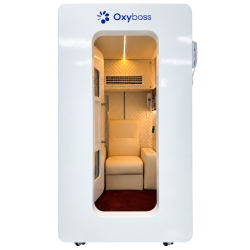
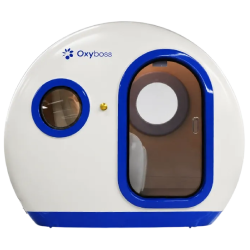
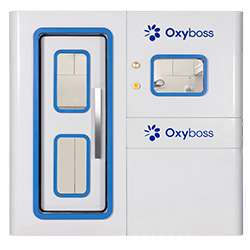
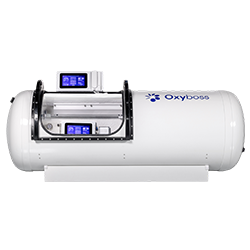
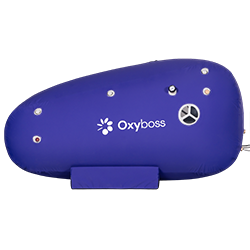
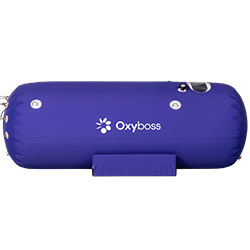
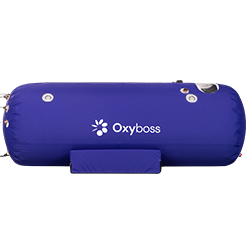
2 Person Hyperbaric Oxygen Chamber for Sale
Multiplace hyperbaric chambers are pressurized enclosures that seat two operators at the same time — usually a couple, a parent and a child, a coach and a client, or two friends booking together. They breathe elevated oxygen through dedicated masks while the chamber runs at the operator-selected pressure, usually for a 60–90 minute session.
For anyone running a wellness center, recovery studio, sports performance facility, or boutique spa, the 2-person chamber hits the sweet spot: more throughput per session, an attendant who can sit inside with nervous first-timers, and a lower per-session operating cost than running two single-user chambers back-to-back. For couples and family buyers, it removes the scheduling friction of booking solo back-to-back sessions.
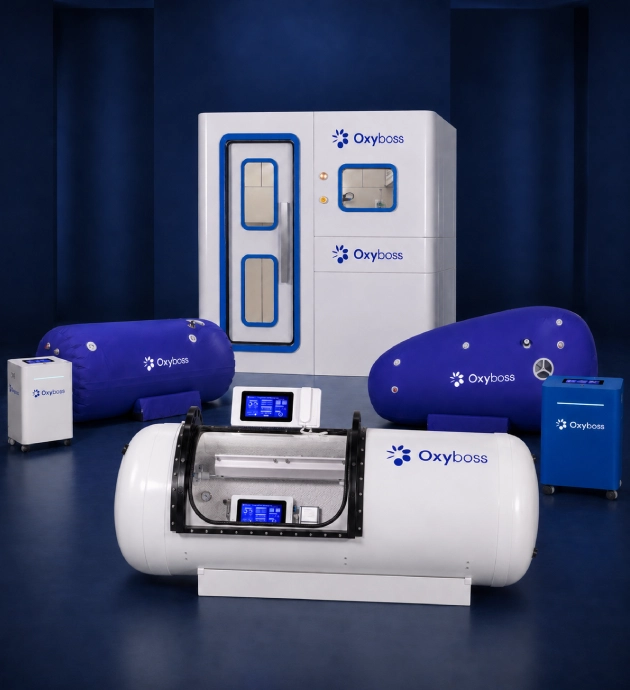
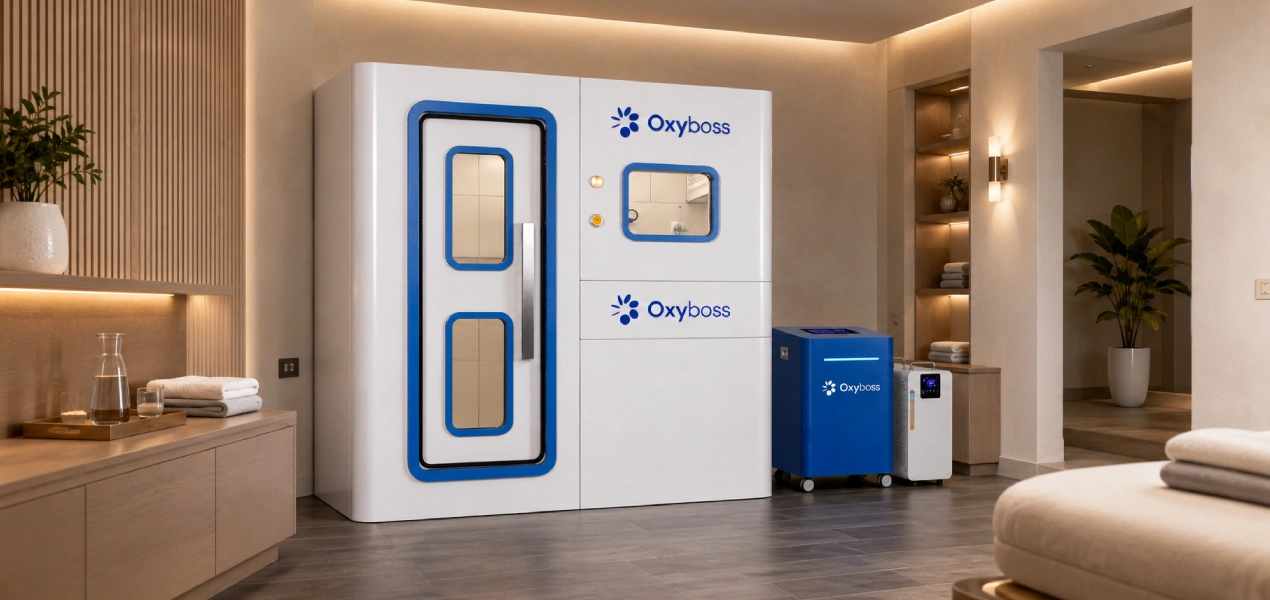
Oxyboss 2-Person Hyperbaric Chamber
Both chambers below are multi person hyperbaric chambers from the same Oxyboss production line. Same pressure ceiling, same oxygen system, same warranty. The differences come down to room shape, door type, and interior feel — pick by the room you have, and we will ship the model that fits.
Why These Multi Person Hyperbaric chambers Sell So Well?
These six points are the reasons our 2-person buyers come back and tell their friends. If any of them match the problem you are trying to solve, this is the chamber to look at first.


.svg)
Internal and external synchronized control panels
Both chambers ship with dual touchscreen interfaces — one inside for the occupants, one outside for the attendant or studio operator. Pressure, session timing, oxygen flow, temperature, and emergency decompression can be initiated from either panel, and both screens mirror each other in real time. Solo users stay independent. Commercial operators supervise multiple chambers without walking between rooms.

Two-way intercom and live monitoring.
The built-in intercom connects inside occupants with outside staff. Pressure, oxygen concentration (with a 24% alarm threshold), CO₂, temperature, and humidity show on both screens simultaneously — your clients see what is happening to them, your staff sees the same numbers from outside.

Built to standards buyers ask for.
The pressure vessel is engineered against the ASME PVHO-1 standard family; production runs on an ISO 13485 quality system; every unit ships with a CE marking including the CE-PED pressure-equipment module. Inspectors, insurers, and your landlord's build-out team tend to ask for these three documents first.

3-year pressure vessel warranty.
The most expensive part of any chamber to replace is the pressure vessel itself. Ours is warranted for three. Most competing 2-person units in this segment ship with a 12-month vessel warranty — we publish ours because we want you to compare.
Oxyboss The 3-in-1 Oxygen Source
The oxygen supply is the part most 2-person chamber buyers forget to budget for — and the part that, if undersized, makes the whole chamber feel underwhelming on day one. The Oxyboss 3-in-1 oxygen source bundles the three modules a 2-person chamber actually needs into a single 2200 W unit, and ships standard with both the H402 and the D201.
.svg)
10 L/min oxygen generator (90% ±3% purity)
Enough flow to feed both masks at once without starving the session when both clients breathe deeply. Most single-output generators in this price class run at 5 L/min and force you to choose between the two seats — ours does not.

Integrated oil-free air compressor
No need to source a separate medical-grade compressor, plumb it in, or find a quiet corner of the room for it. The compressor lives inside the same enclosure and feeds the chamber's air cycle directly.
Integrated climate module
Real-time CO₂ and temperature monitoring with 4–6 air changes per hour (reference ceiling from the NFPA 99 healthcare facility code) and CO₂ held below 5,000 ppm. Your operator does not have to babysit the room between sessions.
2,200 W / 10 A single-phase power draw
No three-phase upgrade, no dedicated commercial power line. Most studio rooms run both the chamber and the 3-in-1 from a standard 220–240 V outlet on the existing breaker panel.
Wellness centers and recovery studios
Running three or more sessions a day. Two-seat capacity cuts the per-session energy cost roughly in two — most of our studio buyers tell us this was the deciding number on the spreadsheet.

Sports performance and physiotherapy facilities
Offering post-training recovery packages to amateur and semi-pro athletes. The 2-person format lets a coach sit inside with the athlete, which most athletes say they prefer.

Boutique spas and resort spas
Integrating oxygen sessions into longer wellness programs (massage + sauna + chamber) for couples or parent-child bookings — the highest-margin booking type in most spa menus.

Longevity and biohacking studios
Building pressure protocols into structured 8–12 week plans. The 2-person format lets a coach run two clients through identical protocols with shared accountability.

Family buyers and couples
In private residences where a second seat matters for a partner or a child joining an adult's session — the use case that drives most of our direct-to-home sales.
From Quote to First Paid Session
The steps below are the actual sequence a multi person hyperbaric chamber order runs through. Timelines reflect the manufacturing and freight windows we hit on our last 20 multiplace orders — not aspirational numbers.
- Send your floor plan and target pressure. A single drawing plus your target ATA is enough for us to confirm room fit and oxygen-source placement — usually within four hours.
- Receive a fixed quote within one business day. A real person replies with line-item pricing: chamber, 3-in-1 oxygen source, freight, and any optional accessories. No hidden fees, no "contact us for pricing."
- Pay deposit; production starts. Hard-chamber production runs 15–20 working days. Soft-chamber units run about 7 working days. We send build-stage photos on request so you can watch your chamber take shape.
- Freight selection. Air freight arrives in 15–20 days; DDP sea freight arrives in 35–45 days. We handle the export paperwork end-to-end.
- Install and commission on site. Our team or a local certified engineer walks the unit into position, connects the 3-in-1 source, runs the pressure test, and trains your staff on the operator console.
- First client session. Most buyers run their first paid session within 60–75 days of the deposit landing on our side — fast enough to keep your pre-launch marketing timeline on track.

Order Your Oxyboss Multiplace Hyperbaric Chamber
Send us your floor dimensions, your target pressure range, and how many sessions per day you expect to run. We will reply within one business day with a fixed quote, a freight estimate to your port or door, and a clear answer on whether the OB-H402 or the OB-D201 fits the space you have. Deposits lock in the next production slot — chambers ship in the order deposits are received.
Frequently Asked Questions
No. Hospital multiplace chambers are clinical devices that operate at 2.0–3.0 ATA, require a prescription, and are operated by trained hyperbaric staff. The two-person chambers on this page are personal-wellness devices with an operating pressure ceiling of 2.0 ATA, sold without a prescription. If you need a clinical-grade suite, we can refer you to a hospital-chamber specialist — the H402 and D201 are not designed for that use case.
The hardware consumables plus electricity for a 2-person chamber running three sessions per day, 90 minutes each, 300 days a year, lands roughly in the $3,400–$6,200 range over five years. Line items: intake filters (about $50 every 500–1,000 hours), door seals (about $150 every two years), molecular sieve (about $600 every 5,000–8,000 hours), control-screen modules (about $500 every five-plus years), and electricity at roughly 2.2 kWh per chamber-hour.
This excludes the per-session consumable that actually moves the number: disposable breathing masks at about €1.50 per mask, two or more per session. For a busy studio that adds up to roughly €13,500 over five years — and is the single largest variable cost line in the whole five-year model. Most competing brands will not put this number in writing. We do, because we want you to plan accurately.
The 3-in-1 oxygen source draws 2,200 W / 10 A on a single-phase 220–240 V supply — no three-phase upgrade. The room needs roughly 4–6 air changes per hour to keep CO₂ below the 5,000 ppm reference ceiling, and the chamber will alarm at 24% oxygen concentration as a safety interlock. A standard studio room with a small exhaust vent is enough.
The pressure vessel — the part that costs the most to repair if it ever fails — carries a 3-year warranty. Soft-chamber units carry a 1-year warranty. Consumables (filters, seals, masks) are replaced on the published schedule and are not covered by the vessel warranty.
Hard-shell lets the unit reach 2.0 ATA; soft-shell chambers top out around 1.5 ATA. Hard-shell vessels also have an 8–10 year service life versus 3–5 years for soft-shell, and the RF-welded seams are easier to inspect than adhesive seams. If your use case is specifically a 1.3–1.5 ATA lower-pressure protocol and the client will be using the unit solo, our soft-shell single-user line is the lower-cost answer and we are happy to quote that instead.
For the 2-person format, yes — most buyers run a single operator for two adjacent chambers, which is the typical layout in a recovery studio. The operator console surfaces both training monitors and both alarms, and the oxygen-concentration interlock and CO₂ monitoring are built into each unit rather than into the room. The dual-screen setup we ship standard is what makes this practical.