.svg)
.svg)
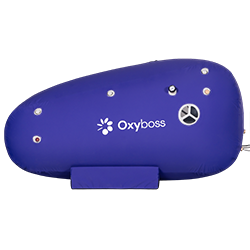
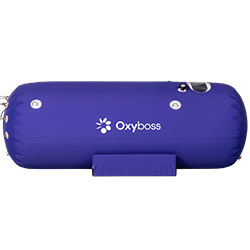
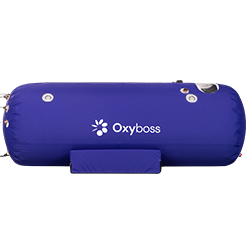
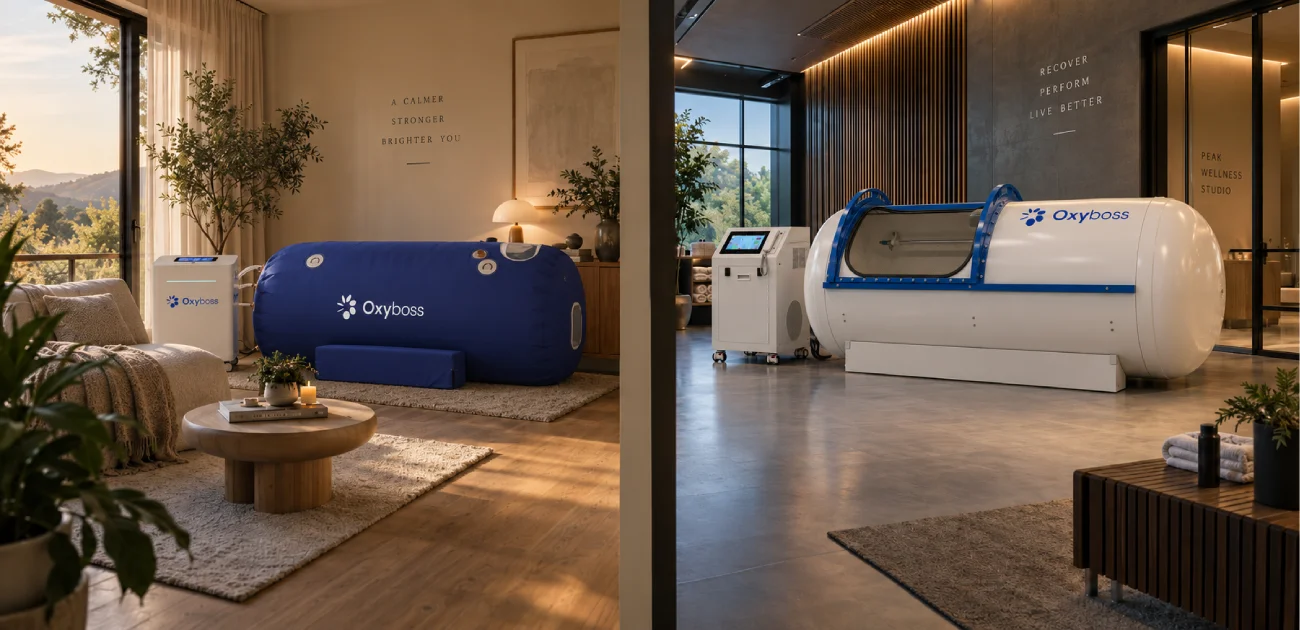
TL;DR
- 1.5 ATA and 2.0 ATA aren't the same appliance with a different dial. They're two different categories — soft shell vs hard shell, wellness use vs clinical HBOT.
- You can't upgrade later. A 1.5 ATA soft chamber can't be pushed to 2.0 ATA, ever. It's a shell limit, not a settings limit. Pick the pressure class you'll want three years from now.
- Insurance won't rescue a bad pressure pick. Medicare covers hyperbaric oxygen therapy only for a specific list of conditions and only in facilities delivering 1.9–3.0 ATA in a hard-sided chamber. Home wellness use, at any pressure, is out-of-pocket. [3][4]
- The real cost isn't the chamber. Concentrator, electrical work, room prep, maintenance, and power add roughly another chamber's worth of spend across the first three years. Plan for it up front.
What "ATA" actually means (and why the number is smaller than it sounds)
ATA stands for atmospheres absolute. One ATA is what you're breathing right now at sea level. So:
- 1.5 ATA = 1.5 × ambient pressure. About 7.35 psi above sea level. Same pressure your body would feel if you sank about 16.5 feet underwater.
- 2.0 ATA = 2 × ambient pressure. About 14.7 psi above sea level. Roughly 33 feet down.
The mechanism people care about is Henry's Law — under pressure, more oxygen dissolves into your blood plasma, not just the hemoglobin. Higher pressure, more dissolved oxygen. That's the whole reason pressure matters in the first place.
But here's the part the comparison pages skip: pressure is one of three levers, not the only one. How much oxygen you're actually getting inside a chamber depends on:
1. Pressure (ATA)
2. Oxygen concentration in the air you're breathing — cabin air (~21% oxygen), a concentrator (usually 90–95%), or USP oxygen cylinders (~100%)
3. Session length (usually 60–90 minutes)
Two setups can end up delivering the same dissolved-oxygen load. A 1.5 ATA session at 90% oxygen for 90 minutes and a 2.0 ATA session at ambient air for the same time land in roughly the same neighborhood on the arithmetic. Which is why anyone who tells you "higher ATA = better" is skipping two thirds of the equation.
What it feels like inside. People imagine being squeezed. It's not that. During compression your ears will pop, same as landing a plane — you'll yawn or swallow to equalize, and if you can't equalize you slow the compression down. Once you're at pressure it just feels like sitting in a slightly stuffy room. That's it. Not dramatic.
Soft shell, hard shell — the physics decides everything downstream
This is the single most important thing to understand, and most comparison pages bury it three scrolls down:
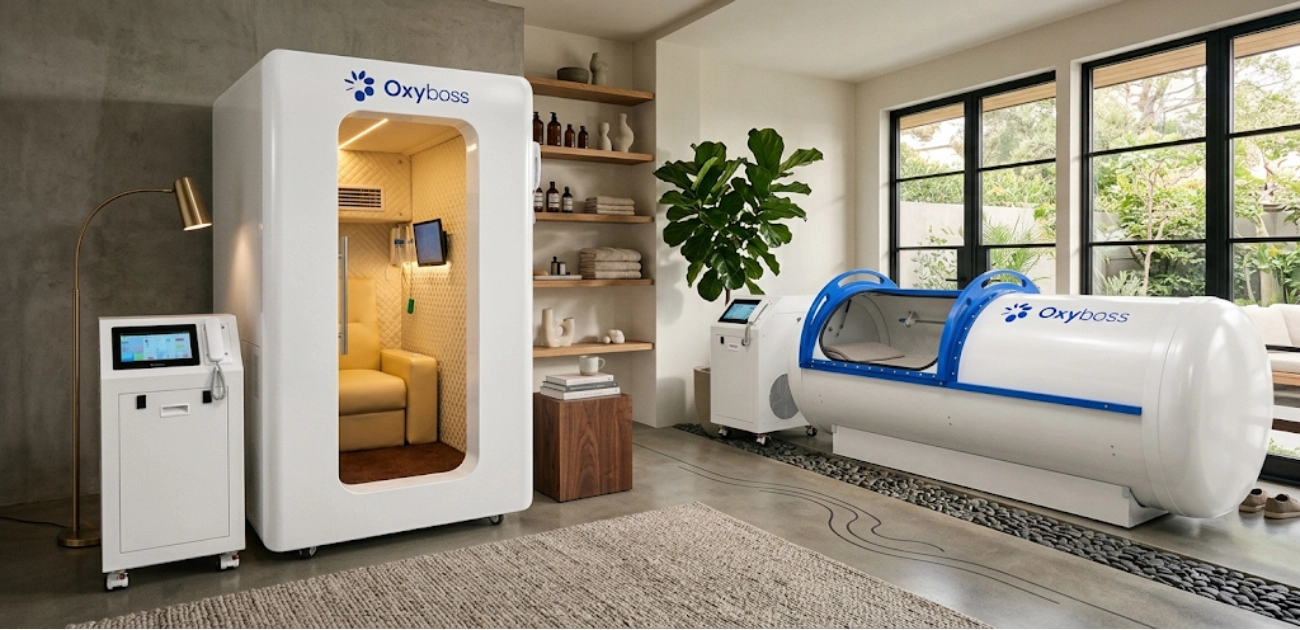
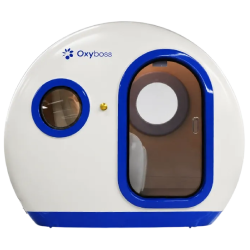
Soft chambers max out around 1.3–1.5 ATA. Period. The shell is fabric-laminated urethane sealed by a zipper. Push that structure past ~1.5 ATA and the seal geometry doesn't hold — the maximum working pressure is a physical property of the material and the zipper, not a limit set by software. There is no firmware update. There is no "high performance mode." A soft chamber that says 2.0 ATA on the box is either measuring in a way that doesn't match FDA-cleared definitions, or something is wrong with it. [5]
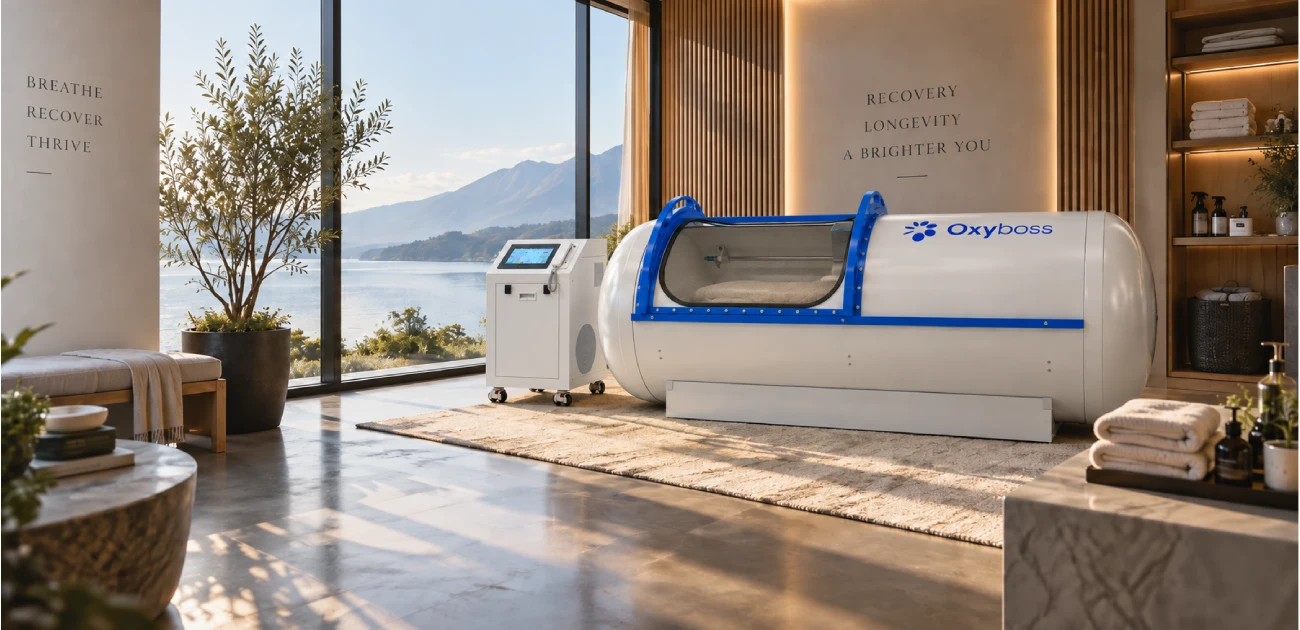
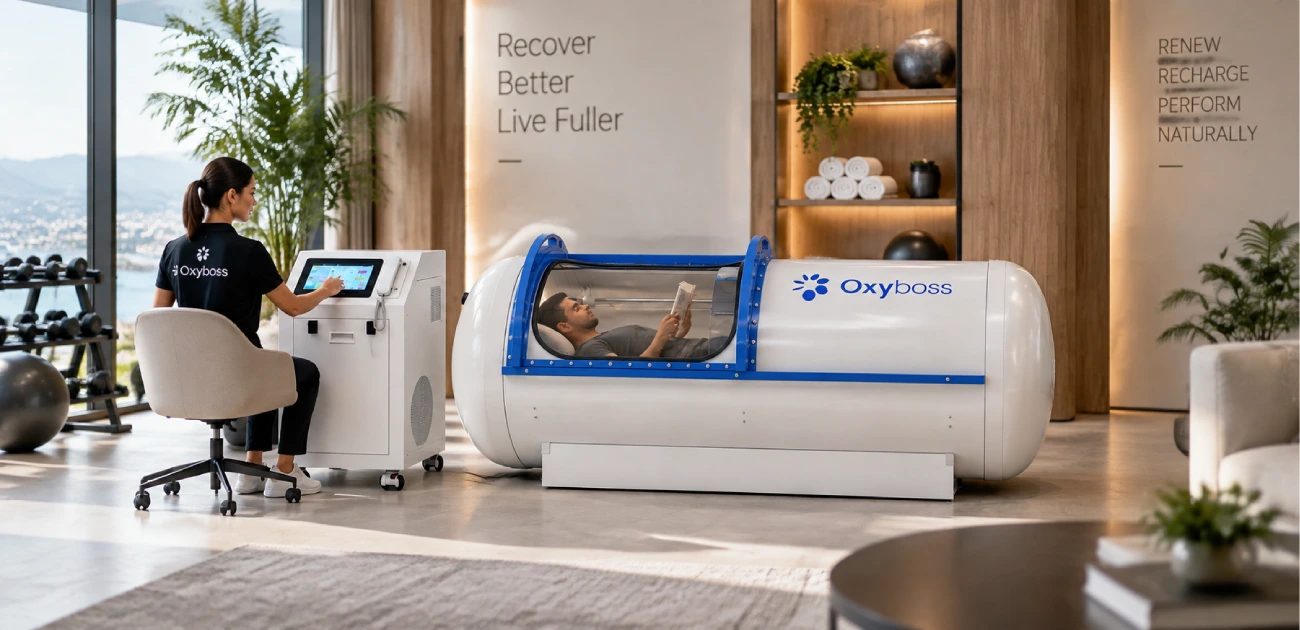
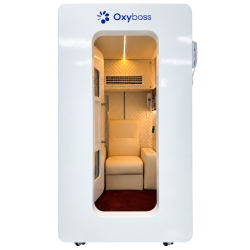
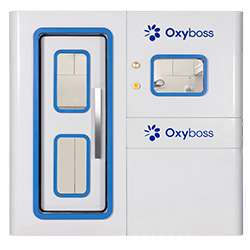
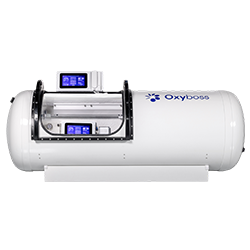
Hard chambers can reach and hold 2.0 ATA (and higher). Steel or aluminum shell, welded or bolted seams, port-glass windows rated to the pressure, mechanical door lock. These are pressure vessels — they're engineered to a different code entirely (in the US, ASME PVHO-1 for the shell and NFPA 99 for the room they live in). [6][7]
Three consequences fall out of this and they run the rest of the article:
1. You can't upgrade. If you buy 1.5 ATA today and decide next year you want 2.0, you're buying a new chamber. This is the most expensive mistake in the category. Pick the ceiling you'll be happy with three years from now.
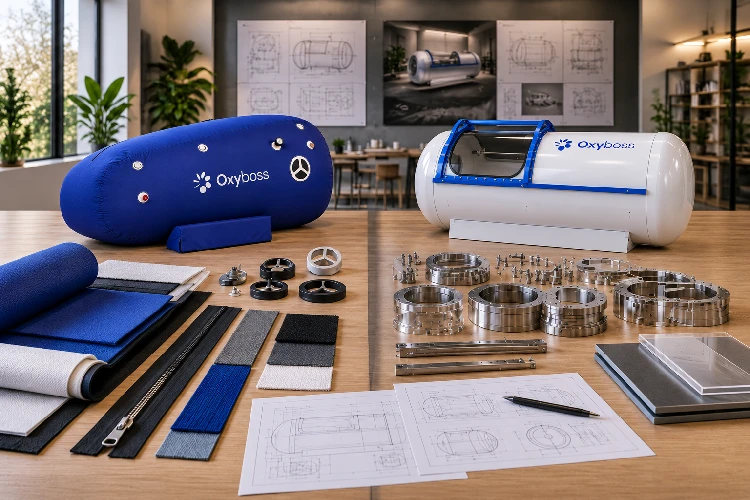
2. Price gap is structural, not marketing. A soft chamber is a fabric bag with a pump. A 2.0 ATA hard chamber is a certified pressure vessel with pressure-rated glazing. That's why the gap is a multiple, not a percentage.
3. The room requirements differ too. Soft goes in a bedroom. A 2.0 ATA hard chamber needs floor space, ceiling height, sometimes a dedicated circuit, and — depending on where you install it — code review.
Where the price gap really comes from
We're deliberately not putting numbers on this page. Prices move, financing terms move, and honest quotes depend on your room, your power, and what you're already set up with. But here's what you're actually paying for at each tier, and where the difference lives.
A 1.5 ATA soft chamber setup, roughly, includes:
- The chamber (fabric shell, zipper, blower, TPU or PVC coating, viewing window)
- An oxygen concentrator (usually 5–10 LPM, 90–95% concentration output)
- A basic control panel and pressure relief valves
- Standard household power (110V, no dedicated circuit typically required)
A 2.0 ATA hard chamber setup adds:
- A welded or bolted metal shell built to ASME PVHO-1
- Pressure-rated acrylic viewports
- A mechanical door with locking mechanism and interlocks
- Higher-capacity compressor to reach and hold 2.0 ATA
- Often a dedicated 220V circuit or upgraded 110V line — depends on the model
- Room preparation the seller can't include in the sticker price
Then there's the year-two math nobody quotes you:
- Oxygen concentrator maintenance — filters every 3–6 months, sieve beds every 3–5 years.
- Electrical — running a compressor for 60–90 minutes daily draws real power. Not enormous, but budget for it.
- Warranty by component — this catches people. The chamber shell might carry three years, but the concentrator, the compressor, and the electronics inside often carry one year each. Always ask for the coverage by part, in writing, before you sign anything.
- Consumables — filters, dehumidifier packs, cleaning materials.
- Shipping-in and installation — a 2.0 ATA chamber can weigh 400–1,000 kg. It's not going up a staircase without a plan.
Financing. A handful of retailers offer 12–36 month installment plans. The math often looks reasonable; the fine print on early termination and interest sometimes doesn't. Ask for the total cost including interest, not the monthly.
The rough rule of thumb: budget for the chamber, then budget again for everything around the chamber. People who ignore that end up with a nice chamber they can't power or can't get through the door.
Who actually uses 1.5 ATA and who actually uses 2.0 ATA
The clearest way to sort this: match pressure class to how the buyer intends to use it, not to how impressive the specs sound.
1.5 ATA soft chambers make sense for:
- Home wellness routines — recovery days, downtime after training, general at-home use
- Athletes and active adults building an at-home recovery station
- Buyers who need a chamber to fit in a bedroom, spare room, or small studio
- Users who want to get in and out without a big installation project
- People sharing the chamber across a household — soft chambers accommodate a broad range of body sizes and are easier for older users or anyone with mobility limitations to enter and exit
2.0 ATA hard chambers make sense for:
- Wellness centers, hyperbaric studios, and clinics running paid sessions
- Rehab, sports performance, or recovery facilities where longer or higher-pressure sessions are part of the offering
- Committed home users with dedicated space, dedicated power, and a long horizon
- Anyone who wants the option to run at pressures a soft chamber physically can't reach
Single-user vs multi-user. Most home units — soft or hard — are single-user chambers. Some hard chambers are wide enough for two, or configured with a bench for a caregiver. Ask for the internal usable dimensions and the rated occupancy, not just the outside size.
A note on multiplace hospital chambers running at 2.4–3.0 ATA: that's a completely different category — pressure vessels sized for eight to twelve patients, staffed with medical operators, installed inside licensed clinical facilities. If that's what you actually need, you're not shopping this article. You're talking to a UHMS-accredited center. [8]
The things sellers don't put on the comparison page
This is where the peer articles go quiet. If you read five 1.5-vs-2.0 blogs and still feel like you don't have enough to decide, it's because they all skipped the same set of questions.
The certifications that actually matter (and how to verify them)
Ask sellers for these, by name, and check them yourself:
- FDA 510(k) clearance — for a specific model, not the brand. Search FDA's database by device name or 510(k) number. [9] A brand having "an FDA clearance" doesn't mean the model you're buying has one. Ask which model number is cleared, and for what "intended use" language.
- ASME PVHO-1 — the pressure vessel standard for hard chambers in the US. If someone sells you a 2.0 ATA hard chamber without this, walk. [6]
- NFPA 99 (Chapter 14) — fire and life safety code for hyperbaric facilities. Matters for the room the chamber lives in, especially in any commercial installation. [7]
- ISO 13485 — a quality management system certification for medical device manufacturing. Important to understand what this is and isn't: it certifies the factory's processes, not that a specific device is cleared for medical use. Peer sites conflate these; don't let anyone confuse you.
- UL / IEC 60601 — electrical safety. Ask for the certificate.
A useful test: any seller who can't send you a certificate PDF within a day probably doesn't have one.
Insurance reality
Medicare (through CMS's National Coverage Determination) covers hyperbaric oxygen therapy for a specific short list of medical conditions — decompression sickness, gas embolism, carbon monoxide poisoning, non-healing wounds meeting criteria, radiation tissue damage, and a few others. It covers therapy delivered in a facility, in a chamber operating at 1.9–3.0 ATA, on a hard shell. Medicare Part B typically covers 80% after deductible. [3][4]
What this means for a home buyer:
- Home wellness use is not covered. Not at 1.5 ATA. Not at 2.0 ATA. Any pressure, any brand — home use is out-of-pocket.
- 1.3 ATA soft chambers are explicitly outside the pressure window Medicare uses. [3]
- Private insurance varies more than Medicare, but most private plans use similar criteria and won't cover home wellness setups.
If a seller implies insurance will "probably" cover your home chamber, ask for a written pre-authorization example. They won't have one.
Prescription rules — what actually decides it
The rule isn't "under 1.3 ATA = no prescription needed, above 1.3 ATA = prescription required." The number itself doesn't decide it. What decides it is whether the specific model has an FDA clearance, and what the cleared "intended use" says.
- A 1.3 ATA chamber that has been FDA-cleared for acute mountain sickness is, in the FDA's view, a prescription device for that use. A physician has to be involved.
- A 1.5 ATA wellness chamber that is not FDA-cleared as a medical device is, by definition, not a prescription medical device. It's a consumer or wellness product.
Two chambers can be at identical pressure and have different legal status. That's the point. Check the actual clearance letter (or absence of one) for the specific model, not the ATA number on the box.
The safety stuff peers gloss over
- Fire and enriched-oxygen atmospheres. A 2.0 ATA chamber running higher oxygen concentrations sits in a fire-risk envelope that a 1.5 ATA soft chamber doesn't. That's why NFPA 99 exists — no synthetic fabrics inside, grounded materials, no electronics that aren't rated. [7] A serious seller will hand you a materials list for what goes into the chamber with you.
- Barotrauma. Ear and sinus discomfort during compression is common and usually resolves with slower pressurization and equalization (yawn, swallow, Valsalva). Don't push through pain — you can actually damage your eardrum. This isn't rare enough to ignore.
- Oxygen toxicity. Real above around 1.4 ATA when breathing high-concentration oxygen for long enough. Its practical signs (nausea, tunnel vision, seizures at the extreme) are what session-length limits exist to prevent. It's the reason clinical HBOT protocols aren't just "longer is more."
- Who shouldn't use one at all. Untreated pneumothorax, active middle-ear or sinus infection, certain chemotherapies, uncontrolled seizure disorders, some lung and heart conditions, and pregnancy in some circumstances. This isn't the complete list. Talk to a physician before starting any hyperbaric routine.
Space, power, and door width — the boring stuff that stops a purchase
- Space. Soft chambers usually need a 3×8 ft footprint. Hard chambers with 2.0 ATA capability need more — typically 8×5–7 ft of clear floor plus a foot of side clearance for the compressor and cables.
- Ceiling height. Vertical chambers can be 6–7 ft tall. Horizontal chambers stay under 6 ft.
- Door width. Getting a boxed chamber through a standard 30–36 inch interior doorway is not guaranteed. Some hard chambers arrive palletized and get assembled on-site.
- Power. Soft chambers run on 110V standard outlets. Larger 2.0 ATA hard chambers often want a dedicated circuit, and some models want 220V. Ask the seller for the exact wattage, amperage, and voltage requirement.
- Floor loading. A 900-kg chamber on a wooden second-floor deck is a bad idea. Concrete slab or ground floor for anything over ~300 kg is the standard advice.
Warranty, unpacked
The peer sites that mention warranty at all mention it as a single number. In practice:
- Chamber shell — often the longest coverage period.
- Concentrator — usually 1 year, sometimes 2. Its lifetime is measured in operating hours; expect to service or replace it before the chamber wears out.
- Compressor — 1 year is common. Check whether replacement is on-site or ship-back.
- Control electronics — usually 1 year.
- Zippers, gaskets, seals — often consumables. Not "warranty" items. Budget to replace.
Also ask: is warranty transferable if you resell? Who pays shipping for a warranty return? Is service on-site or bench?
Noise and heat
Nobody warns you about this. A compressor running for an hour puts out heat and sound — think 55–65 dB, warm the room by a couple of degrees. That's fine in a garage or a home gym. It's not fine in a small bedroom with the door closed. Ask the seller for the compressor's rated dB.
Buying used or refurbished
Reasonable people do this, especially for hard chambers where new is a serious commitment. Two rules:
- Confirm the ASME PVHO-1 certification is current and re-inspected. Pressure vessels have inspection cycles.
- Get the maintenance log. Every hour on a compressor and every cycle on a shell matters.
If either is missing, the discount isn't a discount.
A short honest position from Oxyboss
We build both classes — soft chambers up to 1.5 ATA, and hard chambers up to 2.0 ATA. That's why we can afford to write this article without pushing you one way.
Two things worth saying plainly:
We're a wellness brand, not a medical device company. Our chambers are made for home wellness routines, sports recovery, and small commercial wellness settings. We hold CE and ISO 9001 and ISO 13485 quality certifications on the factory. We don't hold FDA 510(k) clearance for our chambers because we don't sell them as medical devices. If you're looking for a chamber to use inside a licensed clinical program on a specific medical condition, you're looking for a different category of product, and we'll tell you that up front.
We work through regional partners. If you're browsing from the US and want a real conversation about what fits your space, your household, and your intended use, we'll point you to a local partner who can walk your room with you and quote the full setup — chamber, concentrator, install, the works. That way you get someone accountable within a reasonable drive if anything ever needs service. We don't compete with our partners for retail leads.
If you're on the fence between 1.5 and 2.0, send us your intended use, your available space, and your power situation. We'll give you a straight answer, including "you don't need what you're asking about" if that's what the answer is.
FAQ
Is 2.0 ATA safe at home? It can be, in the right space, with the right chamber, and with a routine you actually follow. Fire risk and oxygen toxicity risk both scale with pressure, so the safety margin is thinner than at 1.5 ATA. Serious users install hard chambers in a dedicated room and follow session-length limits carefully. [1][2]
Can I convert my 1.5 ATA chamber to 2.0 ATA later? No. The shell of a soft chamber is the pressure limit. You'd be buying a new chamber.
Do I need a prescription to use a hyperbaric chamber at home? It depends on the specific model and its FDA status, not on the pressure. FDA-cleared chambers are prescription devices for their cleared use. Chambers sold as wellness products (not medical devices) generally aren't prescription. Ask the seller for the model's regulatory status in writing. [9]
Will insurance cover any of this? For home wellness use, no. Medicare and most private insurance cover hyperbaric oxygen therapy only for a specific list of medical conditions, delivered inside a facility, at 1.9–3.0 ATA in a hard-sided chamber. [3][4]
How long is a session? Home wellness sessions are typically 60–90 minutes, though the exact length depends on the setup and how the person is using it. Clinical HBOT protocols are longer, at higher pressure, and are decided by a physician.
How much space do I actually need? For a 1.5 ATA soft chamber, plan for 3×8 ft of clear floor and 6.5–7 ft of ceiling. For a 2.0 ATA hard chamber, plan for at least 8×5–7 ft of floor and a stable, level surface that can hold the weight (often 300–1,000 kg). Measure your doorway before you order.
Can two people use a hyperbaric chamber together? Most home units are single-user. Some wider hard chambers accommodate a caregiver or a second occupant — ask for internal usable dimensions and the rated occupancy of the specific model.
Is a hyperbaric chamber the same as an oxygen concentrator? No. A concentrator generates oxygen-enriched air (typically 90–95% oxygen). A hyperbaric chamber pressurizes the environment around you. They're often used together — the concentrator feeds oxygen into a mask or hood while the chamber holds the pressure — but they're two different pieces of equipment.
Is higher pressure always better? No. Above 1.5 ATA, safety limits tighten and side-effect risk rises. What matters is matching pressure, oxygen concentration, and session length to the intended use — and the intended use is what should decide the whole setup. [1][2]
Can I use a hyperbaric chamber if I have a health condition? Some conditions are direct contraindications — untreated pneumothorax, active middle-ear or sinus infection, certain chemotherapy regimens, uncontrolled seizures, some lung and heart conditions. Others require judgment. Talk to your physician before starting any hyperbaric routine.
References
- Medicare.gov — Hyperbaric Oxygen Therapy Coverage. https://www.medicare.gov/coverage/hyperbaric-oxygen-therapy
- Undersea & Hyperbaric Medical Society (UHMS) — HBO Indications (14th Edition, 2020). https://uhms.org/resources/featured-resources/hbo-indications.html
- CMS — National Coverage Determination for Hyperbaric Oxygen Therapy (NCD 20.29). https://www.cms.gov/medicare-coverage-database/view/ncd.aspx?ncdid=12&ncdver=1
- Wound Care Advisor — Medicare Reimbursement for Hyperbaric Oxygen Therapy. https://woundcareadvisor.com/medicare-reimbursement-for-hyperbaric-oxygen-therapy-vol3-no2/
- HyperbaricPro — 1.3 ATA vs 1.5 ATA vs 2.0 ATA Hyperbaric Chambers: Which Should You Buy? https://www.hyperbaricpro.com/1-3-ata-vs-1-5-ata-vs-2-0-ata-hyperbaric-chambers-which-should-you-buy/
- ASME — PVHO-1: Safety Standard for Pressure Vessels for Human Occupancy. Product page: https://www.asme.org/codes-standards/find-codes-standards/pvho-1-safety-standard-pressure-vessels-human-occupancy
- NFPA — NFPA 99: Health Care Facilities Code, Chapter 14 (Hyperbaric Facilities). https://www.nfpa.org/codes-and-standards/all-codes-and-standards/list-of-codes-and-standards/detail?code=99
- UHMS — Hyperbaric Facility Accreditation. https://uhms.org/accreditation-home.html
- U.S. FDA — 510(k) Premarket Notification Database. https://www.accessdata.fda.gov/scripts/cdrh/cfdocs/cfpmn/pmn.cfm