.svg)
.svg)
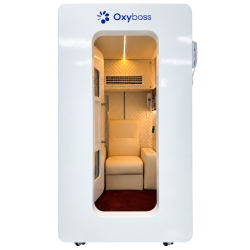
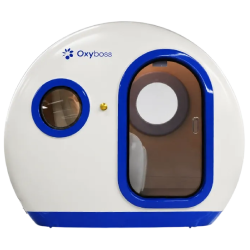
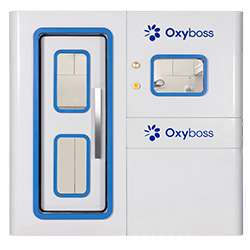
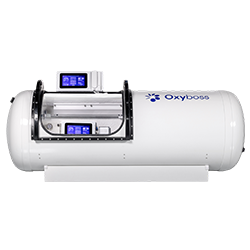
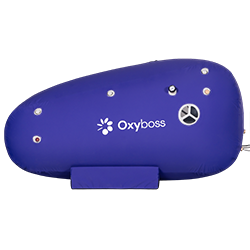
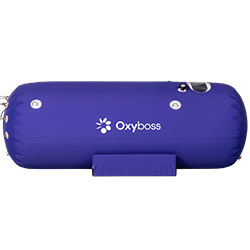
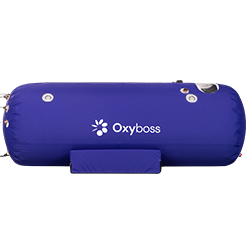
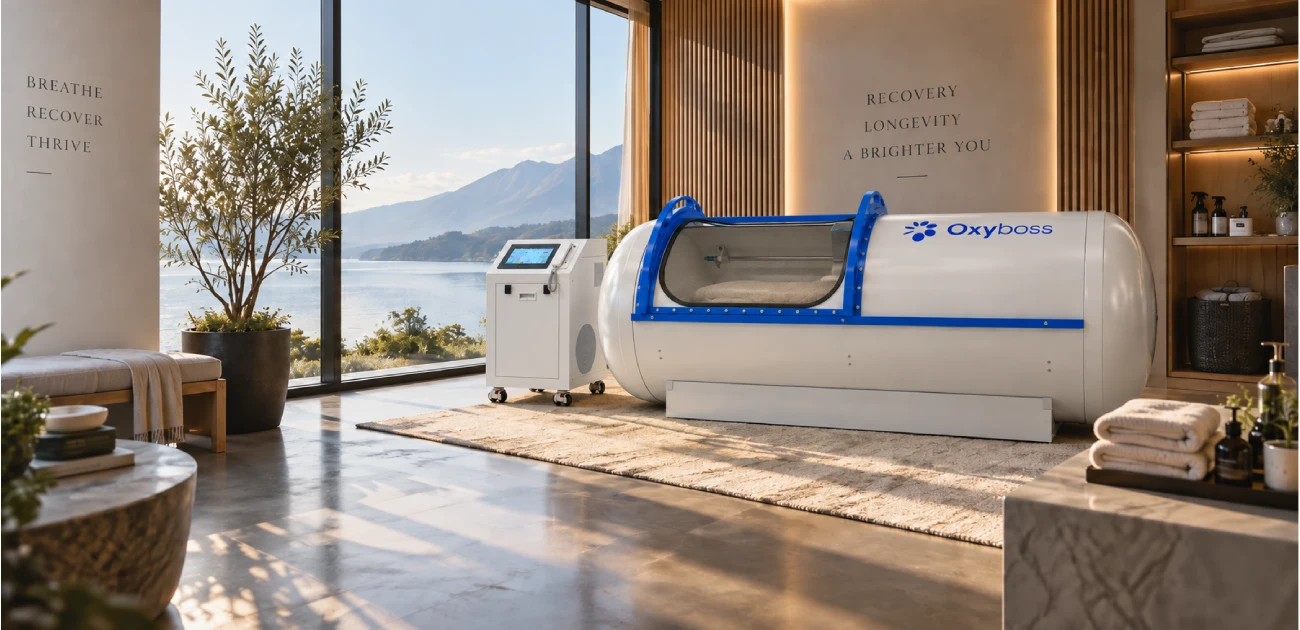
TL;DR — The time it takes to hand your chamber to the next client is not one number. It's four: strip, apply, wet-contact, and dry-and-vent. Most of that time is fixed by the cleaner label and the chamber material, and it can't be shortened without breaking something. What you can shorten is everything that happens in parallel — staging, scheduling, patient prep, paperwork. This piece walks through the four segments, the numbers behind each, the two SOPs you should be running (not one), and the small operational choices that quietly give you back one or two extra sessions a day.
The "3 minutes" problem, and why we don't repeat it
If you've read anything on this topic online, you've seen the number "3 minutes." It comes from a single Perry Baromedical document. Read the paragraph carefully and you'll see it says the cleaning action takes as little as 3 minutes (Perry Baromedical, Guidelines for Cleaning Your Hyperbaric Chamber). The same document, further down, tells you to let one of its approved cleaners air dry for at least 10 minutes before the next patient.
3 and 10. Same page. Same manufacturer.
The number most operators quote is "3." The number that actually decides when the chamber is ready is closer to "wet-contact time + dry time." That gap is where most of the confusion in this category lives, and it's where most operators lose time they didn't need to lose.
So we're going to stop treating "cleaning time" as one number and start treating it as four.
The four segments of chamber-ready time
Between one client walking out and the next one walking in, four things have to happen. They happen in order. You can overlap them with other work, but you can't overlap them with each other.
1. Strip and stage (30–90 seconds). Linens off. Personal items out. Fresh linens ready. Wipes and a lint-free cloth at hand. If your tech is still walking to the supply room at this point, the turn is already behind. Everything the tech needs should sit at the chamber, not down the hall.
2. Apply (60–180 seconds). The actual wiping. High-touch surfaces first (interior handles, control panels, mask harness, seat contact zones), then the acrylic shell or TPU wall. Use the cleaner at its ready-to-use concentration — do not dilute inside the room, because vapor can settle on acrylic and start crazing over time (Perry Baromedical). Cloth: lint-free, always. Temperature: never above 100 °F / 38 °C.
3. Wet-contact (1–10 minutes, depending on the product). The surface has to stay visibly wet for as long as the product label says. This is the segment nobody talks about, and it's the one that decides everything. EPA's rule of thumb is: if it dries early, you have to reapply (U.S. EPA, Selected EPA-Registered Disinfectants). Different products, different times:
The one-minute wipes look attractive because they promise a fast turn. In practice, the extra spend is often worth it — one minute of wet contact vs. ten minutes of wet contact is 9 minutes back per client, every client. Do the math over 30 days.
4. Dry and vent (2–10+ minutes). Air-dry the surface. If your product needs a rinse (bleach and some peroxide products do), rinse and dry again. Reopen the chamber to vent residual vapor — this matters more for soft chambers with a smaller interior volume, because trapped smell reads as "not clean" to the next client even when everything is spotless.
Add those four segments and you get a real number. For a typical wellness setup running a quat wipe with a 2-minute contact time, we see chamber-ready in 8 to 12 minutes. For a 10-minute contact product with rinsing, closer to 20 minutes. Neither of those is "3."
Rule of thumb we ask operators to internalize: you cannot compress contact time. You can only compress everything that isn't contact time. Which is a lot.
The one number the industry will not give you: the "official" turnaround minutes
There isn't one.
The Undersea and Hyperbaric Medical Society — the professional society for the field — states plainly that there is no globally unified infection-prevention standard covering the surfaces of a mono-place or multi-place chamber (UHMS, MEDFAQs: Infection Prevention). Manufacturer manuals give ranges for their own equipment. Product labels give contact times for their own chemistries. Your local codes give environmental rules. Nobody assembles those into a single number for you.
That's not a gap in the research. That's how the category works. So instead of chasing an authoritative number that doesn't exist, we tell operators to build their own:
- Time twenty to thirty real turns end-to-end.
- Take the median and the 90th percentile.
- Schedule the next client one 90th-percentile plus 15 minutes after the previous client's start (Perry Baromedical recommends staggering start times by at least 15 minutes).
That's your defensible baseline. It beats any number you'd find on a competitor's page, because it's yours.
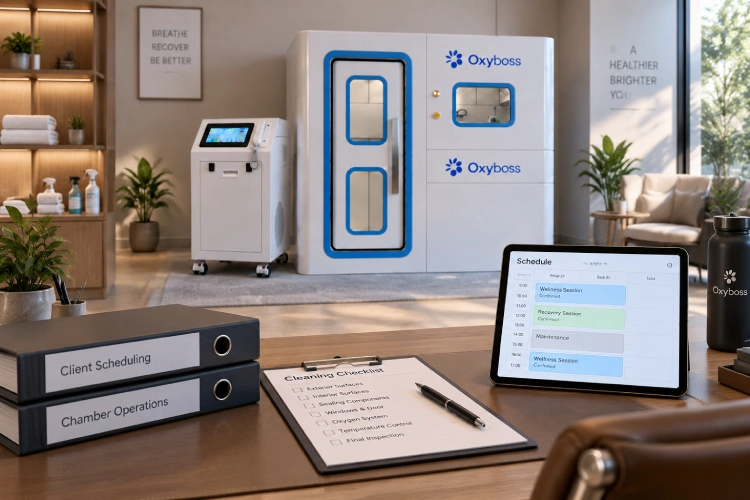
What you can put on the acrylic (and what will ruin it)
Acrylic chambers are chemically fussy. The list of "do not use" is short but strict, and the reasons are worth stating out loud, because most pages just say "don't use these" without telling you why.
Do not use: alcohol wipes, alcohol-based hand sanitizer sprayed nearby, ammonia glass cleaners, abrasive pads, high-heat steam. Alcohol in particular is a hard no — it triggers a hairline cracking pattern in acrylic called crazing, and once it starts, it doesn't reverse (Perry Baromedical). There's also a fire-risk angle: chambers run in oxygen-enriched conditions, and alcohol vapor in that environment is not something to introduce (U.S. FDA, Follow Instructions for Safe Use of Hyperbaric Oxygen Therapy Devices).
The chemistries that acrylic manufacturers actually approve fall into three families (Sechrist Industries, Approved Cleaners):
- Sodium hypochlorite (bleach), diluted, up to about 15%.
- Hydrogen peroxide solutions, roughly 3–20%.
- Chlorine dioxide solutions, up to about 2%.
Those are the approved categories, per the ASME PVHO-2 standard for pressure vessels for human occupancy. Specific product picks still need to appear on your chamber manufacturer's approved-products list — being EPA-registered is not the same as being approved for your acrylic. That distinction trips up almost everybody, so we'll say it plainly: EPA registration proves a product kills what it says it kills. It does not prove the product is safe for your chamber material. Only your chamber maker's written approval covers that second half.
There's a smaller, awkward truth inside the alcohol ban that nobody spells out. To be effective as a surface germicide, alcohol needs to be at roughly 60–80% concentration (U.S. CDC, Guideline for Disinfection and Sterilization in Healthcare Facilities). Acrylic tolerance for alcohol is well under 4%. There is no concentration that both cleans effectively and leaves acrylic alone. That's not a preference — it's a constraint. Once you see it that way, the "no alcohol" rule stops feeling arbitrary.
A quick note on metals, since a lot of chambers still have metal trim, frames, hinges, or valve hardware. The EPA-approved label compatibility list for the disinfectant families above is not "all metals." Bleach and hydrogen peroxide are corrosive to aluminum and to most other reactive metals, and accelerated hydrogen peroxide (AHP) is not safe for copper, brass, or zinc (Berkshire Corporation, Surface Compatibility Study; also discussed in the Saltwater as a Disinfectant review, IJOUR). Aluminum in particular will pit and roughen under bleach and corrode visibly under AHP. Our own instruction manuals route any cleaner that touches a metal component through that component's OEM list. Generic "wipe everything the same" cleaning habits shorten the life of fittings faster than anything else on the chamber.
What you can put on the TPU (and why "medical-grade" isn't the whole story)
Our soft chambers are built from medical-grade TPU — thermoplastic polyurethane tested to ISO 10993 biocompatibility standards and USP Class VI. Those standards are about one thing: whether the material is safe to be in prolonged contact with skin. They test cytotoxicity, sensitization, irritation, and chemical extraction (U.S. Pharmacopeia, ISO 10993 family). No plasticizers, no BPA, no phthalates. That's what medical-grade means, and it's a real thing.
What "medical-grade" does not tell you is how the material will hold up under cleaners, sweat, sunscreen residue, or a decade of UV. Four different TPU chemistries can all carry the medical-grade label and behave very differently in a wellness environment. The two variables that matter most on cleaning day are:
- Aromatic vs. aliphatic hard segment. Aromatic TPU (MDI-based) yellows under UV exposure. That's a photochemistry thing, not a cleanliness thing — it doesn't affect the material's mechanical properties, but a yellowed chamber reads as unclean to a client walking in, and that's a real commercial loss. Aliphatic TPU (HMDI-based) doesn't yellow. On the flip side, aromatic TPU tends to hold up better to oily residues; aliphatic TPU can swell slightly with prolonged oil contact.
- Polyether vs. polycarbonate soft segment. Polyester TPU (not what we use) hydrolyzes in warm, humid conditions. Polyether and polycarbonate TPU don't have that issue.
We say all this on our own material page. We're not going to hide it inside a cleaning blog. But it's worth naming here because it changes what you can wipe on TPU vs. what you can wipe on acrylic:
Note that alcohol on TPU is not the same story as alcohol on acrylic. TPU tolerates a quick alcohol pass. Repeated, high-concentration alcohol use on TPU causes surface tack and cloudiness over time. So the rule for a mixed-material fleet ends up being: write one SOP per material, not one SOP for both. Trying to run a single "wipe everything the same way" policy will either damage your soft chambers or leave your hard chambers under-cleaned.
One more thing, because it bites a lot of soft-chamber owners: TPU doesn't yellow from ozone (the polymer backbone is saturated and not reactive to ozone). It yellows from UV, and only the aromatic grades. We mention this because we've seen the wrong thing written down by a few competitors, and it's worth correcting in print.
Two SOPs, not one: routine vs. contamination event
The single biggest mistake we see in wellness operations is running one cleaning protocol for everything. That's how you end up with 20-minute turns between low-risk sessions (because the SOP was written for a worst-case) or, worse, an inadequate cleanup after an actual contamination event.
Routine between-client turnover covers 99% of your days. Sweat, skin oils, sunscreen and cosmetic residue, hair, everyday touch. It's a wipe of high-contact surfaces, a linen change, a linen swap-out, and a vent. The four segments we laid out above. 8–20 minutes, honest.
Event-triggered decontamination kicks in for a specific list: visible blood or body fluid, vomit, a client who tells you afterward they were unwell, a suspected respiratory illness, a lice or bedbug sighting, a broken barrier or dropped accessory. For any of those, the routine SOP is not enough. You escalate to a bleach-based clean at the concentration on the label, extend wet-contact to the full 10 minutes, rinse with clean water, and dry fully before the next use. Wellness operators are not usually asked to run pressurized purge cycles, but the "let the room breathe for a full cycle before the next client" rule still applies. This is not a routine turn. It's an event, and it costs you 30–45 minutes.
The reason to separate these two SOPs on paper is workflow. If your team knows there are two protocols and which one to run, the routine one stays lean. If they're the same protocol, the lean version silently becomes the heavy one, and you lose two clients a day to caution.
Turnaround as a business metric
We haven't seen this written down anywhere on a competing page, so we'll write it here. Cleaning turnaround is a revenue variable.
Take a spa running one chamber, five days a week, ten hours a day, with 60-minute sessions. If your average turn is 20 minutes, your utilization ceiling is 7.5 clients per day. If you can shave that turn to 12 minutes and run 60-minute sessions back-to-back with a small stagger, you're at 8.3 clients per day. Over a year, that's roughly 200 extra sessions per chamber, per year, at whatever your per-session revenue is.
Some of that "shave" isn't shave — it's parallel work you weren't doing:
- Staging supplies at the chamber, not the supply room.
- Booking the next client's start 15 minutes after the previous client's start, not 15 minutes after the previous client leaves.
- Having the next client fill out any paperwork during the previous client's dry-and-vent window.
- Making masks and hoods personal to the client, not shared inventory that has to be re-cleaned every time (UHMS confirms that patient-dedicated breathing accessories don't require between-session reprocessing).
None of those changes compress contact time. They just remove work from the critical path.
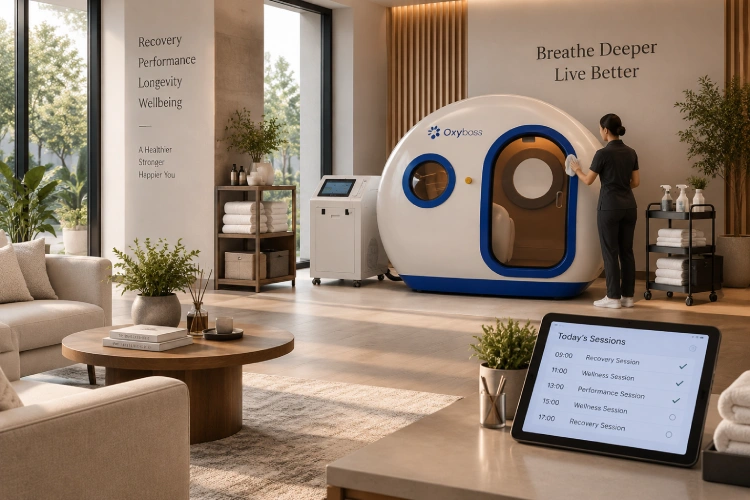
The paperwork that pays for itself
The other operator habit we recommend and almost nobody writes about: log the cleaning. Not because a regulator is coming — for most wellness operators, no regulator is coming — but because a client is coming, and clients read cleaning logs the way they read hotel room seals.
A useful log has nine fields: chamber ID, task performed, product used (brand + EPA number if applicable), the product's required contact time, the date and time completed, the person who did it, the person who verified it, the outcome (passed / re-clean / equipment held), and both signatures. That's it. A single-page form on a clipboard next to each chamber does the job. It changes staff behavior because it moves the action from "we always clean" to "here's the record proving we cleaned, on this date, for this long."
Hyperbaric Business Solutions phrases this well: make the record prove the action (Hyperbaric Business Solutions). A checkmark that says "cleaned" is a weak record. A field that says "peroxide wipe, 5-minute contact, dry, verified" is a real one.
The one-page version
If you're going to change one thing about your turnaround process after reading this, change how you time it. Stop looking for a single number. Start measuring four:
- Strip and stage.
- Apply.
- Wet-contact (this is the fixed one — do not try to shorten this).
- Dry and vent.
Add them. That's your real chamber-ready time. Now, separately, look at your schedule and ask which parts of segments 1, 2, and 4 can happen in parallel with something else the room is already doing. That's where the minutes live. Contact time is honest — it takes what the label says it takes. Everything around it can be re-choreographed.
That's the whole idea, and it's the reason we build chambers with turnaround in mind, not just the session.
Sources
- Perry Baromedical — Guidelines for Cleaning Your Hyperbaric Chamber. perrybaromedical.com/guidelines-for-cleaning
- Sechrist Industries — Approved Cleaners. sechristusa.com/knowledge-base/approved-cleaners
- Undersea and Hyperbaric Medical Society — MEDFAQs: Infection Prevention. uhms.org — MEDFAQs Infection Prevention
- U.S. Environmental Protection Agency — Selected EPA-Registered Disinfectants. epa.gov/pesticide-registration/selected-epa-registered-disinfectants
- U.S. Centers for Disease Control and Prevention — Guideline for Disinfection and Sterilization in Healthcare Facilities. cdc.gov/infection-control/hcp/disinfection-sterilization
- U.S. Food and Drug Administration — Follow Instructions for Safe Use of Hyperbaric Oxygen Therapy Devices. fda.gov — HBOT safe-use letter
- U.S. Pharmacopeia — USP Plastic Classifications. usp.org
- International Organization for Standardization — ISO 10993 Biological Evaluation of Medical Devices. iso.org — ISO 10993 family
- Hyperbaric Business Solutions — Hyperbaric Safety: A Practical Guide. hyperbaricbusinesssolutions.com/hyperbaric-safety
- Berkshire Corporation — Surface Compatibility Study (Bleach vs. AHP vs. HOCl). berkshire.com/surface-compatibility-of-berkshire-versahocl-vs-traditional-disinfectants
- IJOUR — Saltwater as a Disinfectant and Cleaning Agent. ijour.net/article/ajrps-11-2-013