.svg)
.svg)
Disclaimer: This article is for general information only. It is not medical, legal, or regulatory advice. Hyperbaric chambers are not intended to diagnose, treat, cure, or prevent any disease. Rules for facility safety, staffing, and device registration change a lot from country to country, state to state, and chamber to chamber. Always check with your local Authority Having Jurisdiction (AHJ) and a qualified clinician before you buy or run a chamber.
Lead — The hard part isn't pressing Start
Any trained person can press Start on a hyperbaric chamber.
The hard part happens before the button and after the session: did you actually check the door seal today? Is this client cleared for pressure? Do you know what to do if a zipper jams mid-session? Where is the fire extinguisher, and does it actually work? Who signs the session log?
Here's the thing. If you Google "hyperbaric chamber operator training," almost every result is a sales page for a medical certification course. Real, free, practical training content for the commercial, non-medical operator — wellness studio, recovery center, rental, fitness facility — barely exists. That's the gap this guide is built to close.
The Six Domains at a Glance
The big idea: medical operators need certified clinical skill. Commercial non-medical operators need safety discipline at scale. Different kind of hard. Same level of non-negotiable.
Domain 1 — Equipment & Daily Pre-Op Checks
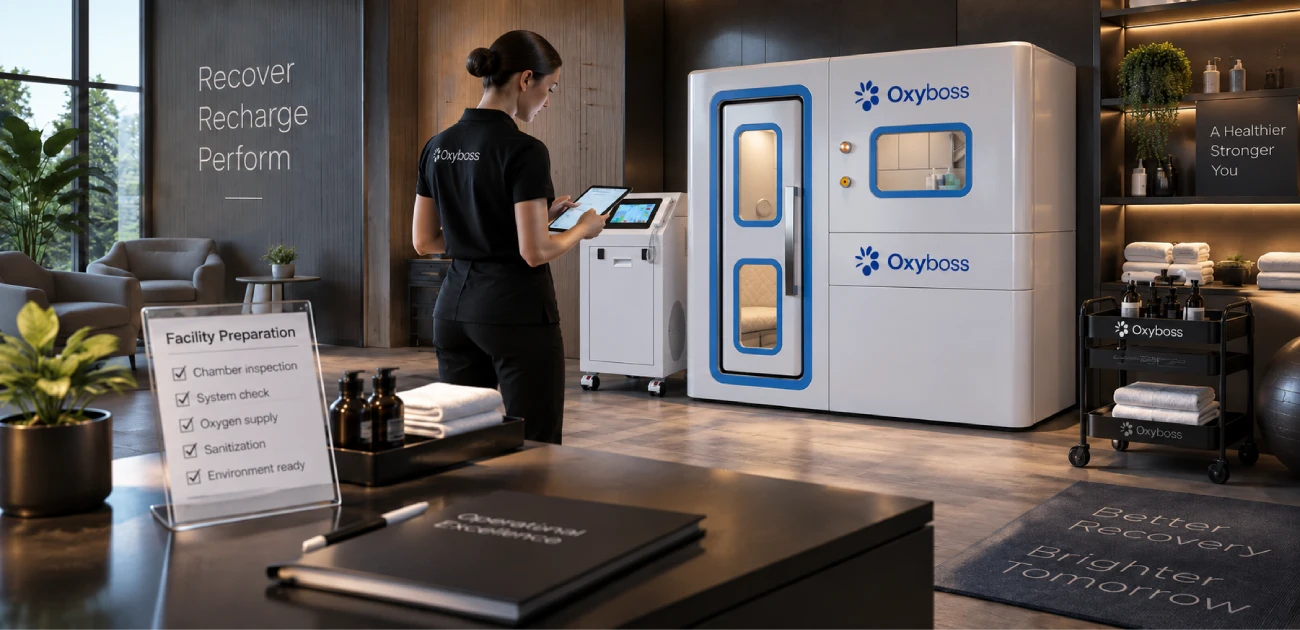
Pre-op is where most incidents get prevented. This is also the area where the manufacturer's checklist matters most — use the one we ship with your chamber, and don't trust a generic substitute.
What "good" looks like
Before every session, a competent operator can say "yes" to each of these, out loud, with a date and a name on it:
- Chamber body & seals. Look for wear on zippers, gaskets, viewports, hull. Soft chambers: zipper track free of debris. Hard chambers: door latches fully seated, no tool marks on threads.
- Pressure system. Pressure gauge returns to zero. Relief valves not stuck or weeping. Hoses and fittings show no abrasion, no oil residue (oil + oxygen = real risk).
- Oxygen system. Sensor calibration within date. Oxygen supply pressure in spec. No grease, no hand lotion, no aerosols anywhere near the O2 path. Cotton clothing on the client, not synthetics.
- Electrical & emergency cut-off. Main breaker known. Emergency stop tested. Chamber-to-room intercom tested both ways.
- Fire suppression. Extinguisher present, gauge in the green, inspection tag current. Know where it is without looking.
- Hygiene. Interior cleaned and dried between clients. Liners or mattress covers changed. Restroom and changing area clean.
Common failure
Skipping the oxygen sensor calibration because "it worked yesterday." Oxygen sensors drift. A chamber that reads "fine" while actually delivering a different concentration is exactly the scenario that turns a wellness session into a fire report.
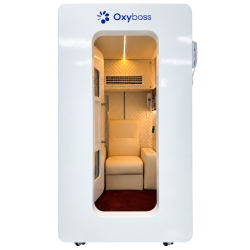
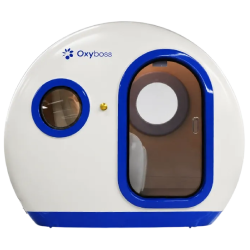
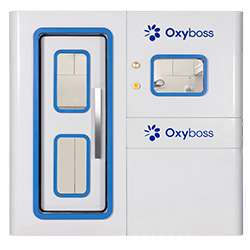
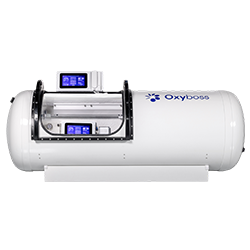
Soft chamber vs. hard chamber: soft chambers need more frequent zipper and seam checks; hard chambers need more frequent pressure-relief and gasket checks. Same habit, different surface.
Domain 2 — Physiology & Client Screening
This is where most well-meaning operators get tripped up. The chamber isn't a medical device — but the human body doesn't care about marketing copy. The basics still apply.
What you actually need to know
- Pressure effects. As pressure rises, gas pockets in the body (middle ear, sinuses, teeth, lungs) try to shrink. If they can't equalize, you get barotrauma — ear pain, sinus pain, in bad cases a perforated eardrum. Slow compression rates exist for a reason. Tell clients to yawn, swallow, or do the Valsalva maneuver during pressurization, and stop the session if pain doesn't resolve.
- Oxygen effects. More oxygen over longer periods raises fire risk and, in some people, can cause CNS oxygen toxicity (seizure-like events) — rare in the 1.3–2.0 ATA range, but not zero. Know the signs: facial twitch, anxiety, visual change.
- Contraindications — when to ask the client to consult their doctor first. This isn't a medical clearance you give. It's a sensible pre-screen. Common flags:
- Cold, sinus congestion, or active ear infection (can't equalize)
- Pregnancy
- COPD, emphysema, or other lung disease
- Recent chest surgery, collapsed lung history
- Pacemaker or other implanted device (depends — manufacturer can advise)
- Severe claustrophobia
- Uncontrolled seizures
- Recent ear/sinus surgery
- Informed consent. Documented. Signed. Plain language. Not a liability waiver from the internet.
Common failure
"Letting it slide" because the client really wants the session. Screening isn't a sales objection. It's the cheapest insurance you have.
Domain 3 — Safety & Emergency
An oxygen-enriched pressurized space is one of the few places where a small mistake escalates fast. The good news: the rules aren't complicated, they're just strict.
Fire and ignition — the non-negotiables
- Nothing flammable in the chamber. No lighters, no petroleum-based products (lotions, lip balm, hairspray), no electronics unless the manufacturer has approved them, no synthetic clothing (cotton only), no heated blankets, no vaping.
- No static. Ground the chamber per the manufacturer's instructions. Humidity in the room matters. Cotton clothing on the client matters.
- Smoking, candles, open flames — keep them well away from the chamber room.
- Don't run oxygen when no one is using the chamber.
Emergency procedures — write them down, drill them
Every operator should be able to do these without thinking:
- Recognize. Fire smell, smoke, abnormal heat, client distress.
- Communicate. Tell the client. Tell the team. Hit the emergency stop if trained to do so.
- Depressurize. Follow the manufacturer's depressurization procedure. Don't improvise.
- Evacuate. Get the client out safely. Don't rush and don't pull against pressure.
- Account for. Headcount, oxygen shut off, doors clear.
- Report & document. Log it the same day. Photos of equipment state. Witness names.
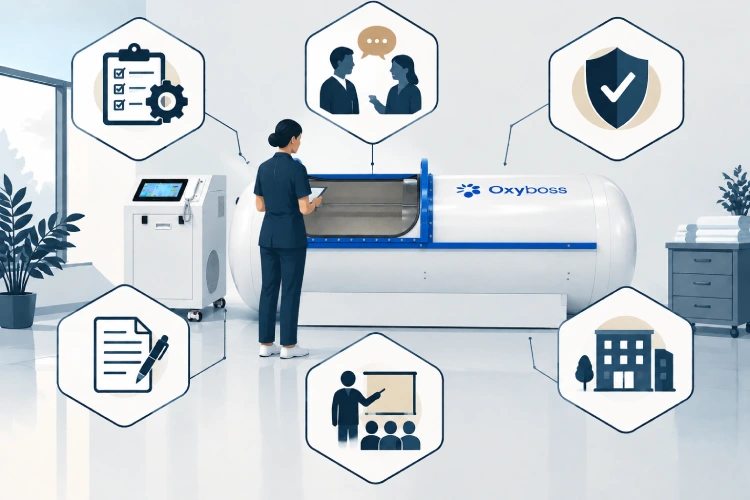
Staffing limits
A single operator should not be running multiple chambers simultaneously across separate rooms. If your model allows one operator to monitor two adjacent single-occupancy chambers, fine — but know the manufacturer's rule, follow it, and document it.
Common failure
"Drills are scheduled for next quarter." No. Drills are monthly for new operators, quarterly once you're steady. A team that has never drilled together has never actually drilled.
Domain 4 — Client Monitoring & Communication
The chamber might be the product, but the experience is the service.
What "good" looks like
- Two-way comms, always working. Test before every session. If comms fail, abort.
- Check-ins at key moments. Start of compression, top of pressure, start of decompression. A 10-second "How are you doing?" is worth more than a fancy console.
- Watch for these. Client rubbing ear, facial grimace, sudden silence, rapid breathing, complaints of cold or heat. All reasons to slow down, pause, or stop.
- Privacy. Changing area separate from the chamber room. Don't walk in mid-session unless it's an emergency. Have a clean gown or cover ready.
- Hygiene between clients. Wipe down. Air out. Change linens. This isn't just COVID-era habit — it's the difference between a clinical feel and a gym feel.
Common failure
Putting on a playlist and walking away. Even with a perfectly tuned chamber, a silent operator is an unsafe operator.
Domain 5 — Records & Documentation
"No record" means "didn't happen" — to your insurer, to an inspector, to a lawyer, to your future self.
Three logs, three purposes
- Session log. Date, chamber ID, client ID (or initials + anonymous ID), start time, end time, target pressure, actual pressure curve, operator name, any anomaly.
- Incident log. Date, time, what happened, who was involved, what you did, what the client did afterward, witness names, photos of equipment state if relevant.
- Maintenance log. Every inspection, every calibration, every repair, every part replaced. Date, technician, signature, next-due date.
Keep them in one place. Paper works. A spreadsheet works. A purpose-built app works. What doesn't work is "in my head."
Common failure
Logging everything on paper for a year, then realizing the binder vanished. Back up.
Domain 6 — Compliance & Insurance Reality
We are not your lawyer, your fire marshal, or your insurer. This section is the questions to ask, not the answers to write down.
The questions that matter
- Which code applies to my chamber, in my jurisdiction? In the US, NFPA 99 (2024 edition, Chapter 14 — Hyperbaric Facilities) is the most cited reference for chambers in commercial settings, including non-medical ones. Many states and cities adopt NFPA 99 by reference; check with your building official, fire marshal, or health department for the edition they enforce.
- Is my chamber registered where it needs to be? In the US, hyperbaric chambers are Class II medical devices under 21 CFR 868.5470. Whether a specific chamber requires 510(k) clearance depends on its intended use and claims. Even "wellness" chambers may carry prescription requirements under 21 CFR 801.109 — confirm with the manufacturer and your regulator.
- What about insurance? Two separate covers: product liability (manufacturer side) and premises/operations liability (operator side). Your general liability insurer should know what you run; if they don't, find one who does.
- Do I need a Certified Hyperbaric Technologist (CHT)? The CHT, issued by the National Board of Diving & Hyperbaric Medical Technology (NBDHMT), is a clinical credential. It requires you to already hold a qualifying medical license (RN, RT, EMT, PA, physician, etc.), plus 480 hours of clinical hyperbaric experience, plus an NBDHMT-approved introductory course. It is not an entry-level certificate, and it is not the typical requirement for running a commercial non-medical chamber. For non-medical commercial operations, the realistic baseline is manufacturer training plus documented in-house drills — not CHT.
Region-by-region quick notes
These are starting points, not legal answers. Always confirm with your local AHJ.
"I've been running for two years, no one has complained." That isn't compliance. That's luck. Compliance is what keeps you in business the day something goes wrong.
FAQ
Do I need a certified hyperbaric chamber operator for a wellness chamber?
In most jurisdictions, no specific license is required — but you do need a trained operator. Manufacturer training, in-house drills, and documented competence are the realistic baseline. Clinical credentials like CHT are not required for non-medical commercial operations and are not a substitute for hands-on training on your specific chamber.
What's the difference between a hyperbaric technician and a chamber operator?
A "technician" usually refers to a Certified Hyperbaric Technologist (CHT) — a clinical credential requiring a prior medical license plus 480 hours of supervised hyperbaric clinical work. A "chamber operator" is a broader term for anyone who runs the chamber; in commercial non-medical settings, that means a trained staff member, not necessarily a clinician.
How many staff do I need to run a commercial hyperbaric chamber?
At minimum: one trained operator present whenever the chamber is in use, with a second person on-site who knows the emergency procedures. One operator should not run multiple chambers in separate rooms. Confirm exact ratios with your manufacturer and insurer.
Are soft-sided and hard hyperbaric chambers operated the same way?
Same six domains, different emphasis. Soft chambers need more attention to seals, zippers, and humidity. Hard chambers need more attention to pressure-relief valves, gaskets, and oxygen system cleanliness. Pressure range matters too — check your chamber's spec sheet.
What should be in a hyperbaric session log?
Date, chamber ID, client identifier, start/end times, target and actual pressure, operator name, and any anomaly. Keep it for at least three years (longer if your insurer requires it).
Are hyperbaric chambers FDA approved?
Hyperbaric chambers are Class II medical devices regulated by the FDA. The FDA has cleared chambers for specific medical uses (decompression illness, carbon monoxide poisoning, wound healing in select cases, and others). The FDA has also stated that the safety and effectiveness of hyperbaric oxygen therapy has not been established for many other conditions, including autism, cancer, Alzheimer's, and stroke. Commercial non-medical use of chambers is a separate question — talk to your legal and regulatory advisors.
References
- NFPA. NFPA 99, Health Care Facilities Code, 2024 edition, Chapter 14 — Hyperbaric Facilities. Quincy, MA: National Fire Protection Association.
- Hyperbaric Service Pros. "NFPA 99, Chapter 14 — Hyperbaric Facilities Reference." https://hyperbaricservicepros.com/reference/nfpa-99-chapter-14
- UHMS HBO2 Safety Committee. "Safety/Technical FAQ." https://uhms.org/nl-be/resources/featured-resources/medfaqs-frequently-asked-questions-faq/safety-technical.html
- National Board of Diving & Hyperbaric Medical Technology. Certified Hyperbaric Technologist® (CHT) Resource Manual. https://nbdhmt.org/wp-content/uploads/2025/10/CHT-Resource-Manual-October-2025.pdf
- U.S. Food and Drug Administration. "Hyperbaric Oxygen Therapy: Don't Be Misled." Consumer Update, 22 Aug 2013.
- U.S. Food and Drug Administration. Product Classification: Hyperbaric Chamber (21 CFR 868.5470).
- U.S. Food and Drug Administration. 21 CFR 801.109 — Prescription Devices.
- European Committee for Hyperbaric Medicine (ECHM) & European Underwater Baromedical Society (EUBS). "Joint Position Statement on the Use of 'Mild Hyperbaric Therapies' in Humans." https://lhmhealthcare.com/2023/01/24/echm-eubs-joint-position-statement-on-the-use-of-mild-hyperbaric-therapies-in-humans
- EN 14931:2006 — European Standard for Multiplace Hyperbaric Chambers.
- EN 16081:2011 — Hyperbaric Chambers: Specific Requirements for Fire Extinguishing Systems.
- DIN 13256-4 — Pressure Vessels for Human Occupancy, Part 4: One-Human Pressure Vessels for Hyperbaric Therapy.
- ANSI/ASME PVHO-1 — Safety Standard for Pressure Vessels for Human Occupancy.
- Health Canada. Medical Devices Active Licence Listing (MDALL) — hyperbaric chamber entries.
- Therapeutic Goods Administration (Australia). Australian Register of Therapeutic Goods (ARTG) — hyperbaric chamber entries.