.svg)
.svg)
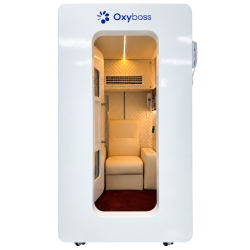
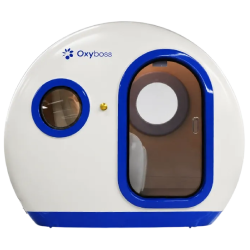
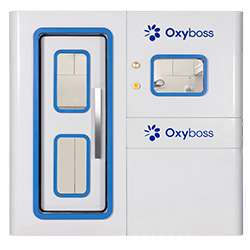
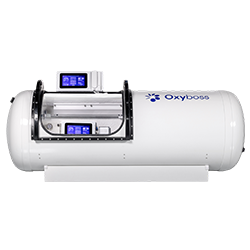
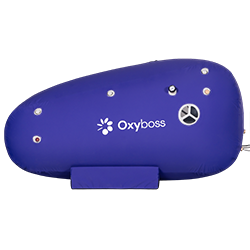
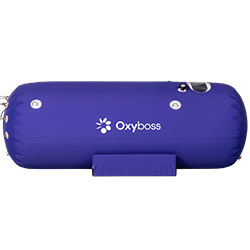
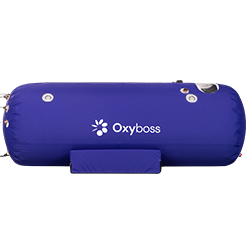

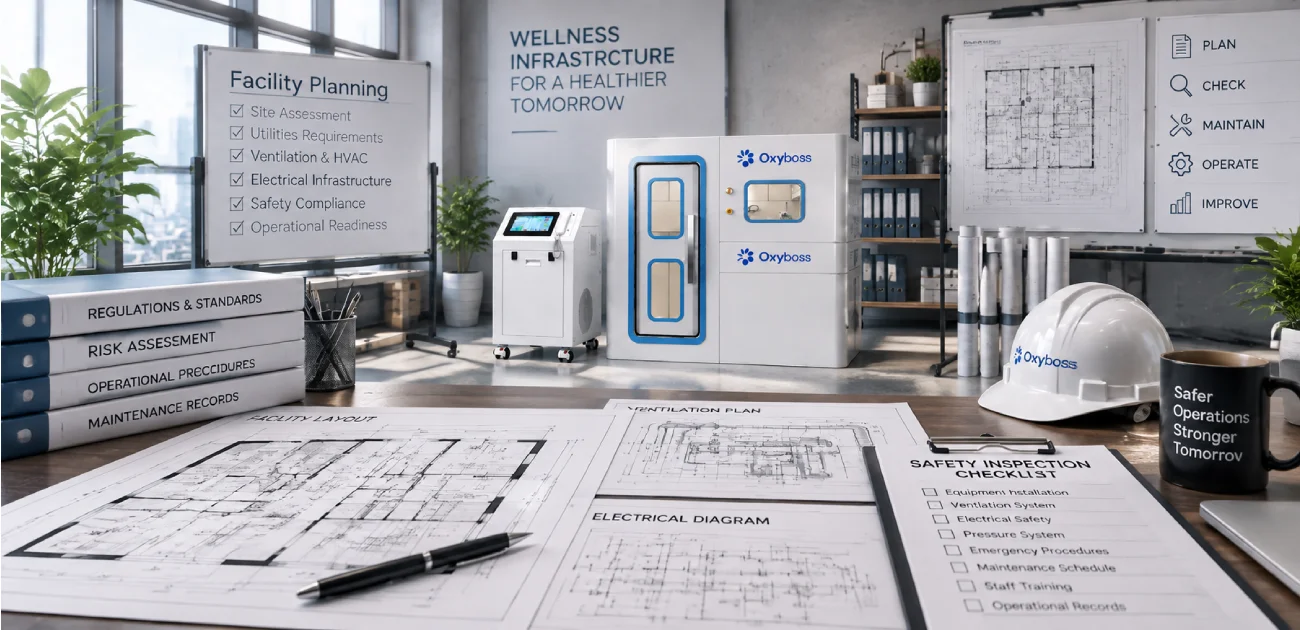
1. The split nobody talks about: medical vs cash-pay
If you've read five other articles on this topic, you've noticed something is off. They all start with chamber specs, then work backwards to location. That's because they were written by companies that sell medical-grade hard-shell chambers.
Pick the model first. Everything else — the room, the lease, the regulatory load, the marketing — falls out of it.
The cash-pay model's biggest hidden advantage isn't freedom from permits. It's freedom from the Medicare payment system. Once you remove OPPS vs MPFS, place-of-service, the physician supervision code 99183, and the G0277 facility fee, your site decision is suddenly about revenue and foot traffic — not about how a billing analyst codes your encounter.
That's a real trade. Medical-pathway operators trade simplicity for reimbursement ceilings. Cash-pay operators trade certainty for simplicity. Neither is wrong. But they don't share a checklist, which is why most "location guides" lead you down the wrong hallway.
A practical rule: if your vendor leads the sales call with square footage before they ask your business model, end the call.
2. The order nobody gets right: permits, then lease
Most hyperbaric businesses that fail on location didn't fail on the lease. They failed on the order of operations.
Here's the order that works:
- Pick the model. Medical or cash-pay. Soft-shell or hard-shell. Insurance or membership.
- Pick the chamber class and pressure. That decision locks your room size, your floor load, your electrical, your oxygen supply.
- Get the AHJ in writing. Zoning, fire, health, oxygen — all of it, in writing, from the actual authority having jurisdiction. Not from your rep. Not from a forum. From the city.
- Test-fit the room. Tape the chamber footprint on the floor. Add the stretcher zone, the technician path, the emergency egress. Walk it.
- Get real quotes. Equipment, dedicated electrical, oxygen supply, HVAC for heat-load, build-out, signage, accessibility upgrades. All of it.
- Sign the lease — with contingencies on all of the above.
Steps 3 and 6 are where it falls apart. Operators sign the lease first because the landlord is ready, the space looks great, and the chamber vendor said "wellness exemption" or "this isn't a medical device, you're fine."
That's not a permit. It's a sales pitch. The local fire marshal doesn't care what your vendor told you.
What "in writing" means. Email from the city planner on zoning. Letter from the fire marshal's office on suppression and oxygen storage. Sign-off from the health department on your intended use. A line in your lease that says you can walk if any of the above don't come through. If a regulator won't put it on letterhead, it doesn't exist.
The contingency list that goes in your lease. Most landlords will accept these if you ask early, before they have another tenant in the pipeline:
- Zoning approval — if denied, you walk
- Fire and oxygen approvals — if denied, you walk
- Landlord's written consent to the intended use (wellness, recovery, or whatever your model is)
- Equipment delivery and installation terms
- Financing contingency
- Permitted use covers your future service expansion (not just the first chamber)
If your landlord refuses any of these, that tells you something useful. It's not the last refusal you'll get.
Skip the vendor interpretation. If your chamber vendor gives you a definitive answer about NFPA, FDA, or your state's pressure-vessel rules, that itself is a red flag. Vendors sell chambers. Inspectors issue permits. Keep those two conversations separate.
3. Where the regulators actually draw the line
There is exactly one regulatory question most cash-pay operators get wrong, and most guides won't even mention it.
Does NFPA 99 Chapter 14 cover a soft-shell chamber?
There are two honest answers floating around the industry, and both have paperwork behind them.
Position A — "Wellness is exempt." Soft-shell chambers operate at 1.3 ATA. They're not treating the FDA-cleared indications that Chapter 14 was written around. Some operators and vendors argue Chapter 14 doesn't apply to them at all.
Position B — "Chapter 14 covers the vessel class, not the patient." NFPA 99 Chapter 14 covers hyperbaric facilities — and the facilities definition ranges from clinical chambers down to pressure vessels between 0 and 100 psi gauge used for medical, therapeutic, or experimental purposes. Under that reading, a soft-shell chamber at 1.3 ATA is still in scope; only the engineering requirements might be lighter.
We are not going to tell you which position is right for your zip code. We're a chamber maker. We sell chambers. We don't have the standing to interpret NFPA, and neither does your salesperson. Neither does anyone writing this kind of article.
What we will tell you:
- The AHJ in your city has a written opinion on this. Ask them.
- The exact questions to ask: what pressure differential triggers Chapter 14 in your jurisdiction, how does your AHJ classify the occupancy, what oxygen storage limits apply, and does your chamber require ASME PVHO-1 certification regardless of pressure class.
- Don't accept a phone answer. Get the email. Get the letter. Print it.
What is still required even if Chapter 14 doesn't apply. Zoning. Fire suppression. Electrical to code. ADA Title III compliance if your facility is open to the public. Oxygen handling per your local fire code. Insurance that names the right use. These don't go away because your chamber is soft-shell.
State-level variation. A handful of states have additional layers. New York, for example, doesn't require a Certificate of Need for an independently operated chamber, but NYS DOH still expects facility compliance with hospital-grade standards when the chamber is part of a hospital program, and construction modifications may trigger limited review. Check your own state health department before you sign anything.
Why we don't claim FDA clearance. We don't have it. None of our chambers are FDA cleared. When we say the only honest answer to the NFPA question is to ask your local AHJ in writing, we mean it. Don't trust us. Don't trust any chamber vendor. Trust the inspector with a stamp.
The same goes for FDA 21 CFR 868.5470, the federal classification for hyperbaric chambers. Read it. It tells you what the FDA considers a chamber and what it doesn't. The document is short. The implications are not.

4. Who you actually need within driving distance
The single biggest mistake cash-pay operators make is picking the neighborhood that looks right instead of the neighborhood that performs right.
"Demographics" is not a strategy. Median household income is not a strategy. They are inputs. The output is how many paying sessions per week your location can sustain, and that comes from a very specific kind of map.
Use drive-time, not ZIP codes. A 15-to-30-minute drive-time polygon is your real catchment. People don't cross a city line for a recovery session. They drive twenty minutes after work, or they don't drive at all. Plot your candidate address in Google Maps, draw the polygon, count what's inside.
The numbers that matter for a cash-pay model:
If you can't find 8–10 fitness, recovery, or wellness-adjacent venues inside a 20-minute drive, your catchment is thin. Not impossible. Thin.
Why CDC prevalence data doesn't help you. Diabetes prevalence, wound care prevalence, post-surgical case volume — those numbers describe the medical model. For a cash-pay recovery studio, your customer is the 35-year-old CrossFit member with a knee, the 50-year-old executive with a torn hamstring, the biohacker who already pays for cold plunge. The relevant census query is income, age, and lifestyle density — not disease prevalence.
Referrals still work, just differently. Chiropractors, physical therapists, sports medicine practices, and longevity clinics send cash-pay clients. They don't send insurance referrals. They send people who already pay out of pocket for recovery services. Build a list of those practices inside your polygon before you sign anything.
Competition checklist. For every chamber you find inside your polygon:
- What pressure do they operate?
- Soft-shell or hard-shell?
- Cash only or insurance mixed in?
- Pricing structure?
- Hours?
- Reviews — and what the reviews complain about
You're not looking to copy them. You're looking for the gap they don't serve.
5. The economics: break-even first, location second
If you can't break even on paper, no location will save you. Most operators run the math backwards — they pick the address, sign the lease, then try to make the numbers work. The right order is the opposite.
The formula.
Break-even sessions per month = Monthly fixed costs ÷ Contribution margin per session
If your monthly fixed costs are $8,000 (rent, basic utilities, insurance, one part-time operator) and your contribution margin is $80 per session (after chamber cycle cost, oxygen, consumables, payment processing), you need 100 sessions per month to break even. That's 25 sessions per week. Five per workday. From a catchment that's already giving you 8–10 complementary venues within 20 minutes.
Now check whether your candidate address can plausibly support 100 sessions a month at your price point. If you're not sure, it can't.
A note on the rent line. Those numbers are medical-office benchmarks. Hyperbaric-specific commercial lease data isn't publicly aggregated — brokers hold it, blogs don't. Treat the range above as a planning anchor, not a market quote. Get your own broker number for your candidate zip code before you commit.
Pessimistic is your first-year reality for most operators. Plan to it. If pessimistic doesn't survive your fixed costs, that location doesn't work — no matter how good the address looks.
Lease terms that matter (and what to ask for):
- Term: 5–7 years minimum. Medical landlords prefer longer.
- Rent escalator: Cap at 3% annual. Negotiate this before signing.
- Operating expense pass-through: Cap it. CAM and building expense escalation can quietly eat your margin.
- Tenant improvement allowance: Get the number and the payment schedule in writing. Free TI in exchange for a longer lease is a standard trade.
- Permit contingency: If zoning or fire approvals don't come through, you walk with your deposit. Non-negotiable.
- Use clause: Permit "wellness, recovery, and related services" — not just the first service you plan to launch. You will add services.
- Exclusivity: If a fitness chain is in the building, ask whether they reserve hyperbaric or recovery services for themselves. Landlords won't volunteer this.
Why "add to an existing practice" beats standalone. A standalone wellness studio needs to fill its own schedule from zero. A chiropractor, sports medicine clinic, naturopathic practice, or boutique gym that adds a chamber already has a patient base, a front desk, an operator, a lease. The chamber fills open appointment slots without adding much fixed cost. Standalone gives you higher ceiling. Add-on gives you faster break-even. Pick the model that matches your cash runway.

What to stop doing
Three things to take off your checklist:
- Stop signing a lease before you have written answers from the AHJ. A vendor's "we've never had a problem" is not a permit.
- Stop quoting square footage in a sales call before you've quoted pressure range, supervision, and reimbursement fit. Proximity is the last filter, not the first.
- Stop trusting vendors who give you regulatory answers without a stamp. Including us. We're not the regulator.
What this guide doesn't cover
We left some questions out. Real commercial lease rates for hyperbaric-specific facilities aren't public. State-by-state rules on soft-shell chambers under NFPA 99 Chapter 14 are inconsistent, and no one has aggregated them. Mobile and trailer-based operations have their own permitting stack we haven't addressed. If those gaps matter for your decision, talk to a broker in your market, a code consultant with hyperbaric experience, and your local fire marshal.
We will update this guide as those gaps close. If you have data we missed, send it our way.
Where to go next
- Browse our chambers → Filter by pressure, room size, and whether your site needs electrical or ventilation work.
- Request a location assessment → Tell us your candidate address and your model. We'll tell you what to verify before you sign anything.
- Read the source list → Every claim in this article, with the exact link we pulled it from.
Sources
- UHMS Facility Accreditation — Hyperbaric facility standards and accreditation pathway.
- CMS National Coverage Determination 20.29 — Hyperbaric Oxygen Therapy coverage scope and indications.
- NFPA 99 Chapter 14 — Hyperbaric Facilities — Hyperbaric facility code with the 0–100 psi scope language.
- ASME PVHO-1 — Pressure Vessels for Human Occupancy — Vessel certification standard.
- FDA 21 CFR 868.5470 — Hyperbaric chamber classification — Federal device classification
- ADA Title III — 2024 Manual — Public accommodation accessibility requirements.
- U.S. Census Bureau — American Community Survey — Median household income and age demographic data.
- NYS DOH — Certificate of Need FAQ — State-level facility modification requirements.
- UHMS Reference Material on Chamber Pressure — Clinical pressure ranges (1.4 ATA minimum clinical, 1.9–3.0 ATA common therapeutic).
This article is general business and location information. It is not medical advice. Regulatory applicability depends on the authority having jurisdiction in your location and on the intended use of the equipment. Cost, space, and timing figures cited are industry planning ranges, not market averages or quotes. Verify all numbers with local sources before signing anything.