.svg)
.svg)

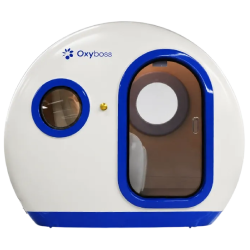
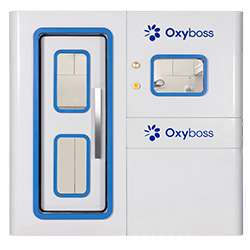
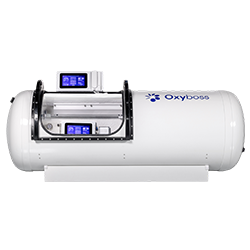
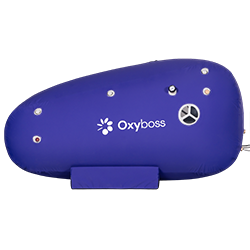
You searched for "EXW, FOB, CIF, DDP" because someone quoted you a price on a chamber and a string of letters that look like alphabet soup. You're about to wire a lot of money to a factory you might never visit, and you want to know who's on the hook for what if something goes sideways.
Most "Incoterms explained" pages stop at definitions. That's not what you need. You're not buying a phone case. You're buying a heavy, pressurized vessel that's about to cross an ocean, get inspected by U.S. Customs, and end up in your facility. The shipping term isn't trivia. It's the difference between a quote you can trust and a bill that shows up six weeks later.
1. The four-letter overview
EXW, FOB, CIF, DDP — these are the four shipping terms you'll see on almost every chamber quote. They split the world into two questions:
- Who's paying for what at each stage of the journey?
- Who owns the risk if something gets damaged, delayed, or seized?
Most pages treat those two questions as the same thing. They're not. That's the single biggest trap in international shipping. We'll come back to it in a minute.
Quick frame:
That last column is where most people get burned. Read it twice.
Source: ICC Incoterms® 2020 official rules.
2. Why the trade term is not the trade contract
Incoterms® 2020 — that's the current version, ICC published it in 2020 and nothing has replaced it. Anyone telling you there's a "2026 version" is recycling content. If your contract says "FOB" without more, a court won't know which port, which fees, or who's responsible for what.
A clean contract looks like this:
FOB Shanghai, Incoterms® 2020 — or — DDP Los Angeles, Incoterms® 2020
The named place is mandatory. The version is mandatory.
Also: Incoterms do not cover payment terms, ownership transfer, warranty, product specs, or breach of contract. Those live in your sales agreement. Don't let your supplier tell you "FOB handles that." It doesn't. Source: ICC Incoterms® 2020 FAQ.
3. Costs and risk walk on different legs
This is the bit nobody explains properly.
CIF looks like a generous term. Seller pays freight. Seller pays insurance. Seller handles everything up to the U.S. port. Sounds great, right?
Here's the catch. Under CIF, risk transfers to you the moment the chamber is loaded onto the vessel at the origin port. The seller is paying for the freight and a minimum-coverage insurance policy, but they're no longer on the hook if the chamber gets crushed, dropped, water-damaged, or stolen in transit. That risk is yours.
Why this matters for chambers specifically: most hyperbaric chambers are 300 to 1,000 kilograms. They're packed in crates. Crates get forklift-ed, stacked, sometimes dropped. A pressure vessel that arrives with a damaged door seal or a cracked observation window is a six-figure problem. If you thought CIF meant "the seller handles damage," read the fine print. Or better, ask for the insurance certificate (the policy itself, not a "we're insured" email) and check three things:
- The insured party is you, not just the seller
- The coverage type is All Risks, not just named perils
- The insured value matches the chamber's full replacement cost, not just FOB
Source: Chubb — Ocean Cargo Incoterms and Insurance.
The same split applies to other terms. EXW shifts everything to you. DDP shifts almost everything to the seller. FOB is the rough midpoint. The contract has to spell out who's liable for what at each leg of the journey, not just who pays.

4. FOB vs CIF: which one's right for a chamber?
For most U.S. buyers of a personal hyperbaric chamber, the choice comes down to one practical question: do you have your own freight forwarder, customs broker, and insurance setup?
- No → CIF or DDP can spare you the work of coordinating a dozen vendors yourself.
- Yes → FOB often saves money and gives you control over routing, insurance quality, and timing.
Two things the standard guides don't tell you, but that matter for chambers:
- FOB and CIF only apply to sea and inland waterway transport. If your chamber is moving by air (which only happens for small soft-shell units under ~100 kg), FOB and CIF aren't valid choices. You'd be on FCA or CIP. The Incoterms® 2020 rules are very specific about this. Source: ICC Academy — CFR or CIF.
- Containerized chambers are not what FOB/CIF were designed for. Both terms assume the goods are physically placed "on board" a vessel. A 1,000-kg chamber in a 40-foot container rarely gets "loaded on board" — it gets stuffed into a container at the factory yard, and the container gets loaded. ICC's own recommendation is FCA or CIP for containers. Most Chinese factories still quote FOB/CIF out of habit, not because it's the best fit. We'll come back to this in section 7.
5. The DDP trap most buyers don't see coming
DDP is the most seller-friendly term. The seller delivers to your named U.S. address, pays the freight, clears customs, pays the duty. You just sign for the crate.
So why does this become a problem?
Because the moment the seller files the customs entry to bring the chamber into the U.S., someone has to be listed as the Importer of Record (IOR). The IOR is the person or company legally responsible for the entry — for the declared value, the HTS classification, the country of origin, and any penalty that comes from getting those wrong.
A lot of DDP quotes assume the buyer will be the IOR. The seller files the paperwork on your behalf, but the legal liability is yours. If the chamber gets misclassified, if the value gets misdeclared (sometimes by mistake, sometimes not), if a customs audit runs two years later — you are the one the U.S. government comes after.
We've seen buyers receive retroactive duty assessments plus penalties because their supplier under-declared the value to keep the landed cost low. The seller's already been paid. The bill lands on the buyer's desk.
Before you accept a DDP quote, ask three things:
- Whose name is on the customs entry form? Yours, the seller's, or a third party's?
- Who holds the customs bond? That's the financial guarantee CBP requires for most entries.
- Is the declared value on the commercial invoice the same as what's on the customs entry? These two documents should match. If they don't, that's the first warning sign.

6. HTSUS classification: the bit nobody will answer for you
Every product entering the U.S. gets a 10-digit HTSUS code. That code determines the duty rate. For Chinese-origin goods, the code also determines whether Section 301 tariffs apply.
Here's the uncomfortable truth: there's no public "hyperbaric chamber HTSUS code" cheat sheet. We checked. We searched. We asked. Two reasons it's fuzzy:
- The duty classification depends on what the chamber is and does. A medical-grade chamber intended to treat a specific condition gets classified differently than a non-medical chamber intended for general wellness use.
- Borderline products get classified by ruling, not by guesswork. The U.S. Customs and Border Protection agency issues binding rulings on real products. You can search those rulings in their public database.
So here's the path, not the answer:
- Define the product properly. What does it do? What's it made of? What's its operating pressure? What's the intended use? Classification lives in these details, not in the marketing name.
- Look up candidate codes in the Harmonized Tariff Schedule. The U.S. International Trade Commission maintains the official searchable schedule. Don't trust third-party "HTS lookup" sites that sell their own answers.
- Have a licensed customs broker verify. They're paid to know. This is not the place to save money.
- If still uncertain, request a binding ruling from CBP. It's free. It's written. It protects you for three years. Source: CBP Informed Compliance — Tariff Classification.
7. Section 301 tariffs: conditional, not categorical
If your chamber ships from China, you may owe Section 301 tariffs on top of the normal duty. The amount depends entirely on the HTSUS code from section 6.
For some codes, Section 301 applies. For others, it doesn't. For others, it applies only to certain sub-classifications or excludes specific products. There's no flat "China chamber = 25% tariff" answer, and any supplier who tells you otherwise either doesn't know or isn't being straight with you.
The way to find out:
- Get the proposed HTSUS code (section 6).
- Have your broker check it against the current USTR Section 301 list.
- Look at USTR's Section 301 search portal.
- Check whether your product is covered, excluded, or partially under the relevant Chapter 99 subheading.
- If the result materially affects your landed cost, request a binding ruling before you ship.
CBP has issued hundreds of rulings on Section 301. They're public. You can search them in the CROSS database. Reading two or three rulings on products similar to yours is the single best way to understand how the rules apply to your situation.
8. "FDA registered" is not "FDA cleared" — and we mean it
You'll see chamber suppliers say things like "FDA registered" or "FDA compliant." Some will even say "FDA approved." Most of these statements are wrong or misleading.
Here's the actual landscape:
- FDA registered means the company has filed a registration with FDA. It's a paper filing. It says nothing about the product.
- FDA cleared means the product has been reviewed by FDA under a 510(k) pathway and found substantially equivalent to a legally marketed device. There's a clearance number. There's a specific product in the letter.
- "FDA approved" is a phrase mostly used for high-risk devices that go through the PMA process. Most hyperbaric chambers don't fall in this bucket.
If your supplier says "FDA cleared," ask for the 510(k) number. Then look it up in FDA's 510(k) database. Verify the clearance covers the exact model you're buying. A clearance for "hyperbaric chamber, model A" doesn't cover "model B" — even if they look identical.
9. The seven things to check before you sign
Quick checklist. Print it. Tape it to the wall.
- Named place. Your contract says "FOB [specific port]" or "DDP [specific address]." Not "FOB USA."
- Incoterms version. "Incoterms® 2020" is on the contract. Nothing else.
- What "delivery" actually includes. Loading the crate onto your truck? Carrying it inside? Installing it? Wiring it? Pressurizing it? These are different jobs and they cost different amounts. Get them in writing.
- Insurance certificate, not insurance promise. If the seller is paying for insurance (CIF, CIP), get the actual policy document. Verify the beneficiary, the coverage type, and the insured value.
- Importer of Record. Whose name is on the customs entry? Who holds the bond? Whose liability is it? Get the answer before you accept DDP.
- HTSUS classification path. Even if you don't have the final code, document the four steps (define, lookup, verify, binding ruling). The process protects you.
- Who you call when something breaks. A chamber sitting in customs because of a paperwork dispute is a chamber not earning. Get the supplier's after-sales contact — real person, real email, real response window — in the contract.
This article is operational guidance based on our shipping experience. It is not legal, tax, or customs advice. For your specific shipment, talk to a licensed customs broker or trade attorney.