.svg)
.svg)

Step 1 — Why "lease or buy" is the wrong first question
The first question most buyers ask is "should I lease or buy?" It's a fine question. It's just not the first one.
The first question is: what's your contribution margin per session?
Here's the budget identity that decides everything downstream:
break-even sessions = installed project cost ÷ contribution margin per session
If you can't plug a number into the right-hand side that you actually believe, the lease-vs-buy decision is theatre. The answer to "lease or buy" gets decided by your answer to "how many sessions per week, at what contribution margin, for how many months" — not the other way around.
Leasing buys you one thing: liquidity. A predictable monthly outlay instead of a single large check. That's a real benefit. It is not a discount. Across every commercial-equipment leasing analysis you can find — and the U.S. leasing industry talks about this in plain language — the total cost of a lease often exceeds the total cost of financing by 20–30 percent over the same term (PNC Equipment Financing, U.S. Bank Equipment Finance). The monthly payment feels lighter; the full repayment doesn't.
We'll come back to financing in Step 7. For now, hold the formula. It's the spine of the article.
Step 2 — The only number that actually matters: installed project cost
The equipment price is the wrong number to budget around. Most guides give you equipment price anyway.
Here's why. Look at any current U.S. price band and you'll find a soft-shell chamber listed somewhere between $4,000 and $28,000, and a hard-shell commercial unit from roughly $30,000 to $150,000 (hbot-finder cost guide, regenerated chamber cost guide). What nobody puts on the front page is that the equipment price is the small line. The big lines are the room.
A working figure that's circulated in the industry — and you'll find it in the original source published by an Atlanta clinic, where it was clearly labeled as a planning estimate, not a market average — is that a $75,000 chamber turns into about a $220,000 installed project. About a 2.9× multiplier (atlantahyperbariccenter cost guide). That includes room build-out, electrical, HVAC, permitting, freight, install labor, and contingency.
But "2.9×" is a single point estimate on a continuous range. The actual multiplier depends on one thing above all else: whether your site needs structural or electrical changes at all. Here's how it collapses across site conditions, modeled on the price band above:
The reason the multiplier widens at the low end is mechanical, not rhetorical. Site preparation, electrical work, permitting, and access costs are roughly fixed in absolute terms across equipment prices. A $4,000 chamber and a $22,000 chamber may pay the same electrician and the same permit fee. So cheaper equipment absorbs more of those fixed costs as a multiple.
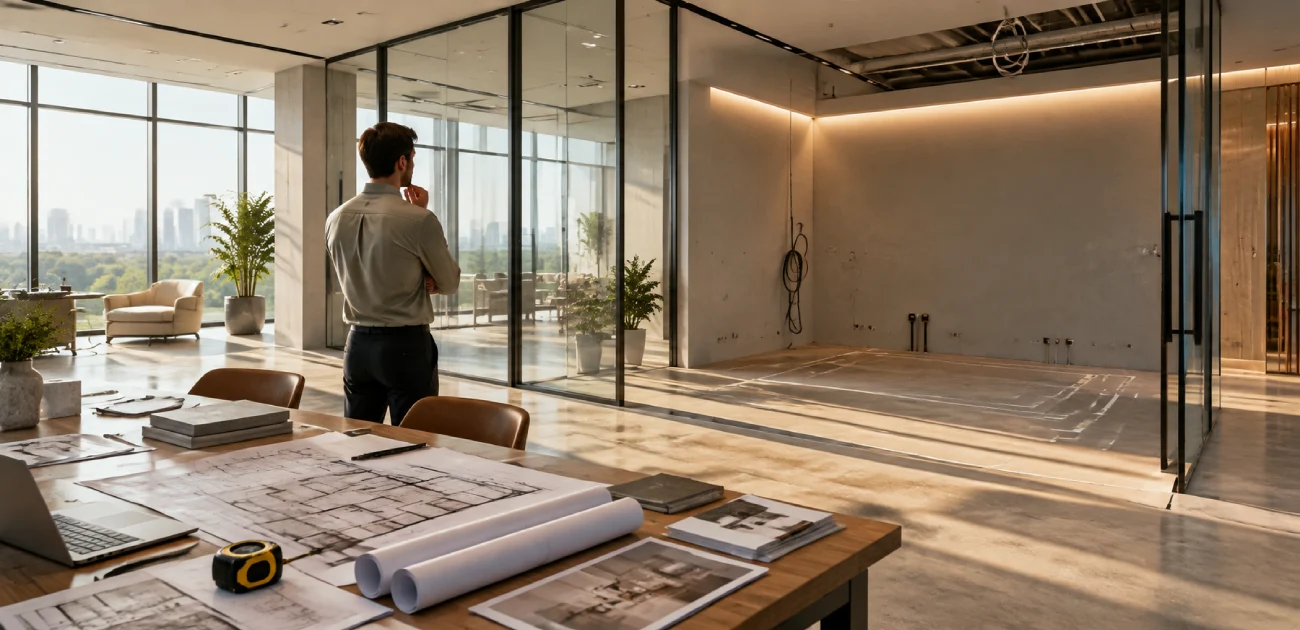
The implication: when comparing equipment, do not compare equipment prices. Compare installed project costs at your specific site. The wrong comparison is buying on price and discovering the multiplier. The right comparison is sorting on what your total number will be after the room is ready.
A second implication, and the one the industry never writes down: low multiplier means low absolute spend, but it also means low per-session capacity ceiling. A soft-shell single-seat unit that drops in to a standard outlet is genuinely cheap to install. It also caps your session volume at one client at a time, on a fixed timeline. That's a real trade. Step 6 puts a number on it.
Step 3 — What belongs in CAPEX and what belongs in OPEX
Most published CAPEX/OPEX breakdowns for chamber budgets are partial lists. They miss the two boundary calls that actually trip buyers up. Here's the complete two-column version, with the boundary calls called out at the bottom.
Two boundary calls need a sentence each, because most articles get them wrong:
Training. Any training bundled with the initial purchase, included as part of commissioning, is CAPEX. Recurring certification, new-hire onboarding, refresher courses — that's OPEX. The same activity lives in different columns depending on when it happens.
Oxygen. The equipment that produces the oxygen — the concentrator, compressor, piping, regulators — is CAPEX. The oxygen itself, refills or the electricity to extract it from room air, is OPEX. Industry write-ups routinely conflate these.
One more row to call out: downtime. Track it as its own line item, not folded into "maintenance." When the chamber is down for two days, you don't just have a repair bill. You have refund requests, idle staff, and a client who quietly finds another provider. Build a 12-month reserve for routine repairs and planned service before you open the doors. This comes from the same Atlanta planning guide linked above, and it's the line most buyers forget.

Step 4 — The three site conditions that decide your real number
Most "installed cost" articles leave these to the installer's discretion. They shouldn't be. Each one has a calculation you can do before you sign anything.
4a. Electrical service
Read the chamber's rated power. Most commercial-grade oxygen concentrator units in the U.S. market sit in the 1,200 W to 2,200 W range (rated power and amperage vary by model and by voltage). Convert that to current on your supply voltage:
current (A) = rated power (W) ÷ supply voltage (V)
Then apply the NEC 80% rule for continuous loads: a branch circuit can only deliver 80% of its breaker rating continuously. So a 15-amp breaker at 120 V is good for 12 amps continuous, which is about 1,440 watts. A 20-amp breaker at 120 V delivers 16 amps, or about 1,920 watts. A 30-amp dedicated circuit at 120 V delivers 24 amps, or about 2,880 watts (NFPA 70 NEC overview).
Translated to actual siting decisions:
- A 1,200 W unit on a standard 120 V, 15-amp household circuit: fine, just barely (10 A draw, 12 A available).
- A 2,200 W unit on the same 120 V, 15-amp circuit: won't work. Needs either a 120 V, 30-amp dedicated circuit or a 240 V, 15-amp or 20-amp circuit.
If your site needs a new dedicated circuit, a sub-panel, or a service upgrade, you're now in the electrical work $5,000 – $60,000 band the industry price guides all cite — but at least you'll know going in.
4b. Floor loading
Here's the one nobody gets right, and it matters for second-floor locations. Floor loading is force per unit area, not total weight.
A common industry planning figure for the heaviest single-seat hard-shell units is on the order of 600 kg on roughly 1.4 m² of footprint, which works out to about 430 kg/m² concentrated at the chamber's base. That number sits above the U.S. office-design live-load floor of 2.4 kPa (50 psf, ~244 kg/m²) as referenced in ASCE 7 (ASCE 7-22 minimum design loads). A two-seat hard-shell unit at roughly 500 kg on roughly 4 m² comes out to about 120 kg/m² — well within residential and light-commercial floors.
The unintuitive bit: the lightest class of chamber can produce the highest floor loading, because of the small footprint. A 1,000 kg room-style chamber on 4.2 m² is about 240 kg/m², basically fine. A 600 kg single-seat chamber on 1.4 m² is higher. "Heavier chamber = needs reinforcement" is the wrong rule. Look at kg/m², not total kg. If your site is on an upper floor, get a structural engineer to sign off before you order the unit, not after.
4c. Doorway and access
Standard U.S. interior door clear widths are roughly 81 cm (32 in) for residential and 91 cm (36 in) for commercial, with the actual clear opening after frame and stops slightly smaller (ADA / IBC door clearances). The number to check is the shortest dimension of the chamber, because that's what has to fit through the door or the elevator.
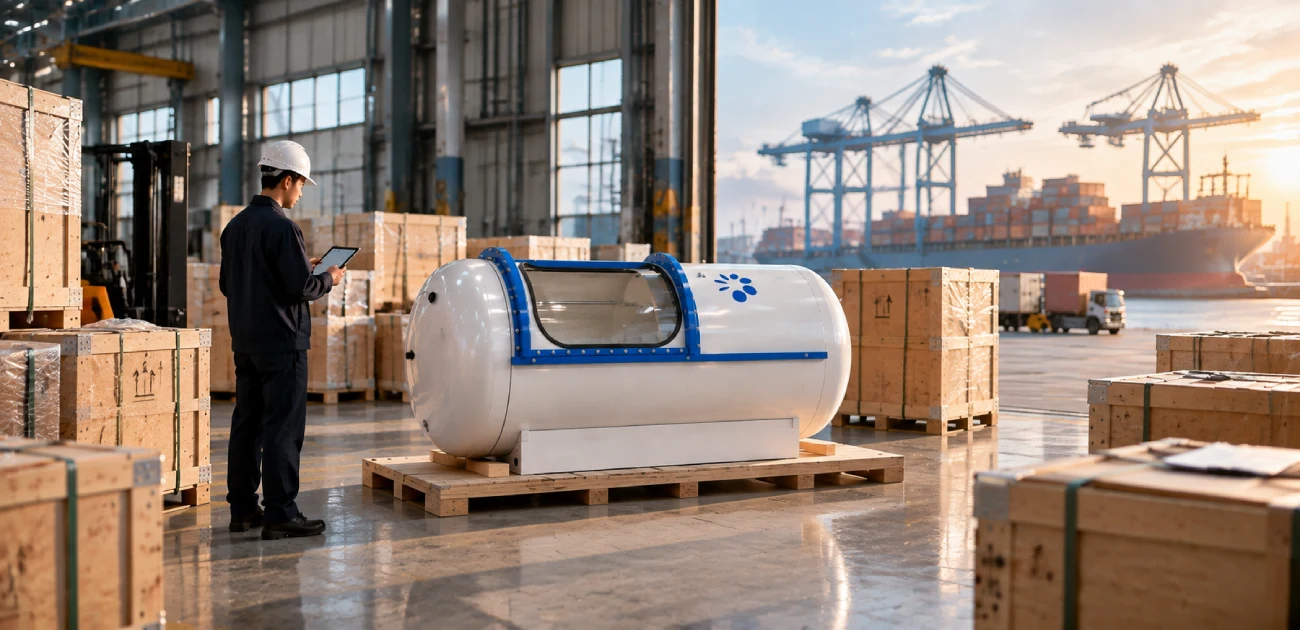
What this decides is whether your installation is a "two people and a dolly" job or a "remove the door frame, use the freight elevator, crane through a window" job. The latter is where the $2,000 – $40,000 freight and install labor line item comes from in published guides. It is not, strictly speaking, an installation cost. It is an access cost. Decide it during selection, not on delivery day.
The three conditions together — electrical, floor loading, doorway — answer the question "what does my installed project cost?" without ever needing a sales quote. If all three check out at your site, your multiplier will sit near the low end of the table in Step 2. If one of them fails, your multiplier jumps. If two fail, you're in full room build-out territory before you even price the chamber.
Step 5 — Oxygen and power: where CAPEX buys down OPEX
Oxygen is the line item most articles treat as a single number. It isn't. It's an explicit trade between one-time capital and ongoing operating cost. There are four practical paths in the U.S. commercial market:
Sources for the cylinder band: hbot-finder cost guide, hyperbaricpro starter guide. Sources for the concentrator band: atlantahyperbariccenter cost guide.
The way to think about this: a modest one-time spend on a higher-capacity concentrator unit typically recovers its cost against cylinder refills within a year, well within the equipment's life. This is what "CAPEX buys down OPEX" actually looks like, in numbers.
On electricity itself: don't budget per chamber model. Budget per kWh on your local rate. Use the formula:
session electricity cost = rated power (kW) × session length (h) × local rate (USD/kWh)
At a typical commercial rate near $0.16/kWh (U.S. EIA commercial electricity rates):
- a 1.2 kW soft-shell unit running a 60-minute session uses about 1.2 kWh, costing about $0.19 per session
- a 2.2 kW hard-shell unit on the same session length uses about 2.2 kWh, costing about $0.35 per session
If a published guide quotes you "$30 to $60 a month in electricity," the math behind that number is roughly 85–170 sessions a month at the 2.2 kW rate — i.e., a steady single-seat operation. The "few dollars a month" figure you may see elsewhere is roughly the same math at 4–20 sessions a month, which is closer to private or low-volume use. Both numbers are right. The difference is sessions, not equipment. This is the kind of context that most published cost guides leave out.
Step 6 — Contribution margin, not gross price
Step 1 promised a formula. Here it is, properly built up.
The cost side, per session:
per-session cost = variable session cost + allocated labor + allocated maintenance + allocated compliance
Variable session cost is the consumables side: oxygen consumed, electricity, cleaning supplies, single-use mask or liner. For a typical session that's on the order of $15 – $40, dominated by oxygen if you're on cylinders and by electricity if you're on a concentrator.
Allocated labor is the labor cost of the operator on shift, divided by the sessions they run in that shift. In the U.S. commercial-wellness context, published planning figures put trained chamber technicians at roughly $20 – $28 per hour fully loaded, and supervising clinical staff considerably higher (hyperbaricpro starter guide, which publishes these as planning ranges for a U.S. commercial buyer).
Allocated maintenance is your annual service contract or in-house maintenance cost, divided by sessions per year. Annual maintenance across the U.S. industry ranges from roughly $3,000 to $12,000 depending on chamber class and service level (hyperbaricpro starter guide, atlantahyperbariccenter cost guide).
Allocated compliance is insurance, calibration, inspection — small but real, on the order of $1,000 – $3,000 a year for a cash-pay commercial operation.
The revenue side, per session:
contribution margin per session = session price − per-session cost
If you're charging $200 a session and your per-session cost is $80, your contribution margin is $120. That's the number that pays the rent, the loan, the salaries that aren't allocated to a specific session, and — eventually — profit.
Now the break-even calculation is honest:
break-even sessions per month = (monthly fixed cost + monthly debt service) ÷ contribution margin per session
Plug in your own numbers. Do not take a break-even figure from a sales brochure. Industry-published "12–18 month payback" claims almost never disclose the assumed utilization, assumed price, or assumed labor cost behind them — see superhumanchambers business plan guide for an example of a five-year TCO worksheet that asks the reader to fill in all of those assumptions explicitly. Use it. The framework is sound; the default numbers are not yours.
Step 7 — Section 179 is a timing rule, not a discount
Most articles on Section 179 read like a tax-credit pitch. It's not a credit. It's a timing election.
What it actually does: lets a business deduct the full purchase price of qualifying equipment in the year it's placed in service, instead of depreciating it over several years. The current-year cap, the phase-out threshold, and the business-use percentage are all spelled out on the IRS site (IRS Section 179 overview, 26 U.S.C. §179 on uscode.house.gov).
Three constraints matter for any chamber buyer:
- The cap is large but not infinite. Above the cap, the deduction phases out dollar-for-dollar. Check the current year's number on the IRS page before you plan around it.
- Business-use percentage. More than 50% business use is required. A chamber that also gets personal use is a partial deduction, not a full one.
- The deduction can't create or increase a loss. It's limited to your taxable income from active business. If your business has a $40,000 taxable income in the year of purchase and you spend $60,000 on a chamber, you don't get a $60,000 deduction — you get $40,000 this year and a carryforward. This is the detail that surprises new buyers the most.
And the one most articles bury: the deduction applies to the year the equipment is placed in service, not the year it's ordered or paid for. A chamber ordered in December and installed in February deducts on next year's return, not this year's.
Section 179 is a useful tool. It is not a 30% discount. Talk to a CPA. Don't trust a vendor's payback spreadsheet that bakes in a Section 179 number without showing the calculation.
Step 8 — Which chamber class matches your site
This section deliberately has no prices. The price conversation belongs to a sales call with a written quote. What follows is the selection logic, which is what the industry almost never writes down in plain English.
We group commercial hyperbaric chambers by what they ask of the site, not by pressure class. The site demands are what determine your installed cost — and installed cost is what determines whether the business case works.
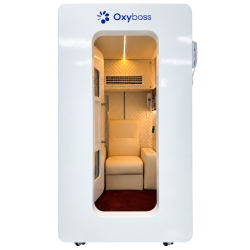
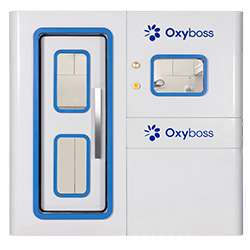
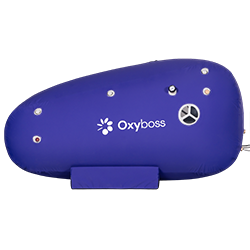
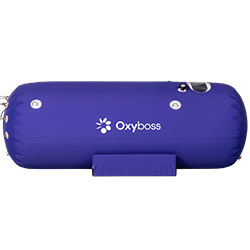
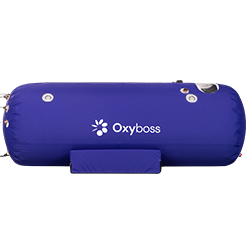
Class 1 — Drop-in soft-shell. Sits on a standard outlet, fits through a standard door, weighs roughly 70 kg with its companion oxygen unit, and finishes in a room you could repaint as a yoga studio. No dedicated circuit, no structural review, no freight crew. This is the lowest multiplier class (Step 2). The trade is session volume — one client at a time, and a softer experience compared to the harder classes below. Best for: solo practitioners, recovery rooms, low-volume concierge wellness.
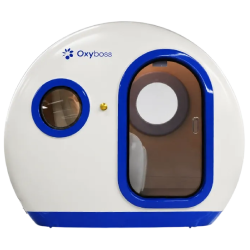
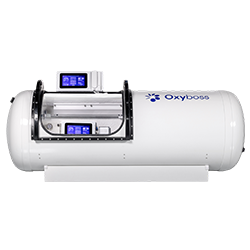
Class 2 — Single-seat hard-shell. Needs a dedicated electrical circuit (see Step 4a). Heavier — typically 300 to 600 kg including the oxygen unit — and the shortest-dimension check matters here. Some single-seat hard-shell units in this class are narrow enough to clear a standard door (about 75–90 cm width); others are not. The single-seat hard-shell class is where the published industry planning figure of "2.9×" comes closest to reality for a site with light-to-moderate build-out. Best for: a dedicated recovery room, a clinic add-on, a single-room boutique.
Class 3 — Multi-seat or room-style hard-shell. The wide range of two-seat to room-style hard-shell units. These units need both a dedicated circuit and usually a structural review. Shortest dimensions routinely exceed 100 cm, so the access question (Step 4c) is the first one to answer, not the last. Build-out typically includes dedicated HVAC and sometimes a separate air-handling decision. Multiplier lands at the high end of the Step 2 range. Best for: high-volume single-location businesses, couples or family session packages, dedicated wellness centers.
The pressure class — 1.3, 1.5, 2.0 ATA — is a separate axis. It matters, and you should pick the right value for your service model and your target client. We are deliberately not weighing in on which pressure to choose, because that's a clinical and regulatory decision that depends on your state, your zoning, and the advice of qualified professionals in your jurisdiction. What we will say: do not let a salesperson choose your pressure class for you. Pressure class is not a feature to upsell. It's a regulatory and operational decision that belongs upstream of any price conversation.
Step 9 — Nine industry phrases that don't hold up
The fastest way to read a chamber brochure like an editor is to learn the words that sound impressive and mean nothing without documentation. Here's the working list. We've grouped them by who usually uses them.
The "we're medical-adjacent" set
- "Clinical-grade." No U.S. regulatory definition. No standard engineering meaning. Ask the seller for the specific pressure-vessel documentation and certification documents behind the claim.
- "FDA-approved." Most chamber claims should say "FDA-cleared." The two words are not synonyms — FDA approval is a drug pathway; FDA clearance is the 510(k) pathway most medical devices actually go through (FDA medical device pathways). If the device is neither cleared nor approved, the seller should say so.
- "ASME compliant." ASME PVHO-1 applies to pressure vessels for human occupancy. "Compliant" without a specific model number and a U-stamp-style documentation trail is a marketing phrase. The standard itself is at ASME PVHO-1. Ask for the documentation, by serial number.
The "running it is cheap" set
- "Low operating cost." Meaningless without rated power, session length, and electricity rate. Use the formula in Step 5.
- "$30 to $60 a month in electricity." True at about 85–170 sessions per month at a 2.2 kW draw. False at 4 sessions. Demand the sessions-per-month number alongside the dollar figure.
- "Medical-grade oxygen." For non-medical cash-pay operations, you're usually buying industrial-grade oxygen with a higher purity spec than medical requires — or extracting it from room air. Either is fine; the label doesn't change the cost line.
The "we've got you covered" set
- "Lifetime support." Without a written service-level agreement and a defined parts-availability commitment, this is a phrase, not a service. Ask for the SLA.
- "Installation included." Without a written scope — electrical work, HVAC, rigging, permits, commissioning — "included" is whatever the seller decides it means when the invoice arrives. Define it in writing.
- "Break-even in 12–18 months." Without disclosed assumptions for session price, session volume, labor cost, and CAPEX, this is a sales target. Build your own with Step 6.
Step 10 — The pre-signing checklist
Before you wire any deposit, the following should be in writing. If your salesperson can't produce them, that's information.
Financial
- Total installed project cost, with line items (chamber, oxygen unit, freight, electrical, HVAC, permits, install labor, training).
- A 5-year TCO model you can edit, with sessions per month, contribution margin, and loan or lease terms as variables — not hardcoded.
- Financing terms on a total-cost basis, not monthly payment: APR or factor rate, term, balloon, buyout, and what's included in the financed amount.
- A Section 179 worksheet or memo from your CPA, current-year cap and your taxable-income constraint included.
Operational
- Site readiness confirmation: electrical (panel capacity, dedicated circuit, voltage), floor loading (signed by a structural engineer if upper floor), access (door widths, elevator dimensions, freight path).
- A named operator, with backup coverage, and a documented training plan — initial training, then ongoing.
- A written service agreement: response time, on-site vs remote, parts availability, maximum repair downtime, loaner or backup plan if available.
- A 12-month operating reserve, in cash, dedicated to maintenance and downtime.
Compliance and documentation
- The chamber's certification documents, by serial number, including the pressure-vessel file.
- A confirmation from your local authority having jurisdiction on what permits and inspections are required.
- A written emergency procedures plan, drilled at least once before opening.
- An insurance binder covering general liability, product liability, and premises exposure at the levels your carrier requires.
- A written confirmation that your operational model and your equipment class are aligned with your state and local regulatory regime — and that the equipment documentation you're relying on is the documentation your regulator or your insurer expects to see.
If you can't tick most of these boxes, the deal isn't ready. Walk.
FAQ and sources
What's the real difference between CAPEX and OPEX for a hyperbaric chamber? Capital expense is the one-time cost you pay to put the equipment in service — the chamber itself, electrical work, room build-out, installation, training bundled with the purchase. Operating expense is everything that recurs — electricity, oxygen, consumables, labor, maintenance, insurance, financing service charges. The line that trips people up is training: bundled with the initial purchase is CAPEX, recurring is OPEX. Same for oxygen: the equipment that produces it is CAPEX, the oxygen itself is OPEX.
Do I really need a 30-amp circuit for a hard-shell chamber? Depends on the model's rated power and your supply voltage. At 120 V, a 30-amp dedicated circuit delivers about 24 amps continuous under the NEC 80% rule (NFPA 70 NEC) — enough headroom for a 2,200 W chamber unit. At 240 V on the same chamber, a 15- or 20-amp circuit is sufficient. Check the model's rated amperage at your supply voltage, not the manufacturer's general spec sheet.
How much should I budget for the room, not the equipment? Industry planning bands for the site work alone — electrical, HVAC, permits, freight and install, and any structural work — sit roughly in the $5,000 to $60,000 range for a typical commercial chamber, depending on site condition (atlantahyperbariccenter cost guide). The wide range is the point: most of it is decided by your site, not your equipment choice.
Can I write off the entire chamber cost in year one? Section 179 lets you deduct the full purchase price in the year the equipment is placed in service, subject to the annual cap, the phase-out threshold, the 50%+ business-use rule, and — most often missed — your taxable income limit. The current-year numbers and the detailed rules are on the IRS site (IRS Section 179, 26 U.S.C. §179). Section 179 is a timing election, not a discount. Confirm with your CPA.
Is a hyperbaric chamber a CAPEX or an OPEX item for a wellness center? Both. The capital purchase is CAPEX. Once installed, the electricity, oxygen, consumables, labor, maintenance, and insurance are OPEX. Leasing shifts most of the capital outlay into a recurring operating payment — useful for cash flow, often more expensive in total. The full breakdown is in Step 3.
What's the cheapest way to get started? A drop-in soft-shell unit on a standard outlet, with a room that already meets the access and floor-loading conditions. Lowest installed cost, lowest per-session capacity. Use the formula in Step 6 to test whether contribution margin covers the fixed monthly cost at your realistic session volume. If it doesn't at 30 sessions a month, the cheaper class isn't actually cheaper — it's just smaller.
What certifications should I look for? At minimum, ask for the pressure-vessel documentation by serial number. If the chamber is being marketed as medical in any way, ask specifically for FDA clearance status (cleared through 510(k) is the usual pathway). For non-medical commercial-wellness use in the U.S., the regulatory floor is lower, but your insurer and your local fire marshal may impose additional requirements. Bring the documentation, not the brochure.