.svg)
.svg)
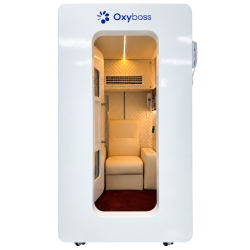
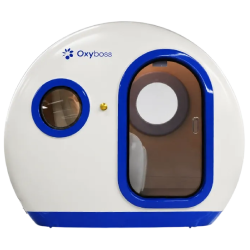
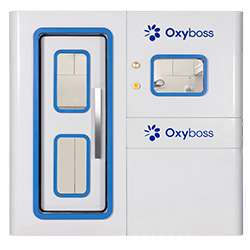
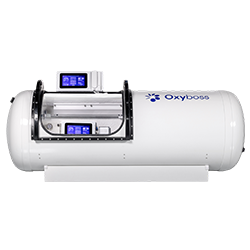

So you're shopping for a hyperbaric chamber. You've compared chamber pressure, oxygen concentration, footprint, and price. You may have even watched a few YouTube reviews.
But here's the thing most people skip over: the warranty and service-level agreement will determine whether you actually like this chamber three years from now.
A great chamber with a bad warranty is a slow-burning nightmare. A good chamber with a strong warranty is something you can basically forget about — until something goes wrong, and then it gets handled.
This post is the one we wish we could hand every buyer before they sign anything. We'll walk through what the industry actually promises, where the gotchas hide, and how to read a warranty like a contract lawyer (without becoming one).
Why this matters more than the chamber spec sheet
Let's be honest. The chamber itself is mostly a solved engineering problem. Sealed hull, pressure-rated valves, oxygen sensor, dehumidifier, control board. Most chambers in the market will run reliably for years.
The variable that breaks people's experience is what happens when something goes wrong.
Anecdotally, the post-purchase complaints we hear most often aren't "the chamber broke" — they're:
- "I reported it Monday and nobody came until Thursday."
- "They responded in 24 hours, but the part took two weeks."
- "They said 'normally 24h' but when I pushed back, they said that wasn't a real commitment."
- "I lost a weekend of bookings and the SLA only refunded me 10% of the monthly fee."
Sound familiar? Almost every one of those complaints traces back to the same root cause: a warranty that was written to look reassuring, not to actually be enforceable.
Let's fix that.
1. "Response time" and "resolution time" are not the same thing
This is the single most important distinction in any warranty, and the one most buyers miss.
Response time is the clock from when you file a ticket to when a human looks at it.
Resolution time (sometimes called "time to close") is the clock from when you file to when the chamber is actually working again.
A warranty that promises "24-hour response" but says nothing about resolution is, bluntly, half a warranty. You're guaranteed someone will say "got it, we're on it" within 24 hours. Whether they actually fix the chamber in 24 hours, 24 days, or 24 weeks is a completely different question.
Most warranties in this industry talk a lot about response time and very little about resolution time. That's not a coincidence.
What to look for:
- A specific number of hours (or days) for both response and resolution.
- A definition of what counts as "resolution." Is the chamber back to full functionality, or is it just "the ticket is closed"?
- Some breakdown of the middle — diagnostics, parts delivery, dispatch, on-site work, post-repair verification.
If a warranty only gives you response time, ask the seller in writing: "What is your typical resolution time, and what's the longest it's ever taken?" If they can't answer in writing, that's a tell.
2. "Average" response time is a misleading number
Here's a trick that comes up over and over in service contracts, and it's worth calling out.
Most brands will quote you an average response time. "Our average is 10 hours." Sounds great.
The problem is: averages lie about tails.
Imagine you have ten service tickets. Nine of them get resolved in 4 hours. One of them takes 64 hours because the part had to ship from overseas. The average is 10 hours. Half the tickets are actually resolved faster than the average, and one is much, much slower.
What you really want to know is the distribution:
- p50 (median): 50% of tickets are closed faster than this.
- p90: 90% are closed faster than this. This is your "typical worst case."
- p99: 99% are closed faster than this. This is your "rare-but-devastating" number.
If a brand can give you p50 / p90 / p99, that's a brand with real data and real systems. If they can only give you an average, they're either hiding their tail or they don't measure it. Neither is great.
A useful question to ask: "Out of your last 100 service tickets, how many took longer than 48 hours to close, and what was the longest?" If the answer is vague, that's information too.

3. Service credit: the line most people skip
Every warranty has a section buried near the end about what happens if the brand fails to meet its own SLA. Usually it looks like this:
"In the event of an SLA breach, the company may, at its sole discretion, issue a service credit not to exceed 5% of the monthly fee."
Three things to notice:
- "May" — not "will." So even the credit is optional.
- "At its sole discretion" — meaning they decide whether it counts as a breach, not you.
- "Not to exceed 5% of the monthly fee" — meaning if your downtime costs you thousands, the most you'll ever get back is a token amount.
Now compare that to the actual cost of being down. If you run a wellness studio with one chamber doing 10 sessions a day at $200 a pop, a single weekend of downtime is $4,000 in lost revenue. A 5% service credit on a $300/month fee is $15. That's not a remedy — it's an insult.
What to look for:
- The credit is automatic, not discretionary. ("Service credits will be applied to your next invoice" beats "may, at our discretion.")
- The credit covers a meaningful percentage of your real downtime cost, not just the fee you pay the brand.
- There's a path to termination if SLA breaches become chronic. If a brand has missed its SLA three months in a row, you should be able to walk away without a fight.
This last point is the sleeper. Termination rights are how you turn a warranty from a polite promise into an enforceable contract. Most brands won't volunteer this — you have to ask.
4. The "exclusions" section is where brands hide their homework
Every warranty has a list of things it doesn't cover. That's normal. The question is how long the list is, and what kinds of things are on it.
Industry standard exclusions are reasonable: damage from dropping the unit, unauthorized modification, use outside the rated environment, normal wear items like filters and O-rings.
Red flags we've seen in the wild:
- "Issues arising from frequent power cycling" — vague, and covers a lot of innocent behavior.
- "Cosmetic damage" — sometimes stretched to mean anything that doesn't affect function, including things that obviously do.
- "Use in commercial settings" — meaning the warranty quietly doesn't apply the moment you start a business with the chamber.
- "Acts of God" plus a long list of vague events that can be invoked at the brand's discretion.
A reasonable warranty should have 3–5 exclusions, all of them specific and behavior-related. If the list is longer than that, or full of vague phrases like "frequent" or "excessive" or "as determined by us," push back.
5. The clock-stop: when the SLA timer pauses (and why it matters)
This is the most under-discussed mechanic in the industry, and frankly it's where most of the frustration lives.
A "clock-stop" is when the SLA timer is paused because of something outside the brand's control. Common reasons:
- Waiting for a part to ship
- Waiting for the customer to authorize a remote diagnostic session
- Waiting for a third-party inspection (insurance, etc.)
- Force majeure events
This is standard and reasonable. The brand can't be blamed for a part stuck in customs or for a customer who doesn't answer the phone.
The problem is when clock-stops are used as a quiet workaround. A warranty that says "we aim to resolve in 48 hours" but then pauses the clock for parts, customer authorization, and "operational reasons" can technically take a week and still be in compliance.
What to look for in the warranty text:
- An explicit list of what triggers a clock-stop. (Vague is bad.)
- A maximum duration for each clock-stop event. ("Parts delivery: clock stops for a maximum of 5 business days" beats "clock stops during parts delivery.")
- A notification requirement. The brand has to tell you when the clock stops, and when it resumes. If they don't, the clock shouldn't stop.
A brand that handles clock-stops transparently is one that's used to being held accountable. A brand that doesn't address them at all is one that hasn't thought about it — or doesn't want you to.
6. What "good" looks like in the industry
A quick reference, based on what service-level research generally considers healthy benchmarks for equipment support contracts:
These are not numbers we invented. They show up consistently in B2B service contract research — see, for example, the analysis of vendor SLA evaluation at web-alert.io and the IT support SLA benchmarks at Microwize. The general framework for thinking about "what's a good SLA" is well covered at Suptask's SLA guide.
If a brand's warranty has you looking at numbers that are below the "OK" column for first response and resolution, you should ask why. If they're at "Best in Class," you've probably found a brand that actually measures and publishes its own performance.

7. The five questions to ask before you sign
Print this out. Take it to your sales call. Don't be shy.
- "What is your p50 and p90 resolution time over the last 12 months?" If they say "we don't track that," you've learned something.
- "If you miss your SLA, what happens — automatically?" Listen for "we will" vs "we may."
- "If you miss your SLA three months in a row, can I terminate without penalty?" A real "yes" here is worth a lot.
- "What triggers a clock-stop, and how long can the clock be stopped?" Vague answers are red flags.
- "Can I see the full warranty document, with the exclusions, before I pay anything?" If they want you to pay first and read later, walk.
8. A note on the non-medical side of things
We build non-medical hyperbaric chambers. We're explicit about that. The chambers we make are intended for general wellness, recovery, and performance support — not for the diagnosis, treatment, or cure of any medical condition.
This is important to mention here because the warranty is one of the areas where some brands quietly blur the medical line. They use clinical-sounding language in the warranty ("therapeutic benefit," "FDA-cleared," etc.) to make the product feel more legitimate, then turn around and refuse service claims because the chamber is sold as non-medical. It's a bait-and-switch.
A clean warranty will use plain language, make the non-medical nature explicit, and stand behind the product on its own terms. If a warranty is doing medical cosplay, that's a sign the brand isn't confident in the product as a piece of equipment.
9. What we do, briefly
A few things about how we approach warranty:
- We publish our SLA numbers. Not just averages — p50 and p90, every quarter.
- Our service credit is automatic and meaningful — if we miss, you get a real credit on your next invoice, not a coupon.
- We've been doing this long enough to know the gotchas, and we write our warranty to address them instead of hiding them in fine print.
- If you want the full warranty document before you talk to us about anything else, here it is. No email gate, no "book a call first."
You can evaluate us on the same five questions above. If we don't pass, we'd rather you find out before you buy.
10. The short version
If you only take one thing from this post: a warranty is not a marketing document. It's a forecast of how the brand will behave when things are hard.
The brand that publishes its actual numbers, writes its exclusions plainly, gives you a path to walk away if they fail, and uses the word "non-medical" without flinching — that's the brand whose chamber you'll still like in three years.
Everything else is spec sheet theater.
Sources and further reading
The framework in this post draws on a few well-regarded pieces on evaluating service-level agreements and warranty structures. Worth reading if you want to go deeper:
- Web-Alert — How to Evaluate a Vendor SLA: What to Look For — practical SLA evaluation framework with a scorecard approach.
- Microwize — IT Support SLA and Response Times: What SMBs Should Expect — clean breakdown of response vs. resolution, priority tiers, and the clock mechanics.
- Suptask — What is a Good SLA? Time, Metrics, and Industry Benchmarks — the benchmarking numbers for first response, resolution, and SLA compliance.
- OxMaint — Track Equipment Warranty and Service Contracts in CMMS — the B2B / facility-management perspective on managing warranty performance over a fleet of equipment.
For warranty evaluation more generally (not chamber-specific), the U.S. Federal Trade Commission's Magnuson-Moss Warranty Act overview is a useful reference. It limits how a brand can disclaim implied warranties in writing.
FAQ
Q: How fast should a hyperbaric chamber warranty respond, really? A: For first human response, 12–24 hours is reasonable. Anything slower is a yellow flag unless you have other reasons to trust the brand. For full resolution, look for a published p50 and p90 — averages alone aren't enough.
Q: Is "24-hour response" enough on its own? A: No. It only covers the first human contact. You also need a stated resolution time and a service credit mechanism if the brand misses it.
Q: What if the warranty has a long list of exclusions? A: Push back. A reasonable warranty has 3–5 specific, behavior-related exclusions. Long, vague lists are a way of saying "we cover very little."
Q: Can I negotiate warranty terms? A: Often yes, especially for commercial buyers or multi-unit orders. Ask. The worst they can say is no.
Q: Does a strong warranty mean the chamber itself is high quality? A: Not necessarily. A weak warranty on a great chamber is bad, and a strong warranty on a junk chamber is also bad. The warranty tells you how the brand will behave when something fails. The product review tells you how often it will. Read both.