.svg)
.svg)
Honestly, the first time I stepped out of a hyperbaric chamber, I was a little disappointed.
My coworkers used the chamber at our company all the time, and they all said the same thing: they'd take a nap inside and sleep like a rock, then come out feeling completely refreshed. So by the time I finally climbed in myself, I was full of expectations—I pictured myself emerging like a brand-new person, my head clear, my body no longer aching.
But when the door opened and I climbed out, I just stood there for a moment, thinking, "That's it?" Going in, my ears had felt a bit of pressure—I knew that was from the compression, so I pinched my nose and gave a gentle push, and they cleared right up. After that, it was pretty uneventful: I dozed off to a faint humming sound. That was all. I felt no different from the person I'd been an hour earlier.
Afterward, I kept wondering: Was it me? Had I set my expectations too high? Why didn't I feel what everyone else described? Or was the very product I'd been working on just a gimmick—a waste of money?
As I gained more experience in this industry and worked with hundreds of customers, I gradually came to understand that my reaction that day was actually the most typical, the most normal one there is. And as for "why I didn't feel anything," there's a misconception behind it that almost every newcomer falls into.
In this article, I'll walk you through all of it.
What Is a First Hyperbaric Session Actually Like?
Based on what I've heard from coworkers and the customers I've dealt with, people's feedback after a first session varies widely—but the experience inside the chamber is pretty much the same for everyone.
When the air starts to pressurize, the thing I notice most is the squeezing sensation in my ears. It's exactly like the feeling I'd always heard about—the one you get when a plane takes off. You can relieve it effectively by swallowing a few times or pinching your nose and gently pushing air toward your ears; chewing gum works too.
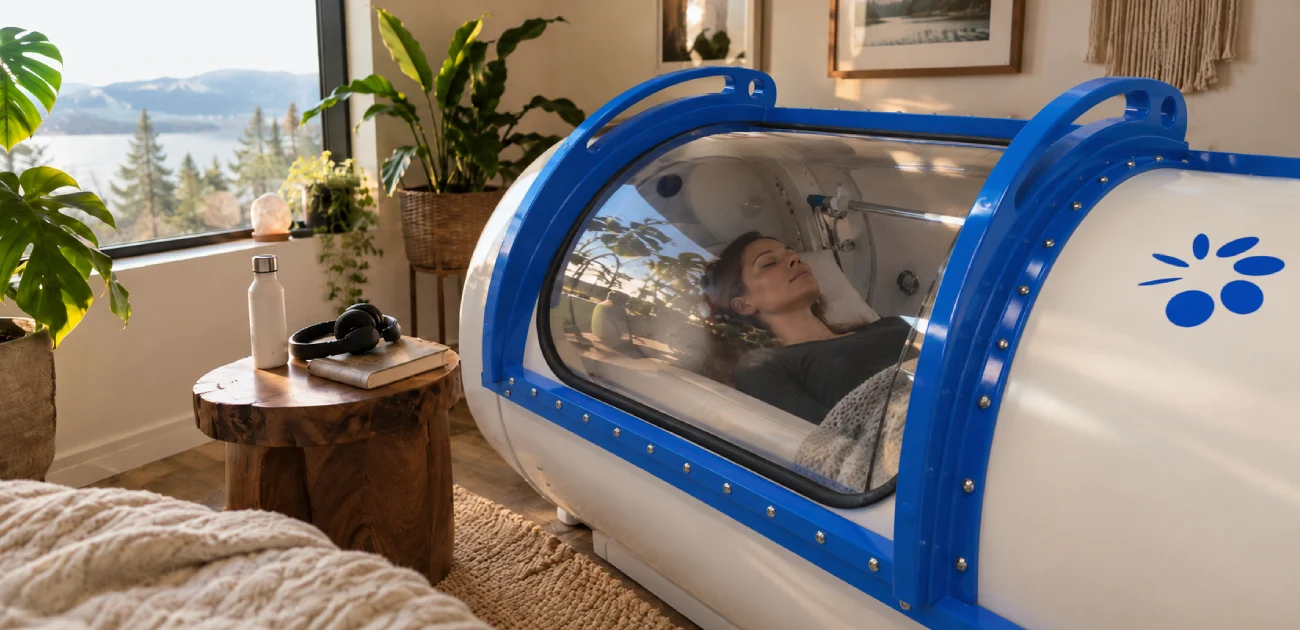
Once the pressure stabilizes, the sound of the inflow dies down, and the chamber actually becomes very quiet—just a faint hum and the occasional hiss of air being released. At this point, you can make yourself as comfortable as you like. A lot of people read, listen to music, or scroll on their phones to pass the time; I personally prefer to use it to catch a quick nap.
Once the pressure is released and you step out of the chamber, this is where people's experiences differ enormously. Some say they feel deeply relaxed, even drowsy, and sleep especially well that night. For others, the experience is somewhat negative: because of their fear of enclosed spaces, they can't get used to spending an extended stretch in a confined chamber after just one try, and they step out still tense from the claustrophobia. But the most common reaction of all is exactly what I experienced myself—literally nothing.
What Is Actually Happening in Your Body During That First Session?
To understand why experiences differ, you first have to understand what a hyperbaric chamber is doing to your body.
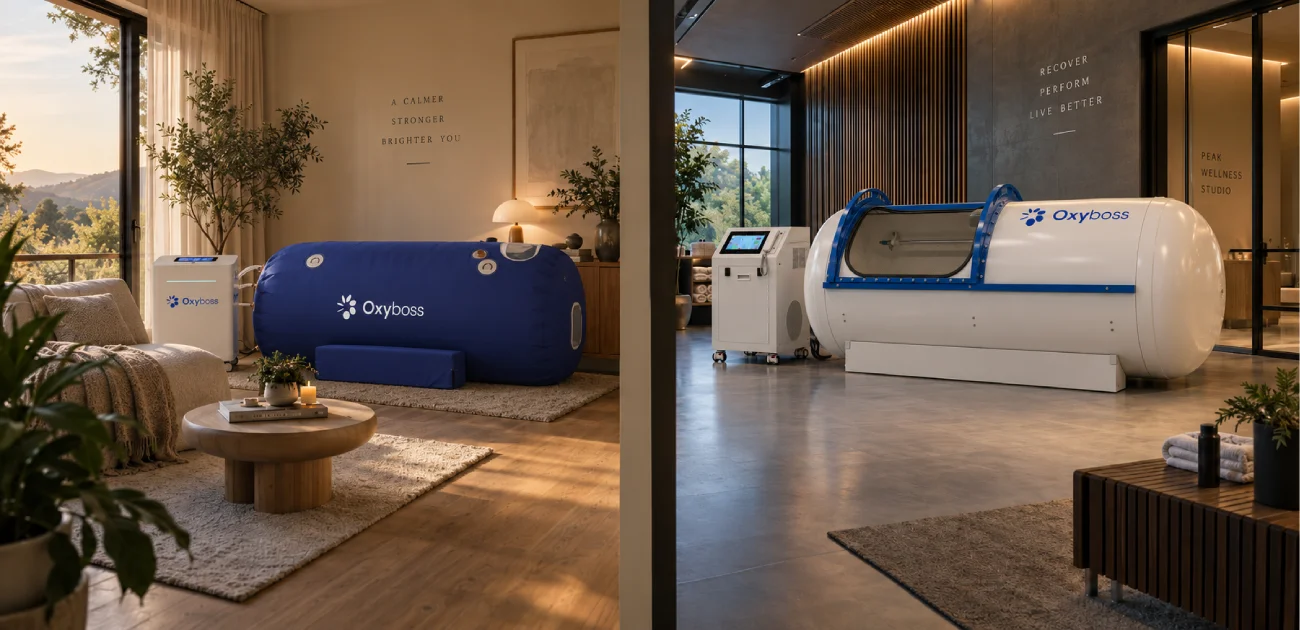
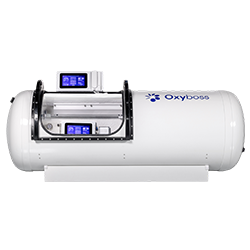
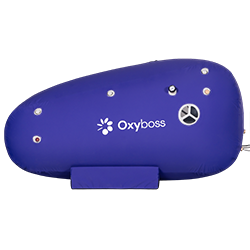
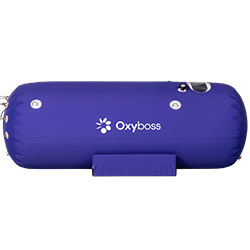
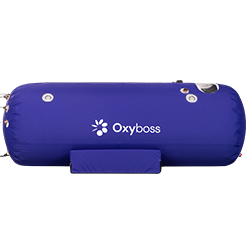
The non-medical chambers most of us experience come in two main types by construction: soft chambers and hard chambers. Soft chambers usually run at lower pressures, typically around 1.3–1.4 ATA, while hard chambers can go higher—some reaching 1.5–2.0 ATA. ATA stands for "atmospheres absolute," and 1.0 ATA is simply the pressure we breathe at on the ground every day.
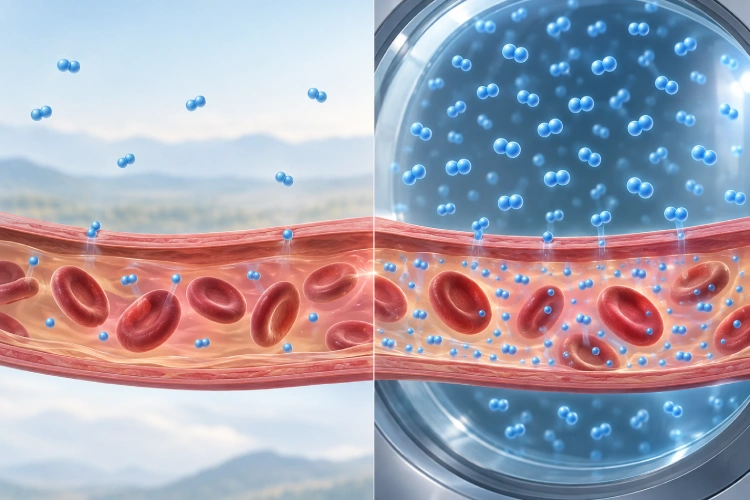
Normally, the vast majority of the oxygen in our bodies is carried by red blood cells—in more technical terms, this is "hemoglobin-bound oxygen." Inside the chamber, the air pressure is higher, so the partial pressure of oxygen in the environment rises along with it. According to Henry's Law, the amount of a gas that dissolves into a liquid increases as the pressure increases—so the extra oxygen dissolves directly into the blood plasma. This is what's called "physically dissolved oxygen in plasma," and it doesn't rely on red blood cells for transport. And yet, this very real process is something we simply can't feel.
Why Do Some People Notice More Than Others?
So why is it that, with the same chamber and the same settings, our reactions differ so much from person to person? It really comes down to just a few things.
The first is your physical baseline going in. Take that coworker of mine with the "over-the-top" reaction—he was chronically sleep-deprived and swamped with work, so his default state was like a tightly stretched rubber band. For someone like that, going through a single hyperbaric session in a sealed space free of outside distractions produces a dramatic contrast. Their starting point is so low that even a bit of rest feels like night and day. My own condition wasn't nearly as sleep-starved as theirs, so for me, that first session was really just napping in a different spot.
The second is psychological expectation. As I mentioned, my coworkers' glowing feedback had pumped my expectations sky-high—I'd conjured up all sorts of images of the refreshed, brand-new me who'd emerge from the chamber. But the reality was that what I'd been hoping for never came, and I labeled that flat, ordinary reaction a "failure," concluding the whole thing was "useless." I suspect most people who dismiss hyperbaric chambers as "pointless" went through the same mental journey I did.
The third is a handful of very small but very real variables. Maybe you didn't sleep well the night before and stepped into the chamber right when your body was craving sleep. Or maybe you'd had a hectic day and felt mentally frazzled, and a quiet, private space happened to clear out all the clutter that had piled up in your head over the course of the day. All of these factors profoundly shape the subjective experience of a first session.
One Session vs. Repeated Sessions
Something a lot of my customers care about—and something I wanted to verify on myself, too—is this: exactly how many sessions does it take before you see "results"? And the conclusion I've reached after using it regularly over a long stretch is this: don't wait for some "wow moment" at the end of any single session—look instead at the overall trend in your body over a period of time.
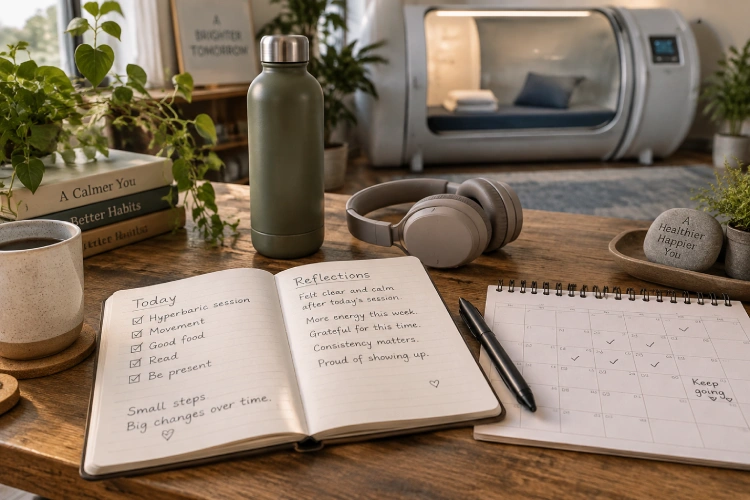
In my own case, I go in and lie down for an hour every weekday at lunch, five days a week. The first few times, I felt nothing. Then, sometime in the second week, on some afternoon, I realized I wasn't getting drowsy as easily as before, my head didn't feel as heavy, and I was falling asleep noticeably faster at night. These changes didn't come out of nowhere—they were the accumulated result of my body being regularly exposed to a hyperbaric environment. It's a lot like exercise: the first few days, all you feel is sore muscles, but stick with it over the long haul and you start to feel your body getting stronger.
So if you're the type who doesn't notice much change after a session, try this: after a stretch of regular sessions, look back carefully and pay attention to dimensions like these:
- Have you been more relaxed lately?
- Do you have more energy?
- Has your sleep improved—for example, do you fall asleep more easily, or dream less?
- Does your body recover faster after a workout?
So, Is One Hyperbaric Session "Enough"?
If all you want is a novel experience, then one session is plenty. But if you want to know whether a hyperbaric chamber is genuinely valuable for you, one session gives you very limited feedback—it can't deliver the answer you're really after.
When you dig into the serious research on hyperbaric chambers, you'll find that many published studies involve multiple sessions over the course of several weeks. For example:
- Dr. Shai Efrati's well-known Israeli study on "anti-aging / telomere lengthening" was designed around sessions five days a week, once a day, 90 minutes each, breathing 100% pure oxygen at 2.0 ATA, for three months and 60 sessions in total;
- A high-quality double-blind controlled trial used a protocol of five days a week for eight weeks, one 90-minute session a day at 2.0 ATA, to examine hyperbaric oxygen's effects on people with long COVID;
- A classic double-blind controlled trial had 94 participants breathe pure oxygen at 2.5 ATA, five days a week for eight weeks, as part of its observations.
This doesn't mean that we ordinary people need that many sessions to achieve some noticeable change. It only goes to show that judging whether something works depends on the trend over a period of time—not on the immediate sensation of any single session. So rather than agonizing over "why didn't I feel anything this time," give yourself an observation window instead.
One important caveat here: studies like these are mostly conducted under medical-grade hyperbaric conditions (higher pressures, typically pure oxygen, with strict clinical indications), which is a different matter entirely from the mild, consumer-grade hyperbaric sessions most of us experience day to day (roughly 1.1–2.0 ATA). Their specific session counts and treatment courses absolutely cannot be copied over as targets for yourself.
Conclusion
So, is one hyperbaric session "enough"? It may well be enough to tell whether you like this piece of equipment or this kind of experience—but it isn't enough to achieve the goal of improving some particular aspect of your health.
That said, the feedback your body gives you after that first session does, to some degree, reflect the state you were in when you went in. If you felt incredibly relaxed, it may be that your body had built up quite a bit of fatigue and really needed a good rest. If you felt nothing much, it may simply be that your current condition, that day's sleep, or your expectations were different—it doesn't mean the chamber is "useful" or "useless." That's the real point of that first session: it's more of a mirror, reflecting the state you're in right now, than a final verdict.
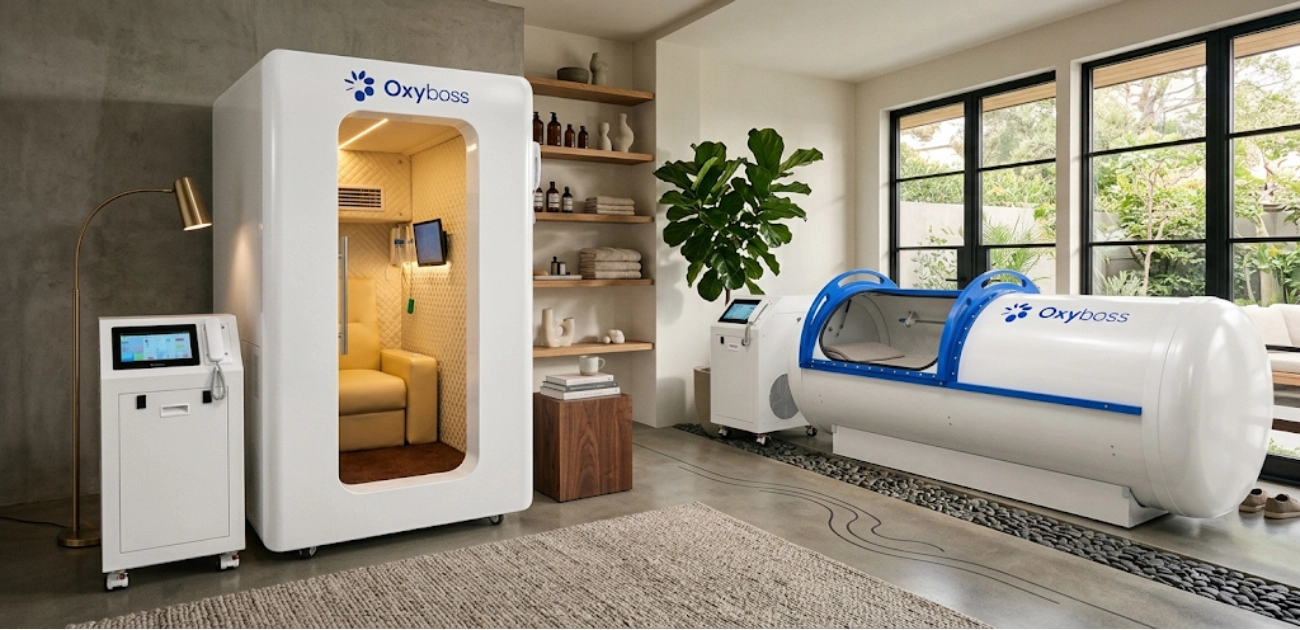
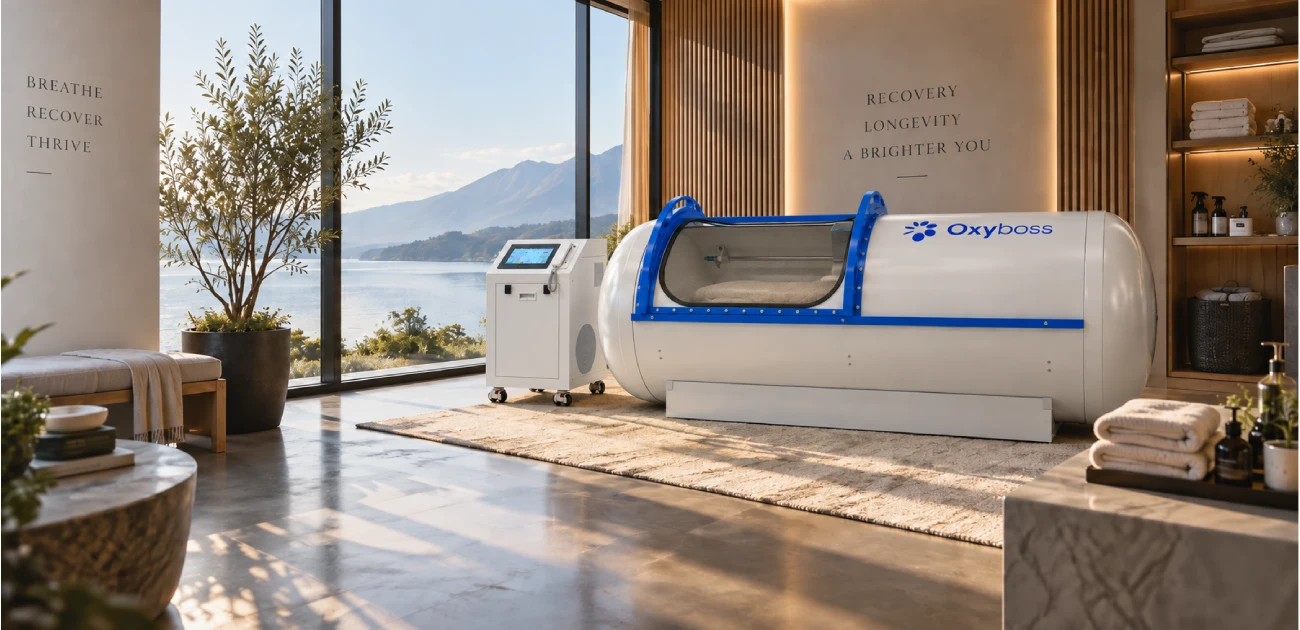
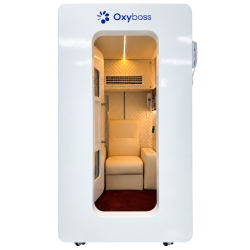
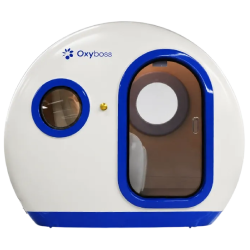
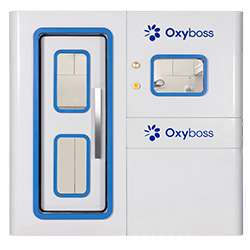
If you'd like to quietly begin your own first hyperbaric experience, come give Oxyboss's chambers a try. We supply a wide range of chambers—soft-shell and hard-shell, in single- and multi-person models—for commercial settings such as distributors, wellness centers, and spas, as well as for individual and home users.