.svg)
.svg)
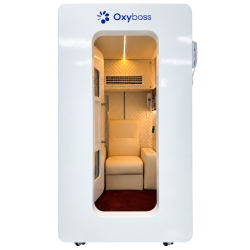
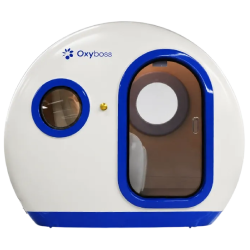
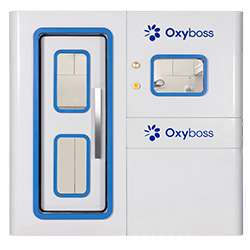
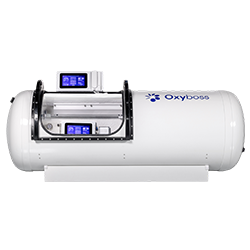
If you've ever searched for hyperbaric oxygen therapy, you've probably noticed something weird. People use two words — HBOT and mild HBOT — like they're the same thing, just at different sizes. They're not. And the people who act like they are are usually selling one of them.
This page is the one we'd want you to read before you spent $8,000 on a home chamber or $4,000 on a 40-session package. It covers what the two really are, what the published evidence actually says, where the costs land honestly, and — most importantly — when neither one is the right answer for you.
The short version
Pressure is the difference. That's the whole thing in one line.
- Traditional (medical-grade) HBOT runs at 2.0 to 3.0 ATA — that's 33 to 66 feet below sea level — and you breathe close to 100% oxygen through a mask or hood. The chamber is rigid steel or acrylic. A physician supervises. (UHMS – Indications for Hyperbaric Oxygen Therapy)
- Mild HBOT (mHBOT) runs at 1.1 to 1.5 ATA — roughly 10 to 16 feet down — in a soft, inflatable chamber. You breathe room air or enriched air from a small concentrator. No medical license is needed to operate one. (Not Synonymous: A Narrative Review, PMC13414326)
That's it. Two different tools, two different pressure ranges, two different categories in the regulatory system.
The reason this matters isn't the difference itself. It's what follows from it: different evidence, different cost, different insurance situation, different ceiling on what the therapy can plausibly do.
What "ATA" actually means (and why we keep bringing it up)
ATA stands for atmospheres absolute. Sea level is 1.0 ATA. Every ATA above that is a unit of pressure pushing on your body.
If you've shopped for a home chamber you've probably seen PSI on the spec sheet instead. The conversion is straightforward: 1 atmosphere absolute equals 14.7 PSI, so gauge pressure on the chamber readout is roughly (ATA minus 1) × 14.7. That puts 1.3 ATA at about 4.4 PSI of gauge pressure and 1.5 ATA at about 7.3 PSI. The standard conversion table in the hyperbaric literature uses 1 atm = 33 feet of seawater = 10 meters of seawater = 14.7 psi. (StatPearls – Hyperbaric Therapy in Blood Loss Anemia)
Why the obsession with pressure? Because the therapeutic effect — more oxygen dissolved into your blood plasma — comes from pressure. Not from the oxygen percentage you're breathing. Henry's Law states that the amount of gas dissolved in a liquid is proportional to the partial pressure of the gas above it. Under standard conditions, breathing room air (21% oxygen) at 1 ATA dissolves about 0.32 mL of oxygen per 100 mL of blood plasma. At 2.0 ATA breathing 100% oxygen, that rises to roughly 4.4 mL per 100 mL. At 1.3 ATA breathing room air, the plasma oxygen content is well under 1 mL per 100 mL — a real bump above sea level, but an order of magnitude below what you get at clinical pressure. (Barata et al. – HBOT in Neuroregeneration and Neuroprotection, Cureus 2024) (StatPearls – Henry's Law and HBOT Physics)
What the UHMS actually defines as HBOT
The Undersea and Hyperbaric Medical Society is the closest thing this field has to an official body. They've been around since 1967 and they publish the indications list that US medicine broadly follows.
Their definition is short and it has teeth: HBOT is an intervention in which a person breathes near-100% oxygen inside a fully enclosed chamber at a pressure of at least 1.4 ATA. (UHMS – Position Statement on Low-Pressure Fabric Chambers)
That last bit — "at least 1.4 ATA" — is the line most soft-chamber marketing quietly steps over. Below 1.4 ATA, by the UHMS's own definition, you're not doing hyperbaric oxygen therapy. You're doing mild hyperbaric therapy, which is a different thing.
There's exactly one exception: altitude sickness. Soft chambers got their original FDA clearance for that, and that's it. If you see a manufacturer claiming their chamber is "FDA cleared," that's what they're cleared for. Not for wound healing, not for brain injury, not for long COVID. (FDA – Letter on Safe Use of HBOT Devices)
A 2026 narrative review in Medical Sciences put it bluntly in their title: "HBOT and Mild Hyperbaric Oxygen Therapy Are Not Synonymous." They go further and propose a hard line at 1.5 ATA for classification purposes. (Are Not Synonymous – PMC Full Text)
We'll keep using 1.4 ATA because that's what UHMS uses. But the broader point is that the field hasn't settled on one number, and that itself is something worth knowing.
The 13 to 15 FDA-cleared conditions (and why the count keeps changing)
This is where it gets irritating if you're researching this stuff. One site says 13 indications, the next says 14, the UHMS page lists 15.
They aren't all wrong. Different bodies have updated their lists at different times, and the UHMS's current edition includes a couple of newer additions. The cleanest current list is the UHMS 2020 list, which contains 15 entries:
- Air or gas embolism
- Carbon monoxide poisoning (and the variant complicated by cyanide)
- Clostridial myositis and myonecrosis (gas gangrene)
- Crush injury, compartment syndrome, and other acute traumatic ischemias
- Decompression sickness
- Central retinal artery occlusion and enhancement of healing in selected problem wounds
- Severe anemia
- Intracranial abscess
- Necrotizing soft tissue infections
- Refractory osteomyelitis
- Delayed radiation injury
- Compromised grafts and flaps
- Acute thermal burn injury
- Idiopathic sudden sensorineural hearing loss
- Avascular necrosis (aseptic osteonecrosis)
If you've heard a manufacturer say their soft chamber is "FDA cleared for the same 13 conditions" — that's not accurate. Soft chambers are cleared only as devices, and only for the acute mountain sickness indication. The condition approvals above apply to medical-grade hard chambers, used at the pressures above.
Now, what does "FDA cleared" mean for the buyer? It means the FDA reviewed data showing the therapy works for that specific condition, at that specific pressure and oxygen dose. That's not a low bar. That's why insurance companies pay for it.
What mild HBOT is actually used for (honestly)
We're a soft-chamber manufacturer. Here's what we think mild HBOT is reasonable for, and why:
Sleep and general recovery. A handful of small studies suggest mild HBOT can shift sleep quality scores and perceived recovery in healthy adults, particularly in higher-altitude environments. A 2026 RCT in High Altitude Medicine & Biology found improvements on the PSQI sleep scale after mHBOT sessions. (RCT of mHBOT at high altitude – ScienceDirect) That's one study. It's a signal, not a verdict.
General wellness, perceived energy, training load. Most of the evidence here is experiential and subjective. Some users report reduced soreness after workouts or a sense of "doing something for my body." None of that has the kind of evidence base that would survive an FDA review, and we want to be upfront about that.
Older adults looking for an accessible routine. Soft chambers are portable, they don't need a clinic visit, and they fit into a home routine. If you're 60-something and your goal is a regular practice you can stick with, the logistics matter as much as the marginal oxygenation.
What mild HBOT is not a substitute for:
- Anything on the UHMS indications list above
- Anything where a physician has told you that you need tissue oxygen levels only achievable at 2.0+ ATA
- Carbon monoxide poisoning, decompression sickness, severe anemia — go to an ER
UnitedHealthcare's coverage policy states this more bluntly than we will: "Mild hyperbaric oxygen therapy is considered unproven and not medically necessary for any indication." (UHC – Hyperbaric and Topical Oxygen Therapy Policy)
We're not UnitedHealthcare, but we agree with their framing on the indications question, even though it means fewer sales for us.
The chamber itself
Soft shells and hard shells aren't just different products. They're different categories of device.
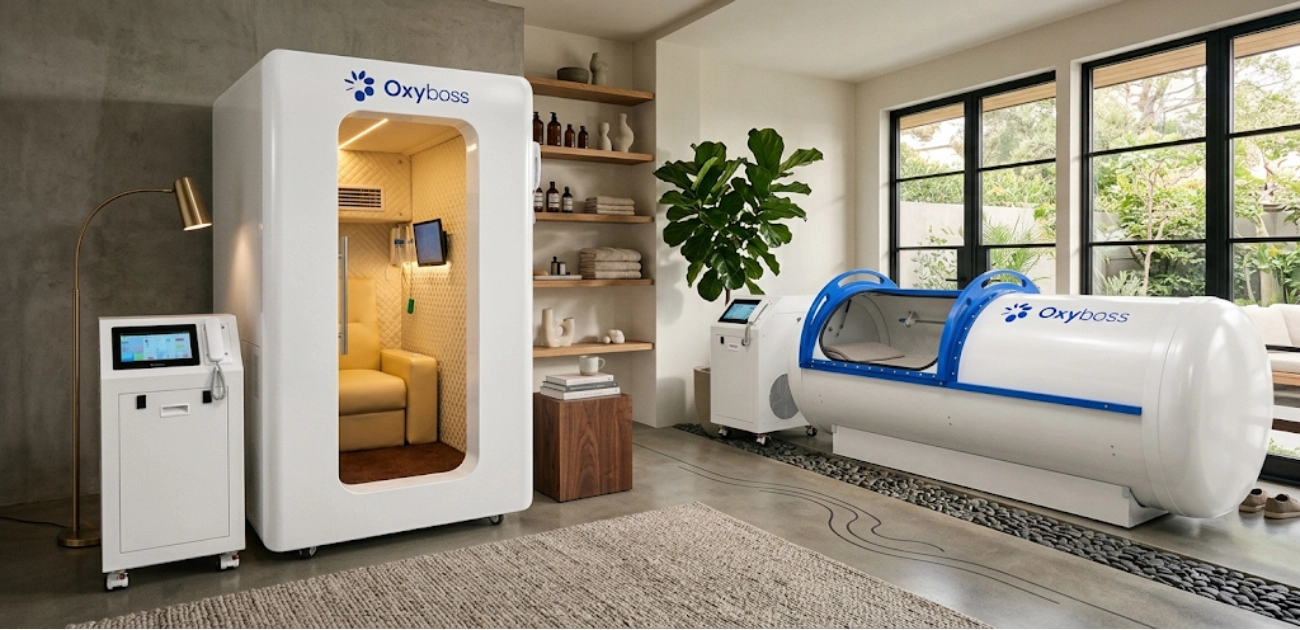
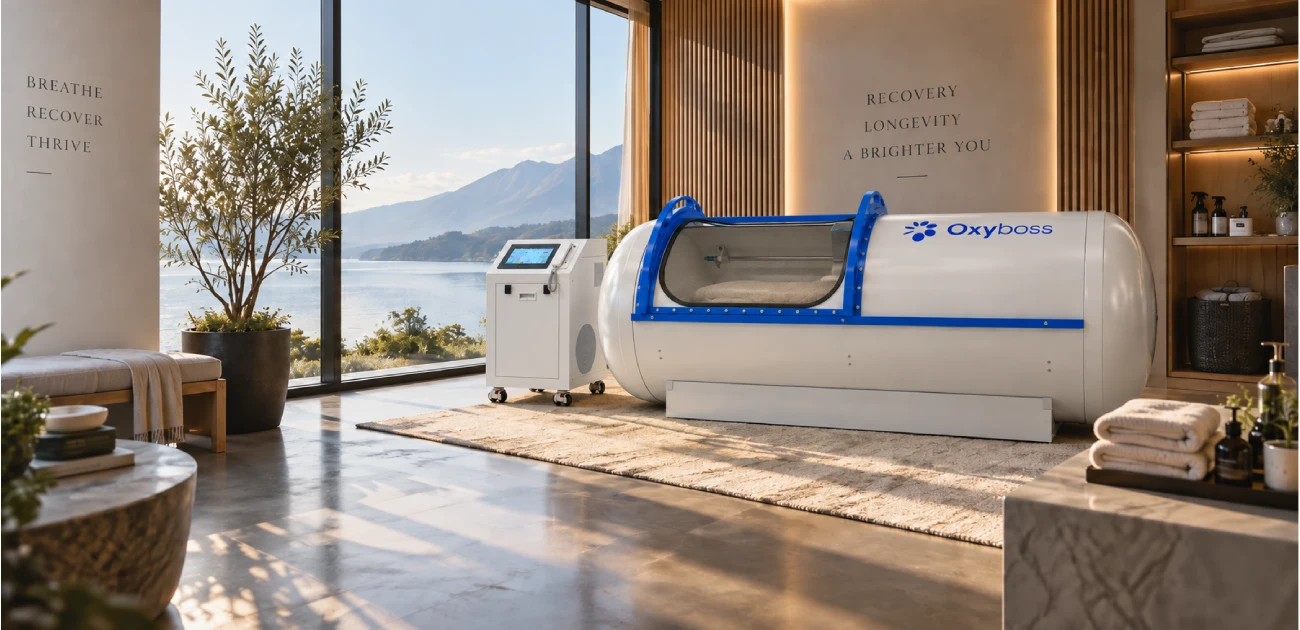
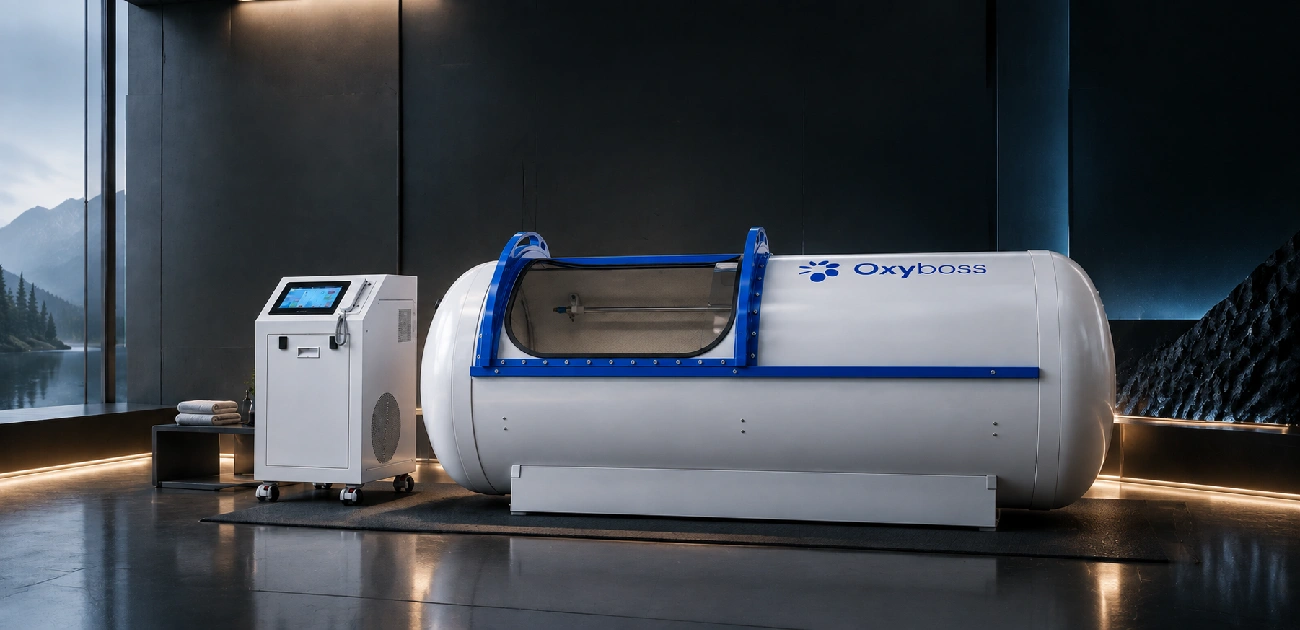
A hard-shell chamber is built like a submarine. Pressure-tested steel or acrylic, mechanical integrity tested to 6 ATA in some cases, fixed installation, requires a trained operator. Hospital-grade chambers are Class IIB medical devices under FDA regulation. Monoplace chambers treat one patient at a time in a reclining position; multiplace chambers treat multiple patients simultaneously. (UHMS – Position Statement: Low-Pressure Fabric Hyperbaric Chambers) (FDA – Letter to Health Care Providers: Safe Use of HBOT Devices)
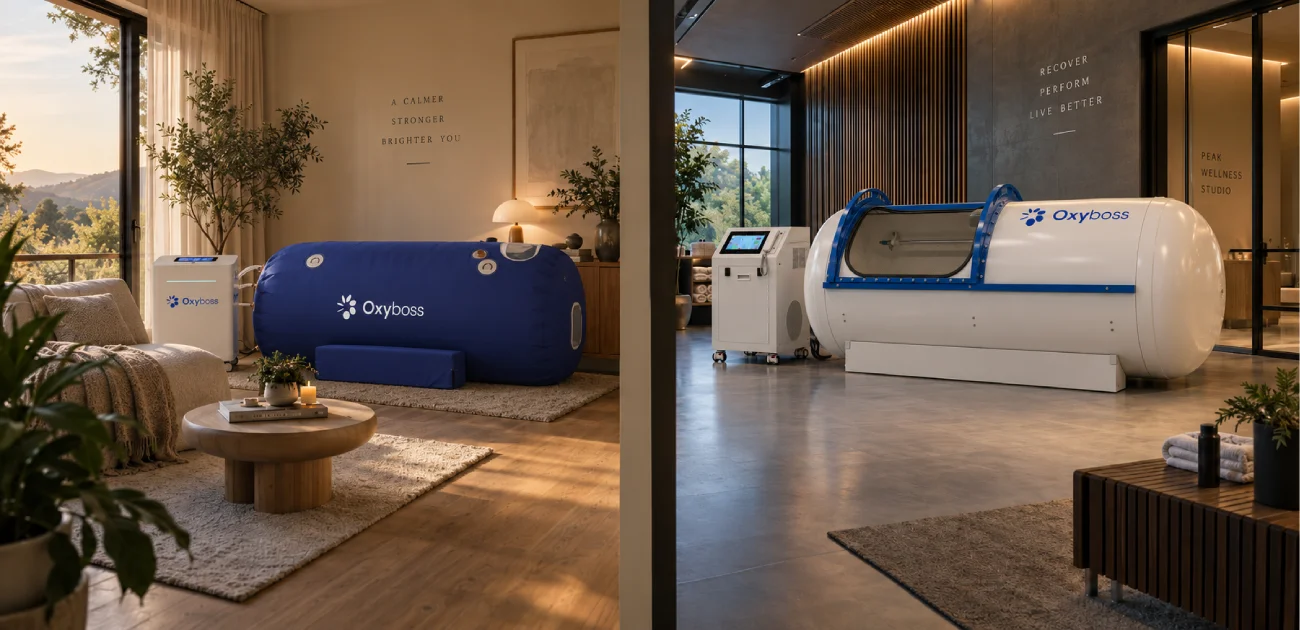
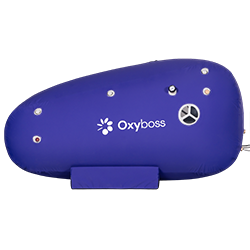
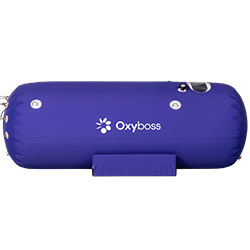
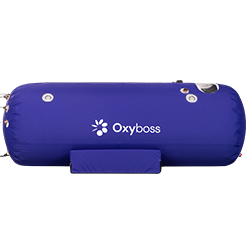
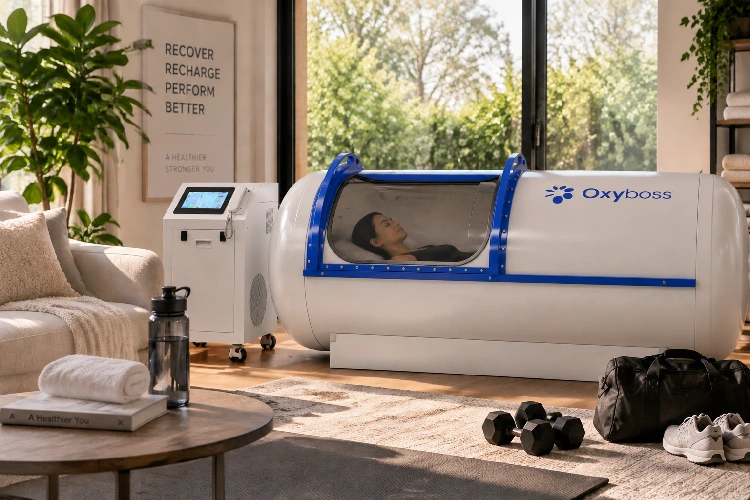
A soft-shell chamber is an inflatable bag made of urethane-coated fabric, usually 1.3 to 1.5 ATA maximum, folds up when not in use, runs off a regular electrical outlet, weighs 30 to 50 pounds. There's no fire suppression system, no mandatory operator certification, and no standardized material requirement.
The chamber itself can run on:
- Compressed air from the room (ambient, ~21% oxygen)
- A concentrator pulling oxygen out of room air and feeding it through a face mask inside the chamber — that gets you somewhere in the 90–95% range
What it cannot legally do in most configurations: have a supplemental oxygen line piped in directly. The FDA explicitly does not allow this with low-pressure fabric chambers. The reasons are safety (oxygen under pressure is a fire hazard, and fabric chambers don't have fire suppression), but the practical effect is that if someone is selling you a "soft chamber with pure oxygen," they're selling you something that's not FDA-cleared for that configuration. (FDA – HBOT Safety Letter)
Safety: what can actually go wrong
Let's be specific, because most of the safety pages on this topic stop at "ear pressure."
Mild HBOT — common, mostly mild:
- Ear barotrauma (ear pain, sensation of fullness, occasionally a perforated eardrum if you don't equalize)
- Sinus pressure or mild sinus pain
- Temporary near-sightedness after a series of sessions
- Mild fatigue or lightheadedness right after a session
- Claustrophobia, especially in longer sessions
Mild HBOT — uncommon but worth knowing about:
- Asphyxiation risk if used unsupervised at home. The UHMS has documented at least one death — a young man in North Carolina — who died from asphyxiation while using a soft chamber alone at home. (UHMS – Consumer Warning)
- Delayed proper care. The FDA has repeatedly warned that patients using unapproved chamber applications can defer or abandon treatments that have been proven effective for their condition. In one three-year period the FDA received 27 complaints about centers promoting unapproved uses. (FDA – HBOT Safety Letter)
Medical-grade HBOT — additional risks because of the higher pressure and oxygen concentration:
- Middle ear barotrauma (more common than with mild HBOT)
- Oxygen toxicity seizures (rare, more likely on long sessions at 2.5+ ATA)
- Pulmonary barotrauma, including pneumothorax (collapsed lung)
- Fire risk — this is why chambers have fire suppression systems and strict material rules
- Cataract progression with very long cumulative exposure
- Hypoglycemia in diabetics on insulin (oxygen-driven metabolism)
When you should not do any version of HBOT:
- Untreated pneumothorax — this is the only absolute contraindication
- Recent middle ear surgery or active ear infection
- Active upper respiratory infection with congestion
- Severe COPD with CO₂ retention (unless specifically approved)
- Pregnancy (relative — discuss with your OB)
- Certain chemotherapy agents, notably bleomycin and disulfiram — both increase oxygen toxicity risk and require careful pre-treatment evaluation (StatPearls – HBOT Contraindications)
If any of these apply to you, talk to a physician who understands hyperbaric medicine before getting into any chamber.
Cost, what you actually pay
Here's where the math usually gets presented dishonestly on both sides, so let's walk through it carefully.
Per session, US market, 2026:
Home chamber purchase:
- Soft-shell (1.3–1.5 ATA): roughly $4,000 to $20,000. Manufacturer suggested retail ranges vary; this is typical market pricing for consumer models.
- Mid-range hard shell: $12,000 to $50,000
- Medical-grade hard shell with installation: $50,000 to $150,000+
Insurance and Medicare:
- Medicare Part B covers HBOT for the cleared indications. For diabetic lower extremity wounds you have to hit Wagner grade III or higher plus have a documented failure of standard wound therapy. You pay 20% of the Medicare-approved amount after your deductible. (Medicare.gov – Hyperbaric Oxygen Therapy Coverage)
- Some carriers cap at 30 sessions per 12 months, with extension requiring medical necessity review.
- Mild HBOT and home chambers: not covered. Not for any indication. The UHC policy is explicit about this. (UHC Medical Policy)
So if you're counting on insurance to help, that's the answer.
How to actually decide between them
Here's the decision tree we walk people through when they email us. It's not a marketing pitch. We're literally telling you when to buy somewhere else.
1. Do you have any condition on the UHMS indications list?
If yes: medical-grade HBOT at a UHMS-accredited facility. Don't buy a home chamber. Don't go to a wellness studio for the same complaint. The FDA explicitly recommends UHMS-accredited facilities for these conditions. (FDA Recommendation)
2. Are you managing a chronic or serious condition that's off-label — TBI, long COVID, fibromyalgia, post-stroke recovery?
Talk to your primary physician. The evidence is mixed. If you decide to pursue off-label HBOT, do it at a facility with physician oversight, on a 1.5+ ATA chamber, and don't let it delay any treatment that's been proven to work. Expect to pay out of pocket.
3. Are you a generally healthy adult looking for a recovery / sleep / wellness routine?
This is where mild HBOT actually fits. Pick your target first, then pick the chamber:
4. Are you looking for "anti-aging" or longevity benefits?
Most of the published research used 2.0 ATA hard chambers for 60+ sessions. A 1.3 ATA soft chamber is not going to reproduce those results. If longevity is the goal and you're committed, a clinic-based 1.5–2.0 ATA protocol is the only published path. If that's not feasible, lower your expectations accordingly.
5. Do you live alone or have mobility issues that make getting in and out of a chamber difficult?
This is a real safety concern. We — and the UHMS — strongly recommend you do not use a soft chamber alone. If getting out of the chamber unassisted is hard, this product category isn't for you.
The honest version
We make soft chambers. We think they're useful for the right person, with the right expectations. We also think the marketing in our space has gotten ahead of what the evidence and the regulators actually support, and we think that hurts the people buying these products more than it helps.
If you're considering a mild hyperbaric chamber for wellness or recovery, that's reasonable. Just know what you're getting: a portable, lower-pressure device that's convenient and pleasant to use, with preliminary evidence behind it for sleep and general recovery, and no insurance coverage for any indication.
If you have a medical condition that needs HBOT, that's a different product category entirely, and you should be talking to a physician at a UHMS-accredited facility, not shopping for a home unit.
References
- UHMS — Indications for Hyperbaric Oxygen Therapy
- Morningstar & Strauchman — HBOT and mHBOT Are Not Synonymous: A Narrative Review — Medical Sciences, 2026
- UHMS — Position Statement: Low-Pressure Fabric Hyperbaric Chambers
- FDA — Letter to Health Care Providers: Safe Use of HBOT Devices
- StatPearls — Hyperbaric Therapy in Blood Loss Anemia (HBOT Physics, ATA Conversions, Henry's Law)
- Barata, Camacho, Lima, Pereira — The Role of Hyperbaric Oxygen Therapy in Neuroregeneration and Neuroprotection: A Review — Cureus, 2024
- High Altitude Medicine & Biology — RCT of mHBOT on cognitive performance and sleep quality
- UnitedHealthcare — Hyperbaric and Topical Oxygen Therapy Policy
- Hachmo, Hadanny, Efrati et al. — Hyperbaric Oxygen Therapy Increases Telomere Length and Decreases Immunosenescence in Isolated Blood Cells: A Prospective Trial — Aging, 2020 (DOI 10.18632/aging.202188)
- Thom et al. — Stem cell mobilization by hyperbaric oxygen — American Journal of Physiology — Heart and Circulatory Physiology, 2006
- Harch et al. — HBOT in mTBI/PPCS: Dosage Analysis — Frontiers in Neurology, 2022
- VA Health Services Research & Development — Evidence Brief: HBOT for TBI/PTSD
- VA/DoD — Clinical Practice Guideline for the Management of mTBI
- Defense Health Agency — TBI Center of Excellence: HBOT and TBI (2025)
- UHMS — Consumer Warning: Home Use Warning
- StatPearls — HBOT Contraindications
- Gelly, Fife, Walker, Eckert — Trends in Medicare Costs of Hyperbaric Oxygen Therapy, 2013 through 2022 — Undersea and Hyperbaric Medicine, 2024 (PMID 38985150)
- Medicare.gov — Hyperbaric Oxygen Therapy Coverage
- UHMS — FDA Recommends UHMS-Accredited Hyperbaric Facilities