.svg)
.svg)
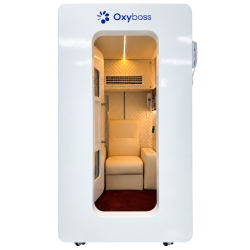
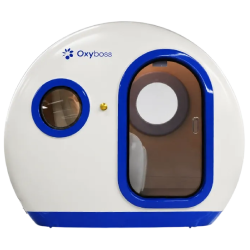
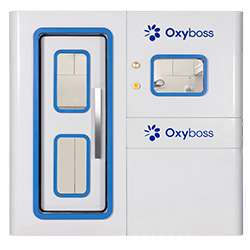
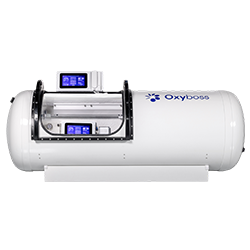
Short version, so you don't have to read the whole thing: if you'll use a chamber fewer than about 15–20 times a month, or you only need it for a fixed stretch like post-surgery recovery, renting almost always wins. If you're using it daily, long-term, and you've got the space, buying starts to make sense somewhere around the 6-to-12-month mark. That's the whole decision in two sentences. Everything below is just showing our work.
The one question that decides everything: how often will you actually use it?
Forget the specs for a second. The single variable that settles the rent-vs-buy question is how many sessions per month you'll realistically do — not the number you're picturing right now, the number you'll still be doing in month four.
Be honest with yourself here, because this is where people lose money. Buying a chamber and using it twice a week for a month before it becomes a very expensive laundry rack is the most common story in this space.
Here's the rule of thumb, laid out so you can find yourself in it:
- Under ~8 sessions/month, or a fixed short-term need → rent. You're testing the waters or covering a recovery window. No reason to own.
- Roughly 8–20 sessions/month → the gray zone. Do the math below. Usually renting for 3–6 months first, then deciding, is the smart play.
- 20+ sessions/month, indefinitely → buying is probably cheaper over time, if you have the space and don't mind the upkeep.
Most guides skip straight to price. That's backwards. The frequency number tells you which price actually matters to you.
Okay, let's talk money — the honest version
Everyone quotes the sticker price and stops there. The sticker price is the smallest part of what a chamber actually costs you. Two lists.
What renting really costs (per month):
- The monthly fee itself. Across current US listings this runs roughly $400–$2,200/month for soft-shell home units — and yes, that's a huge spread, because "rental" covers everything from a basic bladder to a fully-equipped setup.
- A refundable deposit, often $2,000–$2,500, tying up cash upfront.
- Delivery and setup, sometimes bundled, sometimes not.
- Consumables — filters, sometimes oxygen equipment — depending on the plan.
Add it up and your first month out-of-pocket is frequently $3,000–$5,000, even though the "monthly price" looked like it started around $749. That's not a scam, it's just how deposits work — but nobody puts it in the headline.
What buying really costs (once, then forever):
- The chamber. Soft-shell portable units run roughly $5,000–$11,000; rigid higher-pressure units go far higher.
- Shipping both ways if you ever return or resell it — freight on these is not cheap.
- Installation and the room to put it in (more on space below).
- An oxygen concentrator, if your setup uses one.
- Ongoing: electricity, filter replacements, and eventually the bladder and zipper/seal, which are wear items on soft-shell units.
- Repairs and the downtime while you wait for parts.
- Resale value — or lack of it. This is the cost nobody lists, and it's a real one.
The break-even math, three ways (they don't agree, and that's the point)
You'll see a few different "break-even" claims floating around, and they contradict each other because they're answering different questions. Here are all three, so you can pick the one that matches your situation:
- Rent vs. own the same unit. A ~$10,000 chamber rented at ~$1,500/month hits the purchase price in about 6.7 months — before you count maintenance, resale or what the rental included.
- Own vs. go to a clinic. That same $10,000 chamber, compared against ~$200-per-visit clinic sessions, breaks even at about 50 sessions.
- The "regular use" shorthand. A common rule of thumb is that ownership "starts winning" after six to twelve months of regular use, or once you're past ~20 sessions/month.
Notice these can all be "true" and still point different directions. The trap is comparing prices for two different things. A ~$749/month mild soft-shell rental and a ~$45,000 rigid high-pressure purchase are not the same product — comparing them is how people talk themselves into the wrong buy. Match the class of equipment first, then compare.
One more honest note on prices: almost every number you'll find online, including ours, is an advertised or guide price, not a verified transaction average, and most listings quietly exclude delivery, setup, oxygen equipment, taxes and room prep. Treat ranges as ballpark, and check the date on any price you're relying on — this market moves, and a two-year-old number can be badly stale. (Everything here is as of September 2026.)
Renting makes sense when…
- You want to try it before committing thousands of dollars.
- You need it for a defined window — a recovery period, a season, a specific goal — not forever.
- Your usage is light or unpredictable.
- You don't have room for a permanent setup, or you rent your home.
- You'd rather someone else handle maintenance, servicing and eventual disposal.
The downside of renting is simple: past a certain usage level you're paying more over time, and you own nothing at the end.
Buying makes sense when…
- You'll use it frequently and indefinitely — think daily, ongoing.
- You've done the frequency math and you're comfortably past your break-even.
- You have dedicated space and can handle basic upkeep.
- You want it available on demand, no scheduling, no return dates.
The downside of buying: a big upfront hit, you eat all the maintenance and resale risk, and if your usage drops off, that money's gone.
Before you rent or buy anything: know what you're actually looking at
This part trips people up, and it changes what you should rent or buy. Chambers aren't all the same thing, and the pressure number matters.
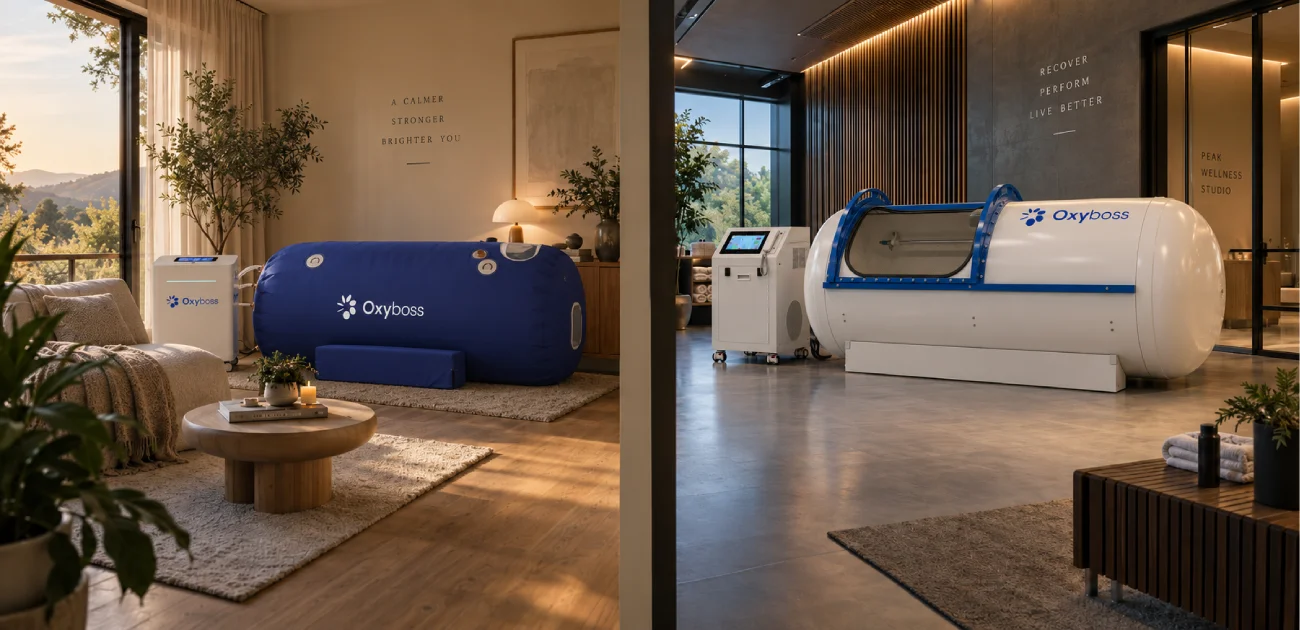
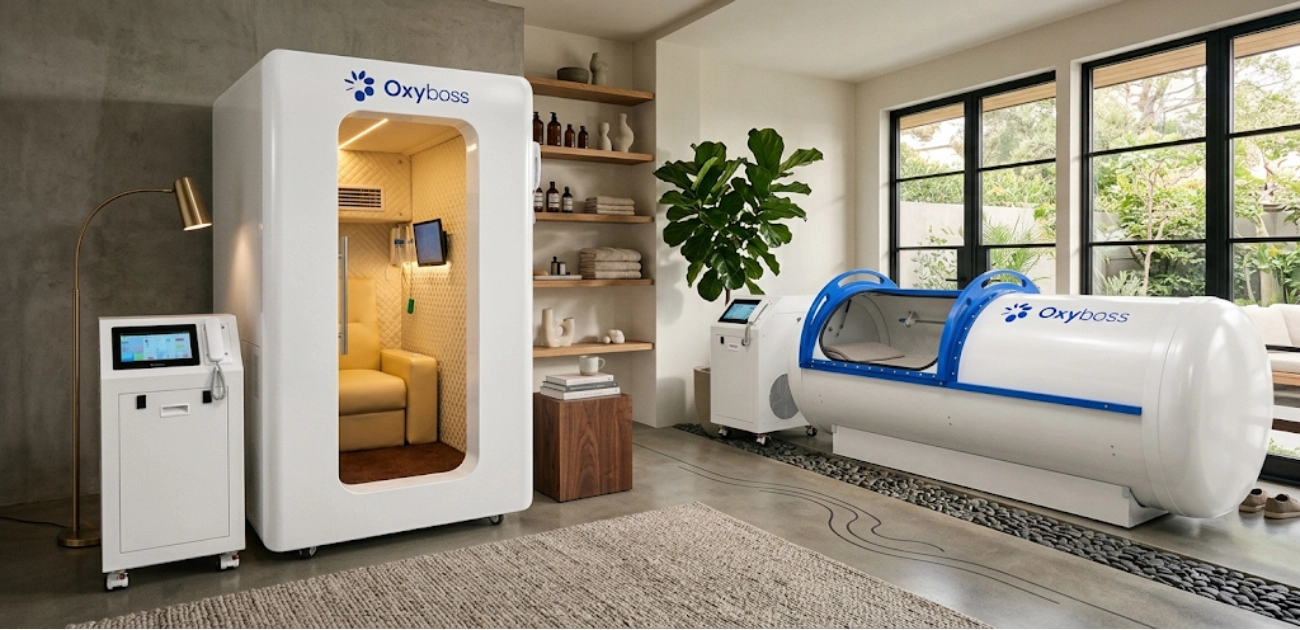
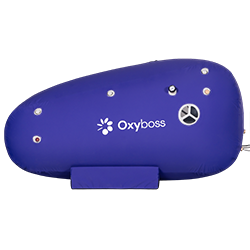
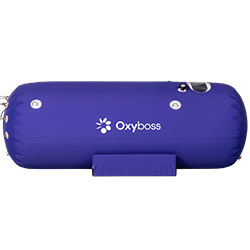
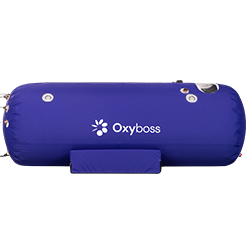
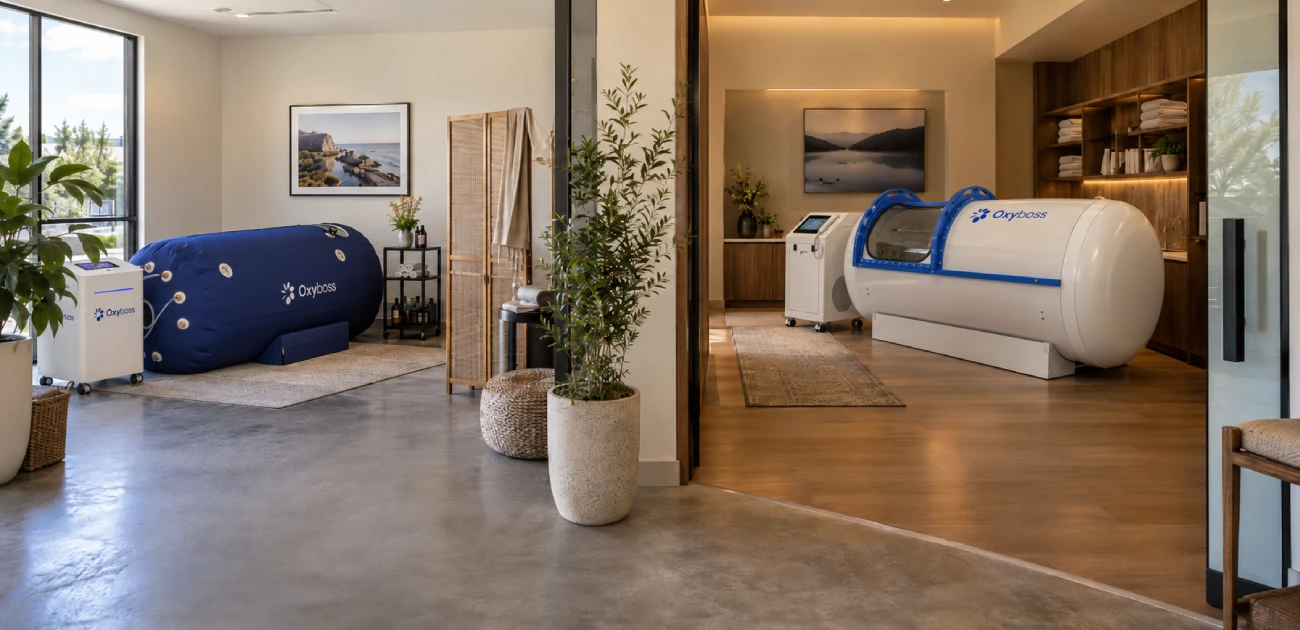
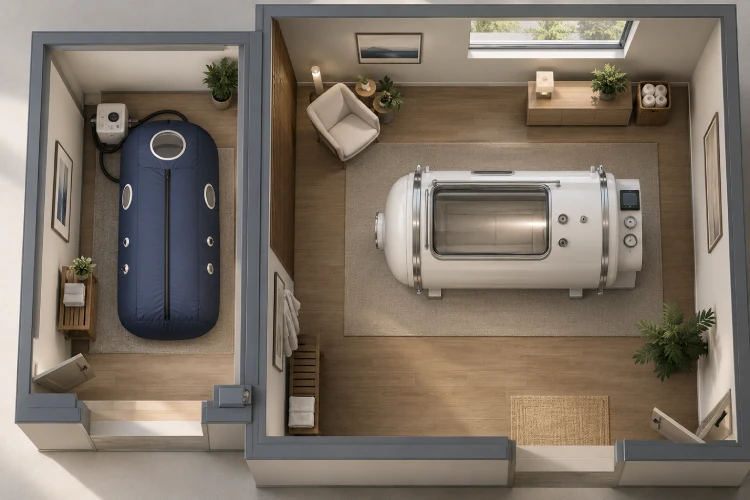
Soft-shell, mild chambers (about 1.3–1.5 ATA). Portable, lighter, fit in a bedroom, lower price. They pressurize with ambient air, and some setups add an oxygen concentrator to raise the oxygen level of the air you're breathing inside. This is the category most home rentals and home purchases fall into.
Rigid / hard-shell chambers (2.0 ATA and up). Heavier, bigger, more expensive, built for higher pressure. These are a different animal in terms of installation, engineering and cost.
Two things worth being precise about, because the internet is sloppy here:
- A higher pressure number does not automatically mean "more effective" for any given goal. Don't let a spec sheet make the decision emotional.
- The ATA rating and the oxygen level are two separate things. A 1.5 ATA soft chamber running on concentrator-enriched air is simply not the same setup as a 2.0 ATA rigid chamber running near-pure oxygen. When you compare prices, make sure you're comparing the same class of equipment.
For reference, the Undersea & Hyperbaric Medical Society (UHMS) defines clinical hyperbaric oxygen as breathing near-100% oxygen at a minimum of 1.4 ATA, and notes that its recognized clinical indications call for a minimum of 2.0 ATA. It also states that low-pressure fabric chambers below 1.4 ATA are designed for compressed air and, in the US, are cleared only for acute mountain sickness — not the broader list of conditions people often assume. [1][2] We mention this not to make any health claim, but so you can read spec sheets and marketing with clear eyes.
"Do I need an oxygen concentrator?"
Common question, quick answer: a mild soft-shell chamber works without one — it can pressurize with ambient air. Some users add a concentrator to increase the oxygen density of the air inside the chamber. A mild chamber will never reach 100% oxygen, and whether enriched oxygen is appropriate for you is a decision to make with a qualified professional, not something to settle from a blog.
If you're renting, check whether a concentrator is included or an add-on. If you're buying, factor it into the total cost — it's a line item people forget.
The two costs nobody mentions: space and noise
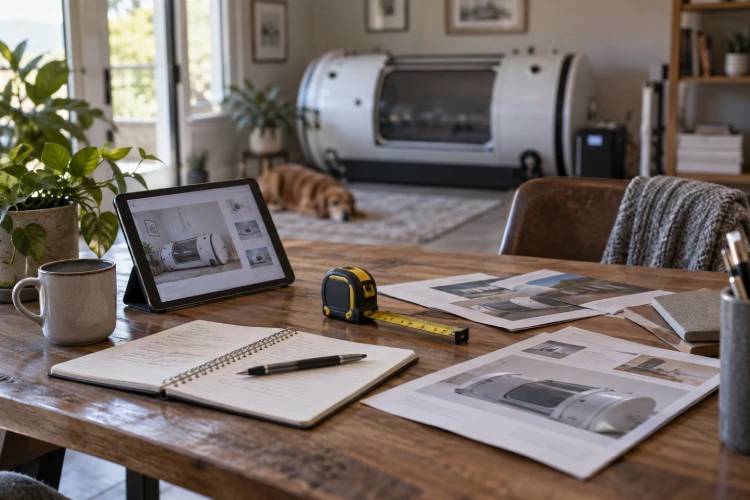
Space. A chamber needs a permanent, level footprint with clearance to get in and out — and, for many units, room for a compressor and concentrator nearby. Measure your actual room before you fall in love with a model. This alone pushes a lot of apartment-dwellers toward renting, or toward not buying at all.
Noise. The compressor that pressurizes the chamber runs for the entire session, and it is not silent. If your plan is daily early-morning sessions in a small home with other people sleeping, this matters more than the brochure suggests. Almost no seller brings it up. Ask about compressor noise levels before you commit.
Safety and engineering: the questions that actually protect you
This is where a little homework saves a lot of grief. Whatever you rent or buy, and whoever you buy it from, ask:
- What certifications does the unit carry, and for what intended use? Certifications differ by region — for example, a CE mark applies in the European market, while the US uses the FDA clearance system. Know which one applies to where you live and what it actually covers. [3]
- For rigid, higher-pressure chambers, ask about relevant engineering and facility standards — in the US that conversation includes NFPA 99 (the code covering fire and electrical safety for chamber installations) and pressure-vessel testing. Get specifics, not slogans.
- Fire safety. Pressurized, oxygen-enriched environments raise fire risk. Reputable equipment and setups address ignition sources, materials and procedures directly.
- Maintenance and documentation. If you rent, a trustworthy provider gives you well-maintained equipment plus clear records of maintenance and sanitation. If you buy, ask what servicing costs and who does it.
- Clear operating instructions and pressure-relief mechanisms. Non-negotiable, either way.
On that last point: in August 2025 the US FDA issued a safety letter to healthcare providers after reports of serious injuries and deaths involving hyperbaric devices, stressing the importance of following manufacturer instructions, proper training, maintenance, supervision and fire prevention. [4] The takeaway for a home user is not fear — it's that the boring stuff (instructions, training, upkeep) is the stuff that keeps you safe. Don't skip it, and be wary of anyone who does.
A quick word on what these chambers are and aren't
You'll see a lot of big health claims attached to hyperbaric chambers online. We're going to stay in our lane: we make chambers, we're not a medical provider, and this article isn't health advice. There's an important distinction worth understanding as a buyer — clinical hyperbaric oxygen (the near-100%-oxygen, higher-pressure kind used in accredited facilities for specific recognized conditions) is a different thing from the mild, wellness-oriented soft-shell chambers most people rent or buy for home use. [1][3]
If you have a specific medical condition in mind, the right move is to talk to a qualified healthcare professional about whether hyperbaric oxygen is appropriate for you and at what pressure — not to pick a chamber first and reverse-engineer a reason. The US FDA has publicly noted that claims about a number of conditions are unproven and recommends professional consultation and accredited facilities where medical treatment is indicated. [3] We're flagging this because it protects you, and honestly because any seller who won't say it out loud is a seller to be cautious with.
Who should not use one without checking first
Regardless of rent or buy, there are well-documented situations where hyperbaric pressure isn't advisable without professional clearance — for example an untreated pneumothorax (collapsed lung), which is considered an absolute contraindication, as well as certain ear/sinus conditions, active upper-respiratory infections, specific heart conditions, uncontrolled high blood pressure, and confinement anxiety, among others. This isn't the full list, and it isn't for us to interpret for your situation — it's a prompt to have the conversation with a professional before you commit money. [5]
So… rent or buy?
Let's bring it home. Run yourself through this, in order:
- How many sessions per month, honestly, in month four? Under ~8 or fixed-term → rent. 20+ and forever → lean buy. In between → keep going.
- Do you have the space and tolerance for the noise and upkeep? No → rent, or don't buy.
- Have you added up the full cost — deposit, shipping both ways, oxygen equipment, electricity, wear parts, resale — not just the sticker? Do this before either decision.
- Is this a "try it" moment or a "this is part of my life now" moment? Trying → rent. Committed → the math above will tell you when to buy.
If you're still unsure after that, rent first. It's the lower-regret option: you learn your real usage, you find out whether the space and noise work in your actual home, and you keep your capital while you decide. The people who regret renting are rare. The people who regret a $10,000 purchase that now sits folded in a closet are not.
That's the honest answer, even from a company that makes the things.
FAQ
Is it cheaper to rent or buy a hyperbaric chamber?
It depends almost entirely on how often you'll use it. For light or short-term use (under ~8 sessions a month, or a fixed recovery window), renting is cheaper and lower-risk. For heavy, indefinite use (20+ sessions a month), buying usually costs less over time — often crossing the break-even point somewhere between 6 and 12 months of regular use.
How much does it cost to rent a hyperbaric chamber per month?
Current US listings for soft-shell home units run roughly $400–$2,200/month, plus a refundable deposit that's often $2,000–$2,500. Because of the deposit, first-month out-of-pocket is commonly $3,000–$5,000. These are advertised guide ranges as of September 2026, not verified averages.
How much does it cost to buy a hyperbaric chamber?
Soft-shell portable chambers run roughly $5,000–$11,000; rigid, higher-pressure chambers cost substantially more. Remember to add shipping, installation, oxygen equipment, electricity, wear parts and maintenance to the sticker price.
What's the difference between 1.3, 1.5 and 2.0 ATA?
It's the pressure level. 1.3–1.5 ATA are mild, typically soft-shell chambers pressurized with ambient air (sometimes with an added oxygen concentrator). 2.0 ATA and up are rigid chambers built for higher pressure. A higher number isn't automatically "better" for a given goal, and pressure is separate from oxygen concentration. [1]
Do I need an oxygen concentrator?
No — a mild chamber works on ambient air. Some users add a concentrator to raise the oxygen density inside. Whether that's appropriate for you is a decision for a qualified professional. If renting, check whether it's included.
Should I rent before buying?
If you're unsure, yes. Renting for 3–6 months tells you your real usage, whether the space and noise fit your home, and whether it's worth owning — all without a five-figure commitment.
Sources
Prices and market figures in this article are general observations of advertised US ranges current as of September 2026; they are not standardized transaction averages, and no third-party seller is endorsed. Regulatory, safety and definitional references are linked to primary and authoritative sources only:
- UHMS — Position Statement: Low-Pressure Fabric Hyperbaric Chambers — https://www.uhms.org/images/Position-Statements/UHMS_Position_Statement_LP_chambers_revised.pdf
- UHMS — Hyperbaric Oxygen Therapy Indications (reference material) — https://uhms.org/images/UHMS-Reference-Material.pdf
- US FDA — Hyperbaric Oxygen Therapy: Get the Facts (Consumer Update) — https://www.fda.gov/consumers/consumer-updates/hyperbaric-oxygen-therapy-get-facts
- US FDA — Follow Instructions for Safe Use of Hyperbaric Oxygen Therapy Devices (safety letter, Aug 2025) — https://www.fda.gov/medical-devices/letters-health-care-providers/follow-instructions-safe-use-hyperbaric-oxygen-therapy-devices-letter-health-care-providers
- StatPearls / NCBI Bookshelf — Hyperbaric Oxygen Therapy: contraindications — https://www.ncbi.nlm.nih.gov/books/NBK499820/
This article is for general information only. It is not medical advice, and it does not diagnose, treat or make health claims about any condition. Consult a qualified healthcare professional about whether hyperbaric oxygen is appropriate for your situation. Certifications, regulations and pricing vary by country and change over time — verify current details for your region before purchasing or renting.