.svg)
.svg)
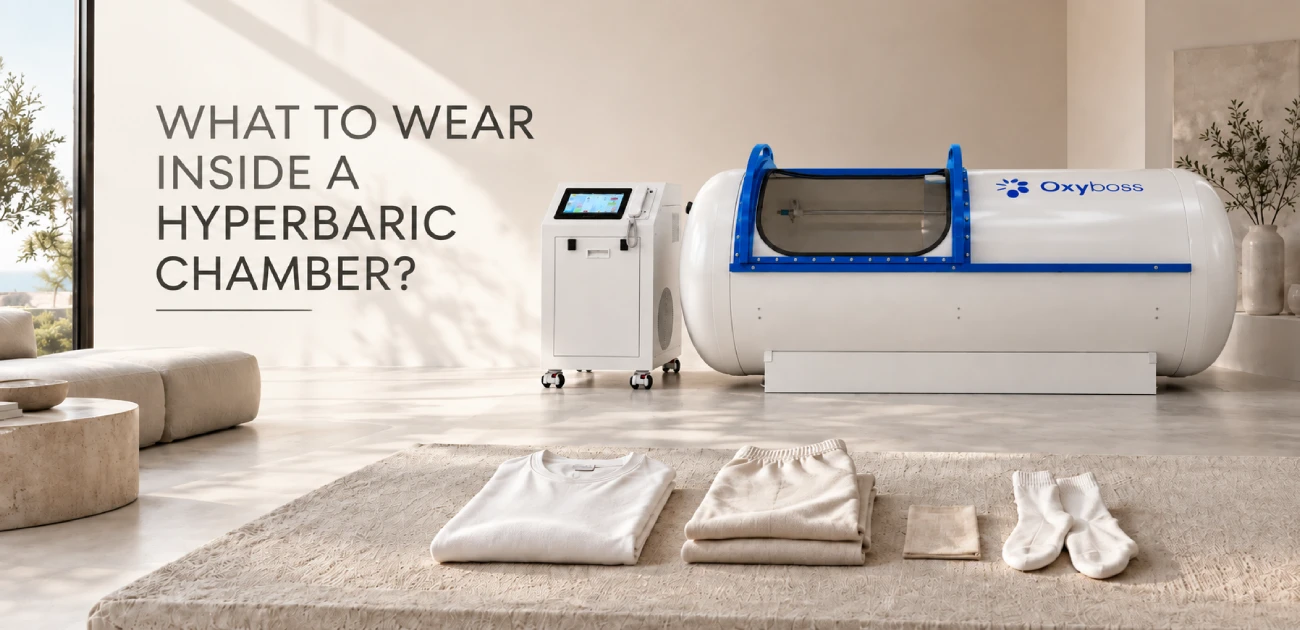
Ask five hyperbaric facilities what you should wear inside the chamber, and you'll get five lists that mostly agree: 100% cotton, no zippers, no jewelry, no makeup. Ask them why, and the answers get much shorter — because the real answer is about fire physics, fabric chemistry, and the type of chamber you're in.
This guide covers both the rules and the reasons behind them: what to wear, what never to wear, the hidden hazards hiding inside "cotton" labels, and why the rules can differ between a pure-oxygen chamber and a pressurized-air wellness chamber. If you take away only one line, make it this: 100% cotton is the safest default — but no fabric is fireproof, and no checklist replaces a properly operated, properly grounded chamber.
TL;DR — The essential list
Wear:
- 100% cotton clothing (T-shirt, sweatpants, scrubs, or facility-provided garments)
- Cotton underwear and socks (if allowed; some facilities require you to change into their clothing entirely)
- Clean skin and hair — no lotions, perfumes, makeup, or hair products
Never wear:
- Synthetic fabrics (polyester, nylon, spandex, acrylic)
- Metal (zippers, buttons, snaps, underwire bras, jewelry, metal-tipped shoelaces)
- Electronics or batteries (phones, watches, hearing aids, Bluetooth devices)
Before you leave home:
- Stop using styling products, nail polish, and oil-based cosmetics at least 12–24 hours before your session
- Check fabric labels for hidden elastic bands or synthetic blends
- Follow your facility's rules or your chamber's user manual — they override any general article
Why hyperbaric clothing rules exist
Fire needs three things: fuel, an ignition source, and oxygen. Inside a hyperbaric chamber the oxygen level — or simply the pressure — is elevated, so materials that barely burn in normal air can ignite more easily and burn dramatically faster. The largest fuel load in the chamber is usually you: your clothing.
Synthetic fabrics like polyester, nylon, and spandex are restricted for two reasons. First, they generate static electricity readily — and a static spark is an ignition source. Second, synthetics don't just burn; they melt onto skin, causing far worse injuries. That's why "100% cotton" is the industry baseline.
One correction matters here: cotton is flammable too. Chamber fire reviews have found 100% cotton garments among the materials involved. Cotton is the best default because it holds moisture, resists static buildup better than synthetics, and doesn't melt — it's not a guarantee. Grounding, oxygen monitoring, and keeping ignition sources out of the chamber remain essential, whether you're in a clinic or at home.
Think of it this way: wearing cotton lowers the odds, but it doesn't replace the other safety layers — grounding straps, proper ventilation, and trained operation.
What to wear: the 100% cotton baseline
Upper and lower body:
Loose, breathable 100% cotton is the rule. T-shirts, sweatpants, scrubs, or hospital gowns all work. Avoid anything tight or with pressure points — you'll be lying still for 60–90 minutes, and even a small seam can get uncomfortable under pressure.
Underwear and socks:
Cotton is preferred. Many facilities will ask you to change into their own garments entirely, which removes any guesswork about fabric content or hidden elastic. If you're using a home chamber, stick with freshly laundered, 100% cotton underwear and socks.
Hair:
Tie long hair back with a cotton hair tie or soft cotton headband. Keep it away from any seals or openings in the chamber. Metal clips, plastic elastics with metal crimps, and decorative pins are all out.
Quick fabric check:
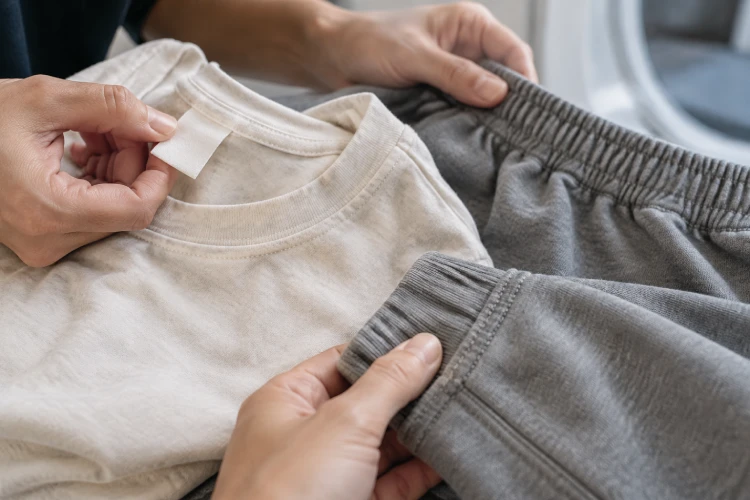
Before you assume a shirt is safe, read the label. Look beyond the main fabric — check for elastic cuffs, spandex waistbands, printed designs (some use synthetic ink or foil), and "tagless" heat-transfer labels, which are often polyester. More on hidden hazards below.
What never to wear — and why
Synthetic fibers (polyester, nylon, spandex, acrylic, rayon):
Static electricity plus melting plastic equals bad burns. Even a "mostly cotton" blend with 5% spandex gets flagged by strict facilities.
Metal (zippers, buttons, snaps, rivets, underwire bras, belt buckles, jewelry, metal-tipped shoelaces):
Metal can create sparks and becomes an uncomfortable pressure point. Some facilities allow titanium eyeglass frames if you need glasses inside — ask first.
Electronics and batteries (phones, smartwatches, fitness trackers, hearing aids, Bluetooth earbuds, vape pens):
Batteries can overheat or spark. Hearing aids fall into the "necessary device" category — see the Medical Devices section below for how to handle those.
Jewelry (rings, necklaces, earrings, piercings, watches):
Metal. Remove everything.
Eyeglasses:
Most facilities allow you to keep non-metal frames on. If your frames have metal parts, ask whether titanium is acceptable, or plan to go without.
Why does this matter? A single spark in a high-oxygen environment can ignite clothing in seconds. Every restriction exists because something went wrong in the past.
Clean skin & hair: the 12/24-hour rule
Petroleum-based products, alcohol-based sprays, and oils can act as fuel. That's why you're asked to show up as if you just stepped out of the shower — clean, with nothing on your skin or hair.
What to avoid (starting 12–24 hours before your session, depending on the facility):
- Lotions, moisturizers, sunscreen, body oils
- Makeup, foundation, mascara, lipstick
- Perfume, cologne, body spray, deodorant (some facilities allow unscented, alcohol-free deodorant — confirm first)
- Hair gel, hairspray, mousse, leave-in conditioner, dry shampoo
- Nail polish and acrylic nails (if applied less than 12–24 hours prior)
- Petroleum jelly (Vaseline), lip balm, hand salves
- Fresh hair dye, relaxers, or perms
Why the time window varies:
"Surface dry" doesn't mean chemically inert. Solvents and oils can off-gas for hours. Some facilities say 12 hours is enough; others want 24. When in doubt, go with the longer window and follow your specific facility's rules.
Day-of checklist:
Shower with plain soap the morning of your session. Skip all styling products. If you forgot and applied something, most facilities have cleansing wipes in the changing area.
Read beyond the label: hidden hazards in "cotton" clothes
A shirt labeled "100% cotton" can still have:
- Elastic cuffs or waistbands with spandex or rubber
- Heat-transfer "tagless" labels made of polyester film
- Metallic or glittery prints (foil, sequins, reflective ink)
- Metal-tipped drawstrings or eyelets
- Synthetic stitching in seams (rare, but it happens)
Three-step check:
- Read the label for the main fabric and any "exclusive of trim" fine print.
- Stretch the cuffs, collar, and waistband — if they snap back with strong elastic memory, they likely contain spandex.
- Skip anything with decorative prints, appliqués, or shiny details unless you're certain they're cotton-based.
Plain is safe. Fancy usually isn't.

Does the type of chamber change the rules?
Yes — and understanding why can actually make the rules less confusing.
The honest truth about home chambers:
Mild hyperbaric chambers that pressurize filtered room air carry a lower fire risk than pure-oxygen systems. That doesn't mean "anything goes." Using the same cotton-only habit keeps things simple and safe, especially if multiple people use the chamber or if you're new to it.
Critical warning:
Never connect oxygen concentrators, oxygen tanks, or any supplemental oxygen system to your chamber unless it was specifically designed and approved for that setup. Adding oxygen changes the entire risk profile. If your chamber wasn't built for it, don't do it.
Our protocol, in plain English
As a chamber manufacturer, our guidance matches everything above: wear clean, 100% cotton clothing; remove all metal, electronics, and cosmetics before every session; never connect any oxygen equipment that your specific model was not designed and approved for; and keep the chamber area free of ignition sources. When in doubt, your chamber's user manual and your facility's rules always override a general article like this one.
Medical devices, dressings & facility rules
Wound dressings, adhesive patches, ostomy appliances, catheters, implanted devices:
If you're using a hyperbaric chamber under supervision for wound care or a specific condition, do not remove any of these on your own. Your care team will assess each item. Just because something is flame-retardant at sea level doesn't mean it's safe in a pressurized, oxygen-rich environment — materials behave differently under pressure.
Hearing aids, pacemakers, and other necessary devices:
Hearing aids contain batteries and electronics, so they're typically removed. Pacemakers, ICDs, and other implanted devices require clearance from your doctor before you use a hyperbaric chamber. If you have any implant, history of collapsed lung, or other serious health condition, talk to your doctor first.
Why do facilities insist on providing their own clothing?
It's not about control. Facility-provided garments have known fiber content, no laundry chemical residue, controlled lint and fiber shedding, and consistent combustion properties across all users. It's an engineering decision, not a bureaucratic one.
If you're allowed to bring your own clothing:
Expect it to be inspected by a safety coordinator before you're cleared to wear it inside.
Real-life scenarios: seasons, kids, athletes, shoes & hair
Seasonal adjustments:
- Summer: Cotton T-shirt and cotton shorts work fine. Chambers are climate-controlled, so you won't overheat.
- Winter: Cotton layers are okay (cotton long-sleeve + cotton sweatpants), but don't overdo it — the chamber is usually warm. One or two cotton layers is plenty.
Kids:
Same rules. Watch for glittery prints, light-up shoes, and battery-operated toys. Kids' clothes love sequins and foil — skip those entirely. If a parent or caregiver is going in with the child, they follow the same clothing rules.
Athletes:
Compression gear is almost always spandex or nylon. Bring 100% cotton sweatpants and a cotton T-shirt instead.
Shoes and head coverings:
Most facilities ask you to remove shoes and wear cotton socks or facility-provided non-slip socks. If you need a head covering for religious or medical reasons, use a soft, 100% cotton option and get approval beforehand.
Eyeglasses, dentures, contact lenses:
Policies vary. Soft contact lenses are usually fine; some people find them uncomfortable during pressure changes and prefer to remove them. Dentures are typically okay. Eyeglasses depend on the frame material. When in doubt, ask.
FAQs
Can I wear cotton sweatpants with an elastic waistband?
If the elastic contains spandex or rubber, some strict facilities will say no. Plain cotton drawstring pants are the safest bet.
What about underwire bras?
No. The wire is metal. Wear a cotton sports bra or go without.
Can I bring my phone in to listen to music?
No. Electronics and batteries are prohibited. Some facilities have built-in audio systems or allow you to bring a book (paper, not a tablet).
I just got my nails done yesterday. Can I still go?
Most facilities ask for 12–24 hours of drying time. Call ahead and ask.
My 5-year-old has light-up shoes. Can they wear those?
No. The lights have batteries. Bring plain cotton socks or soft cotton slippers.
I use a home chamber. Do I really need to be this strict?
Yes. Consistent habits prevent mistakes. And never add oxygen to a system not designed for it — that's where serious risk comes in.
What if I have a pacemaker or implant?
Talk to your doctor before using any hyperbaric chamber. Some implants are fine; others are contraindications.
Sources & further reading
This guide draws on safety standards, facility protocols, and hyperbaric resources including:
- NFPA 99: Health Care Facilities Code (fire safety and prohibited items in hyperbaric environments)
- Undersea & Hyperbaric Medical Society (UHMS): Safety guidelines, fire incident reviews, and risk assessment protocols
- U.S. Food and Drug Administration (FDA): Safety communications regarding unapproved oxygen use with non-medical chambers
- University hospital hyperbaric programs: Including Dartmouth-Hitchcock, University of Iowa, and Atlantic Health System
- National Board of Diving and Hyperbaric Medical Technology (NBDHMT): Standards of practice
For technical or facility-specific questions, contact your hyperbaric provider or refer to your chamber's user manual.
Disclaimer
This article is for educational purposes only and does not constitute professional advice. If you are using a hyperbaric chamber under care for a health condition, follow your provider's instructions. If you have a history of collapsed lung, seizures, pacemaker or implanted device, pregnancy, or other serious health issues, consult your doctor before using a hyperbaric chamber. Equipment use should always follow the specific user manual for your chamber model.