.svg)
.svg)
Introduction
We need oxygen to survive — but too much of it, under the wrong conditions, can actually harm you. Weird, right?
Here's the thing: it's not about how pure the oxygen is or even how much you're breathing. What matters is partial pressure and time. Get those two factors wrong, and that's when problems start.
Most people who hear about oxygen toxicity ask the same question: "Should I be worried?" This article will help you figure that out. We'll walk through what oxygen toxicity actually is, when it happens, and where your own situation — whether that's a wellness hyperbaric chamber, supplemental oxygen, or diving — sits on the safety scale.
What Is Oxygen Toxicity?
Oxygen toxicity is damage that happens when you breathe oxygen at a way higher pressure than normal, for long enough that your body's defenses can't keep up.
Normally, we breathe air with about 21% oxygen at sea level — that's an oxygen partial pressure of roughly 0.21 atmospheres absolute (ATA). Your cells handle this level just fine.
But when oxygen pressure climbs way above that baseline, your body starts making too many reactive oxygen species (ROS) — basically, destructive molecules like superoxide and hydrogen peroxide. When these pile up faster than your antioxidant defenses can neutralize them, they start damaging cell membranes, proteins, DNA, and the powerhouses inside your cells (mitochondria). The organs most at risk? Your lungs, brain and spinal cord, and eyes.
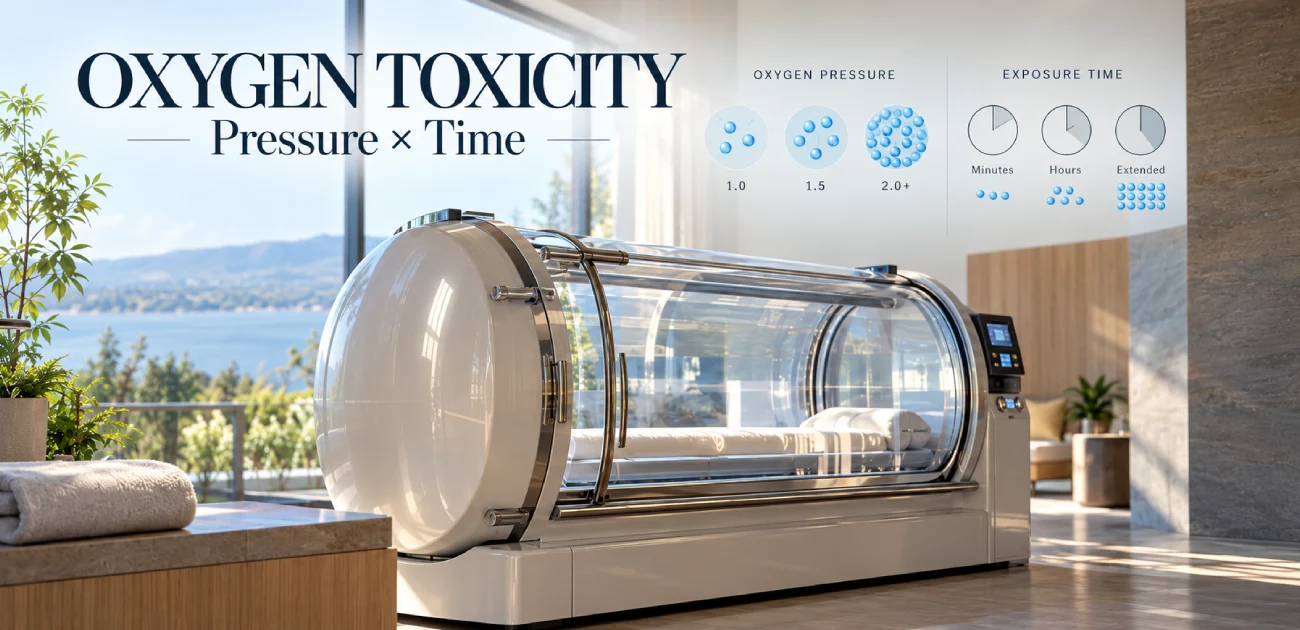
Here's the key: Toxicity isn't a sudden cliff you fall off. It's a dose–time relationship — the higher the pressure, the shorter your safe window; the lower the pressure, the longer you can go. Keep that framework in mind as we walk through the details.
Three Forms of Oxygen Toxicity: Pulmonary, CNS, and Ocular
Oxygen toxicity shows up in three different ways, each hitting different organs under different conditions.
1. Pulmonary Oxygen Toxicity (Lorrain Smith Effect)
What it hits: Your lungs — specifically the tiny air sacs (alveoli) and airways.
When it happens: Long exposure to moderately high oxygen levels, typically sustained partial pressures above ~0.5 ATA or breathing oxygen concentrations above 50–60% for many hours to days.
Where you see it:
- ICU patients on ventilators getting high oxygen for extended periods
- Long-duration recompression sessions
- Technical divers doing repeated deep dives over several days
What it feels like: Chest pain when you take a deep breath, persistent dry cough, shortness of breath, reduced lung capacity. If exposure keeps going, inflammation gets worse and fluid can build up in the lungs.
Can it reverse?: Most of the time, yes — if you lower the oxygen or stop exposure quickly enough.
2. Central Nervous System (CNS) Oxygen Toxicity (Paul Bert Effect)
What it hits: Your brain and spinal cord.
When it happens: Shorter exposure to high oxygen pressures, typically above 1.4–1.6 ATA, with risk jumping sharply as you approach and pass 2.0 ATA.
Where you see it:
- Medical hyperbaric oxygen sessions (HBOT) at 2.0–3.0 ATA with 100% oxygen
- Technical and military diving with high-oxygen gas mixes at depth
- Underwater breathing gear malfunctions
What it feels like: Vision problems (tunnel vision, flashing lights), ringing in the ears, nausea, dizziness, confusion, facial muscle twitching (especially around your lips), and — in serious cases — full-blown seizures. Important: CNS toxicity can hit with almost no warning.
Why it's dangerous: Underwater, a seizure can lead to drowning or air embolism. On the surface or in a chamber, seizures usually stop once oxygen pressure drops, though the event itself needs medical attention.
3. Ocular Oxygen Toxicity
What it hits: Your eyes, especially the retina.
When it happens:
- Premature babies: High or fluctuating oxygen disrupts normal retinal blood vessel development, leading to retinopathy of prematurity (ROP), a major cause of childhood blindness. High oxygen suppresses a key growth factor (VEGF), shutting down retinal vessels; when oxygen drops later, abnormal vessel growth takes over.
- Adults: Extended hyperbaric oxygen sessions can cause temporary nearsightedness due to lens changes; cataracts have been reported in rare cases after many HBOT sessions.
Where you see it: Neonatal intensive care, long-term medical HBOT protocols.
When Does Oxygen Toxicity Occur? A Pressure-Time Safety Map
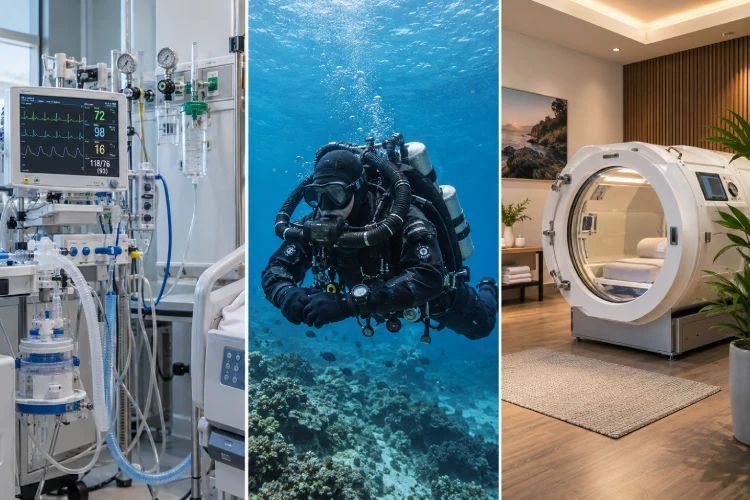
To answer "When does it happen?", we need to see where different activities fall on the oxygen pressure spectrum and how they stack up against known thresholds.
Oxygen Partial Pressure Thresholds
The table below summarizes exposure limits from authoritative sources like NOAA (National Oceanic and Atmospheric Administration), the U.S. Navy, and clinical hyperbaric medicine guidelines:
(Based on NOAA Diving Manual, U.S. Navy, and Undersea & Hyperbaric Medical Society guidelines)
High-Risk Scenarios
Looking at the table, oxygen toxicity becomes a real clinical concern in these situations:
- Medical hyperbaric oxygen sessions (HBOT): Patients breathe 100% oxygen at 2.0–3.0 ATA for 60–90 minutes. CNS toxicity happens in roughly 1 in 2,000–3,000 sessions, usually as seizures. Facilities reduce this risk with "air breaks" (periodic breathing of normal air) and close monitoring.
- Technical and military diving: Divers using oxygen-enriched gas mixes (nitrox, trimix) at depth can exceed 1.6 ATA. Seizures underwater can be fatal.
- ICU mechanical ventilation: Patients needing oxygen concentrations >60% for days are at risk for pulmonary oxygen toxicity. Modern ventilation strategies aim to keep oxygen as low as safely possible while maintaining adequate blood oxygen levels.
- Neonatal oxygen: Premature infants are vulnerable to ROP when exposed to high or variable oxygen during a critical developmental window.
Mild Hyperbaric Chambers: Where Do They Fall?
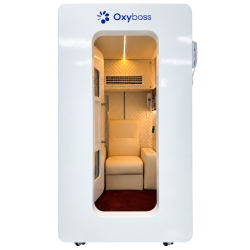
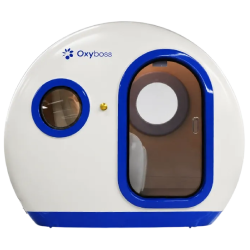
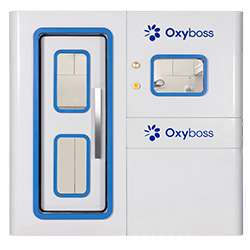
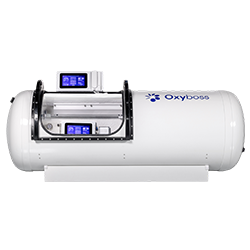
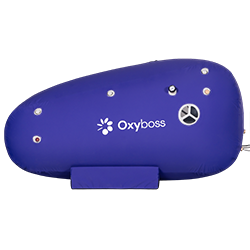
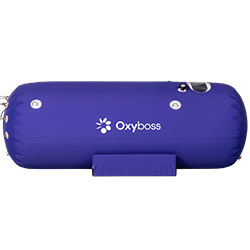
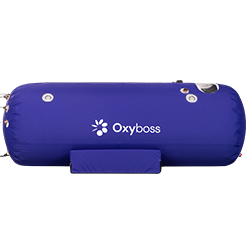
Mild (or "soft") hyperbaric chambers — the kind commonly used for wellness and recovery — typically run at 1.3 to 1.5 ATA and use regular air (21% oxygen) as the breathing gas, not pure oxygen.
Calculating the Oxygen Partial Pressure
At 1.3 ATA breathing air:
PO₂ = 1.3 ATA × 0.21 = 0.27 ATA
At 1.5 ATA breathing air:
PO₂ = 1.5 ATA × 0.21 = 0.32 ATA
Now compare those numbers to the thresholds:
- CNS toxicity becomes a documented concern above ~1.4 ATA PO₂ (with serious risk above 2.0 ATA). At 0.27–0.32 ATA, you're well below that threshold — honestly, not much higher than the air you're breathing right now.
- Pulmonary toxicity mainly shows up with sustained exposures above 0.5 ATA PO₂ or FiO₂ >50% for many hours. Short, intermittent sessions at 0.27–0.32 ATA sit well outside that risk window.
In context: Mild hyperbaric chambers operate in a totally different pressure zone than medical HBOT (2.0–3.0 ATA, 100% O₂) or high-risk technical diving. The actual oxygen dose — pressure multiplied by time — stays modest.
Individual Variability and Caution
Even though the statistical risk is low at these pressures, personal factors can change how well you handle oxygen:
- Carbon dioxide buildup (from poor ventilation, exertion, or lung disease) can boost ROS production and lower seizure threshold.
- Cold, fever, heavy exertion, and certain medications (like steroids, thyroid hormones, or some diuretics) can shift your susceptibility.
- Existing lung or neurological conditions can shrink your safety margin.
Because of this, no one can promise zero risk. If you have underlying health issues, talk to a doctor before using any pressurized breathing device.
What Are the Warning Signs?
Knowing the symptoms helps you catch oxygen toxicity early and back off before things get serious.
Pulmonary Symptoms
- Chest pain or burning, especially when you take a deep breath
- Persistent dry cough
- Shortness of breath or feeling winded easier than usual
- Chest tightness
CNS Symptoms (memorize the CONVENTID acronym)
- Convulsions (seizures)
- Ocular changes (vision problems, tunnel vision, flashing lights)
- Nausea, vomiting
- Vertigo, dizziness
- Ear symptoms (ringing, tinnitus)
- Numbness, tingling (especially around the mouth)
- Twitching (face, lips)
- Irritability, anxiety, confusion
- Drowsiness, altered consciousness
Heads up: CNS toxicity, especially seizures, can hit with barely any warning. That's why high-pressure oxygen exposure in medical and diving settings demands strict protocols, trained supervisors, and emergency prep.
Why Do Some People Seem More Vulnerable?
Oxygen toxicity thresholds come from averages in controlled studies. Real-world tolerance varies based on:
- Metabolism and body clock: Your antioxidant levels, enzyme activity, even the time of day can shift your susceptibility.
- CO₂ retention: Elevated CO₂ (from exertion, rebreathing, or breathing issues) boosts ROS production and lowers your CNS seizure threshold.
- Physical exertion: Exercise bumps up oxygen consumption and CO₂ output, raising risk at a given PO₂.
- Temperature: Cold has been linked to lower seizure thresholds, though the mechanism isn't fully clear.
- Medications: Corticosteroids (like dexamethasone), thyroid hormone replacement (like levothyroxine), and acetazolamide (a diuretic) have been associated with higher oxygen toxicity risk in some studies.
- Underlying health: Lung disease, neurological conditions, or metabolic disorders can shrink your safety margin.
This variability is why even statistically safe exposures aren't guarantees, and why medical screening and following manufacturer guidelines matters.
What Happens If Oxygen Toxicity Occurs — and When to Seek Medical Attention
Immediate Response
If symptoms show up:
- Lower or stop the oxygen exposure right away. In a hyperbaric chamber, depressurize (if it's safe to do so). Switch to a lower oxygen concentration if you can.
- Protect the airway. If someone has a seizure, turn them on their side to prevent choking, don't restrain them forcefully, and keep them from getting hurt.
- Watch closely. Most CNS symptoms go away quickly once oxygen pressure drops. Pulmonary symptoms may take longer to improve.
When to Get Medical Help
Call a doctor or emergency services if:
- A seizure has happened
- Ongoing chest pain, coughing up blood, or severe shortness of breath
- Confusion, altered consciousness, or neurological changes that don't clear up quickly
- Any worry about how serious the symptoms are
Medical Management
- Pulmonary toxicity: Management is supportive — reduce oxygen, rest, and in severe cases, mechanical ventilation with lung-protective strategies. Most cases improve over days to weeks.
- CNS toxicity: Seizures usually stop on their own once pressure drops. Benzodiazepines may be used if seizures drag on. Neurological evaluation is recommended.
- Ocular toxicity: In newborns, screening and potentially laser intervention or anti-VEGF agents. In adults, nearsightedness from HBOT usually resolves gradually after sessions end.
Common Myths About Oxygen Toxicity
Myth 1: "Breathing pure oxygen is always dangerous."
Fact: Toxicity depends on partial pressure × time, not concentration alone. Breathing 100% oxygen at sea level (1.0 ATA PO₂) is safe for short periods (hours). The danger shows up when you add pressure — like in medical HBOT at 2–3 ATA.
Myth 2: "You can get oxygen toxicity just by breathing harder."
Fact: At normal atmospheric pressure, oxygen concentration stays at ~21% no matter how fast or deep you breathe. Toxicity requires a source of elevated oxygen partial pressure (supplemental oxygen, pressurized environment, high-oxygen gas mix).
Myth 3: "Mild hyperbaric chambers are the same as medical HBOT."
Fact: Mild chambers (1.3–1.5 ATA, air) and medical HBOT (2.0–3.0 ATA, 100% O₂) sit in completely different zones on the pressure-time safety map. The oxygen dose differs by an order of magnitude.
Myth 4: "Once you have oxygen toxicity, the damage is permanent."
Fact: Most pulmonary oxygen toxicity reverses with quick reduction of exposure. CNS seizures stop when pressure drops, though the event needs medical evaluation. Only prolonged, severe exposure or vulnerable populations (like newborns with untreated ROP) face lasting injury.
Myth 5: "If I use a hyperbaric chamber, I'll have a seizure underwater like a diver."
Fact: Seizures from oxygen toxicity happen when CNS thresholds (typically >1.4–1.6 ATA PO₂, more commonly >2.0 ATA) are exceeded. Mild chambers running at 0.27–0.32 ATA PO₂ don't get anywhere near that range. The diving context is different because divers use high-oxygen mixes at depth, reaching much higher partial pressures.
Frequently Asked Questions (FAQ)
Can you get oxygen toxicity breathing normal air?
No. At sea level, air contains ~21% oxygen (0.21 ATA PO₂). That's the baseline your body is built for. Toxicity needs a significantly higher partial pressure, which normal air just doesn't provide.
At what pressure (ATA) does oxygen toxicity occur?
CNS toxicity risk starts showing up above ~1.4 ATA oxygen partial pressure, with serious risk at 2.0 ATA and above. Pulmonary toxicity becomes a concern with sustained exposures above ~0.5 ATA PO₂ or >50–60% oxygen for many hours. The exact threshold depends on how long you're exposed and your personal factors.
Can oxygen toxicity happen in a home hyperbaric chamber (1.3–1.5 ATA)?
Mild hyperbaric chambers running at 1.3–1.5 ATA with air (not supplemental oxygen) produce an oxygen partial pressure of 0.27–0.32 ATA — well below the CNS and pulmonary toxicity thresholds documented in the medical literature. Individual variability exists, but these sessions fall into a low-risk category. That said, if you have underlying health conditions, check with a doctor first.
What does oxygen toxicity feel like?
CNS: Vision changes, ear ringing, nausea, dizziness, facial twitching, confusion. Seizures can hit with or without warning.
Pulmonary: Chest pain (especially with deep breaths), persistent cough, shortness of breath.
A lot of these symptoms can come from other causes too, so medical evaluation matters.
How long is too long in a hyperbaric chamber?
It really depends on the oxygen partial pressure. At 1.3–1.5 ATA breathing air, sessions typically run 60–90 minutes and happen intermittently (like daily or a few times a week). That profile is far from the continuous, high-pressure exposures associated with toxicity risk. Follow manufacturer guidelines and ask a healthcare provider if you're unsure.
Is mild hyperbaric oxygen use FDA-approved?
In the U.S., hyperbaric chambers intended for medical use (addressing specific conditions like decompression sickness, carbon monoxide poisoning, chronic wounds) require FDA clearance. Mild hyperbaric chambers marketed for general wellness, recovery, or non-medical purposes are considered non-medical devices and cannot make claims about diagnosing, addressing, or preventing any disease. Understand this distinction and talk to qualified professionals for medical advice.
Is 1.3 ATA or 1.5 ATA safe?
Based on established oxygen partial pressure thresholds and decades of diving medicine research, 1.3 to 1.5 ATA with air breathing gives you oxygen partial pressures (0.27–0.32 ATA) that sit well within safe ranges for short, intermittent exposures in healthy individuals. Individual factors (health, meds, exertion) still apply. When in doubt, ask your doctor.
Conclusion
Whether oxygen acts as a lifeline or a liability comes down to pressure and time. At normal atmospheric levels, oxygen sustains us. Under controlled, elevated pressures — as in medical hyperbaric sessions or technical diving — oxygen becomes a powerful tool, but one that must be managed with respect for dose limits. And in the vast majority of everyday scenarios, including wellness hyperbaric chambers operating at mild pressures with air, we remain comfortably below the thresholds where toxicity becomes a documented concern.
Understanding the partial pressure × time relationship lets you place your own exposure on the safety map, ask informed questions, and make decisions grounded in physiology rather than fear.
References and Further Reading
- Cooper, J.S., et al. (2024). Oxygen Toxicity. In: StatPearls [Internet]. National Library of Medicine. https://www.ncbi.nlm.nih.gov/books/NBK430743/
- Divers Alert Network (DAN). Oxygen Toxicity. https://dan.org/health-medicine/health-resources/diseases-conditions/oxygen-toxicity/
- National Oceanic and Atmospheric Administration (NOAA). NOAA Diving Manual: Oxygen Exposure Limits. https://www.omao.noaa.gov/learn/diving/diving-manual
- Undersea & Hyperbaric Medical Society (UHMS). Hyperbaric Oxygen Indications. https://www.uhms.org/
- Lumb, A.B., et al. (2012). Perioperative oxygen toxicity. Anesthesiology Clinics, 30(4), 591-605.
- Thomson, L., et al. (2014). Oxygen toxicity. Paediatric Respiratory Reviews, 15(2), 120-123.
Disclaimer
This article is for educational purposes only and does not constitute medical advice. It is not intended to diagnose, address, or prevent any disease. Mild hyperbaric chambers discussed here are non-medical devices for wellness use. Always consult a qualified healthcare provider before using any pressurized breathing device, especially if you have underlying health conditions, are pregnant, or are taking medications. If you experience symptoms consistent with oxygen toxicity, seek medical attention immediately.