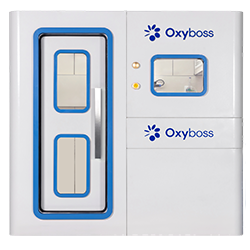
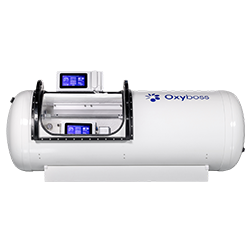
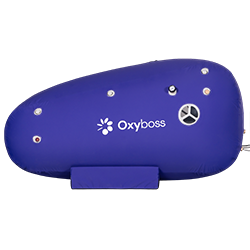
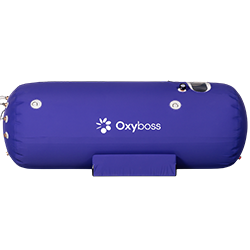
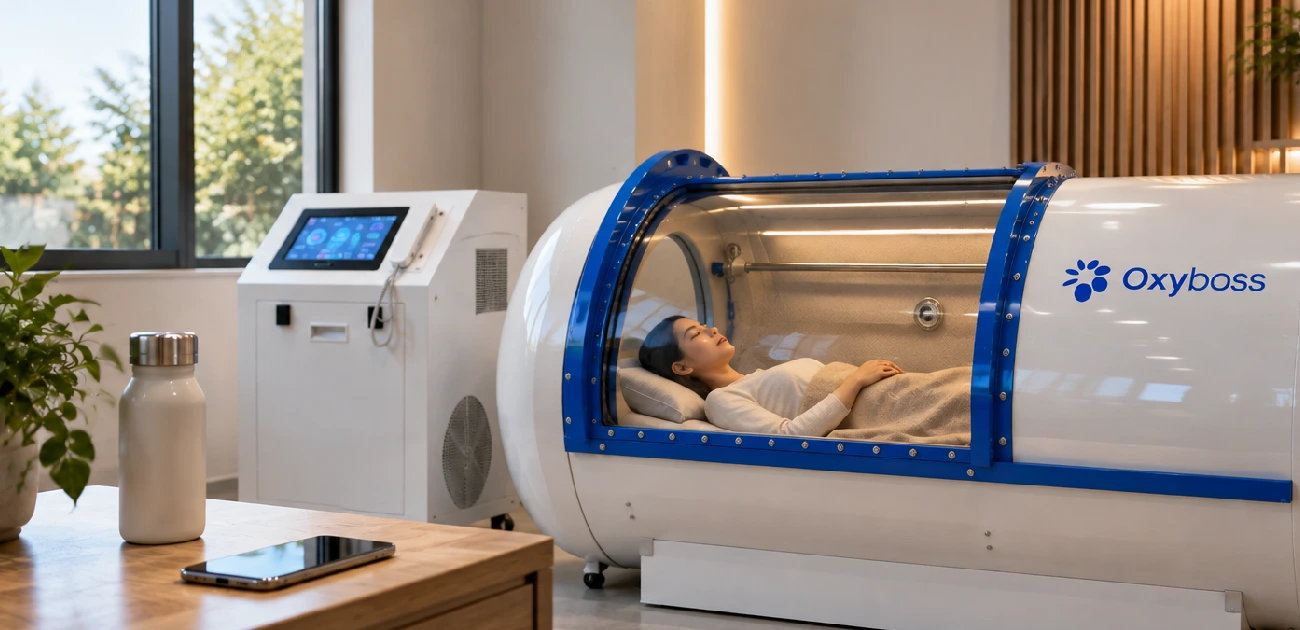
Can You Bring a Phone, Tablet, or Headphones into a Hyperbaric Chamber?
Short answer: no. Not a phone, not a tablet, not earbuds, not a smartwatch. It doesn't matter if the device is off or in airplane mode. It doesn't matter if the chamber is a hospital unit or a home wellness one. The reason isn't a rule someone made up — it's the physics of what happens to a sealed lithium battery inside a pressurized, oxygen-rich box.
Why a Sealed Chamber Isn't the Same as a Sealed Room
The two things that make a hyperbaric chamber different from your living room are the same two things that make your phone a problem inside one: pressure and oxygen. Nobody talks about them together, which is why the topic feels murky. So let's put them together.
The pressure is higher than your phone was built for
A typical hyperbaric session runs at 1.5 to 2.4 ATA — that's 1.5 to 2.4 times normal atmospheric pressure. Hospital-class hard-shell chambers often sit at the higher end of that range; soft-sided home units typically run lower. The number sounds small until you translate it into what your phone actually feels.
At 2.0 ATA, the pressure difference pressing on every surface of your phone is about 14.7 psi (~1 bar). Spread across the front glass of a modern phone, that's roughly the weight of a large adult standing on the screen. The whole time. Quietly.
Two things worth noticing here. First, a plane cabin is lower than atmospheric pressure, not higher. So the "my phone works fine on planes" reasoning doesn't apply — a chamber is doing the opposite of a plane. Second, no consumer phone is engineered as a pressure-rated device. IP68 water resistance is about keeping water out, not about withstanding a sustained 1-bar squeeze on the outside for 60–90 minutes.
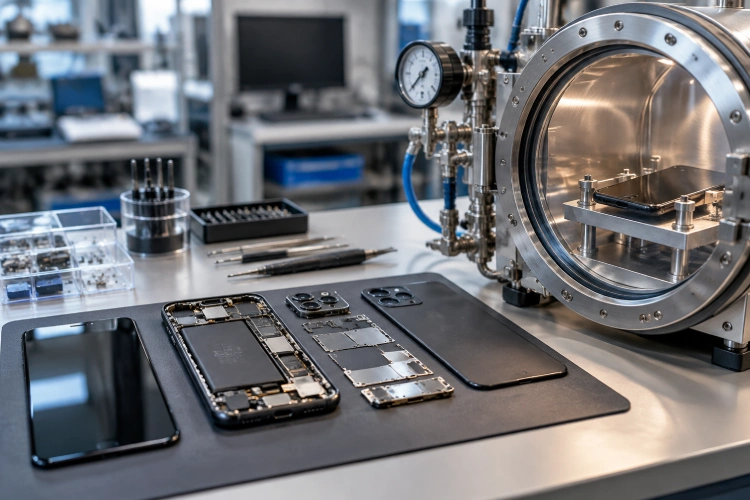
What happens when you actually run one at pressure? Some devices survive. Some come out with screens that have visibly delaminated, glued adhesives that softened, or batteries that got compressed inside their housing. Compression damage to a lithium cell doesn't announce itself immediately — it becomes an ignition source later. Which brings us to the second half of the problem.
The atmosphere inside isn't just "air"
Here's the part most sites either duck or oversimplify. You'll read that hospital chambers are "100% oxygen" and home ones are "just air." Neither is the whole truth, and the difference matters less than people think.
The truth is a gradient, not a switch.
- Normal air is about 21% oxygen.
- A chamber pressurized with air, with oxygen delivered by mask, still has more oxygen inside than the room outside — because gas leaks from the mask, and because higher pressure raises the amount of oxygen every breath actually delivers.
- A chamber pressurized with 100% oxygen is at the top of the gradient.
The medical bodies are explicit about this. FDA's 2025 safety letter to healthcare providers notes that HBOT often involves "elevated pressure and often 100% oxygen" and warns that high oxygen concentrations create fire risk. [FDA 2025] UHMS spells out the second half plainly: oxygen from a mask or a concentrator can leak into the chamber and accumulate, especially in soft-sided units without proper ventilation. [UHMS Consumer Warning]
So "we're an air chamber, so it's fine" is not the safety argument it sounds like. There is no version of the inside of a chamber that's just room air. Which is why the answer doesn't change with the chamber type.
But Wait — I've Seen Places That Let You Bring Your Phone
You have. And you're not making it up. A small number of wellness facilities do allow phones or tablets during their sessions. Their reasoning is usually some version of: "We use ambient air, oxygen goes through a mask, ventilation keeps the chamber below 25% oxygen — so it's safe."
Here's an editor's honest read on that argument.
That's a facility-specific marketing position, not an authorization from FDA, UHMS, or any standards body. UHMS has actively warned consumers about soft-sided operators who let electronics in without proper grounding or ventilation. [UHMS Consumer Warning] FDA's 2025 letter tells healthcare providers to follow the exact instructions for use shipped with the chamber and to control ignition sources. [FDA 2025] Neither leaves room for a house rule that overrides the manufacturer's own document.
There's also an internal contradiction in the "under 25% oxygen" argument once you look at it slowly. If a facility says it can measure the concentration well enough to guarantee it's under 25%, ask them: measure it where in the chamber, and how often? A leak plume from the mask isn't evenly mixed. A meter mounted 40 cm from the mask reads one number; the space next to the phone in your lap reads another. The number that matters is the one where the ignition source is, not the number at the sensor.
That's not a takedown of any particular clinic. It's the reason the industry's safety bodies keep the answer at "don't" — because the possibility of a local pocket of enriched oxygen next to a battery is enough. The event doesn't need to happen every time. It only needs to happen once.
"But It's Off. Or in Airplane Mode."
The single most common follow-up question, and the answer everyone dances around. So we won't.
Off doesn't remove the battery. Airplane mode doesn't remove the battery. Battery cells sit at their nominal voltage whether the device is running or not. What causes lithium-ion cells to fail catastrophically is:
- Mechanical damage (which we just covered — the pressure alone can do this over 60–90 minutes)
- Internal short circuit (a manufacturing defect, or damage that develops over time)
- Thermal runaway from an external heat source (a warm chamber, a battery under compression, one component slightly out of spec)
None of these care whether the screen is on. The 2025 Fortius 420 incident in Arizona, documented in FDA's MAUDE database, resulted in a fatal chamber fire; the scene inventory afterwards included "cell phone, tablet, headphones, portable battery." [FDA MAUDE — Fortius 420] A separate MAUDE entry describes a Sechrist chamber fire tied to a battery-powered fan — a small, mundane device that nobody thought about. [FDA MAUDE — Sechrist]
Airplane mode is a radio setting. It's not a physics setting.
The Things People Forget
Phones and tablets are the obvious ones. The list is longer.
The ⚠️ Ask rows are important. They aren't dodges. They're the actual boundary: things where the answer legitimately depends on the specific chamber, the specific device, and a written policy. "Some facilities allow it" is not the same as "your facility allows it." Always ask, always ask for the answer in writing.
The Standards Behind the Word "No"
If you've read this far, you probably want the receipts. Fair.
The rule against electronics inside a chamber isn't one document. It's a stack of them, all pointing the same way.
- NFPA 99, Chapter 14 — the US Health Care Facilities Code section covering hyperbaric facilities — restricts electrical equipment and wiring inside Class A chambers, including how battery-operated devices are treated. [NFPA 99 § 14.2.7.3] It also specifies grounding and ground-fault protection requirements that a consumer phone can't meet. [NFPA 99 § 14.2.7.4]
- ASME PVHO-1 — the design standard for pressure vessels for human occupancy — governs what a chamber itself has to be built to. It's the reason certified chambers exist as a category. It doesn't approve devices for use inside; it doesn't have to. [ASME PVHO]
- UHMS publishes both a consumer warning about soft-sided chambers and a position statement about low-pressure fabric units. Neither is friendly to bringing personal electronics in. [UHMS Consumer Warning] [UHMS LP-Fabric Position]
- FDA's 2025 safety letter instructs providers to follow the manufacturer's instructions for use exactly, and to control ignition sources. [FDA 2025]
So when a clinic says "we don't allow phones," they aren't being cautious. They're following the layer of documents underneath the room.
Five Questions to Ask Any Facility (Print This)
The clearest way to tell whether a place has really thought this through — beyond the friendliness of the front desk — is to ask five things and listen to how they answer. If they can answer these, you've probably found a serious operator. If they can't, that tells you something too.
- What's the oxygen concentration inside the chamber during a session, and how do you measure it? A useful answer includes a number or a range and a monitoring method. "We're not a pure-oxygen chamber" isn't an answer.
- Where is your written policy on personal electronic devices? Can I see it? A policy that exists on paper is a policy. A policy that exists in someone's memory isn't.
- What standards and documents does your chamber meet? Can you name them? Look for specific numbers — ASME PVHO-1, NFPA 99 chapter 14, an FDA 510(k) if the chamber is US-cleared. "Meets international standards" is not an answer.
- How do you handle grounding and static control inside the chamber? They should be able to describe both the electrical grounding of the equipment and the clothing guidance for occupants (usually cotton).
- If my device fails inside the chamber, who is responsible? A serious operator has a written answer to this before you ever walk in. If they don't, that's not a legal problem — that's a preparedness problem.
You don't have to become an expert to protect yourself here. You just have to ask the questions and listen for whether the answers have edges.
Home and Soft-Sided Chambers: Same Answer
Home wellness chambers — soft-sided, single-person, up to 1.5 ATA — get treated as a different category in a lot of marketing copy. The device answer isn't different. Same batteries. Same pressure differential. Same possibility of oxygen accumulation from a mask.
Two safety principles hold regardless of the chamber's shape:
- The manufacturer's instructions for use come first. Not the operator's, not the receptionist's. If the IFU says no personal electronics, that governs. FDA's 2025 letter is explicit on this. [FDA 2025]
- The industry's safety bodies have written positions on low-pressure fabric chambers specifically. If you own or are considering one, read them yourself. We're not going to summarize them for you — that's the point of a primary source.
So What Do You Actually Do for 60–90 Minutes?
The valid worry. Nobody talks about this and it's the reason people push back on the electronics rule.
Watch something, if the chamber offers it. Some chambers include a separate viewing screen that stays on the chamber side of the safety design — that's a different piece of hardware from the touch-panel controls, and it's the one that's meant for content. Ask whether the specific chamber has one.
Listen to something. Speakers mounted outside the chamber wall, aimed at the observation window, work well. A book on a stand you can see through the window works too. The chamber's own control panel handles pressure, oxygen readings, and session time — it's not the screen you're going to watch a movie on.
Just… let it be quiet for an hour. This is the part nobody says out loud. A lot of regular chamber users end up welcoming the disconnection. You don't need to plan every minute of it. Some of the best evidence for how normal this feels is how quickly first-timers stop asking about it after their second or third session.
If you're claustrophobic, that's a real conversation to have with the operator — bringing your phone isn't the fix for it anyway. Being able to see out, hearing a familiar voice through the intercom or window, and doing a short session first are the actual answers.
Preparing for Your Session (Short Version)
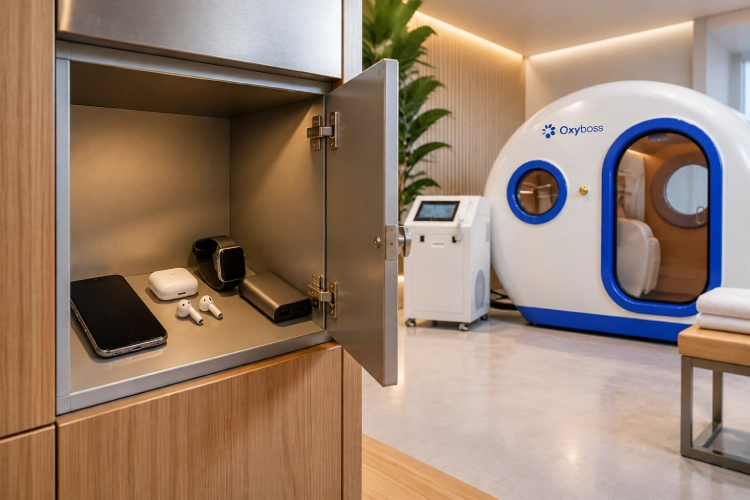
- Leave every powered device in the changing room. Every one.
- Wear 100% cotton. Skip synthetic fabrics and skip fabric softener that day — both hold static.
- Skip lotion, hair gel, cosmetics, and perfume on session days. Oil plus concentrated oxygen is a chemistry problem you don't want to be a part of.
- Contact lenses: check the facility's policy in advance. Bring your glasses case.
- If you use a hearing aid, ask before you arrive, not at check-in.
- Use the restroom first. You're going to be in there a while.
Sources
- FDA — Follow Instructions for Safe Use of Hyperbaric Oxygen Therapy Devices (Letter to Health Care Providers, 2025).
- FDA — Hyperbaric Oxygen Therapy: Get the Facts (consumer update).
- FDA MAUDE — Adverse Event Report: OXYHEALTH FORTIUS 420 (2025 Arizona fatality).
- FDA MAUDE — Adverse Event Report: SECHRIST INDUSTRIES HYPERBARIC (battery-fan-linked fire).
- UHMS — Consumer Warning: The Dangers of Soft-Sided Bag Chambers.
- UHMS — Position Statement: Low-Pressure Fabric Hyperbaric Chambers (PDF).
- UHMS — MEDFAQs: Item Approval.
- NFPA 99 — § 14.2.7.3 Wiring and Equipment Inside Class A Chambers (via up.codes).
- NFPA 99 — § 14.2.7.4 Grounding and Ground-Fault Protection (via up.codes).
- ASME — Safety Standard for Pressure Vessels for Human Occupancy (PVHO-1).
- Monoplace Chamber Fire, Lima, Peru (2006) — UHMS Safety Article (PDF).