The Short Answer: Four Multipliers Decide Everything
Most three-year models for hyperbaric chamber businesses under-perform not because the formula is wrong but because the inputs are. Four multipliers do almost all of the work:
- How many real sessions a chamber can run per day — set by session length, changeover, and operating hours, not by the chamber's "maximum sessions" rating.
- How many operating days the business has in a year — set by seasonality, maintenance days, and the operating mode (60-minute soft-side sessions or 90-minute hard-shell sessions).
- Utilization ramp by year — Year 1 rarely resembles Year 3, and the ramp shape is what determines whether the loan survives.
- Realized price versus posted price — almost every published price range assumes a posted number that almost no one actually pays.
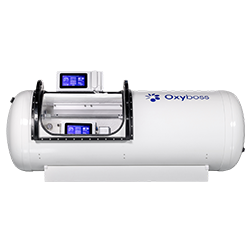
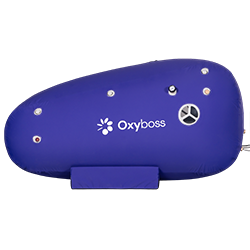
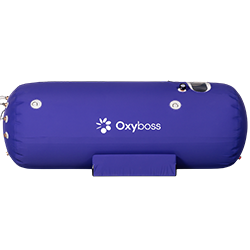
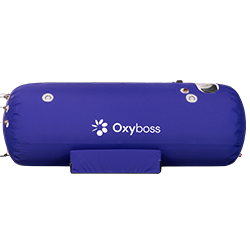
The rest of this page works through each multiplier, the cost lines most often missed, and the package a lender will want to see. The category grid below translates chamber specs directly into the model line they affect.
Your Revenue Line Has Four Multipliers. Most Models Get Three of Them Wrong.
Multiplier 1 — How many real sessions a chamber can run per day
Daily session count is not a property of the chamber; it is a property of the operating day:
Daily sessions = Operating hours ÷ (Session length + Changeover)
The oxygen system recovery is the binding constraint, not the client change. Two illustrative session counts, both for an 8-hour operating day:
The published "6–8 sessions per day" figure on peer sites assumes the 60-minute case with extended hours — at 10 hours the soft-side formula gives 6.7 → 6. The 90-minute case produces one to two fewer sessions per day from the same room; that difference cascades through the entire three-year revenue projection.

Multiplier 2 — How many operating days the business has in a year
A session-per-day number multiplied by 365 is not an annual session count. Subtract seasonal slow periods (first-quarter demand typically under-performs third-quarter), scheduled maintenance days for chamber and oxygen source separately, and soft closures. The published "300 operating days per year" figure is optimistic; the honest range is 240–280.
Multiplier 3 — Utilization ramp by year
Year 1 utilization is rarely Year 3 utilization. The published "60% utilization" figure is a Year-3 steady-state number, not a Year-1 average. Two rules of thumb:
- Year 1 typically runs 30–45% of the Year-3 figure for a new entrant without an existing client base.
- The ramp is steepest between months 6 and 18; the model should show month-by-month utilization for the first 18 months, not a single annual number.
Treating "60% utilization" as a Year-1 input is one of the most common reasons a three-year model fails in practice.
Break-Even and Payback: Three Numbers, Not One
A single "payback in X months" figure is the most common published claim and the least useful. It collapses three different numbers into one:
A realistic business payback for a single-chamber cash-pay operation, on typical inputs, is in the 12–24 month range. Figures below 6 months assume utilization and price points that most operators do not consistently achieve in Year 1.
When to add a second chamber
A second chamber is rarely justified by capacity alone in Year 1. The triggers are usually:
- Sustained utilization above 70% for three consecutive months (the chamber is the constraint, not demand)
- A second shift is operationally feasible (operator availability, not just demand)
- The maintenance reserve is fully funded and the loan service coverage ratio is above 1.5
If any of those three is missing, the second chamber is a marketing decision, not a financial one, and it should not be in the three-year model.
Marketing is a recurring expense, not an opening expense. A new cash-pay wellness operation spends 8–15% of revenue on marketing in Year 1 and 5–8% in steady state. If the model has no marketing line in Year 2 and Year 3, it is incomplete.
Working capital drag on cash. Minimum cash on hand is the lowest point the cumulative cash line reaches across the first 12 months — for a new chamber operation, that trough is usually in months 4–8, not the Year-1 ending balance.
Buy vs lease vs finance. Buy puts the full capex into the pre-opening budget and reduces monthly cost. Lease shifts capex to monthly payments but at a higher total cost. Finance (loan or equipment finance agreement) sits between the two and is what most SBA-backed operators use. The decision turns on cash position and tax posture more than on interest rate alone.
Three-Year Line Items and the Assumptions Page
A clean three-year projection groups line items by frequency (one-time / monthly / annual) rather than by topic — frequency is how a lender reads the model.
One-time, pre-opening: chamber + oxygen system · shipping (per weight convention) · door / frame work · floor reinforcement · electrical upgrade · permits, licensing, professional fees · pre-opening marketing · working capital reserve (cash trough, usually months 4–8) · initial consumables and spare parts · initial training.
Monthly, recurring: rent · operator labor · owner draw · marketing (8–15% of revenue Year 1; 5–8% steady state) · payment processing (2.5–3.5% of card revenue) · oxygen system electricity · consumables · maintenance reserve accrual · loan service · software subscriptions.
Annual, recurring: chamber scheduled maintenance · oxygen source scheduled maintenance · insurance (general liability + property) · business licensing renewal · pressure-vessel inspection cadence (state-required, separate from scheduled maintenance) · workers' compensation.
Lines most often missed: working capital trough (treated as Year-1 ending balance rather than the lowest cumulative cash point across months 1–12) · marketing as recurring expense · maintenance reserve accrual · owner draw as a planned line · payment processing on card-on-file memberships · pressure-vessel inspection · tenant improvement (TI) allowance assumption.

The assumptions page: three columns, physically separated
The assumptions page is what the lender reads first. A clean format divides inputs into three columns:
- Measured — inputs you have actually measured at the specific site (door width in cm, floor type, circuit rating, local rent, measured marketing cost per lead in the first 90 days)
- Sourced — inputs from a published benchmark, with citation (posted price tiers with URL and date, SBA 5-year projection requirement, ASCE 7 floor-load baselines with edition)
- Assumed — inputs you are choosing without measurement or citation (Year-1 utilization rate, discount rate, Year-2 marketing spend as % of revenue, session-length assumption)
The lender reads Column 3 first because that is where the operator's judgment lives. For every input in Column 3, show the model's output at three values (low / mid / high); inputs that move the output a lot deserve more thought, not less.
Packaging for a lender
The SBA expects a five-year projection, with the first year broken out monthly or quarterly. A three-year model will pass review, but it passes more easily if it shows the operator has thought about Years 4 and 5 (hold Year-3 steady-state values constant, adjust for inflation 2–4% per year, model any planned second chamber as a discrete Year-4 or Year-5 event). Show three scenarios — base, downside, severe-downside — side by side. Severe-downside should still leave the business with positive DSCR in every year. Show the debt service coverage ratio explicitly (threshold for most SBA-backed loans is 1.20–1.25). Franchise FDD Item 7 and Item 19 are useful as one data point among many, but neither is a benchmark for an independent operation.
State-by-State Compliance: Questions to Bring to Your Attorney
This page does not provide legal advice. The list below is a starting set of questions to bring to a qualified attorney or compliance professional in your location; answers vary by state and often by city.
- Zoning and occupancy. Is chamber operation permitted at the planned address? Does it change the property's occupancy classification? Are there setback, ventilation, or exhaust requirements specific to oxygen-enriched environments?
- Fire and building code. Which fire code edition applies (NFPA 1, NFPA 101, or state-specific)? Is the installation subject to NFPA 99 Chapter 14 (healthcare) or Chapter 25 (non-healthcare)? Verify current chapter and section numbers — they have been revised across editions. What are the oxygen-enriched environment signage, storage, and fire-suppression requirements?
- Operating permits. Is a state- or county-level operating permit required? Is a certificate of need (CON) required? Are there operator certification or training requirements at the state level? Local business license requirements beyond state registration?
- Pressure-vessel requirements. Does the chamber require state pressure-vessel inspection or registration? What is the inspection cadence? Are there operator-side record-keeping requirements?
- Consumer protection and disclosure. State-specific disclosure requirements for wellness services? Pricing-display or refund-policy requirements? State rules on testimonials or outcome claims for non-medical services?
- Insurance. Does general liability require specific rider language for oxygen-enriched environments? Does property insurance require notification of equipment installation? State-specific workers' compensation requirements for the operator role?
FAQ
Q: I have heard the chamber business pays back in 3–6 months. Why does this page show 12–24 months? The 3–6 month figure assumes a posted price and a Year-3 utilization that most operators do not consistently achieve in the first year. The 12–24 month figure uses realized price (after discounts) and a Year-1 ramp. Both numbers are defensible; they are answering different questions. Use the one that matches your assumptions.
Q: Why is the install cost so hard to estimate from a brochure? Because the brochure does not know your door width, your floor type, or your electrical service. The install cost is a function of the room, not the chamber. Until you have those three numbers measured, any install estimate is a placeholder.
Q: Can I skip the structural review for the lighter hard-shell chambers? No. The threshold that matters is uniform floor load, not total weight. Several chambers in the 2.0 ATA class exceed the residential 40 psf baseline even though their total weight looks modest.
Q: Why does the model carry a maintenance reserve if the chamber is under warranty? Because the warranty covers what it covers and does not cover the rest. The reserve is for the parts of the operation that fall outside the warranty — oxygen-system consumables, the room, peripherals, soft costs of a service event — and it is the bridge to the post-warranty period.
Q: What is the one number most often wrong in published chamber-business models? Realized price. Almost every published revenue figure uses posted price and ignores discounts. Adjusting that one input is usually enough to bring a published model closer to what an operator actually sees.
Q: Do state requirements really vary that much? Yes. Operating requirements, fire codes, and zoning rules vary state by state and often city by city. Confirm with a qualified professional in your location before relying on any assumption here.