
What the Research Actually Says
Here's the part most articles skip: HBOT isn't one thing. It's a family of interventions that share a chamber, and the evidence behind each version is wildly different.
The strong-evidence tier is narrow. Hyperbaric oxygen therapy has solid support for a specific set of conditions where tissue is oxygen-starved, ischemic, infected, or damaged by radiation. This is the UHMS-cleared territory: decompression sickness, severe carbon monoxide poisoning, gas gangrene, crush injuries, certain sudden hearing or vision loss, severe burns, radiation tissue damage, compromised grafts, and non-healing diabetic wounds. The FDA clears HBOT devices for these uses, which is a specific regulatory determination. It does not mean every condition marketed online has been reviewed.
The "promising but not settled" tier is broader. Things like wound healing, inflammation reduction, post-radiation recovery, and certain neurological conditions sit here. There is research. The research is real. But it isn't yet the kind of evidence that lets a regulator stamp "approved" on it.
The "weak or unsupported" tier is where most marketing lives. Athletic performance. General wellness. Anti-aging. Long COVID in many cases. Traumatic brain injury as a recovery tool. Autism. Lyme disease. Cancer. Alzheimer's. The FDA has specifically warned that HBOT has not been proven to cure cancer, Lyme disease, autism, or Alzheimer's. That doesn't mean it does nothing in these areas. It means regulators haven't been shown enough to say it does.
This three-tier split is the lens we'll use throughout this piece. Whenever we talk about a use, we should be able to tell you which tier it sits in.
Pressure, Intended Use, and Strength of Evidence: The Three-Way Matrix
Most articles on this topic compare chamber pressure like it's the whole story. "1.3 ATA versus 2.0 ATA — which is better?" is the format you'll see over and over. But pressure by itself doesn't decide whether something is worth it. Pressure, intended use, and strength of evidence all matter together.
The table below lays out the picture as the research currently supports it.
The UHMS definition of clinical HBOT is breathing near-100% oxygen inside a chamber at at least 1.4 ATA, and most cleared indications run at 2.0 ATA or higher. A lower-pressure chamber isn't automatically useless, but it isn't the same thing as a clinical-grade high-pressure session. We'll come back to this distinction in the soft-shell section below because that's where most of the confusion lives.
When It's Worth Considering — and When It Isn't
Let's get practical. Here's how to think about whether HBOT is worth it for you.
Worth considering if:
- A doctor has recommended it for a condition on the cleared-indications list. This is the strongest case. Insurance may even cover it. The FDA has cleared HBOT devices for the conditions listed in the matrix above.
- You're recovering from radiation tissue damage or a non-healing wound, and a wound care team is supervising.
- You've done the math on session cost versus ownership and the ownership path is genuinely cheaper given how often you'd actually use the chamber.
- You're in a context where adjunctive oxygen makes clinical sense (your doctor will tell you this if so).
Probably not worth it if:
- You're buying a chamber because someone on a podcast said it cured their brain fog. Cognitive optimization, general biohacking, longevity — these are the most-marketed uses and the least-supported.
- You're being sold a chamber as a cure for cancer, autism, Alzheimer's, or Lyme disease. The FDA has specifically called out these uses as unproven.
- You want it for athletic performance. The systematic reviews on healthy adults are pretty clear: there isn't a meaningful effect on performance or recovery.
- You haven't talked to a doctor. The only absolute contraindication for HBOT is an untreated pneumothorax. Other contraindications matter too — lung disease, certain heart conditions, pregnancy, some medications. None of this is a "just buy one and figure it out" situation.
The honest version of "is it worth it" depends on which side of this list you're on. Most people who Google this question are closer to the second list than the first, and most articles don't tell them that directly.
The Real Cost: What You Actually Pay
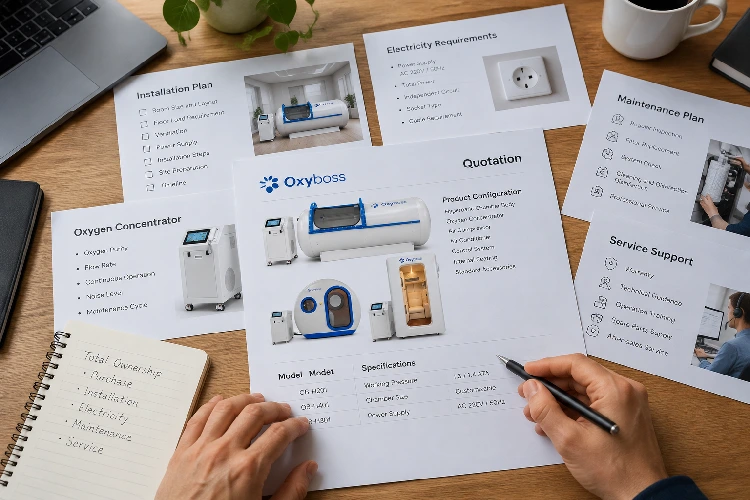
What nobody tells you at the quote stage. The sticker price of the chamber is rarely the total cost of ownership. The hidden line items are real:
The break-even math. A commonly cited break-even point is somewhere in the 50-to-60 session range. Treat that number as a starting point for your own math, not a guarantee. The break-even for you depends on:
- How many sessions you'd realistically do in a year
- What you'd pay per session at a clinic in your area
- The full installed cost of the chamber you're buying (chamber + oxygen source + install + electrical)
- The lifespan of the equipment
- What the equipment might be worth if you sell it later
We are not going to give you a single dollar figure for anything here. We don't have visibility into your local clinic pricing, your electrical setup, or how often you'll actually use it. Anyone who quotes you a single total cost without those inputs is selling you something.

Soft-Shell vs Hard-Shell: What the Difference Actually Means
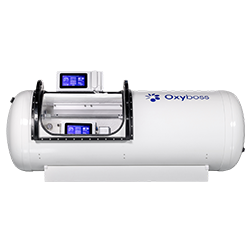
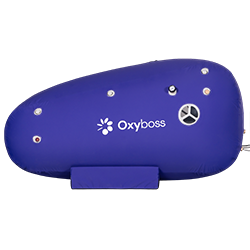
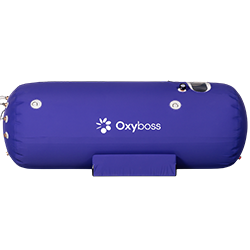
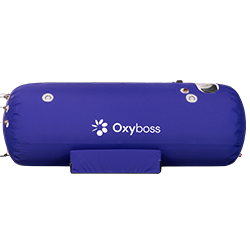
This is the section where we have to be most careful, because we sell both types, and the most common buyer mistake is to treat them as interchangeable.
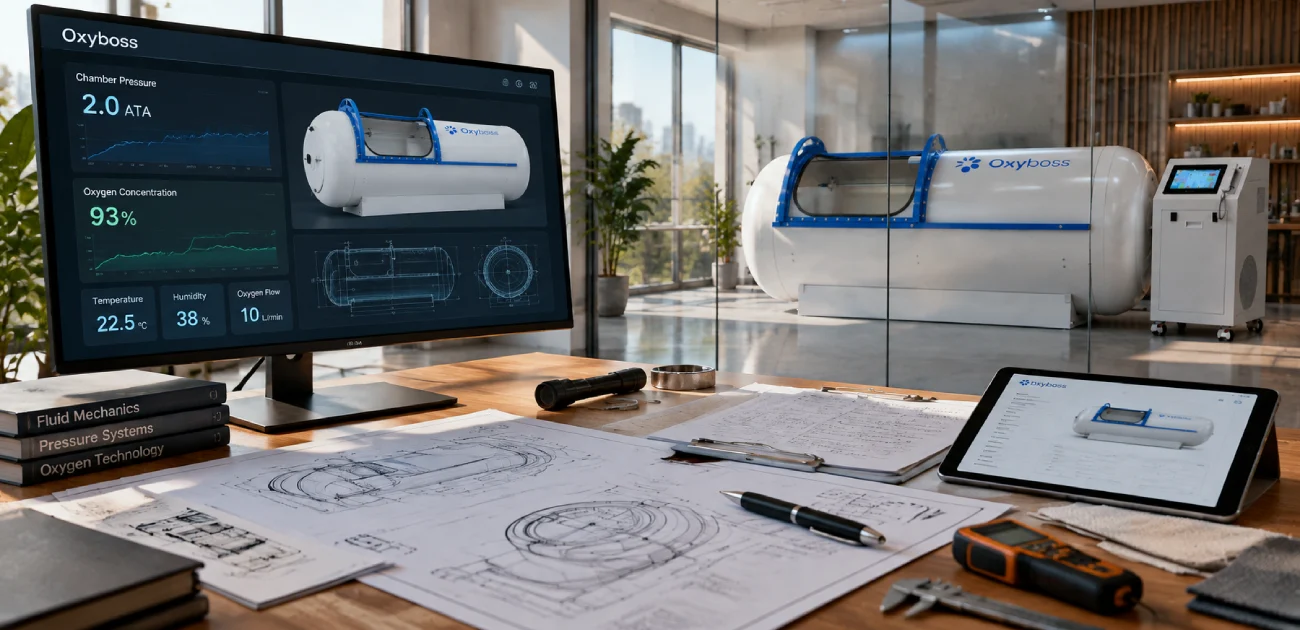
Pressure isn't the whole story, but pressure is most of it. UHMS defines clinical HBOT as near-100% oxygen at at least 1.4 ATA, and most cleared indications run at 2.0 ATA or higher. A soft-shell chamber, even a good one, typically operates at lower pressures than a hard-shell chamber. That's the mechanical reality.
Oxygen source is the other half. A chamber pressurizes whatever gas is inside it. If you're pressurizing room air, you're breathing slightly more oxygen than you would at sea level — but not by much, and not enough to meet the UHMS definition of clinical HBOT. If you're running the chamber with an oxygen concentrator attached, the picture changes. How much it changes depends on the equipment.
Why this matters for buyers. The marketing around soft-shell chambers tends to split into two camps that are both unhelpful. One camp says soft-shell chambers are basically useless and only clinical-grade hard-shell chambers count. The other camp says soft-shell chambers deliver the same benefits as clinical sessions. Neither is right.
Here's what's actually defensible:
- A soft-shell chamber at 1.3 ATA pressurizing room air is not the same intervention as a 2.0 ATA clinical session with near-100% oxygen. If a seller tells you otherwise, they're either confused or overselling.
- A soft-shell chamber with a properly sized oxygen concentrator delivering high-concentration oxygen to the occupant is doing something meaningfully different. The question is whether it matches your goals.
- Research studies in clinical settings have generally used 2.0 ATA or higher. That doesn't mean lower pressures have no effects. It means most of the strong evidence is at higher pressures, and you're working with thinner evidence below that line.
- For acute mountain sickness, the FDA has cleared low-pressure fabric chambers. That's the one use where a soft-shell chamber has a regulator-stamped clear use.
What "worth it" means for a soft-shell. If your goal is a hard clinical outcome that UHMS has cleared HBOT for, you want a hard-shell chamber or a clinical facility. If your goal is general wellness, recovery, or a non-cleared use case, a soft-shell chamber might be a reasonable tool for the job — but go in with clear eyes about what the evidence base is and isn't.
Safety, Limits, and What We Don't Claim
We're going to spend more time on safety than most articles in this category, because the recent history of this industry makes that important.
The general safety picture is favorable when chambers are used properly. Most people who use HBOT experience nothing worse than ear pressure (like what you feel on a flight), some sinus squeeze, or temporary nearsightedness after a long course of sessions. The serious risks — oxygen toxicity, seizures, fire — are rare and associated with specific scenarios.
The fire risk is real and worth taking seriously. High-concentration oxygen environments are flammable. The FDA has issued explicit safety communications about HBOT device fires causing serious injuries and deaths, and the guidance is clear: follow the manufacturer's instructions, follow fire-safety practices, and don't introduce ignition sources into the chamber. If you're considering a home chamber, this is the section to read twice.
We want to be specific about what we don't do. We don't make medical claims. We don't say our chambers cure, treat, or heal anything. We're a non-medical wellness equipment manufacturer. If you have a condition that a doctor has evaluated HBOT for, that's a conversation between you and your clinician — and it's a conversation that should happen with someone who can examine you, not with a chamber seller.
What this means for you:
- Don't buy a chamber to self-treat a medical condition without a clinician's involvement.
- Read the safety documentation that comes with whatever chamber you buy. If a seller can't or won't provide that documentation, that's a red flag.
- Don't modify the chamber. Don't bring ignition sources into the chamber. Don't operate it on an electrical circuit that wasn't designed for it.
- For home use, plan on professional installation, especially for hard-shell chambers.
How to Read the Specs (and What "FDA Approved" Actually Means)
Specs in this industry are written to confuse you. Here's how to read them.
"FDA approved" is almost always wrong when applied to an HBOT device. FDA clears devices through the 510(k) pathway for specific intended uses. The cleared indications for HBOT devices are the list we covered earlier. "FDA approved" suggests a broader endorsement that doesn't exist. If a seller is using that language, treat it as a signal to ask harder questions.
"FDA cleared" is closer to right, but only if you can see the 510(k) number and the intended use statement. Without those, you don't actually know what the device was cleared for. Ask.
"FDA registered" is a much weaker claim. It means the manufacturer has registered the company and listed the device with the FDA. It does not mean the device has been reviewed for safety or effectiveness for any particular use. Many sellers blur this with the stronger claims above.
"FDA listed" is the same as "FDA registered." Same word here.
"Clinical-grade" and "medical-grade" are not regulated terms in this context. They're marketing language. Ask what the seller means. If the answer is anything other than a defined spec (operating pressure, oxygen concentration, materials compliance), it's not a meaningful claim.
Working pressure is the right word for how much a chamber pressurizes above normal atmospheric pressure. You'll sometimes see "therapy pressure" in marketing material — that's the same number, and we use "working pressure" because it's the more accurate term.
If a chamber spec sheet uses the words we've flagged above without defining what they mean, that's not a chamber to trust.
What About [Off-Label Use You Probably Searched For]?
We know a lot of people land on this article from searches for specific uses. So let's address them directly.
Athletic performance and recovery. The peer-reviewed evidence for healthy adults using HBOT to improve performance or speed recovery is weak. A systematic review in Frontiers in Physiology found no significant effect on performance or recovery in healthy adults. Some athletes use chambers and report subjective benefits. The published evidence doesn't strongly support performance gains. Recovery is more mixed and may reflect placebo, anti-inflammatory effects, or both.
Anti-aging and longevity. There is research on telomere length and senescent cell reduction with HBOT protocols, including a study showing telomere elongation of roughly 20% to 38% over a three-month course at 2 ATA. That's a striking number. It's also a single study protocol in a narrow population. It does not mean HBOT extends lifespan. The researchers themselves are careful about that claim, and so are we.
Long COVID. Some studies show benefit. Other authoritative voices are more cautious. The honest answer is that the evidence is still developing, and you should not buy a chamber based on long-COVID marketing alone.
Traumatic brain injury and concussion. Some research is promising, particularly for persistent post-concussion symptoms. The evidence base is growing but not yet settled. If a clinic is treating you for TBI with HBOT, that's a clinical decision; if a chamber seller is making claims, that's a marketing decision.
Autism, Alzheimer's, cancer, Lyme disease. The FDA has specifically said HBOT has not been proven to cure these. Anyone telling you otherwise is selling you something that regulators say they don't have evidence for.
We mention these not to tell them what to do with their health, but because they're the searches that bring people here, and we think those people deserve an honest answer.
If You're Considering a Chamber
Here's the framework we'd use if we were in your shoes, and we say this having made our own buying decisions in adjacent categories.
Step 1: Figure out what you're actually trying to accomplish. If a clinician has recommended HBOT for a cleared indication, your path is straightforward and may include insurance coverage. If you're considering a chamber for a non-cleared use, you should be honest with yourself about the evidence base.
Step 2: Get a real cost picture. Per-session cost at a clinic near you. Full installed cost of the chamber you're considering. Lifetime maintenance and consumables. Then run the break-even math against how often you'd realistically use it.
Step 3: Decide on chamber type based on your use case. Soft-shell for non-cleared wellness uses, with eyes open about the evidence. Hard-shell for cleared indications and clinical applications. Don't buy a soft-shell to self-treat a cleared indication; don't buy a hard-shell expecting clinical outcomes from a non-cleared use.
Step 4: Read the documentation. Installation manual. Safety manual. Specifications with the 510(k) number if applicable. If a seller can't produce these, walk away.
Step 5: Talk to a doctor. Especially if you have any of the relative contraindications: lung disease, certain heart conditions, pregnancy, certain implanted devices, certain medications.
We make both soft-shell and hard-shell chambers. We've tried to write this article as if we didn't. If you want to see how the options compare side by side, our product overview page walks through the chamber types and what they're each suited to.
Sources
- FDA — Hyperbaric Oxygen Therapy: Get the Facts — https://www.fda.gov/consumers/consumer-updates/hyperbaric-oxygen-therapy-get-facts
- UHMS — Position Statement: Low-Pressure Fabric Hyperbaric Chambers — https://www.uhms.org/images/Position-Statements/UHMS_Position_Statement_LP_chambers_revised.pdf
- FDA — Hyperbaric Oxygen Therapy: Get the Facts (statement on unproven uses) — https://www.fda.gov/consumers/consumer-updates/hyperbaric-oxygen-therapy-get-facts
- Frontiers in Physiology — Hyperbaric Oxygen Treatment and Physical Performance — https://www.frontiersin.org/journals/physiology/articles/10.3389/fphys.2021.791872/full
- StatPearls (NCBI) — Hyperbaric Oxygen Therapy, Contraindications — https://www.ncbi.nlm.nih.gov/books/NBK557661/
- Medical News Today — Hyperbaric Oxygen Therapy: Benefits, risks, and costs — https://www.medicalnewstoday.com/articles/326792
- Cleveland Clinic — Hyperbaric Oxygen Therapy — https://my.clevelandclinic.org/health/treatments/17811-hyperbaric-oxygen-therapy
- StatPearls (NCBI) — Hyperbaric Oxygen Therapy (complications and indications) — https://www.ncbi.nlm.nih.gov/books/NBK459191/
- UnitedHealthcare — Hyperbaric and Topical Oxygen Therapy Medical Policy — https://www.uhcprovider.com/content/dam/provider/docs/public/policies/index/commercial/hyperbaric-topical-oxygen-therapy-07012025.pdf
- MDPI — Hyperbaric Oxygen Therapy in Sports and Neurocognitive Outcomes — https://www.mdpi.com/2813-0413/4/4/63
- FDA — Safe Use of Hyperbaric Oxygen Therapy Devices (Letter to Health Care Providers, 2025) — https://www.fda.gov/medical-devices/letters-health-care-providers/follow-instructions-safe-use-hyperbaric-oxygen-therapy-devices-letter-health-care-providers
- Nature — Hyperbaric oxygen therapy increases telomere length and decreases immunosenescence in isolated blood cells (2020) — https://www.nature.com/articles/s41591-020-1006-z