
What "hyperbaric chamber" actually means in this market
Two very different machines share one name. Confusing them is most of the reason people get into trouble.
- A medical hyperbaric chamber is a hard-shell pressure vessel, typically run at 2.0 to 3.0 ATA, filled with near-100% medical oxygen, operated by trained staff, used for things like decompression sickness, carbon monoxide poisoning, and wound-healing conditions the FDA has approved.
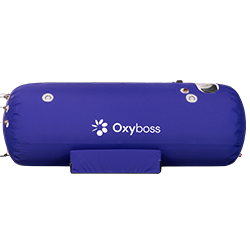
- A consumer "mild" chamber is a soft-shell or compact hard-shell unit run at 1.3 to 1.5 ATA, filled mostly with room air (sometimes with an in-chamber oxygen concentrator boosting oxygen to around 90%). It's intended for general wellness and recovery use. It is not a medical device.
Pressure is the number that matters. Industry shorthand:
Two things worth flagging on that 1.5 vs 2.0 split, because most pages don't:
- Pressure and oxygen are separate specs, and they trade off. A chamber running 1.5 ATA in room air delivers less oxygen per session than a chamber running 2.0 ATA with an in-chamber oxygen concentrator pushing near-100% O₂. They aren't ranked versions of the same thing. They're two different products, often sold at different price points, with different intended use cases. A few comparison sites frame the trade-off as "more pressure = more chamber." It isn't.
- FDA has cleared soft-shell chambers specifically for acute mountain sickness — not for athletic recovery, anti-aging, concussion, or general wellness. Those clearances exist, and they're narrower than the marketing usually implies. More on the regulatory picture below.
If a page is comparing a soft-shell chamber to a clinical HBOT system and using the word "treatment" or "therapy" for both, it's blurring a line that exists for a reason.
What athletes actually use them for
There are really only three reasons professional athletes end up in a chamber, and they don't all carry the same weight.
1. Recovery from an actual injury. The place where the evidence is closest to "yes." Bone bruising, avascular necrosis (AVN), delayed bone healing — these are oxygen-starved problems, and pressurised oxygen can plausibly help. A 2021 systematic review covering 19 studies and 612 patients found that the most consistent signal in the whole sports literature was in oxygen-deprived tissues like bone. The same review was honest that ligament healing had limited evidence and tendon oxygenation came back inconclusive. So: real signal, narrow lane.
2. Time pressure inside a packed schedule. This one gets talked about less, and it's probably closer to why teams actually keep chambers on site. When a starting player is one week from a playoff game, "anything that helps them get back a day earlier" is worth a lot — even if the evidence for marginal recovery is mixed. A lot of team-level adoption is risk management and availability, not a belief that the chamber is doing something magical.
3. Status, endorsement, and infrastructure access. Some athletes get access because their team has one. Some get it because their sport's medical staff has been doing it for a decade and didn't need a meta-analysis to start. None of that is evidence the chamber works. It's evidence the chamber is available. There's a difference, and it's worth holding on to when you read athlete quotes.
A small but important note on those quotes: when outlets say "LeBron reportedly uses a hyperbaric chamber" or "Phelps has spoken about using one," that's media reporting, not a clinical endorsement of efficacy. Some headlines imply the second. The first is the only thing actually on the record.
Where the evidence is strong, mixed, or weak
This is the part most pages skip, and it's the part you actually want if you're trying to decide whether one belongs in your facility or your home. Three layers, sorted honestly:
Layer 1 — Stronger evidence: injured or oxygen-deprived tissue
If you're coming back from a bone bruise, a slow-healing wound, or you're dealing with post-radiotherapy tissue damage, the case for hyperbaric oxygen is the strongest it gets. This is also where medical hyperbaric chambers (2.0 ATA, near-100% O₂, clinical oversight) live. Don't conflate the two — more on this below.
For everyday athletic recovery in a healthy, well-trained athlete, the evidence gets thinner fast.
Layer 2 — Mixed evidence: muscle recovery after hard training
Here's where the headline-friendly claims and the actual research disagree the loudest.
- Muscle damage (objective markers like creatine kinase, strength loss after eccentric work): the meta-analytic signal is positive. Hyperbaric oxygen accelerated return of muscle-damage markers in pooled studies.
- Muscle soreness (the subjective DOMS feeling athletes care about most): the signal is essentially zero. Multiple trials and reviews concluded HBOT "did not enhance recovery from exercise-induced muscle soreness" and "is not an effective therapy for the treatment of DOMS."
That split matters because the consumer marketing almost always leads with "less soreness." It also matters because if you read one study, you might find a result that sounds encouraging. The combined evidence is what tells you whether that study is the rule or the exception. It is usually the exception.
Layer 3 — Weak evidence: performance enhancement in healthy athletes
Hard no on a sport's performance and VO₂ max. A 2021 systematic review of 10 studies covering 166 well-trained athletes found that using HBOT around training had no significant effect on performance outcomes in healthy subjects. The only "maybe" window was during exercise itself, and there weren't enough studies to draw a real conclusion.
If somebody tells you a chamber will give you a bigger VO₂ max, faster sprints, or better endurance, they're either reading off a vendor page or extrapolating from animal or wound-healing data. Walk.
Why the layers get blurred
Two reasons:
- Mechanism sounds plausible. Pressurised oxygen dissolves into plasma, reaches oxygen-starved tissue, reduces edema, can drive healing in wounds. All true. None of it automatically means a healthy muscle recovers faster.
- Most published studies are small and use very different protocols. Pressure, session length, frequency, oxygen concentration, and post-exercise timing vary enough across the literature that combining them is hard. Saying "the research shows" usually means "one study showed." Be a sceptic of single citations.
Why teams still keep chambers on site
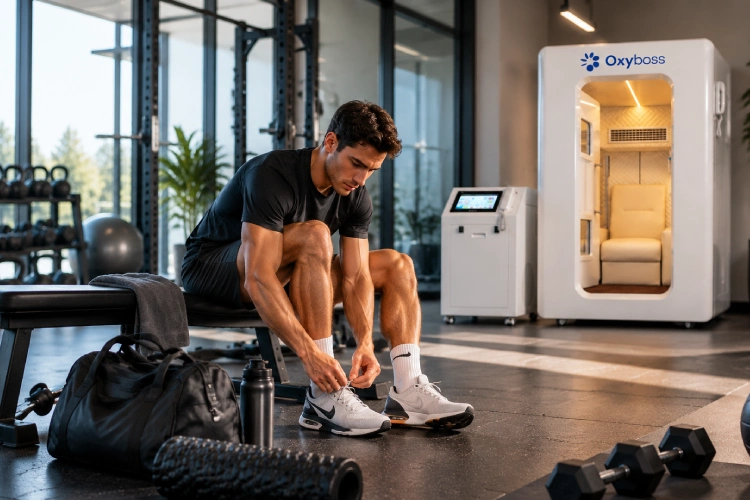
Two reasons, neither of them "because it makes athletes faster."
Risk and availability economics. A marginal day of recovery on a $30 million contract is worth real money. Teams pay for soft tissue work, sleep tech, hyperbaric — the same reason any business buys insurance. Not because each claim has a 0.9 effect size; because the option has positive expected value.
Convenience and rehab workflow. A chamber on site is one fewer appointment to schedule, one fewer car ride, one fewer insurance authorisation. For clubs already running a sports medicine department, it's plumbing.
Neither of those arguments says the chamber works. They say it's a sensible piece of infrastructure if you already believe the marginal evidence. They are also the most common reasons professional environments have one — far more common than "the data convinced our medical staff."
Is it allowed in competition?
Yes, with the usual footnotes.
WADA: Inhaled oxygen and oxygen replenishment are not on the WADA Prohibited List. Hyperbaric chamber use, in and of itself, is permitted.
NCAA: Follows a similar framework. Hyperbaric treatment is permitted; banned-substance medical exceptions handle edge cases. Note that the NCAA page on medical exceptions doesn't name hyperbaric specifically — it's the general framework that covers it.
Individual federations: Some governing bodies can impose tighter rules, particularly around competition-day oxygen use. Always check the current year's version of your federation's rulebook. WADA's prohibited list is reviewed annually and the cutoff date for changes is the start of each calendar year.
One phrase you'll see on a few vendor sites — "legal doping" — please don't use it. The Prohibited List doesn't classify oxygen as a doping substance, but the term implies that something is both permitted and performance-enhancing. It isn't. Using it to describe a chamber invites claims about performance the research hasn't supported, and it's misleading in either direction.
What "FDA-cleared" does and doesn't mean here
This is the second bit most pages fudge. Three layers to keep separate:
- FDA-cleared device — the chamber hardware has cleared FDA review for safety and manufacturing. This is real, and most legitimate chambers have it.
- FDA-cleared indication — the specific use has been reviewed. For low-pressure soft-shell chambers, the only sports-relevant cleared indication is acute mountain sickness.
- Off-label physician use — a licensed physician may use a cleared device for an unapproved indication. That's standard medicine, but it's the doctor making the call, not the device manufacturer.
- Wellness marketing claim — a chamber promoted for "recovery," "energy," "longevity," or "general health." This is a marketing category. It is not FDA-cleared as a treatment for any of those things.
If a chamber is being marketed for athletic recovery, that's category 4, not category 1. The device itself may be legitimate. The claim is not regulated as a medical claim. Athlators and weekend athletes are category 4 users. That's fine, but it's the truthful framing.
Safety: what to actually screen for
Hyperbaric chambers are generally safe at consumer-grade pressures when used as designed. They're not safe for everyone. Worth knowing before you book a session or buy a unit.
- Ear and sinus barotrauma — the most common complaint. Anything that makes ear clearing hard (recent cold, sinus congestion, ear surgery) is a reason to delay.
- Claustrophobia — soft chambers are tight. Hard chambers help. Not a deal-breaker, but know your tolerance.
- Lung conditions — COPD, bullae, certain prior pneumothoraces. Higher-pressure chambers in particular should not be used without screening.
- Pregnancy — most manufacturers and clinics advise against.
- Seizure history — seizure threshold can drop with elevated oxygen. Discuss with your physician.
- Fire risk — the chamber interior is oxygen-enriched. No electronics, no petroleum-based skin products, no smoking nearby. This is why the chambers ship with strict operating rules.
Sleeping in a chamber overnight is occasionally reported in the media. The mechanism is straightforward — tissue repair consolidates during sleep, so more hours in a pressurised environment would in theory compound the effect. The evidence base for overnight sessions is thinner than for standard 60–120 minute sessions, and most chamber designs aren't rated for continuous pressurised sleep. We don't recommend overnight use. Standard daytime sessions in a properly rated chamber are where the safety profile is well-established.
What a chamber isn't a substitute for
Strongest recovery evidence is still the basics. Sleep, nutrition, load programming, hydration, and stress management beat any add-on. If a vendor is telling you the chamber replaces those — or that you'll see the same gains just by skipping them and adding the chamber — they're selling you something else.
The honest framing: a chamber is a complement to a recovery routine, not a replacement for it. It is not a substitute for sleep, food, or a training plan that fits the athlete. Anyone using one alongside decent sleep and a reasonable programme is probably getting a small marginal benefit at best, and a real one when tissue is actually oxygen-starved. Anyone using it in place of the basics is wasting money.
How to choose a chamber if you've decided to get one
This is the part where we can speak from direct experience — we make these — so the framing shifts here. We're going to keep it about specs and use cases, not about what the chamber does for your sport.
Two product lines, by physical attributes
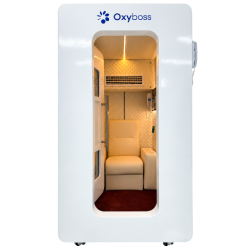
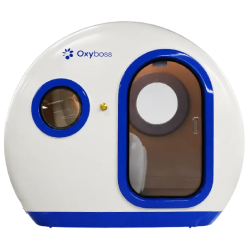
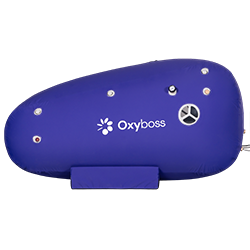
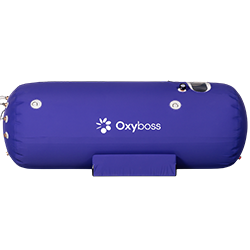
Soft-shell (1.5 ATA): Lightweight, movable, fits in a spare bedroom or apartment. Most use room air plus an optional oxygen concentrator. Best for home use, small studios, athletes who want a setup they can store or move between locations. Oxyboss soft-shell range is 1.5 ATA across the board, which is a meaningful step above the 1.3 ATA common at the entry tier.
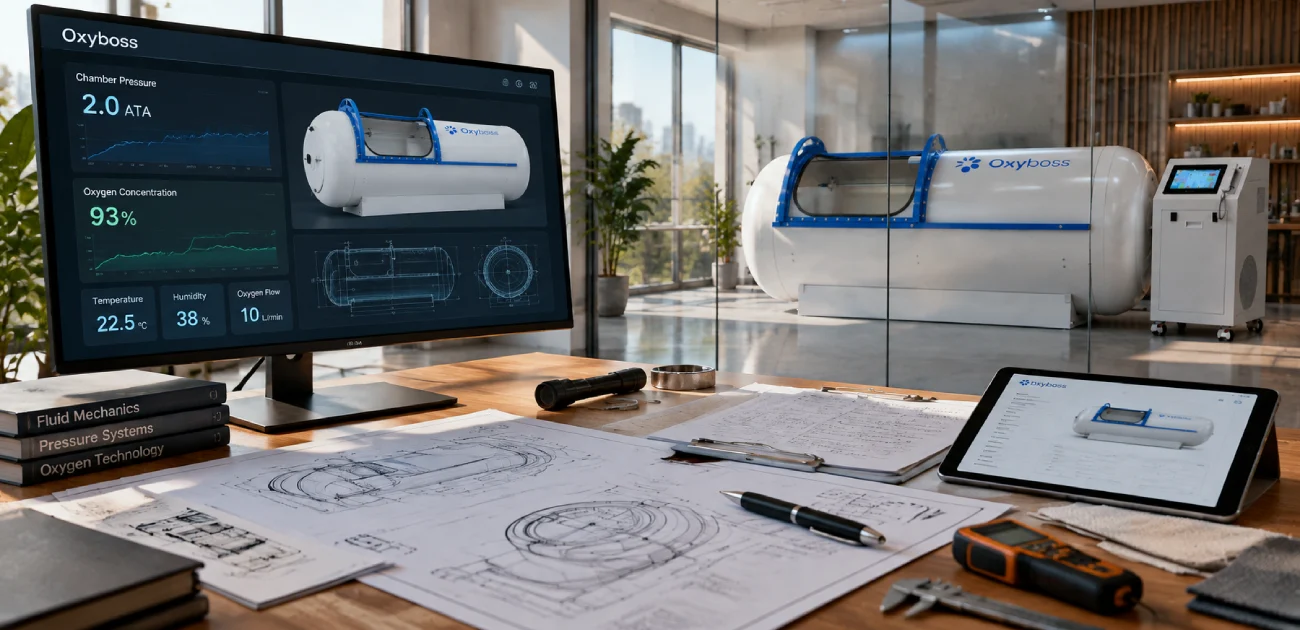
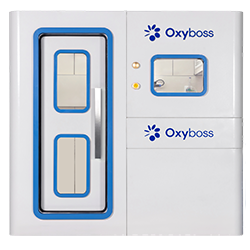
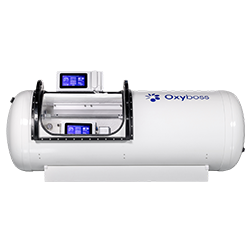
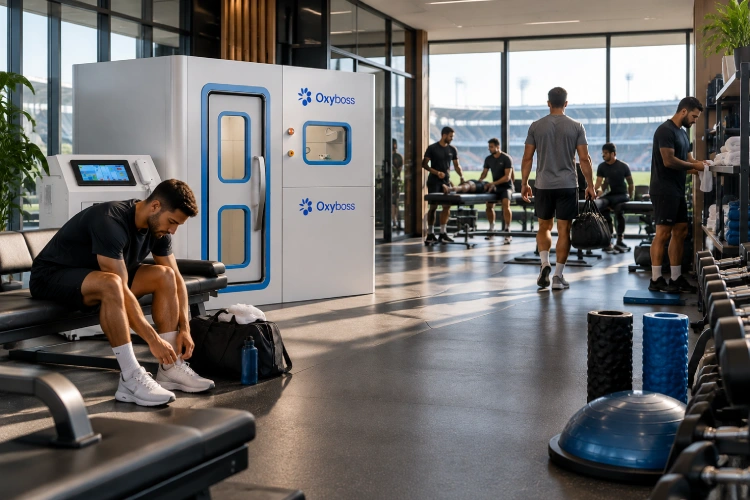
Hard-shell (2.0 ATA): Fixed installation. Larger interior. Most include a built-in oxygen concentrator (10 L/min, around 90% O₂), climate control, and an electric or reclining seat. Heavier and more involved to install. Best for teams, performance facilities, wellness centres, multi-user homes.
Specs worth comparing, regardless of brand
If you're sourcing for a facility, team, or distributor
The home-buyer logic above doesn't quite apply when you're buying for a clinic, a small performance facility, a team room, or you're a distributor evaluating a manufacturer. Different questions matter at that level: warranty length, certification footprint, lead time, spare-parts supply, installation support, and what the manufacturer actually does when something breaks. Things worth asking before you sign:
- Warranty terms. Soft-shell chambers typically ship with a 1-year warranty. Hard-shell chambers commonly run 3 years. Check what's actually covered — labour, parts, pressure vessel integrity, electronics — and what isn't. Wear items like zippers, seals, and O-rings usually sit outside the warranty.
- Installation and commissioning. For hard-shell units (and any unit running above 1.5 ATA in a commercial setting), installation is rarely a "ship-it-and-plug-it-in" transaction. Ask whether the manufacturer provides on-site or remote commissioning guidance, and whether the price you were quoted includes it. Building-code and fire-safety requirements vary by country and by US state; the manufacturer should be able to point you at the relevant ones for your jurisdiction.
- Spare parts and service. A chamber that's down for a month because a seal or a screen is on a 12-week boat is a chamber that isn't paying for itself. Ask how spares are stocked, what the typical lead time is, and whether the manufacturer can walk you through a replacement remotely. Most of the simpler service tasks — zipper replacement, sensor calibration, screen swap — shouldn't require an on-site engineer.
- Training. If your staff are running sessions for clients, the manufacturer should provide written or video operating procedures for the specific model. Generic YouTube videos aren't a substitute; soft-shell and hard-shell protocols differ.
- Certifications for your market. CE, ISO 9001, ISO 13485 are the baseline. If you're selling into the US, ask about FDA device registration status. If you're selling into the EU as a medical device, ask about MDR classification. Certifications aren't a marketing checkbox — they affect what claims you can legally make downstream.
- White-label and OEM. If you're a distributor or running your own brand, ask whether the manufacturer offers private-label production, custom branding on the chamber exterior and packaging, and what the minimum order quantities look like. Lead times for first OEM runs are typically 30–60 days after artwork approval.
FAQ
Do they help with muscle soreness or just muscle damage?
Both, in a specific way. Objective markers of muscle damage (strength loss, creatine kinase) improve more quickly with HBOT in pooled studies. Subjective muscle soreness (DOMS) does not. Most marketing leads with the soreness claim because it's what athletes feel. The evidence is more honest about the damage side.
Are hyperbaric chambers allowed under WADA or NCAA rules?
Yes. Inhaled oxygen is not on the WADA Prohibited List. The NCAA permits hyperbaric use under its medical-exceptions framework. Individual federations can impose tighter rules, particularly around competition-day use, so verify with your sport's governing body.
Is hyperbaric therapy FDA-approved for athletic recovery?
No. Low-pressure soft-shell chambers are FDA-cleared for acute mountain sickness, not for sports recovery, anti-aging, or general wellness. The device itself may be cleared; the indication is not. Marketing claims about recovery, energy, and longevity sit in the "wellness" category and aren't regulated as medical claims.
Are soft-shell chambers as effective as hard-shell chambers?
Not on the same metrics. They're different products, with different intended use cases. A 1.3 ATA air-filled soft chamber is built for general wellness and recovery at home; a 2.0 ATA hard-shell chamber with a built-in oxygen concentrator is built for higher-pressure, fixed-installation use. Don't compare them on a "more chamber = better" axis; compare them on what your use case actually needs.
Does hyperbaric therapy help with concussion recovery?
Evidence is mixed. One 2025 randomised trial showed symptom score improvement at 13 weeks, but a larger multi-site trial in military populations showed similar improvement in both treatment and sham groups — suggesting the benefit may have been non-specific (natural recovery plus placebo). Most insurance policies still classify HBOT for TBI as investigational.
How often and how long should athletes use a chamber?
In published sports-injury research, sessions are typically 60–120 minutes at 2.0–2.5 ATA, around 10 sessions per course of treatment. Home-use protocols are usually 60 minutes at 1.3–1.5 ATA, 3–5 sessions per week. These are not interchangeable; the home protocol is a wellness use, not a clinical course.
Do athletes actually sleep in chambers overnight?
Some report doing so in interviews, and the mechanism is plausible. We don't recommend it. The evidence for extended overnight sessions is thinner than for standard daytime sessions, and most chambers aren't designed for continuous pressurised sleep.
Sources
- UHMS — Definition of Hyperbaric Oxygen Therapy. https://www.uhms.org/resources/hbo-indications.html
- UHMS — Position Statement on Low-Pressure Fabric Hyperbaric Chambers. https://www.uhms.org/images/position-statements/UHMS_Position_Statement_Low-Pressure_Fabric_Hyperbaric_Chambers.pdf
- FDA — Hyperbaric Oxygen Therapy: Get the Facts. https://www.fda.gov/consumers/consumer-updates/hyperbaric-oxygen-therapy-get-facts
- WADA — Prohibited List. https://www.wada-ama.org/en/prohibited-list
- WADA — Therapeutic Use Exemptions. https://www.wada-ama.org/en/athletes-support-personnel/therapeutic-use-exemptions
- NCAA — Medical Exceptions for NCAA Banned Substances. https://www.ncaa.org/what-we-do/health-safety-and-performance/anti-doping-and-substance-misuse-prevention/banned-substances/medical-exceptions
- Frontiers in Physiology — Systematic review and meta-analysis on HBOT and athletic performance. https://www.frontiersin.org/journals/physiology/articles/10.3389/fphys.2021.791872/full
- PMC — Systematic review on HBOT for soft-tissue and bone injuries in sports. https://pmc.ncbi.nlm.nih.gov/articles/PMC13455398/
- PubMed — Meta-analysis on HBOT and exercise-induced muscle damage. https://pubmed.ncbi.nlm.nih.gov/40784513/
- JAMA Internal Medicine — Multi-site RCT on HBOT for post-concussive symptoms (military population). https://jamanetwork.com/journals/jamainternalmedicine/fullarticle/1935931
- PubMed — Weaver et al. 2025 RCT on HBOT for persistent post-concussive symptoms. https://pubmed.ncbi.nlm.nih.gov/42576206/
- MDPI — Systematic review on HBOT protocols in published RCTs. https://www.mdpi.com/2305-6320/12/3/43
- UHMS — Indications for Hyperbaric Oxygen Therapy (full list). https://www.uhms.org/images/position-statements/UHMS_HBOT_Indications_13th_Ed.pdf
- StatPearls — Hyperbaric Oxygen Therapy, contraindications and complications. https://www.ncbi.nlm.nih.gov/books/NBK537191/
- INAHTA — Health technology assessment database entry on HBOT for sports. https://database.inahta.org/article/32228
- Oxyboss — Product specifications (1.5 ATA soft-shell, 2.0 ATA hard-shell). https://www.oxyboss.com