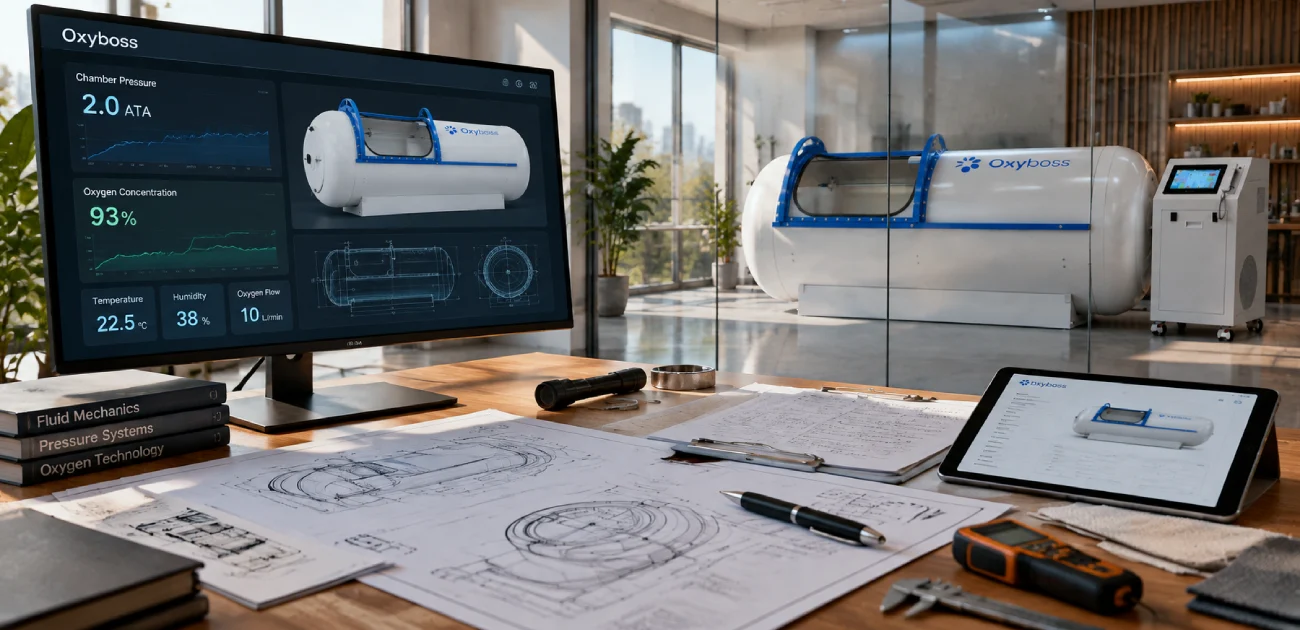

If you run a chiropractic practice, you've probably had this thought at some point: "We should add hyperbaric chambers — that's where the wellness revenue is going."
You're not wrong. The interest is real. The question is whether your practice can actually do it.
1 · Why there isn't one rule that covers all 50 states
There is no single national answer on whether a chiropractor can offer chamber services. The answer depends on the state your practice is in, the chamber's design, and what you call the service.
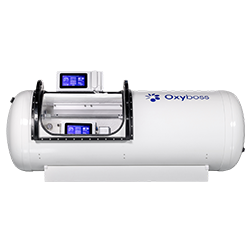
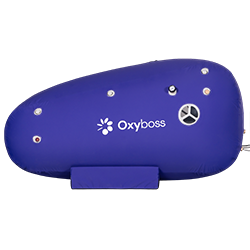
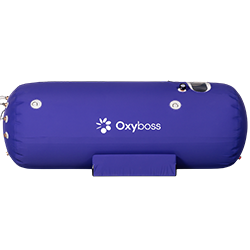
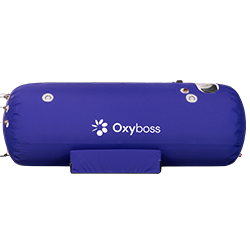
Hyperbaric chambers aren't a single category. A soft-shell chamber rated at 1.3 ATA is a different object — legally and physically — than a hard-shell chamber rated at 2.0 ATA. Different states handle them differently, and the same state may handle the same chamber differently depending on whether you're calling it "hyperbaric therapy" or "hyperbaric oxygen therapy."
A few things to know up front:
- FDA 510(k) clearance matters at the state level, not just federally. Several state boards require the chamber you use to hold a 510(k) clearance as a condition of offering the service. We can't tell you whether a specific chamber has one — that depends on the manufacturer and the device listing.
- "Medical" vs "non-medical" is a regulatory line, not a safety line. Both are built to pressure-vessel standards. The difference is what claims you can make, who has to supervise, and whether insurance can be billed.
- You don't get to choose which category you're in. Your state board decides. If you're in a state that requires physician oversight for "oxygen therapy," calling your service "wellness sessions" doesn't change the underlying classification.
If your takeaway from this section is "I need to call my state board before I do anything else," you've got the right idea.
2 · What three states actually say
We picked three states where the rules are publicly written and noticeably different. If you're not in one of these states, these examples don't apply to you — but they show you what kinds of questions to ask.
North Carolina
The North Carolina Board of Chiropractic Examiners published a policy on hyperbaric therapy (approved April 25, 2025). Key points:
- Hyperbaric therapy is within the chiropractic scope of practice, as part of a comprehensive treatment plan with documented clinical indications and goals.
- Soft-shell chambers must operate at no greater than 1.3 ATA / 4 PSIG.
- Hard-shell chambers capable of 15 PSIG or greater must comply with ASME/PVHO-1.
- Chambers may not use oxygen concentrators, medical-grade gases, or pure oxygen classified by the FDA as prescriptive.
- A Hyperbaric Safety Coordinator (formerly "Safety Director") must be designated, certified by an external organization such as the International Board of Undersea Medicine (IBUM).
- Doctors and chiropractic assistants must complete training and certification from an accredited external organization.
The policy has a footnote that's easy to miss and worth quoting: "This policy allows doctors to offer hyperbaric therapy, not hyperbaric oxygen therapy. Advertising should be consistent with that distinction."
That single sentence is the reason we use the phrase "chamber services" instead of "oxygen therapy" throughout our own materials. It's not marketing — it's the state's own framing.
Oregon
Oregon's rules came through House Bill 2394 in 2023, which updated the chiropractic scope to explicitly allow atmospheric-pressure oxygen and certain hyperbaric applications. The relevant limit is that oxygen delivered at concentrations above a defined threshold is treated as a prescription drug, which affects how oxygen is supplied to the chamber.
Practically: Oregon clinics can use oxygen concentrators rated for ≤99% concentration, but storing or dispensing 100% medical-grade oxygen brings in pharmacy and prescription rules. If you're sourcing oxygen, ask your supplier how the device is classified.
Illinois
Illinois is the cautionary tale. The Illinois Chiropractic Society has documented dozens of disciplinary actions against chiropractors who used mild hyperbaric chambers outside the rules. The state eventually clarified its position through legislation, and the current framework generally permits chamber use within scope — but the historical record is the reason Illinois clinics tend to be more conservative than their neighbors.
The takeaway from Illinois isn't "don't do it." It's "keep documentation tight and stay inside your scope."
What this means if you're in another state
Three states don't make a national rule. But they share a pattern:
Five questions. Ask these before you look at a single product page.
3 · "Medical chamber" vs "non-medical chamber" — and why it isn't what you think
A lot of confusion comes from one phrase: "medical-grade chamber." There's no single regulatory definition. People use it to mean different things, and manufacturers use it because it sells.
Here's the actual breakdown:
This isn't a quality spectrum. A non-medical chamber isn't a worse medical chamber. It's a different category, with different rules about what you can say about it and how you bill for it.
Two things to be careful about:
- "FDA approved" is almost always wrong. FDA "clears" devices through the 510(k) pathway, which means substantially equivalent to an already-cleared device — not "approved for treating X." The cleared indications for use are narrow. If you see a marketing page claiming "FDA-approved conditions," that's a red flag about that company's understanding of the regulations.
- "Clinical-grade" is marketing language. There's no FDA definition. If a chamber is sold as "clinical-grade," ask what specific standard it meets (ASME/PVHO-1, NFPA 99, IEC 60601, ISO 9001) and ask for documentation.
If you want a non-medical chamber and you're comparing options, the questions that matter are:
- What working pressure range does it cover?
- What does the manufacturer recommend for facility requirements (power, ventilation, space)?
- What documentation comes with the chamber (pressure test certificates, material specs, user manual)?
- What's covered under warranty, and what's the actual response time if something fails?
We'll get to our own products at the bottom. For now, keep reading.
4 · The facility checklist nobody gives you
This is the section most product pages skip, because it makes the sale harder. We're including it because every clinic owner we've talked to has hit at least one of these walls.
Space
A soft-shell chamber (one person, lying down) needs roughly 1.5 m × 2.5 m of floor space, plus clearance for the oxygen concentrator and for someone to access the chamber. A hard-shell multi-person chamber can need 20 m² or more, plus room for the cooling system if you have one.
Measure your available room before you fall in love with a chamber. The number-one reason chambers end up returned isn't "it didn't work" — it's "it doesn't fit."
Power
This is where most clinics get surprised. Real numbers from our own spec sheets:
These are continuous-load devices. That means a dedicated 15A or 20A circuit, not a shared outlet. If your exam rooms are on the same circuit as the waiting-room fridge and the front-desk computer, you'll trip breakers. Have an electrician check your panel before the chamber ships.
Voltage: all of our units support 110V / 220V / 240V, so international clinics are fine. North American clinics will run on 110V or 220V depending on what their electrician installs.
Ventilation
If you're running sessions back-to-back, the room needs air exchange. The relevant standard is NFPA 99 Chapter 14 (Health Care Facilities Code), which specifies minimum ventilation rates for hyperbaric facilities:
- Class A chambers (multi-place): minimum 3 ft³/min per occupant
- Class B chambers (mono-place): minimum 1 ft³/min per occupant
The current chapter is 14, not Chapter 20 as some older guides still reference. The 2024 edition is what state inspectors work from. You don't need to memorize the chapter — but if a contractor tells you "Chapter 20," they're working from an outdated copy.
Reference: NFPA 99 Health Care Facilities Code, Chapter 14, "Hyperbaric Facilities."
Fire safety
Hyperbaric chambers are oxygen-enriched environments. Standard fire suppression may not be appropriate. Your local Authority Having Jurisdiction (AHJ) — usually the fire marshal — will tell you what they want to see. Things that commonly come up:
- Smoke detectors rated for the environment
- Fire extinguisher type and placement
- Emergency egress path
- Signage
Don't skip this conversation. The fire marshal can shut you down faster than the state board can.
Permits and zoning
Zoning approval, building permits, certificate of occupancy — these are local, not federal. Your city or county planning department handles them. Some municipalities classify a chamber as medical equipment (different permitting path); others don't. Call and ask before you sign a lease amendment or place an order.
Pre-session assessment (not "informed consent")
You'll see "informed consent" in a lot of chamber marketing. That phrase implies a clinical relationship with specific legal weight. Most states reserve it for licensed medical acts. If you're offering non-medical chamber sessions, what you actually need is a pre-session screening and written acknowledgment — a different document, with different content.
We can't tell you the exact wording for your state. Your attorney should draft this. What we can tell you is that copying a generic "informed consent form" from a medical chamber operator is the wrong starting point if you're running a non-medical service.

5 · Cash-pay vs billing: the math that decides everything
There's a quieter question that determines whether this project makes sense for your practice: are you going to bill insurance, or stay cash-pay?
If you're billing insurance
Hyperbaric chamber services are billable under specific CPT codes (typically G0277 for facility fees and related codes for professional services). Coverage depends on:
- The diagnosis (covered indications are narrow — mostly wound healing and specific post-surgical cases)
- Payer policy (Medicare Administrative Contractors publish LCDs that vary by region)
- Medical necessity documentation
- Whether you're credentialed with that payer
The CMS Medicare Administrative Contractor (MAC) coverage policies (search for LCDs related to hyperbaric oxygen therapy) spell out the conditions. If you're not in a covered indication, the claim denies, and you eat the cost.
Important: billing for hyperbaric services in non-covered indications isn't just a denied claim — it's a compliance issue. Don't assume you can bill and refund if denied.
If you're cash-pay
Most wellness-focused chiropractic clinics run their chambers as cash-pay. This is simpler operationally, but it means:
- You're building patient demand through marketing, not referrals
- Your pricing has to compete with the local wellness market
- Patient retention depends on perceived value, not clinical outcome
- You can make claims about experience and recovery, but not about treating medical conditions
There's nothing wrong with cash-pay. It's the model most non-medical chambers are designed for. But the math is different: instead of "covered CPT × patients," it's "cash price × sessions × patient retention rate."
The break-even calculation, written out
Fill in your own numbers. If the result is higher than your expected patient volume, you have two levers: raise price, or reduce setup cost. Don't fudge the volume number — that's the one that decides everything.
6 · The order to do things in
Here's the order we'd actually do this, if we were standing up a new chamber program from scratch. This isn't a "10 steps to success" listicle — it's the sequence that prevents you from buying something you can't use.
Step 1: Confirm your state allows it. Call your state board of chiropractic examiners. Ask specifically: "Is chamber use within scope for a licensed chiropractor in this state, and are there any specific training or equipment requirements?" Get the answer in writing if possible.
Step 2: Confirm your zoning and building type allow it. Call your city's planning or building department. A medical office in a retail-zoned strip mall has a different path than one in a dedicated medical building.
Step 3: Map your facility constraints. Measure the room. Check your electrical panel. Note existing ventilation. If you're in an older building, this step may kill the project before you spend a dollar on a chamber.
Step 4: Talk to your insurance carrier. Get a quote for the rider. If the cost is prohibitive or the carrier won't cover chamber-related incidents, that's information you need before you buy.
Step 5: Decide cash-pay or insurance billing. This decision drives chamber selection more than any spec sheet. If you're cash-pay, you have more chamber options. If you're billing, you need a chamber and documentation setup that meets payer requirements.
Step 6: Get competitive quotes from at least three suppliers. Don't go with the first vendor who answers your email. Ask each one for the same set of documents: chamber specifications, warranty terms, installation requirements, training included, and references from at least two clinics running their equipment.
Step 7: Plan the installation. Coordinate the chamber delivery, electrical work, and any room preparation for the same week. The downtime compounds if these are sequenced wrong.
Step 8: Document everything from day one. Session logs, equipment maintenance, staff training records, incident reports. This isn't just for compliance — it's also what makes your chamber program defensible if a patient files a complaint or an inspector visits.
If any of steps 1–4 kill the project, that's a successful outcome. You saved yourself the cost of a chamber you couldn't use.
Frequently asked questions
Do I need an MD on staff to run a chamber?
Depends on your state. Some states require physician oversight for chamber use; others don't. North Carolina requires a Hyperbaric Safety Coordinator (which can be the chiropractor themselves with IBUM certification). Check with your state board.
What's the difference between 1.3 ATA and 2.0 ATA?
1.3 ATA is roughly the pressure at the bottom of a 10-foot swimming pool. 2.0 ATA is roughly twice atmospheric pressure — what you experience 33 feet underwater. Higher pressure delivers more oxygen to tissues but requires harder containment and more safety equipment. For non-medical wellness applications, most clinics operate between 1.1 and 2.0 ATA.
How long does a session take?
Typical sessions run 60–90 minutes, including compression and decompression time. Plan for one room turnover per chamber per 1.5–2 hours.
Will my malpractice insurance cover chamber-related incidents?
Probably not under your existing policy. Most chiropractic malpractice policies exclude hyperbaric services or require a specific rider. Talk to your insurance carrier before installing the chamber.
Can my patients use FSA or HSA funds to pay?
Often yes, with a Letter of Medical Necessity from a licensed provider. This is a common workaround for cash-pay wellness services. Check with your tax advisor on the specifics.